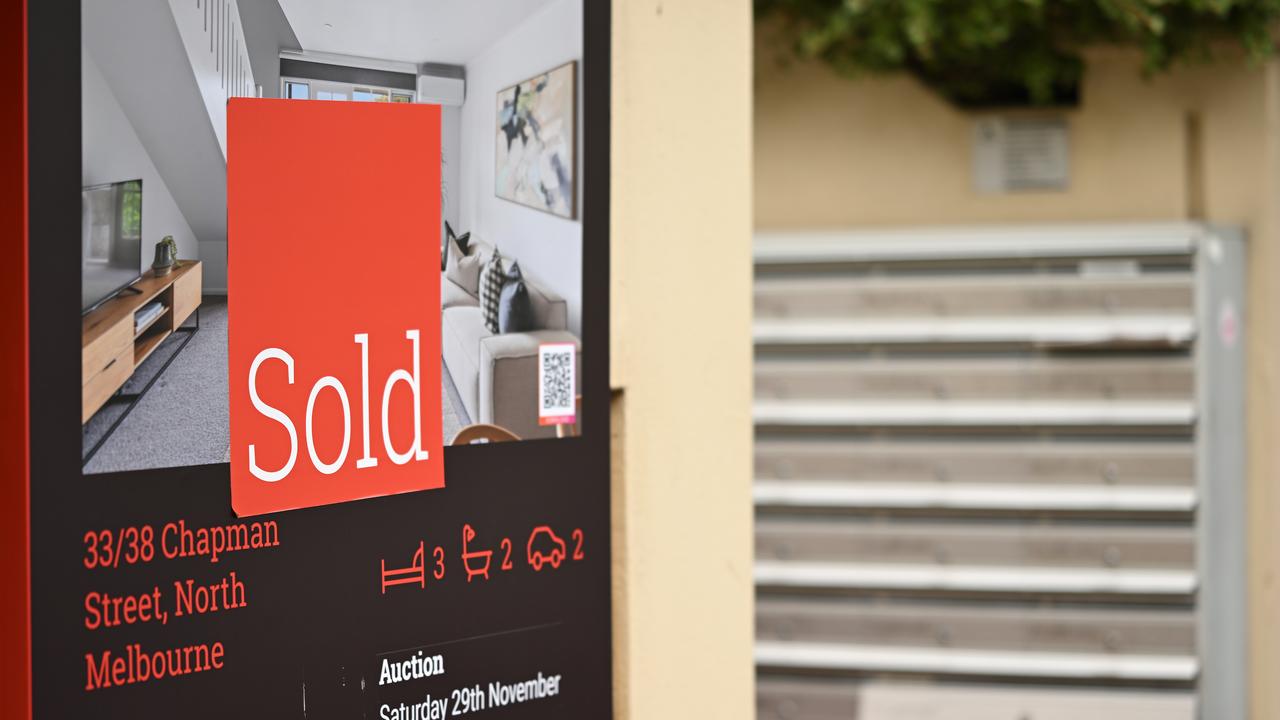
The housing market is tipped to start weaker in 2026 with confidence dented by fears the Reserve Bank’s next move will be a rate hike, a leading property data provider says.
Cotality’s national Home Value Index recorded the smallest gain in five months, with values rising 0.7 per cent in December.
Sydney and Melbourne were the biggest drag on the growth outcome, with values sliding -0.1 per cent.
That marked the first month-on-month decline since January 2025.
Every other capital and rest-of-state region recorded a rise in values through December, although most saw some momentum leave the market.
Tim Lawless, Cotality’s research director, said the softening hinted at a weaker start to 2026.
But an ongoing undersupply of housing would be enough to keep upward pressure on prices, he told AAP.
The slowdown in the growth rate, particularly in Sydney and Melbourne, was a clear sign of “a pretty substantial dent in confidence on the back of high inflation and this really hawkish stance from the RBA”, he said.
But increasing building costs and a tight labour market for construction trades would continue to keep housing supply far below what the country requires and therefore drive house prices up.
“In 2026 I think we will be encountering the same sort of barriers to getting more stock into the marketplace,” Mr Lawless said.
“A ‘higher for longer’ setting on interest rates, alongside a resurgence in cost-of-living pressures and worsening affordability pressures, looks to have taken some heat out of the market.”
Despite the softer December outcome, the Home Value Index surged 8.6 per cent higher in 2025, adding about $71,400 to the national median dwelling value.
It was the strongest calendar year gain in home values since 2021, when the market rose 24.5 per cent amid emergency low interest rates and record-high purchasing activity.
Every capital city and rest-of-state region recorded an increase in dwelling values over the year, bookended by Darwin, up 18.9 per cent and Melbourne with a milder 4.8 per cent gain.
Regional markets were more resilient to a slowdown, but not immune.
The monthly pace of growth across the combined regional markets of Australia slowed from 1.2 per cent in November to 1.0 per cent in December.
Despite the easing the monthly pace of gains was double the combined capital city growth trend, where values rose by 0.5 per cent in December.
Over the calendar year, regional dwelling values rose by 9.7 per cent, outpacing the 8.2 per cent rise recorded across the combined capital cities.
Across the rest-of-state regions, Western Australia stood out with a 16.1 per cent annual increase, followed by regional Queensland, up 12.6 per cent.
Regional Victoria recorded the lowest growth outcome over the year, with values up 6.0 per cent.

Renters saw some relief in December with the rental dwellings vacancy rate rising from 1.5 per cent to 1.6 per cent through the month, accompanied by an easing in the pace of rental growth.
But rents were likely to rise further through 2026, Mr Lawless said, after rising 5.2 per cent nationally in 2025.
Regional WA recorded the largest annual rise, up 10.1 per cent, followed by Darwin with an 8.2 per cent lift.
Melbourne recorded the smallest increase in rents, up 2.9 per cent.

Australian Associated Press is the beating heart of Australian news. AAP is Australia’s only independent national newswire and has been delivering accurate, reliable and fast news content to the media industry, government and corporate sector for 85 years. We keep Australia informed.