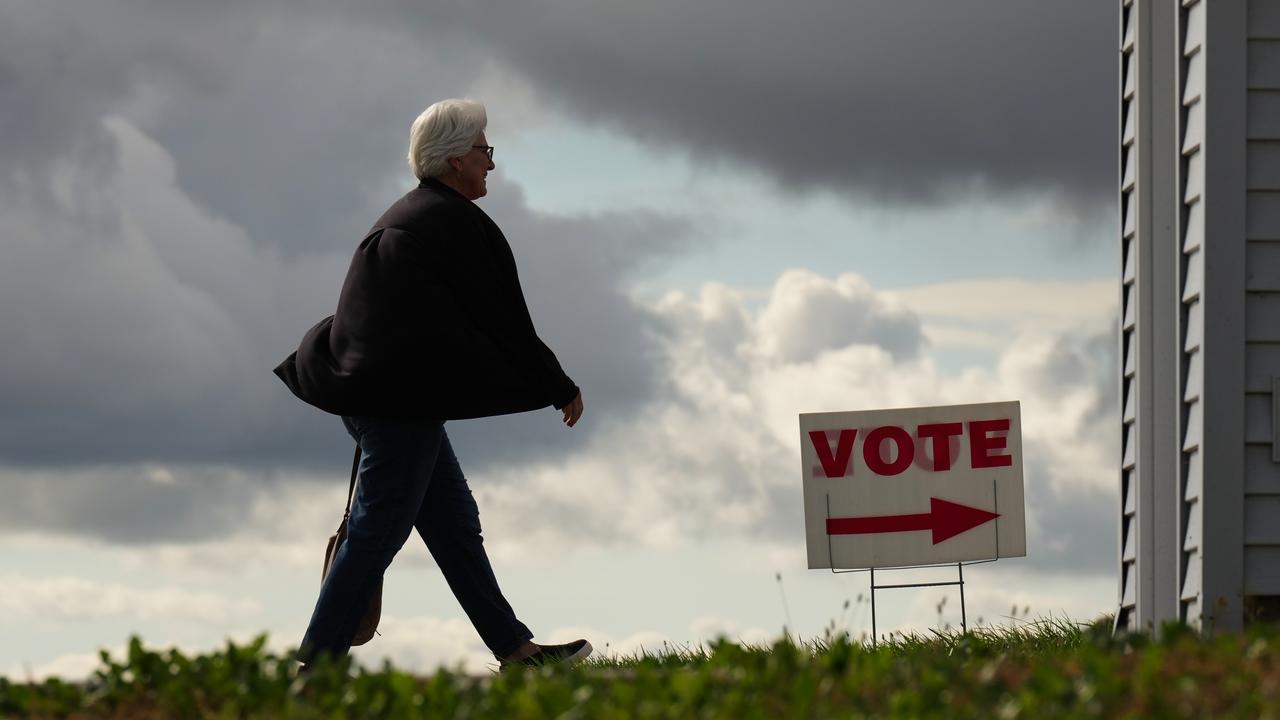

Voters struggling with high prices and angry over an unpopular war with Iran are deciding whether to drastically shift power in Washington DC, with surveys favouring Democrats to wrest the House of Representatives from Republicans while control of the Senate remains uncertain.
Democrats were cautiously optimistic as they watched Republicans spend the campaign’s final stretch pumping tens of millions of dollars into states and districts that US President Donald Trump won handily two years ago.
They’re betting that discontent over Trump’s failure to deliver on his promise to tackle rising costs and perceptions that he has focused more on gilding the capital than their pain at the pump will depress Republican turnout and drive their own voters to the polls.
“I think the results are going to be better (for Republicans) than you think,” Trump told Fox News, adding that he would be watching the results come in later on Tuesday night at the White House, where he is hosting a viewing reception.
In remarks that appeared aimed at swaying largely Democratic-leaning voters unhappy with US support for Israel, Trump said that the United States would stop $US4 billion ($A5.7 billion) in annual funding to Israel after the end of this year.
Republicans held out hope their money advantage would help stem the tide but they were bracing to lose control of the US House of Representatives and fighting to hang onto the US Senate.
Margins are tight in both chambers; one or two seats could tip the balance.
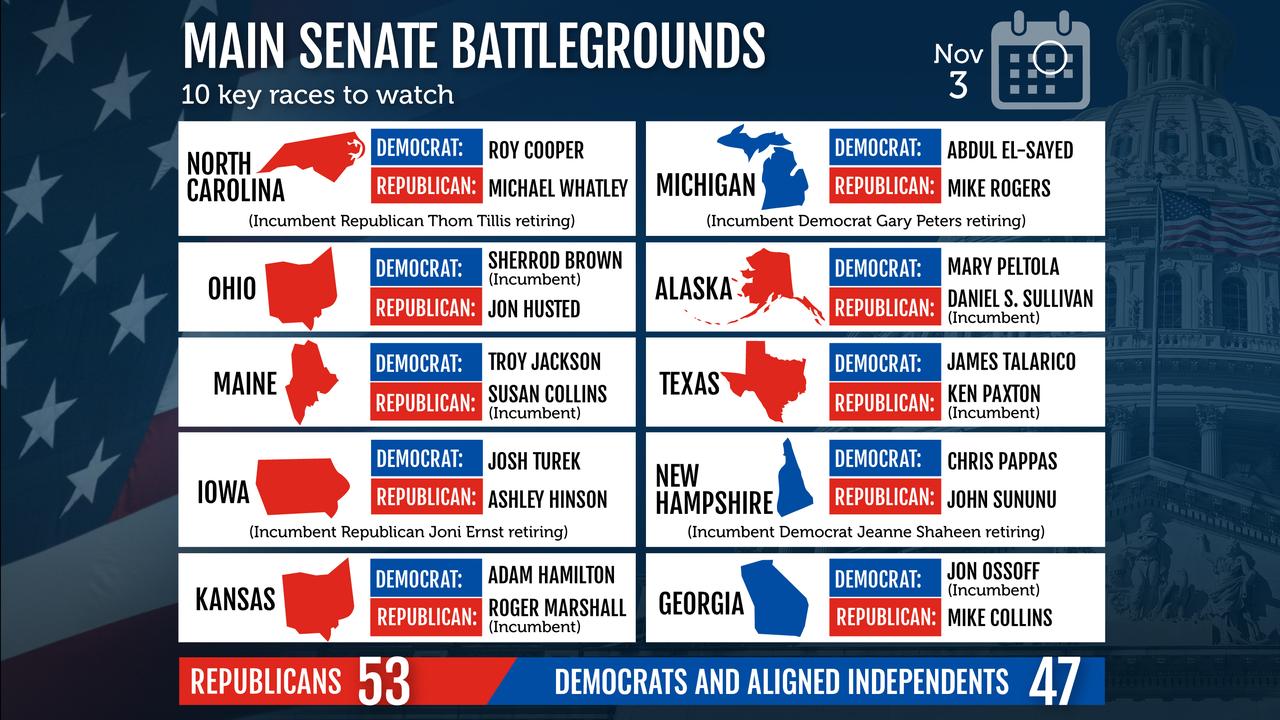
Democrats need a net gain of four seats in the 100-member Senate to win the majority, and most competitive races are in historically Republican states.
In the 435-member House, they need three.
More than 57 million people had already cast ballots as of Monday, with turnout surpassing the early vote four years ago in many closely watched states.
Trump, whose party has struggled when he’s not running to turn out the low-propensity voters who’ve fuelled his victories, has told voters to act as though he’s running, even as many Republican candidates have kept their distance.
Trump’s aggressive schedule had stops in the most Republican states, including Mississippi, South Carolina and Texas, underscoring his party’s challenges.
On Tuesday, Mark Barker, of Palm Beach Gardens, Florida, said Trump was top of mind as he voted.
“I’ve just been following Trump the whole time. I really think he’s doing an awesome job,” said Barker, noting the president’s promise of $US5000 ($A7200) for every US adult if Republicans retain control of Congress, border policy and war in the Middle East.
“Everything he’s done has been outstanding.”

In Raleigh, North Carolina, 57-year-old librarian James Moore said he voted for Democrats to push back on Trump’s big tax breaks and spending cuts bill.
“I’m paying more taxes. I’m paying more for my healthcare. I’m paying more for everything,” he said.
“We need more representatives in Congress that are going to stand up to Trump.”
Polling sites opened early on Tuesday along the east coast, with few disruptions.
In New York’s suburban Westchester County, officials said an issue with machines accepting paper ballots was requiring ballots to be placed in emergency bags for later counting but stressed that they would remain secure.
Democrats must flip at least three House seats and four Senate seats to win a majority in each chamber.
Democrats have little margin for error.
The party must defend all of its current seats while winning at least two states that voted for Trump by a double-digit margin two years ago: Alaska, Iowa, Kansas, Nebraska, Ohio, South Carolina and Texas.
Opinion polls suggest Democrats are either narrowly leading or within striking distance in all of those states.
with Reuters

Australian Associated Press is the beating heart of Australian news. AAP is Australia’s only independent national newswire and has been delivering accurate, reliable and fast news content to the media industry, government and corporate sector for 85 years. We keep Australia informed.