
Australians underestimate just how transformative artificial intelligence will be, says a high-profile futurist who’s bringing her investing prowess to local shores.
ARK Invest chief executive and co-founder Cathie Wood said while investors understood the opportunities offered by data centres, there’s more to AI than that.
“What’s underappreciated, in terms of AI, is what we call embodied AI or physical AI,” Ms Wood told AAP in an interview while visiting Australia.
The Florida-based executive became one of the most celebrated investment gurus on the planet during the COVID-19 pandemic, after her flagship fund delivered a stunning 153 per cent return in 2020 thanks to big, bold bets on disruptive technologies.

These days the fund’s largest position remains in Elon Musk’s electric vehicle and AI robotics company, Tesla, which she describes as the biggest AI project on Earth.
The fund holds more than $1.6 billion in Tesla shares, making up roughly a tenth of its portfolio.
“Autonomous transportation, we think, is going to deliver revenues within the next five to 10 years of $US10 trillion ($14 trillion) per year,” Ms Wood said, adding that this reflects the entire ecosystem including China.
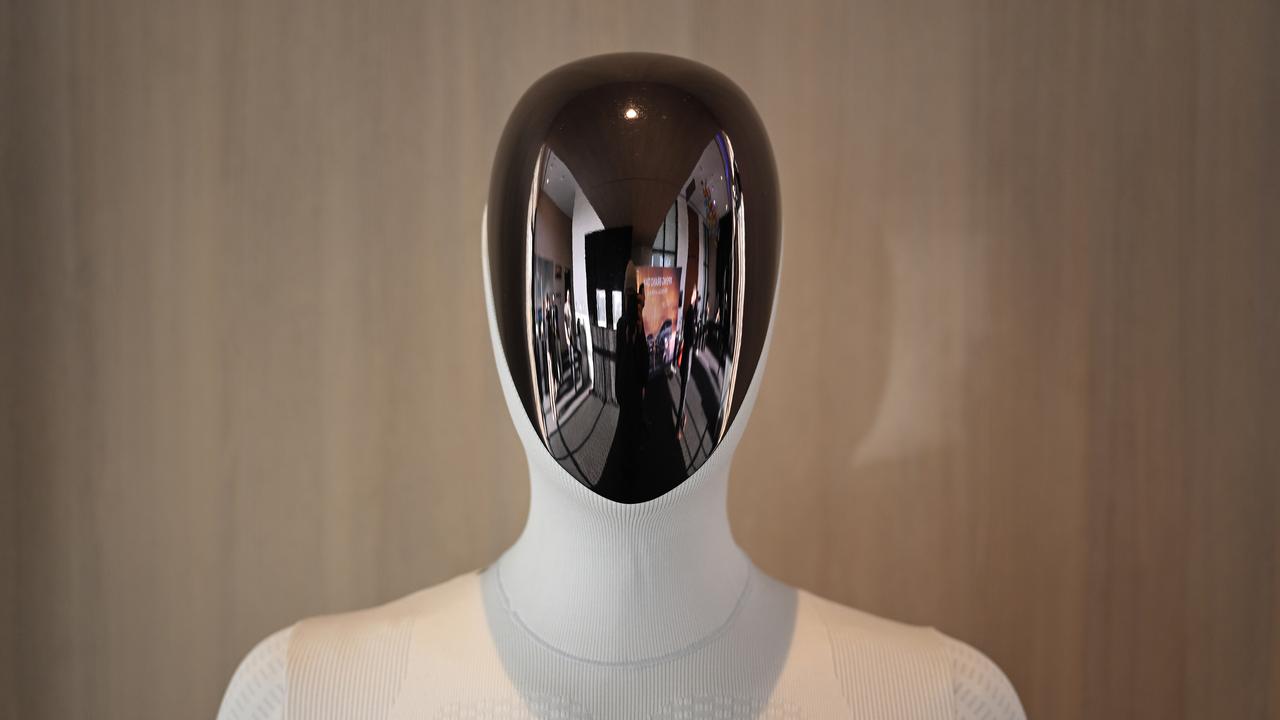
“Beyond that, humanoid robots, which is also Tesla. We think that’s a $US25 trillion ($35 trillion) revenue opportunity per year, both in the home and in manufacturing.”
Mr Musk’s humanoid “Tesla bot” might be on sale to the public in 2027.

However, Ms Wood believes the biggest transformative opportunity for AI lies in health care.
“We think that AI is going to collapse the time and the cost to discover new drugs and therapies,” she said.
“With just blood tests, it will help us diagnose diseases before they’re even symptomatic.”
AI-powered gene editing will cure diseases, Ms Wood said, pointing to Swiss-American company CRISPR Therapeutics that is already using gene editing to treat rare blood diseases sickle cell and beta thalassemia.
“Many people say, ‘Oh, it’s so small. These are just rare diseases’. It’s not just rare diseases,” Ms Wood said.

CRISPR is also working on a gene-editing therapy to cure bad cholesterol, and Ms Wood believes the one-time infusion has blockbuster investor potential.
Monash University’s Victorian Heart Hospital was among institutions worldwide to participate in an early 15-person clinical trial that concluded in November.
ARK has invested in other companies using AI to quickly develop potential treatments for endometriosis and alopecia, a disorder that causes hair loss.
It currently takes about 13 years and $US2.4 billion ($3.4 billion) to develop a new drug, and Ms Wood believes that AI will collapse that to five years and $US600 million to $US700 million (roughly $907 million).
“We think what’s going to happen in this new age is we’re going to transform sick care, which is where most money is spent today in health care, into real health care and preventative care,” she said.
“I think it’s one of the most exciting developments in healthcare history.”

Ms Wood was speaking to AAP ahead of opening her venture capital fund to Australian wholesale investors through a partnership with Associate Global Partners.
The ARK Venture Fund invests in disruptive public and private companies such as OpenAI, Anthropic and the prediction market Kalshi.
Ms Wood will return in Australia within weeks to meet with potential investors, and praised the nation for its open mind to innovation.
“I shouldn’t be playing Europe against Australia, but you know, Europe is so tied up in regulation,” she said.

Australian Associated Press is the beating heart of Australian news. AAP is Australia’s only independent national newswire and has been delivering accurate, reliable and fast news content to the media industry, government and corporate sector for 85 years. We keep Australia informed.