


Mental illness, extremism or terrorism? The horrific attack on Helen Haines puts Australia at a crossroads. Aleta Moriarty on personal experience and what the science says.
Eight weeks ago, a Women for Election survey that I took part in, found nearly nine in 10 Australian women in politics had been abused and more than half questioned whether to run again.
Many of us said the safety risks were rising and raised the alarm, including preparing submissions and proposals to improve safety. We’d watched Labour MP Jo Cox murdered in 2016 and former MP Ann Widdecombe killed in her home this July, and we could feel the ground shifting here too.
At the time, Women for Election CEO Licia Heath said: “I don’t want to wait for a woman MP to be killed in office before we start making some changes”.
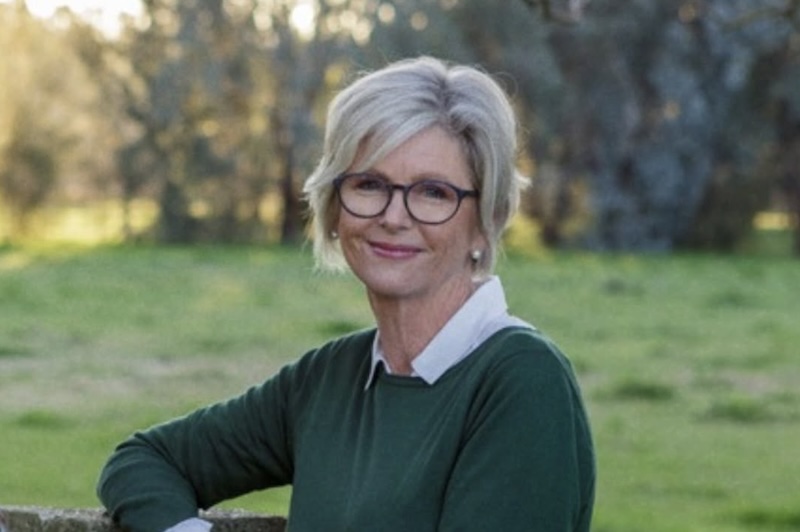
Unfortunately, yesterday our worst fears were confirmed when Independent Federal MP Helen Haines was maliciously run down by a car in what the Prime Minister called a deliberate act. While police haven’t established a motive, many of us could feel something horrific like this was coming. I am profoundly sad for the wonderful Helen, her family, and for the state of our democracy.
It can not continue like this.
The violence of politics, media
I’ve spoken to candidates and reps from most major parties, and they describe the same thing: politics has become more hate-filled, more polarised and angrier. Everyone agrees it’s changed. Real worries about the cost of living, the economy and global and domestic injustice have been wedged open by populists and supercharged by social media and AI bots.
It’s combustible, it’s ugly and is it is incredibly dangerous.
Candidates like me are driven to stand for a heartfelt desire to change our communities for the better. On several occasions I’ve received thousands of hostile interactions within hours, including rape and death threats.
It is like being pinned to the wall of the gravitron while having the world vomit on you. Strangers have told me they want me dead, that they want to whip me, and tell me exactly how they would f**k me. No doubt bots make up a large share but as researchers have noted, the social media era has normalised ever more aggressive forms of abuse. Research shows that every bot pile-on tells real people that this behaviour is fine, and real people join in.
One of my supporters, a woman in her seventies, received 400 negative interactions for a single kind comment. She wrote to tell me it was the most vicious thing she’d experienced in her life, and that she couldn’t sleep all night. Another supporter was sent a death wish.
To comply with electoral law, some of my campaign material carried my home address (an independent candidate can’t afford an office, let alone security). After all the abuse, my children were too frightened to sleep in their own rooms.
Worst fears confirmed
Monday’s news confirmed my worst fears, and I’ve been awake ever since.
We all know this rage doesn’t stay online. Research led by Julie Posetti for UN Women found 41% of women in public life had experienced physical violence linked to online harm, double the figure five years earlier. The online environment has created an authorising space where violence against women is increasingly normalised. A University of Melbourne study found a quarter of all boys aged 13 to 17 believe feminism should be resisted with violence if necessary.
Lead researcher Dr Sara Meger found hostility to women was the strongest single predictor of support for violent extremism. What we’re seeing is white-hot rage about legitimate things like declining living standards fused with hatred of women, or First Nations people or migrants who are being scapegoated and putting these people at risk.
There have been some small steps in the right direction but much more needs to be done to address the rise in misogyny and efforts to prevent and respond to abuse. A Digital Duty of Care Bill is now before Parliament that would make platforms take responsibility for the harm they amplify, which Pauline Hanson wants it scrapped but things need to be much farther reaching.
Mental illness, extremism or terrorism?
We don’t yet know where the Haines investigation will land, but we should talk honestly about what we call terrorism, extremism or mental illness because what we call it determined how it gets prioritised and addressed.
Misogynist ideology has been linked to at least 15 attacks in Western countries between 2009 and 2022, and 58 deaths.
In the 2024 Bondi Junction attack, five women and one male security guard, Faraz Tahir, were killed. The NSW Police Commissioner said the attacker had obviously targeted women. Despite the attacker’s father citing his frustration at not having a girlfriend, this attack was squarely blamed on mental illness.
Yet what gets called terrorism depends on who commits it. Researchers Sian Tomkinson and Tauel Harper have shown how violence by a Muslim is quickly framed as ideological and a danger to everyone. There is a high likelihood that these groups also have mental illness histories. A 2025 study found 42% of adolescent Australian extremists had a history of mental illness but this often gets dropped off.
More than one thing can be true
Two things can be true at once. Someone can be experiencing serious mental health issues and be driven by misogyny, online hate, populism or other intersecting drivers that have radicalised them, leading to extremism.
Reducing these incidents to a single explanation risk overlooking the multiple, factors that contribute to violence against women leaders. If we are serious about preventing violence, we must be willing to examine them properly, the culture of normalised misogyny (which appears to be getting ramped up), including the role of online hate, radicalisation and the growing hostility and normalised violence directed towards women in and out of public life.
The bigger question
All of this aside, there is a bigger, more fundamental question what kind of society do we want to live in? And how do we want to treat one another?
We can keep choosing anger over action, hate over kindness, division over unity, and rage over dialogue until there is nothing left of us.
Or we can choose a country where kindness and respect matters, we restore common decency, we believe in fundamental principles of equality, and we work together to solve the real problems facing our communities.
I believe in something so much better than this.
—————
Aleta Moriarty is an Independent candidate for the Western Victoria Region in the Legislative Council.
International Women’s Day. Never closer to equality, nor closer to losing it.

Aleta is a practitioner researcher in human rights, disability inclusion and gender. She is completing a PhD at University of Melbourne and has twenty years of experience working across agencies including the United Nations, UN Women, World Bank, and the University of Melbourne. She is currently standing as an Independent Candidate for Western Victoria. Her website is www.aletamoriarty.com