
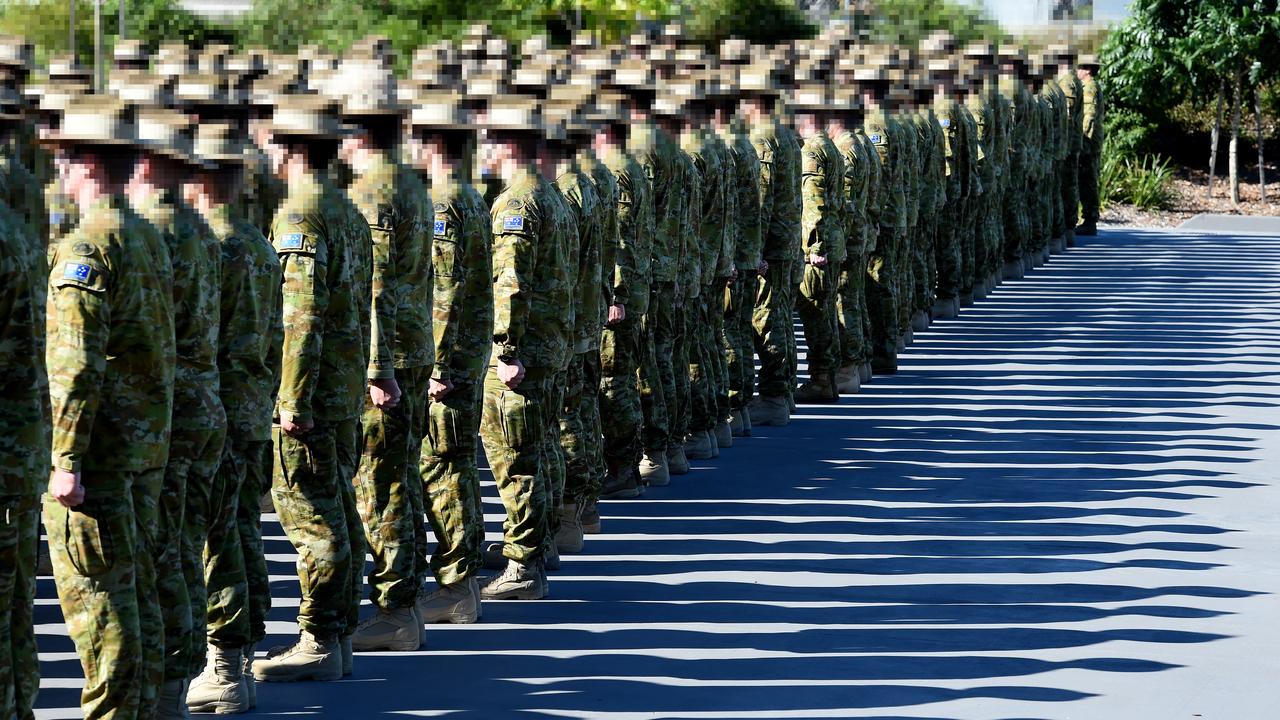
Barriers to investigating sexual assault in the Australian Defence Force and how the military can better tackle the issue will go under the microscope as part of a landmark inquiry.
A standalone, independent inquiry into military sexual violence will cover 11 recommendations from the Royal Commission into Defence and Veteran Suicide, which found sexual misconduct in the military was systemic.
The standalone inquiry will compare the effectiveness of the military justice system and civilian justice system, which operate separately, including how sexual and related offences are investigated, according to the terms of reference obtained by AAP.
Rebecca McGaw, who was sexually assaulted as a 17-year-old recruit in the Royal Australian Air Force in May 2017, welcomed the inquiry and said it was important it was open to everyone regardless of gender and rank.
“(Sexual violence) is an issue that is extremely prevalent in the current environment that is the Australian Defence Force,” she told AAP.
Being underage, her assault by a fellow recruit should have been reported to police but wasn’t, despite it being witnessed by a colleague of a more senior rank.
A report was filed but an investigation never progressed and the member did not face consequences.
The former leading aircraftwoman said she believed the inquiry needed to look at how the judicial systems had been weaponised and how command investigated reports of sexual violence.
“This is an issue that needs to be addressed, and the entire system needs to be looked at holistically, in conjunction or separate to every other inquiry that is going on,” she said.
Veterans’ Affairs and Defence Personnel Minister Matt Keogh will announce the terms of reference at the National Press Club in Canberra on Tuesday.
The probe was recommended by the royal commission, which also found troops convicted of particular sexual crimes should be kicked out of the military, victim-survivor support should be improved, and more work should be done to understand the prevalence of sexual violence.
The federal government accepted all of these recommendations.
The inquiry will examine the investigative powers of military police, barriers faced by civilian police investigating sexual assault on defence force bases, recidivism, decisions not to prosecute, conviction rates, sentencing outcomes and penalties.
It will also look at the perception of how reporting sexual assault could impact careers and what supports can be put in place to help victims, witnesses and complainants, as well as legal and other support available to perpetrators.
Barriers to reporting sexual misconduct, following through with complaints and the pressing of charges will be covered, as will the role of alcohol and drugs, family and domestic violence and the impact of peers and colleagues when a person decides whether to report.
The effectiveness of anonymous reporting will be explored, including a comparison of approaches in the United States, the United Kingdom, Canada and New Zealand.
The inquiry will further provide recommendations to improve the military’s understanding of perpetrators’ behaviour, “consistent with a victim survivors-centric approach and including clear consequences for perpetrators when a report is substantiated”.
The inquiry will commence in 2026 and finish within 12 months before a final report into military sexual violence is publicly released.
1800 RESPECT (1800 737 732)
National Sexual Abuse and Redress Support Service 1800 211 028
Lifeline 13 11 14
beyondblue 1300 22 4636
Open Arms 1800 011 046

Australian Associated Press is the beating heart of Australian news. AAP is Australia’s only independent national newswire and has been delivering accurate, reliable and fast news content to the media industry, government and corporate sector for 85 years. We keep Australia informed.