
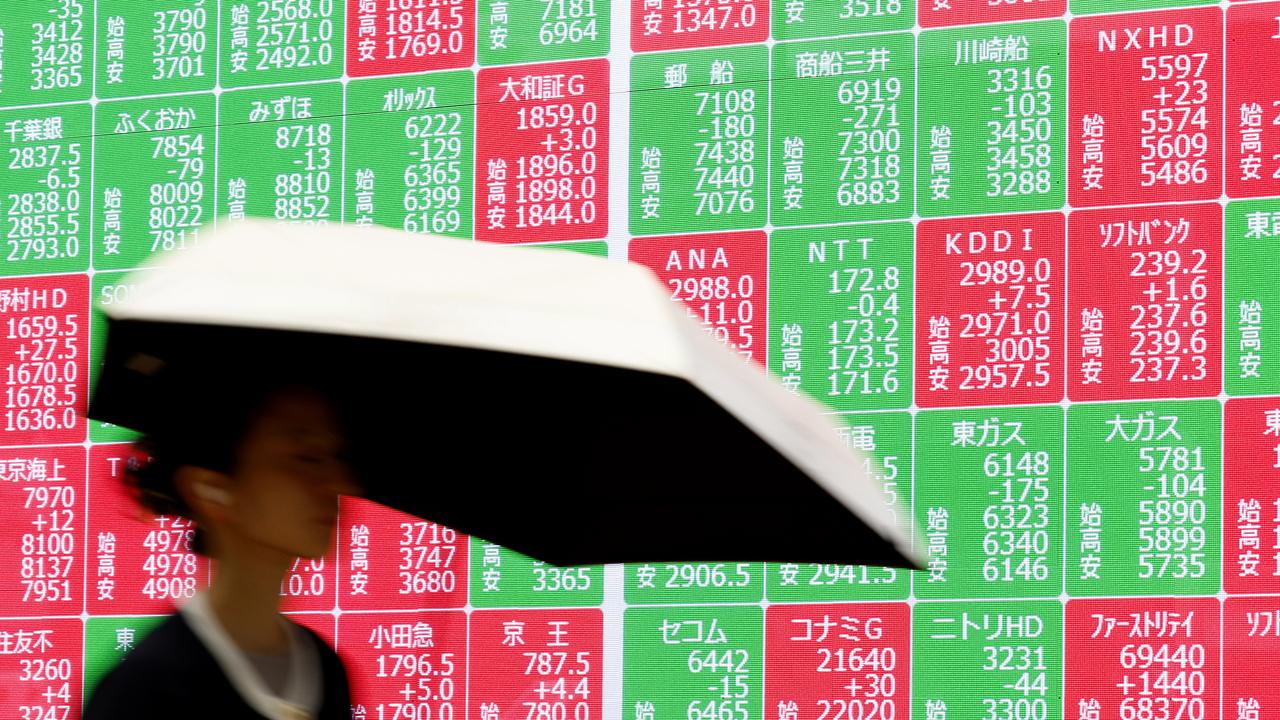
Global shares and bonds have dipped while Japan’s well-telegraphed hike fell short of supporting the yen, as markets approached the end of a turbulent week marked by a global push by central banks to quell inflation.
Monetary policy has been the prime focus this week, as the war in the Middle East nears the seven-month mark with few signs of ending, which is keeping oil prices above $US100 per barrel and fanning inflation fears.
The Japanese currency headed for its biggest daily slide since mid-February, with the dollar up one per cent to 157.54, after the Bank of Japan raised rates to a 31-year high of 1.25 per cent.
The decision on Friday, though expected, excited yen bears with two board members dissenting to the hike.
The Japanese currency has risen 1.6 per cent in September, driven by expectations of a faster pace of hikes from the BOJ and early signs of repatriation from Japanese investors.
But the Federal Reserve raised rates for the first time in three years on Wednesday and switched to a more aggressive stance on inflation, which knocked the yen, putting it on course for its worst weekly performance against the dollar in two years, down 2.6 per cent.
BOJ governor Kazuo Ueda said, with underlying inflation approaching two per cent, the bank’s policy focus had shifted, and most of the central bank’s board members believe policy was still accommodative, even after Friday’s hike.
The BOJ decision wraps up the series of major central bank meetings in which policymakers have ratcheted up hawkish rhetoric.
September has seen the biggest rise in average interest rates across the G10 since July 2023, with four raising rates and others indicating they may need to do so before too long.
The Bank of England on Thursday left UK rates unchanged but said it may have to hike if the Iran war drags on.
The European Central Bank last week also flagged the need for further tightening as it raised rates.
And Australia’s top central banker on Friday said some of the upside risks to inflation flagged by policymakers appeared to be materialising.
A retreat in the oil price provided little respite for stocks or bonds, which registered modest price losses.
Stocks in Europe fell 0.3 per cent on the day, while US stock futures rose 0.3 per cent to 0.6 per cent, led by strength in tech shares, which shook off the negativity earlier in the week from dire warnings from the top AI executives about the threat to humanity from unchecked AI development.
Brent crude futures fell as much as 2.8 per cent to $US101.92, following a Reuters report that China has asked Tehran to help rein in the Houthis after their military blitz over the past week.
That, together with hopes Gulf exporters may find alternative routes to ship oil, has put crude futures on course for a two per cent weekly drop, although the strain is showing in physical markets, where prices are about $US120.
Bond prices edged up, although volatility was far lower, after another brutal sell-off this week that took the 10-year US Treasury yield beyond five per cent to its highest since 2007.
It was last at 4.93 per cent.
Yields across the euro zone and in Britain have also hit multi-year highs in the last week but by Friday were only a touch higher on the day.

Australian Associated Press is the beating heart of Australian news. AAP is Australia’s only independent national newswire and has been delivering accurate, reliable and fast news content to the media industry, government and corporate sector for 85 years. We keep Australia informed.