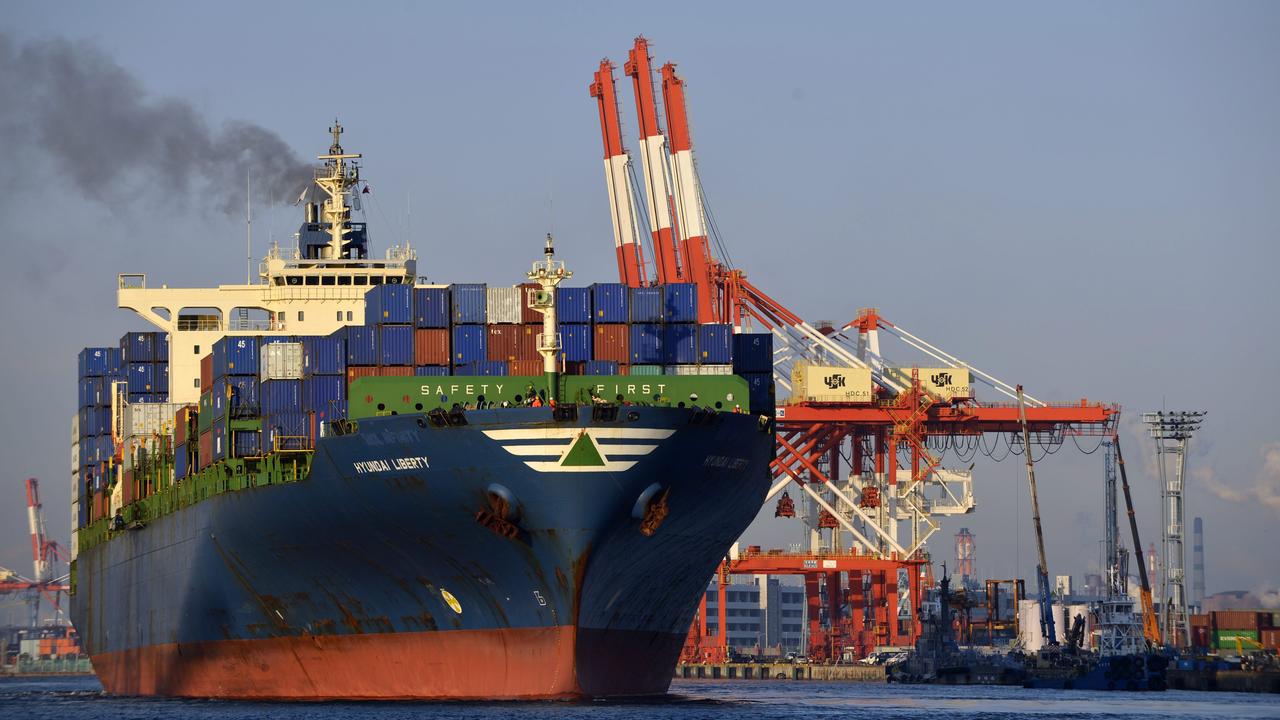

Japan’s trade deficit reached 2.81 trillion yen ($A25 billion) for the first fiscal half, according to government data, as the war in Iran sent oil import prices soaring.
The finance ministry’s preliminary data showed that Japan’s exports for the April-September period in 2026 grew 18.4 per cent from the same period the previous year to 63.5 trillion yen, while imports soared to 66.3 trillion yen, up 20.4 per cent year-over-year.
Both were record highs for Japan. The soaring price of oil affects a wide range of sectors, including plastic goods and shipping costs.
Resource-poor Japan imports virtually all its oil and has relied on access to the Strait of Hormuz in the Middle East for its oil shipments.
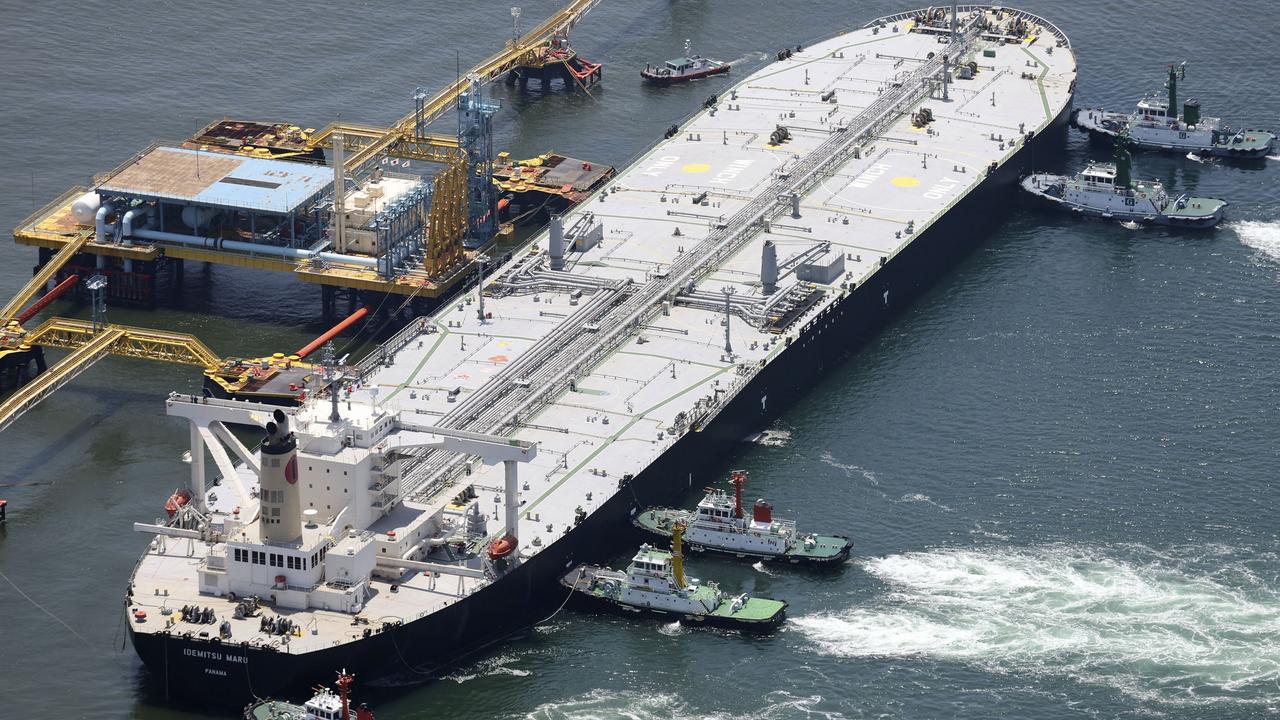
That is now basically blocked, and Japan has had to pay more to get shipments from other routes.
Brent crude, the international standard, has soared from $US70 a barrel in February to about $US100 a barrel lately, after shooting up to above $US110 a barrel in recent months.
Analysts say prices are unlikely to ease soon.
For the month of September, Japan’s trade deficit totalled 536.6 billion yen, marking the fifth month of deficits, but down from 1.1 trillion yen in August.
Japan’s September imports grew 18.9 per cent from the previous year, while exports rose 16.7 per cent.
One sore point is the weakening yen, which drives up the cost of imports. The US dollar is lately trading at 150-yen levels.

The central bank, which kept borrowing costs at below or near zero for years to help keep a shaky economy going, has been gradually raising interest rates, in part to prop up the yen.
In September, the Bank of Japan raised the benchmark interest rate to 1.25 per cent from 1.0 per cent, a 31-year high.
Its monetary policy board meets again next week. The bank has an inflation target of about two per cent.
The Japanese government has repeatedly stressed it’s working closely with the Bank of Japan.
The government of Prime Minister Sanae Takaichi is promising a tax cut on food to one per cent from eight per cent to help lower-income families cope with soaring prices.
That bill is being debated in parliament.

Australian Associated Press is the beating heart of Australian news. AAP is Australia’s only independent national newswire and has been delivering accurate, reliable and fast news content to the media industry, government and corporate sector for 85 years. We keep Australia informed.