
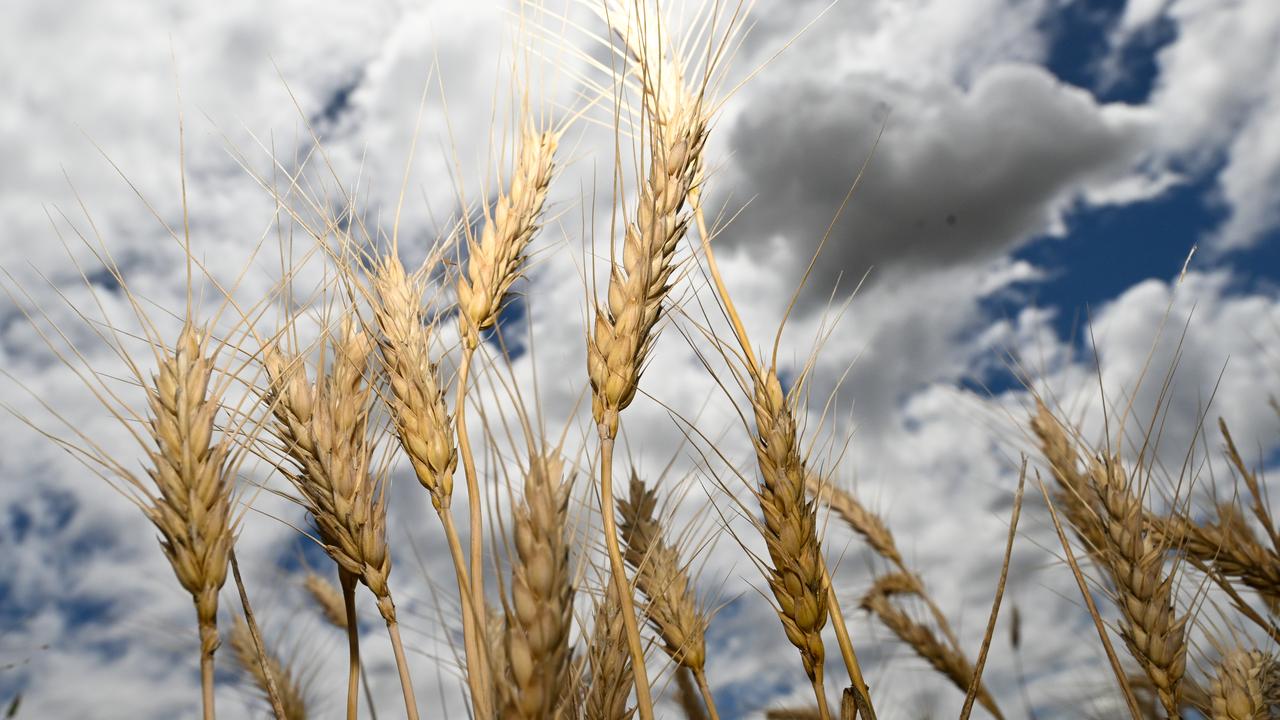

World food prices have risen to their highest since late 2022, as adverse weather and war disruption in the Black Sea heightened concern over the supply of staples.
Extreme heat and drought in Europe, the threat of a severe El Nino weather pattern and trade upheaval caused by wars in Ukraine and Iran have unsettled agricultural markets, pushing grain prices to three-year highs and sugar to a one-year peak, the United Nations’ Food and Agriculture Organization said.
The FAO Food Price Index, which tracks monthly changes in a basket of internationally traded food commodities, averaged 133.3 points in August, up from July’s revised reading of 130.8.
That was the highest score since November 2022, though nearly 17 per cent below a record peak from March 2022, shortly after Russia’s full-scale invasion of Ukraine.
“August’s increase in global food prices is a warning that the risk premium is returning to food markets: climate shocks, geopolitical tensions and disrupted trade logistics are converging to tighten supply expectations,” FAO Chief Economist Maximo Torero said in a statement.
The FAO’s price benchmarks for cereals, vegetable oils, sugar, meat and dairy all rose in August.
Extreme weather in Europe affected prospects for the maize and sugar-beet harvests as well as livestock output, while the anticipated El Nino phenomenon fuelled concerns for palm oil and sugar output in Asia, the organisation said.
Escalating attacks in the Black Sea have curtailed grain shipments from Russia and Ukraine in their ongoing war, while the US-Iran conflict has strained the flow of fertiliser for crops.
Among food categories, FAO’s cereals price index rose 2.2 per cent month-on-month to its highest since May 2024, and the vegetable oil index edged up 0.6 per cent to its highest since June 2022.
The agency’s sugar benchmark jumped 11.9 per cent to its highest since June 2025, with lower production in Brazil’s crucial centre-south region adding to weather concerns in Europe and Asia.
In a separate report, the agency cut its 2026 global cereal production forecast by 3.4 million metric tonnes from a previous estimate in July to 2.980 billion tonnes, now 2.0 per cent below 2025 in the largest annual decline since 2018.
Projected output would still be the second-largest on record, however.
Forecast world cereal stocks at the close of 2026/27 were revised down 1.1 per cent to 947.2 million tonnes, now only marginally above the previous season.
A reduced estimate of coarse grain stocks outweighed an upward revision for wheat that reflected an anticipated build-up in Russian and Ukrainian stocks due to shipping disruption, the FAO said.

Australian Associated Press is the beating heart of Australian news. AAP is Australia’s only independent national newswire and has been delivering accurate, reliable and fast news content to the media industry, government and corporate sector for 85 years. We keep Australia informed.