
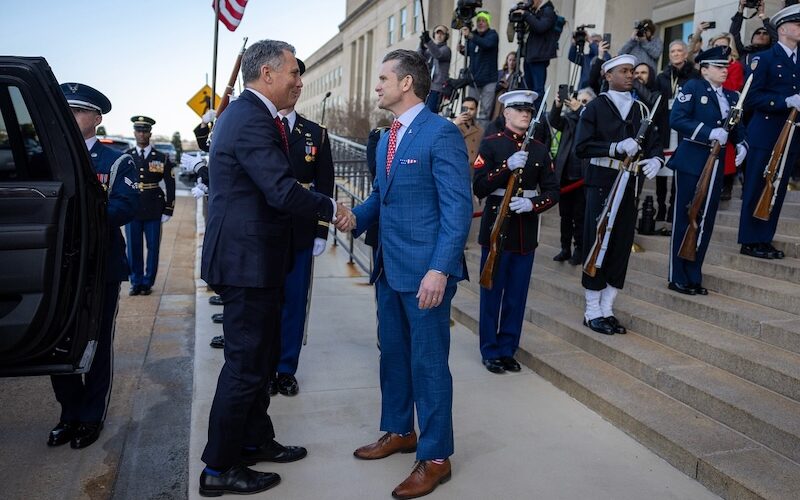
As public concerns over the AUKUS alliance rise – with expanding US bases in Australia and Donald Trump’s belligerent conduct, FOI documents reveal the Government is secretly expanding its ‘US Department of War Protest’ Force. Rex Patrick reports.
Most people won’t be aware that the Australian Federal Police (AFP) has established a new command.
Headed by Commissioner Krissy Barrett, our national police force is made up of five regional commands (Northern, Eastern, Central, Southern and Western) and a number of functional commanders dealing variously with crime, fraud and corruption, cyber operations, counter-terrorism and special investigations, and protective security. No surprises there – the AFP structure is well established and pretty much what you would expect.
But now there’s a new AFP “AUKUS Command”, established with little fanfare and headed by AFP Assistant Commissioner Sandra Booth.
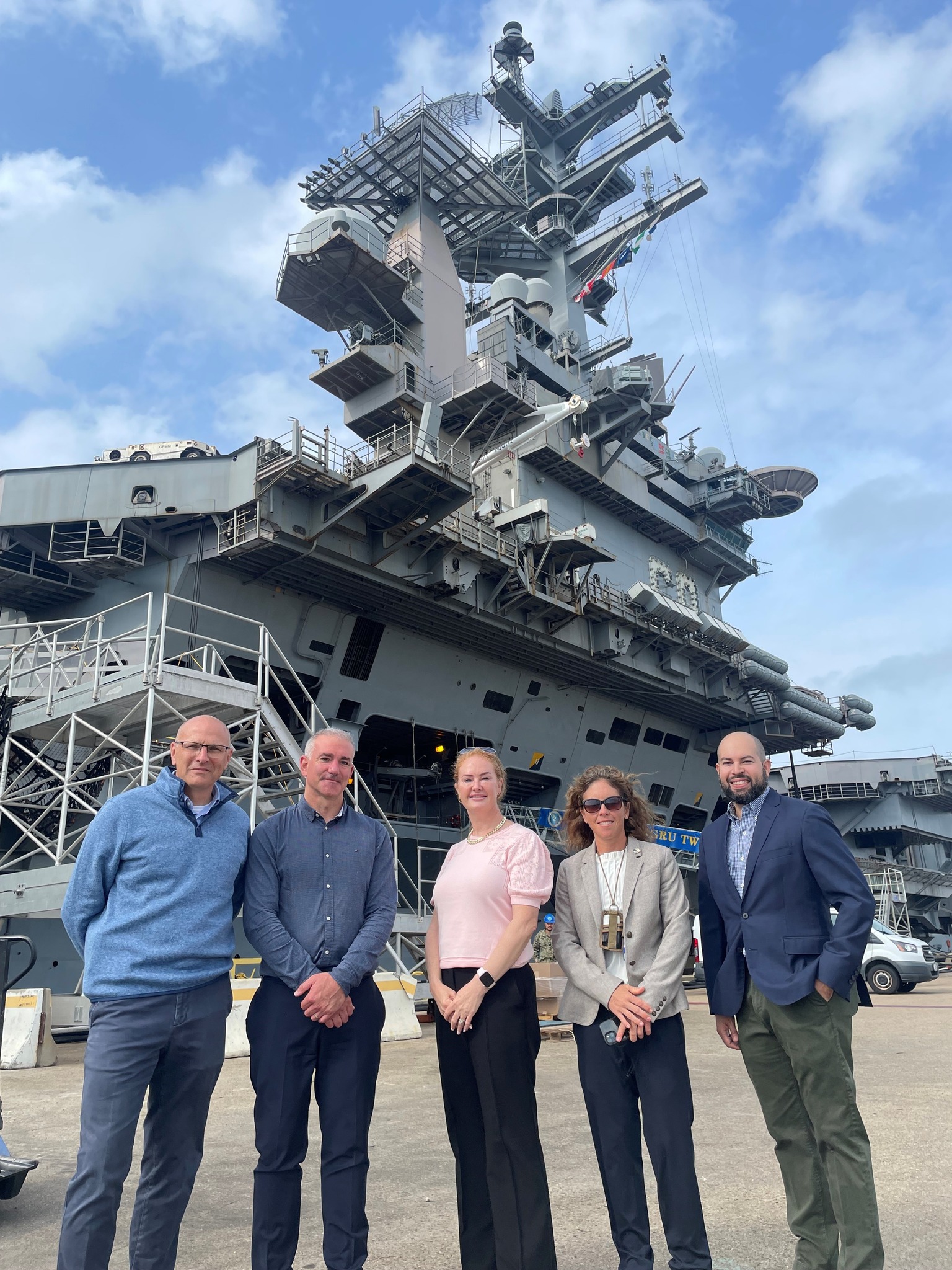
AFP Assistant Commissioner for AUKUS Sandra Booth at a US naval station. Image: AFP
AUKUS Command’s roles are centred on security for the AUKUS nuclear submarine project and interestingly include ‘Public Order Management’, but its mandate is much broader than protecting nuclear submarines.
MWM’s Freedom of Information (FOI) request to the AFP, amongst other things, sought access to documents that show the terms of reference, functions and responsibilities of AUKUS Command and Documents held by AUKUS Command that relate to potential political opposition and/or protest activity relating to the AUKUS nuclear-powered submarine project.
The AFP’s FOI response came in late and was covered with large swaths of black ink redacting most of the information, but enough has been revealed to show that the Government is boosting its capability to deal with anticipated political protest activities against a much expanded US military and intelligence presence in Australia.
AUKUS Protection
AUKUS Command starts with a “permanent AFP horizontal security overlay” set up at HMAS Stirling (near Perth) to “support the Australian nuclear submarine program under the AUKUS initiative”.
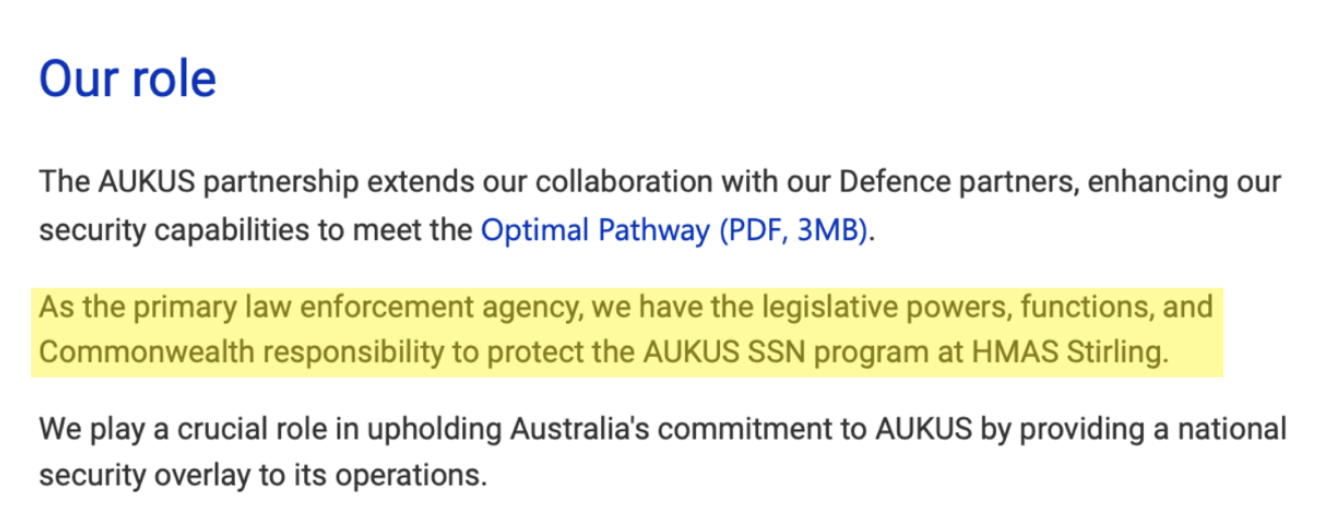
Protecting HMAS Stirling (Source: FOI)
The set-up in some part replicates the US Department of Energy’s Nuclear Protective Forces and the UK’s Ministry of Defence Special Escort Group.
The AFP AUKUS Command will initially conduct AUKUS protective security work, including waterborne and remotely piloted aircraft escorting of US Navy, Royal Navy and (eventually, maybe) Royal Australian Navy submarines in and out of waters around the base.
Submarines berthing at HMAS Stirling have to do a lengthy and protest-vulnerable surfaced transit through Gage Roads to get to/from the deep water north-west of Rottnest Island.
The AUKUS Command has established a rapid response capability and is prepared for
public order management operations.
Officers in the AUKUS Command are trained in rapid appraisal, coxswaining, jet ski operation, remote piloting of aircraft and countering remotely piloted aircraft, protestor negotiation techniques, protestor removal techniques and “public order management munitions delivery”.
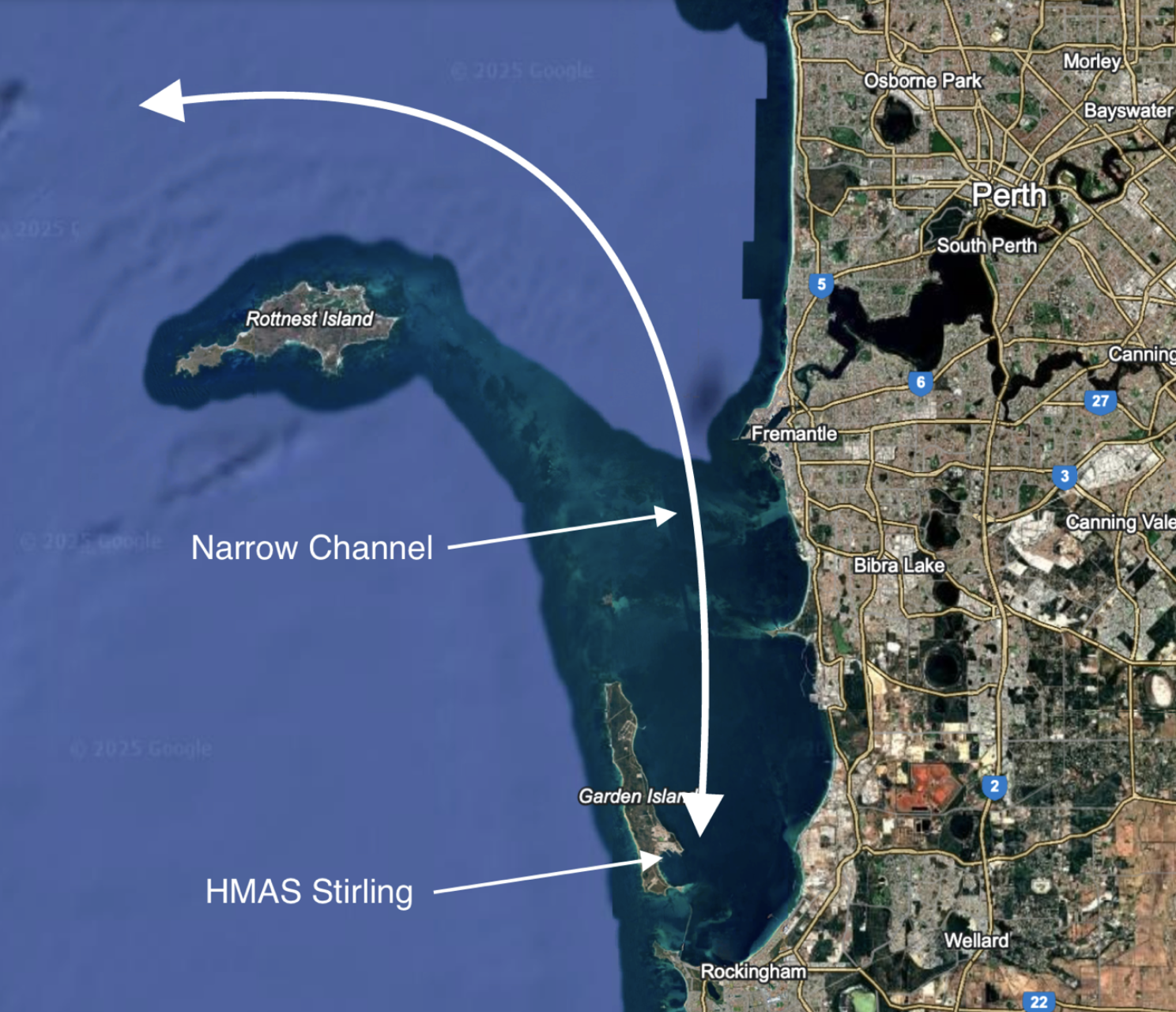
The long surface transit (Google Earth)
Initially, at least, the Command will comprise four teams, a ready reaction team and a canine unit.
Nuclear protestors not tolerated
Although anti-nuclear protests focused on visiting US Navy nuclear powered submarines have so far been small in scale, the AFP has likely been alerted to the possibilities of larger scale water-borne protest by the “Rising Tide” environmental actions at Australia’s largest coal export terminal at Newcastle.
Protest groups involved in those activities have already been subject to close scrutiny by the AFP and New South Wales Police.
In any case, it’s clear that the Australian Government and the AFP are determined to demonstrate to the United States and the United Kingdom that there will be no tolerating protest activity that might impede or delay the movement of American and British submarines stationed at HMAS Stirling as part of the AUKUS Submarine Rotational Force – West.
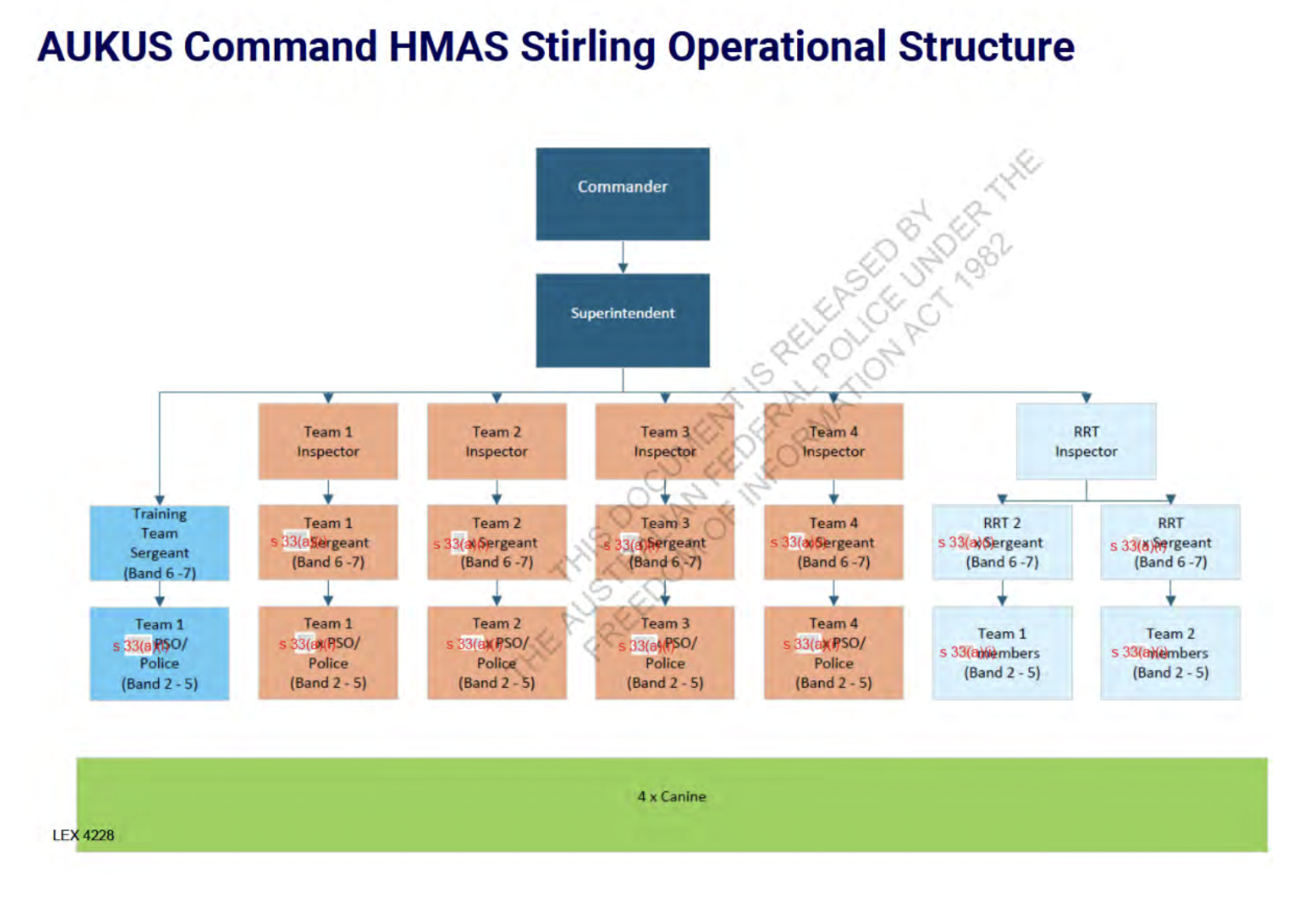
AFP AUKUS Command at HMAS Stirling (Source; FOI)
But wait, there’s more, much more
But it turns out that protecting nuclear submarines is only part of the AUKUS Command’s responsibilities.
The first giveaway as to the much broader purpose of the Command is the fact that a July 25, 2025, Memorandum of Understanding signed by Assistant Commissioner Booth was between the AFP and, not the Australian Submarine Agency, but the Department of Defence.
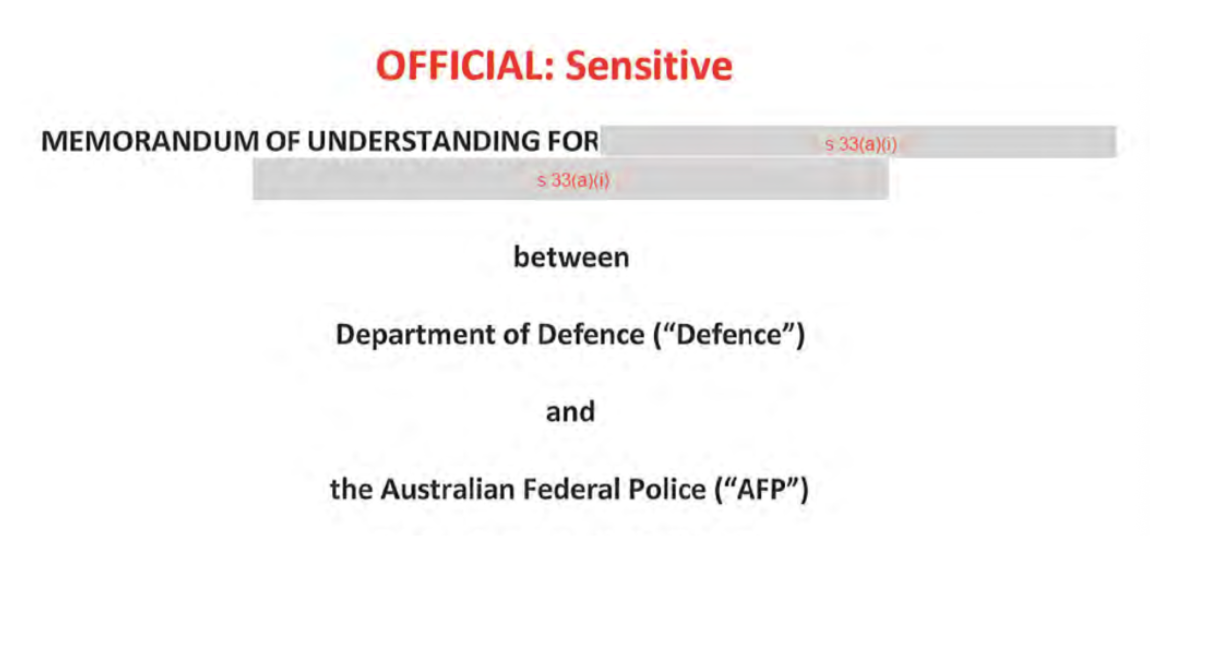
MOU for AUKUS Command (Source: FOI)
The previously secret AFP documents released under FOI show that the AFP AUKUS Command will have strategic responsibility for delivery of protective security services to “specified Defence bases) under the Defence MOU, with a significant focus on building and supporting a future-ready Protective Security Officer workforce.
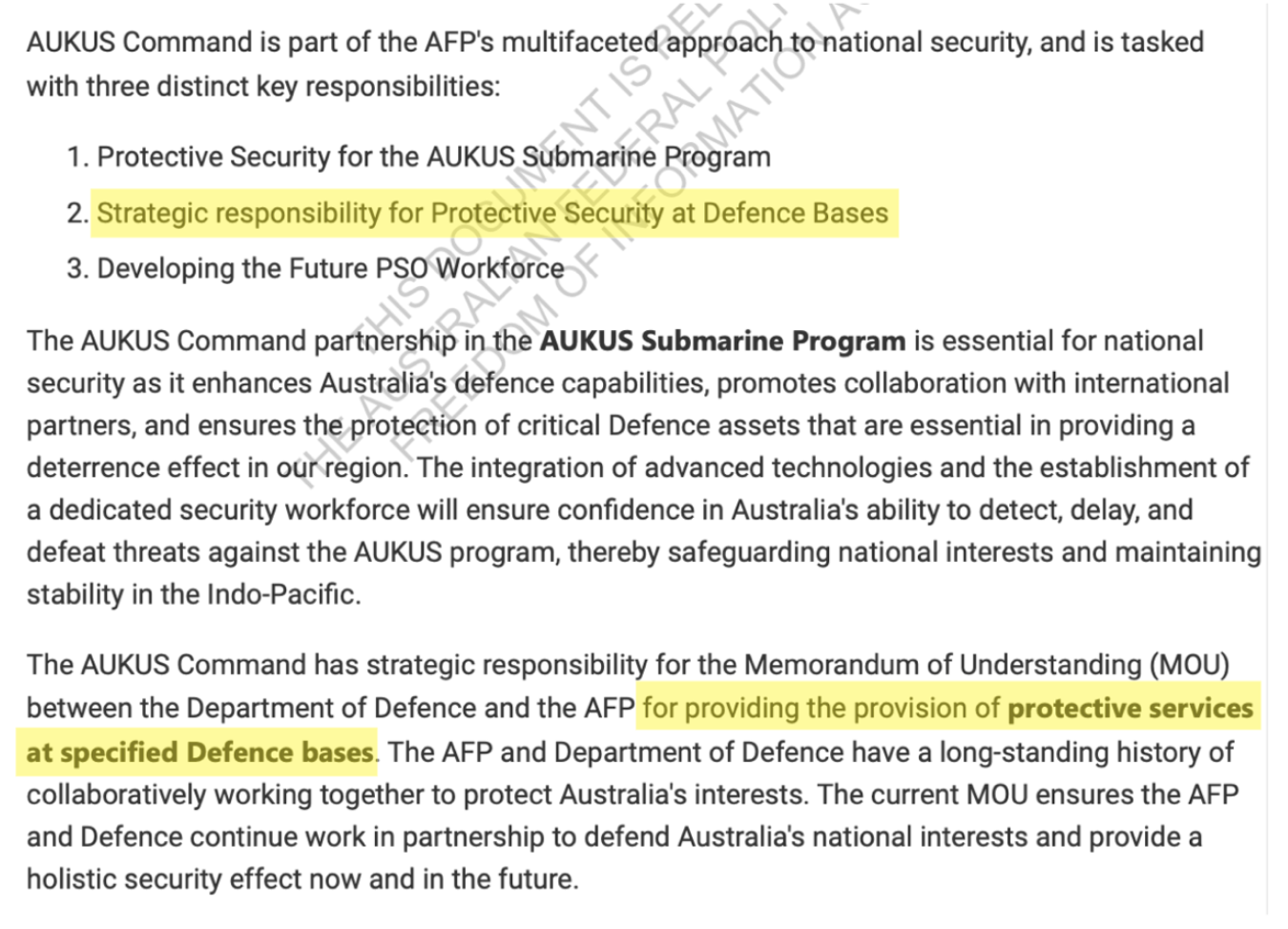
A much broader responsibility (Source: FOI)
Pine Gap
The documents do not reveal which Defence bases, but the FOI request did capture emails between Assistant Commissioner Booth and other AFP officers dealing with a protest that took place last year at Joint Defence Facility Pine Gap, the top-secret signals intelligence facility near Alice Springs that’s operated by the US National Security Agency, the US National Reconnaissance Office and the Australian Signals Directorate.
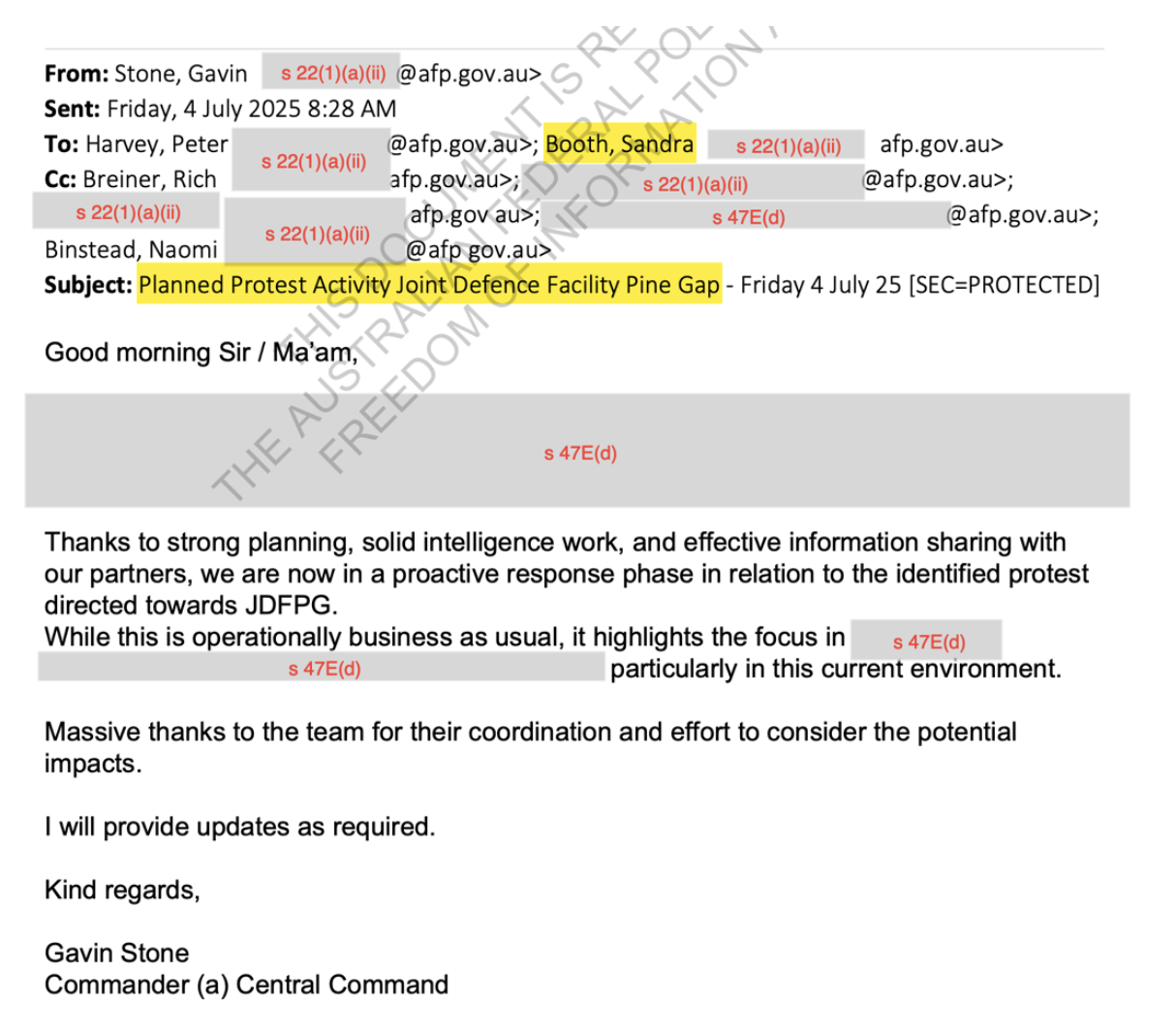
AUKUS Command in Pine Gap Protest Communications (Source: FOI)
Major upgrades are taking place at a number of other Australian Defence Force facilities to accommodate an expanded US military presence in Northern and Western Australia.
Significant works have also been underway at Australian intelligence facilities, including a major perimeter security upgrade and installation of new satellite dishes at the ASD’s Shoal Bay Receiving Station, nineteen kilometres north-east of Darwin.
As the US defence and intelligence footprint expands, it’s likely that the AUKUS Command’s security and “public order management” responsibilities will be quite wide-ranging.
More protests coming, and costs
As public concerns rise over nuclear issues, it’s very likely the arrival of the US submarine rotational force at HMAS Stirling, the increasing disposition of US forces around Australia and the abandoning by the US of a ‘rules-based order’ will lead to more protests.
The Mid-Year Fiscal and Economic Outlook (MYEFO) handed down in December showed an allocation to the AFP AUKUS Command of $73.8 million in this financial year and $125.2 million in the next.
The expenditure publication was unusual, given that the Government thinks it is entirely appropriate to wrap
AUKUS costs in total secrecy.
Indeed, even in this release, cost information in the MOU was redacted.
US Australia prepare for war with China, remain mute on consequences of nuclear attack – FOIs
AUKUS Cost Secrecy (Source: FOI)
A lack of transparency
It is accepted that some things around nuclear submarines are properly confidential. But the Australian Government has been wrapping a thick secrecy blanket over everything to do with AUKUS; absolutely everything.
As an FOI related transparency fight goes on in background, including in the Federal Court where this writer is trying to get access to documents that advise the government on how to select a high-level radioactive waste site, the Government has (in contrast to the US and UK) refused to allow for an inquiry into this bankrupting Defence capability.
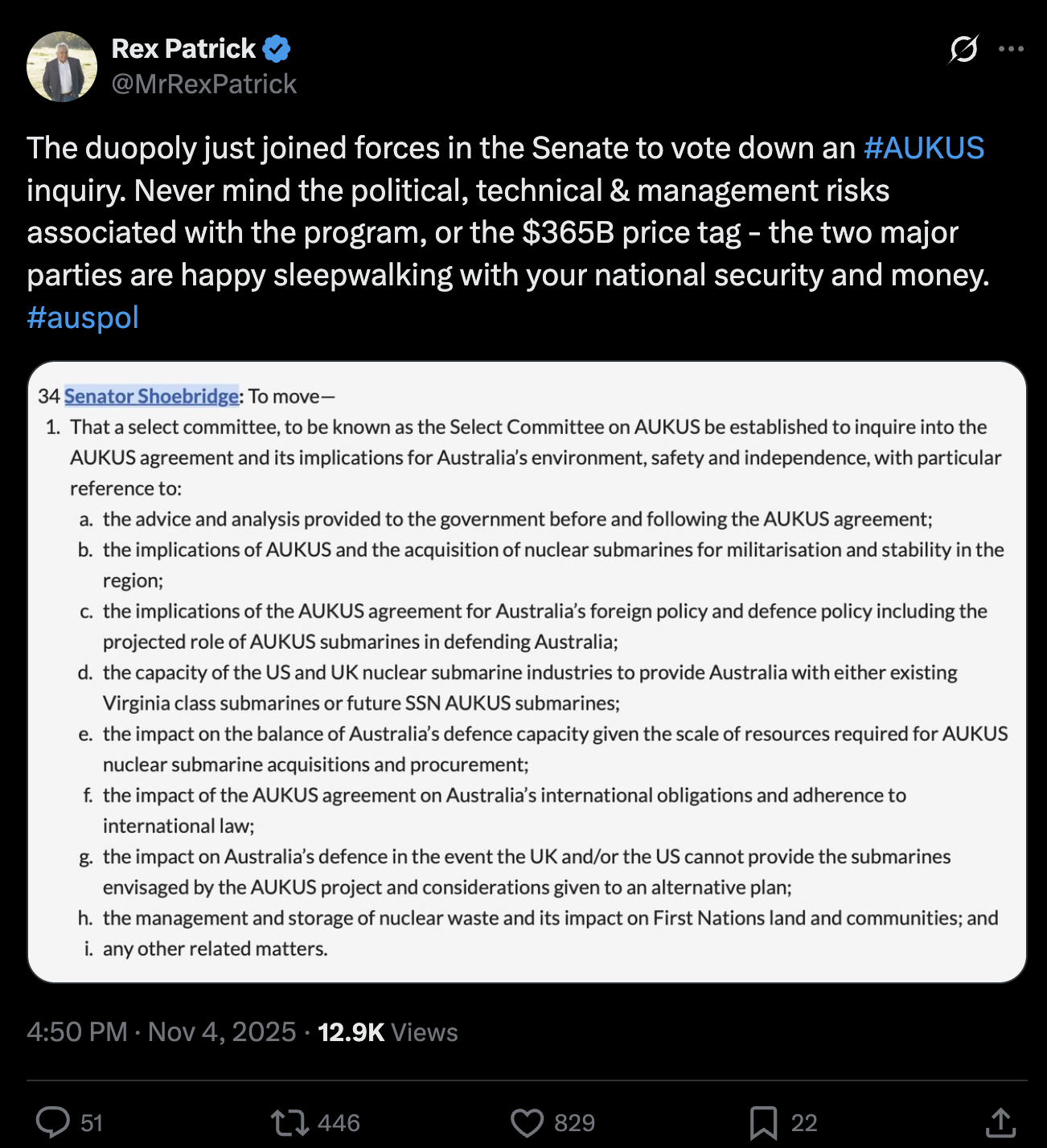
Rex Patrick, X
Instead of bringing the Australian public along with them, instead of generating social licence for the project, instead of being up front about the integration of the Australian Defence Force into the US Armed Forces at a time when Australians are struggling with confidence in the US, opaqueness is the order of the day for the Government.
And now, for good measure, there’s a whole new AFP command to keep a lid on the secrets and to crack down on public protests.

Rex Patrick is a former Senator for South Australia and, earlier, a submariner in the armed forces. Best known as an anti-corruption and transparency crusader, Rex is also known as the "Transparency Warrior."