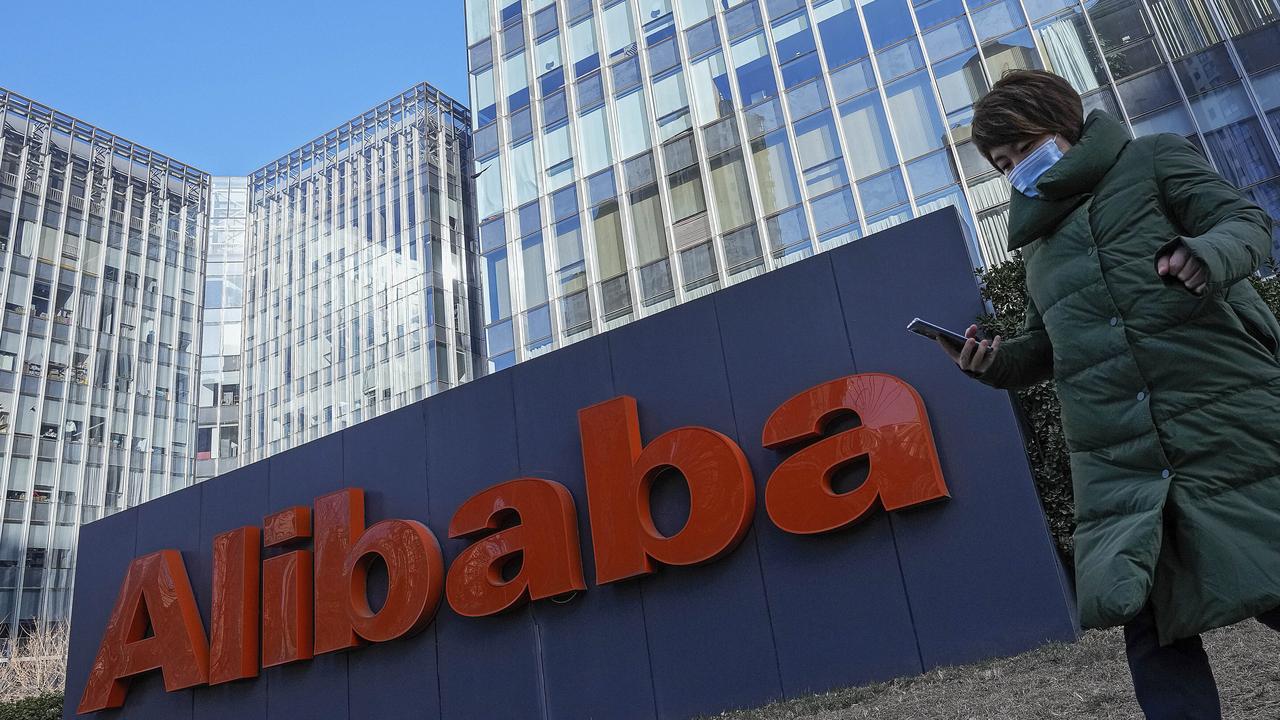

Alibaba Group plans to train a new artificial intelligence model with between five trillion and 10 trillion parameters.
Chief Executive Eddie Wu announced the plan on Tuesday, as the Chinese technology giant outlined a sweeping strategy encompassing AI models, chips and data centres.
Speaking at Alibaba Cloud’s annual Apsara Conference in Hangzhou, Wu said the company’s Qwen team was continuing research into model architecture and data optimisation, with the goal of completing “more complex, longer-horizon tasks” and advancing toward artificial superintelligence, or ASI.
In a separate statement, Alibaba said its next-generation model, Qwen 4, was currently in training, adding that the upcoming Qwen 4.5 and Qwen 5 series were projected to scale up to five trillion to 10 trillion parameters.
Parameters are the variables a model learns during training and are a rough gauge of its size.
Alibaba’s current flagship model, Qwen 3.8 Max, has 2.4 trillion parameters, meaning the planned model would be roughly two to four times larger.
Wu said Alibaba’s proprietary M890 AI supernode already handles inference for models above two trillion parameters, a capability he said only “a handful of companies globally” possess.
The Qwen team has made “meaningful progress” on recursive self-improvement, in which models identify their own limitations, design experiments and synthesise data to drive a cycle of self-evolution, he said.
Alibaba also introduced the Zhenwu V900, a next-generation AI chip from its T-Head semiconductor unit, which Wu called the most powerful AI chip in China.
It delivers three times the performance of its predecessor, the M890, and a single cluster built on it can support up to 500,000 cards for frontier model training and inference, he said.
The chip is scheduled for mass production and commercial release in the first quarter of 2027, the company said in the statement. The M890 was released in May.
The company expects “significant growth” in annual AI chip shipments, Wu said.
The launch comes as Chinese firms race to build domestic alternatives to Nvidia’s processors amid US export restrictions.
Wu set a target for Alibaba Cloud’s global data centre capacity to surpass 20 gigawatts by 2032.
He said customer demand for AI remained “exceptionally robust” and was accelerating Alibaba Cloud’s revenue growth, but acknowledged that global shortages across the AI data centre supply chain were limiting how fast the company could expand.
“The industry’s mid-to-long-term demand far outpaces our supply capabilities,” he said, adding that Alibaba Cloud would begin bringing its AI supernodes online at commercial scale this quarter.
Wu framed the moment as the dawn of an era of “Machine Intelligence” comparable to the Industrial Revolution, predicting machines would eventually produce more than 1000 times the “thinking” of all humanity, up from less than three per cent today.
He likened AI coding to the light bulb of the electrical age – an early application rather than the breakthrough product.
“The truly groundbreaking products of the Machine Intelligence era have not yet arrived,” he said.

Australian Associated Press is the beating heart of Australian news. AAP is Australia’s only independent national newswire and has been delivering accurate, reliable and fast news content to the media industry, government and corporate sector for 85 years. We keep Australia informed.