

Dwindling aid is forcing the Asia-Pacific region’s youngest nation to maintain its unhealthy addiction to fossil fuels, an Australian clean energy summit has been told.
President Jose Ramos-Horta says East Timor’s electricity grid is almost exclusively powered by expensive diesel, and it’s hampering investment, but his country has no other choice.
“For the time being, and for many years to come, we need fossil fuel development to power the diversification of our economy into green energy and a green economy,” he told the Global Citizen Now conference in Perth on Monday.
“The cost of our energy in Timor-Leste is a killer of investors.”
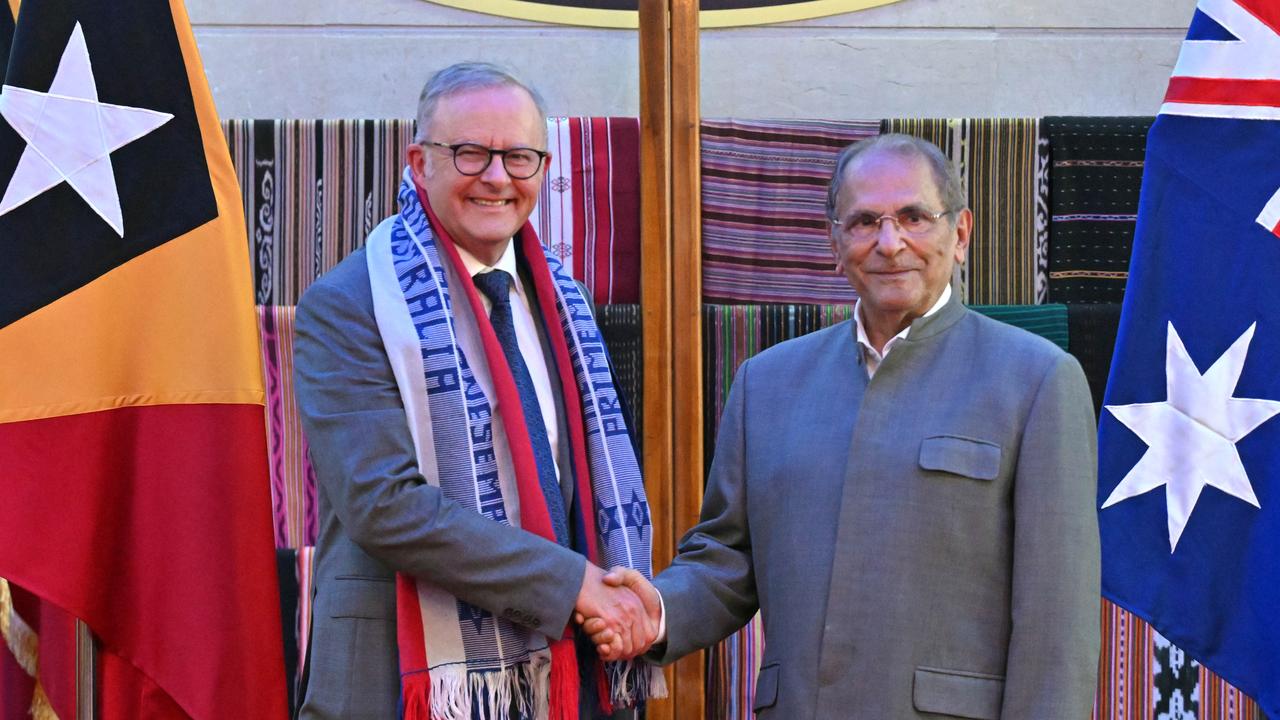
President Horta said official development assistance, which could help East Timor transition its economy more quickly, has “almost ceased to exist”.
Some traditional Organisation for Economic Co-operation and Development (OECD) donor countries had shifted their aid to the war in Ukraine, he said.
“They shifted aid to shelter refugees, to support refugees, and the millions who flock to Europe,” he said.
“So (official development assistance) has never suffered so much.
“We need fossil fuels; we need to develop our oil, gas, offshore and onshore, to survive.”
The Nobel Prize winner said there had also been “draconian” cuts to humanitarian aid budgets, pointing to the World Food Programme and UNICEF.
“So this makes it even more difficult for any of us to quickly transition to cleaner energy,” he said.
“But we know that the only way to go for the survival of our humanity is if we still can stop it.”
It comes as the Green Climate Fund says it is accelerating access to finance in the Pacific region.
It announced a project with up to $1 billion in grants and investment funding for Pacific nations, which will be presented to its board for approval next week.

“It will cover 21 projects, and it will basically serve 3.7 million people, so it’s one out of four in the 14 Pacific Islands,” director of external relations Marie-Ange Saraka-Yao told AAP.
The fund will work with regional and local partners to help Pacific nations build renewable energy, water and climate-resilient infrastructure projects.
“It will pretty much change the environment there,” Ms Saraka-Yao said.

Australian Associated Press is the beating heart of Australian news. AAP is Australia’s only independent national newswire and has been delivering accurate, reliable and fast news content to the media industry, government and corporate sector for 85 years. We keep Australia informed.