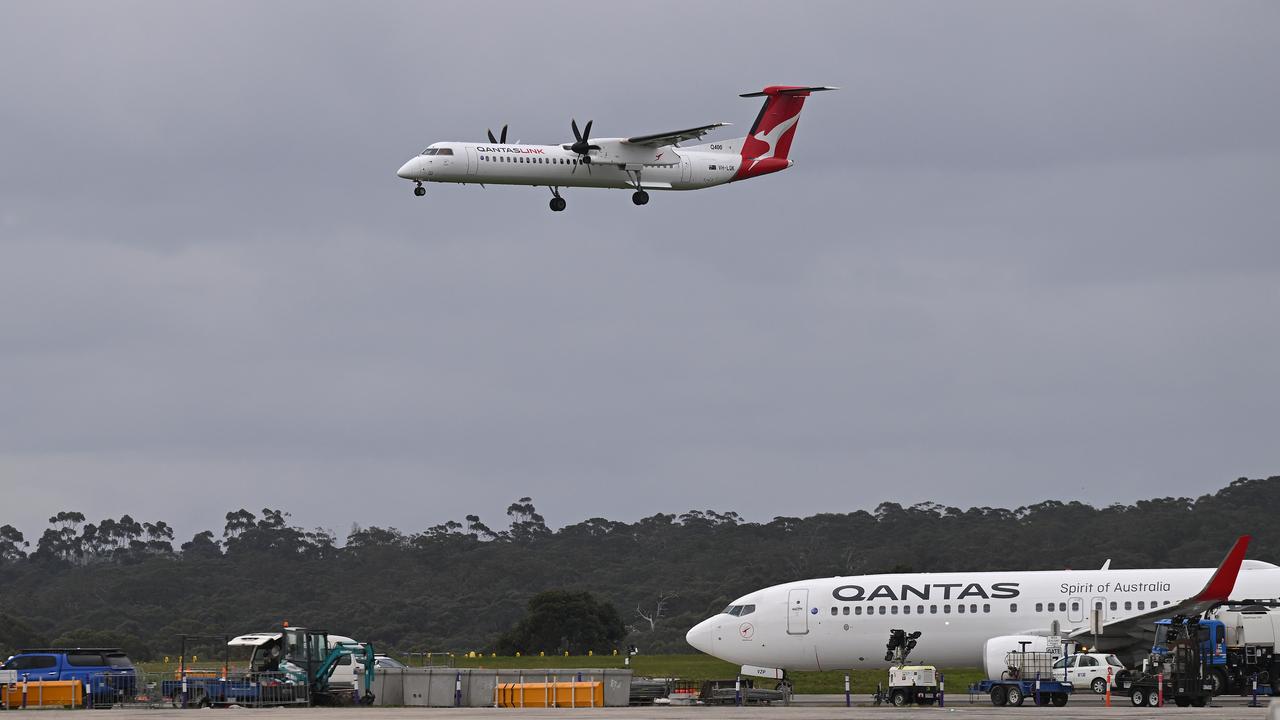

Australia’s regional aviation sector is flying by the seat of its pants, operating on thin margins and doubling some rural fares as costs surge.
Regional airfares were 11 per cent higher per-passenger in the two years to 2025 compared to city routes and 13 per cent higher per kilometre, a Productivity Commission report has found.
Some rural and remote per kilometre fares were more than double city prices.
The commission released its interim report into regional airfares on Wednesday night, using previously withheld cost and revenue data from the nation’s airlines.
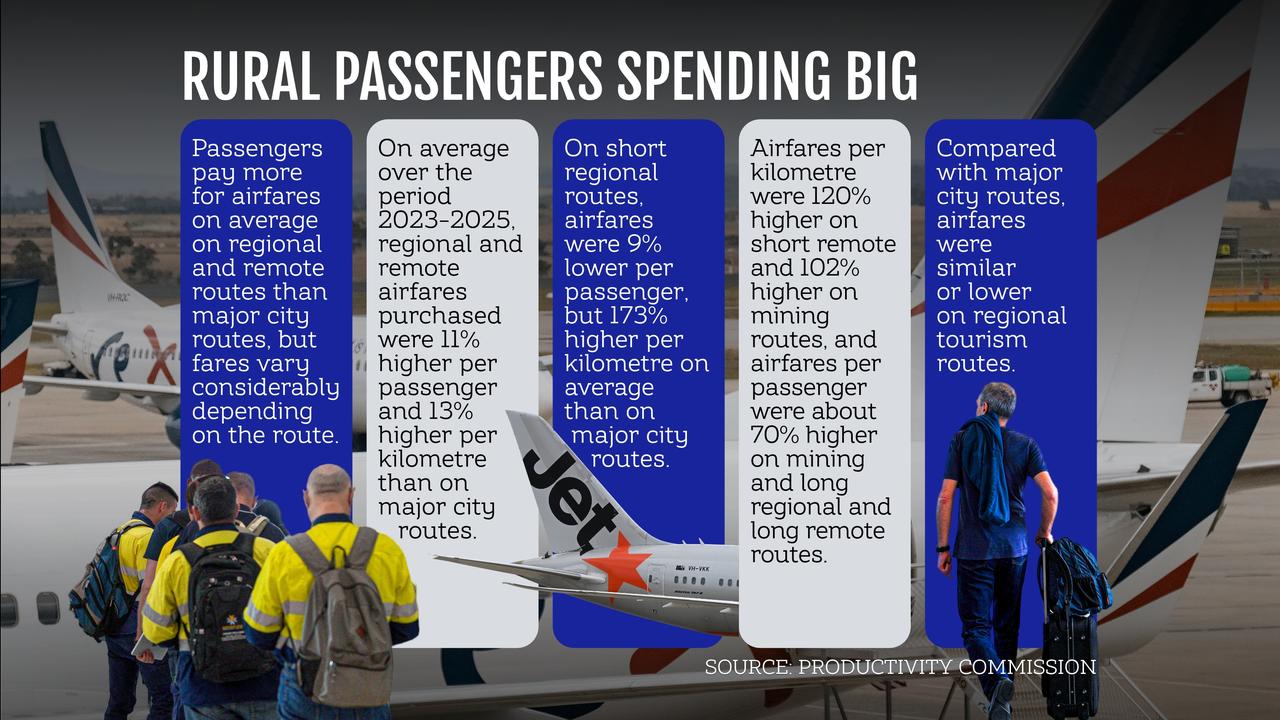
“Many regional communities are frustrated by the high cost of flights,” Commissioner Catherine de Fontenay said in a statement.
“Previous government inquiries have looked at the issue, but until now we haven’t had the data or the evidence to understand what really sets the prices.”
Regional services spread costs out across fewer passengers, leaving many routes with a profit margin of five per cent or less, the report said.
That position leaves regional aviation extremely vulnerable to cost surges, such as the rising price of jet fuel and reduced demand.
Leading costs are fuel, airport charges and crew, with a nine per cent margin on the average regional fare.
A separate Senate inquiry into the sector heard surging fuel costs sparked by the Strait of Hormuz closure forced several airlines to abandon some regional routes.
“Jet fuel just made it completely unsustainable,” Virgin’s chief customer officer Andrew Cleary told the Senate inquiry in October, referring to the airline’s decisions to cut some regional routes.
“This is not a two-to-three month spike in jet fuel.
“There are very few people in the industry who believe this will be a short-run impact.”
Competition was also highly concentrated, according to the Productivity Commission report, with 90 per cent of passengers flying with either Qantas group (including Jetstar), or Virgin Australia.
There was a single carrier on 72 per cent of regional routes.
Qantas has long denied competitors’ claims it “aggressively” entered regional routes.
The airline’s submission said it acknowledged the tight market, which it said was a result of Australia’s geography and population profile.
Government assistance to support other market entrants and improve competition was not a long-term solution, the commission found.
“Governments should seek to remove barriers, rather than reinforce them,” the report said.
“While government support for airlines can help maintain services to communities in the short term, ongoing assistance for individual carriers can weaken incentives for entry.”
With public transport key to regional development and Closing The Gap targets, the commission recommended improving incentives for passengers who fly to receive healthcare.
Further public submissions and hearings will inform the commission’s final report, which is due in April 2027.

Australian Associated Press is the beating heart of Australian news. AAP is Australia’s only independent national newswire and has been delivering accurate, reliable and fast news content to the media industry, government and corporate sector for 85 years. We keep Australia informed.