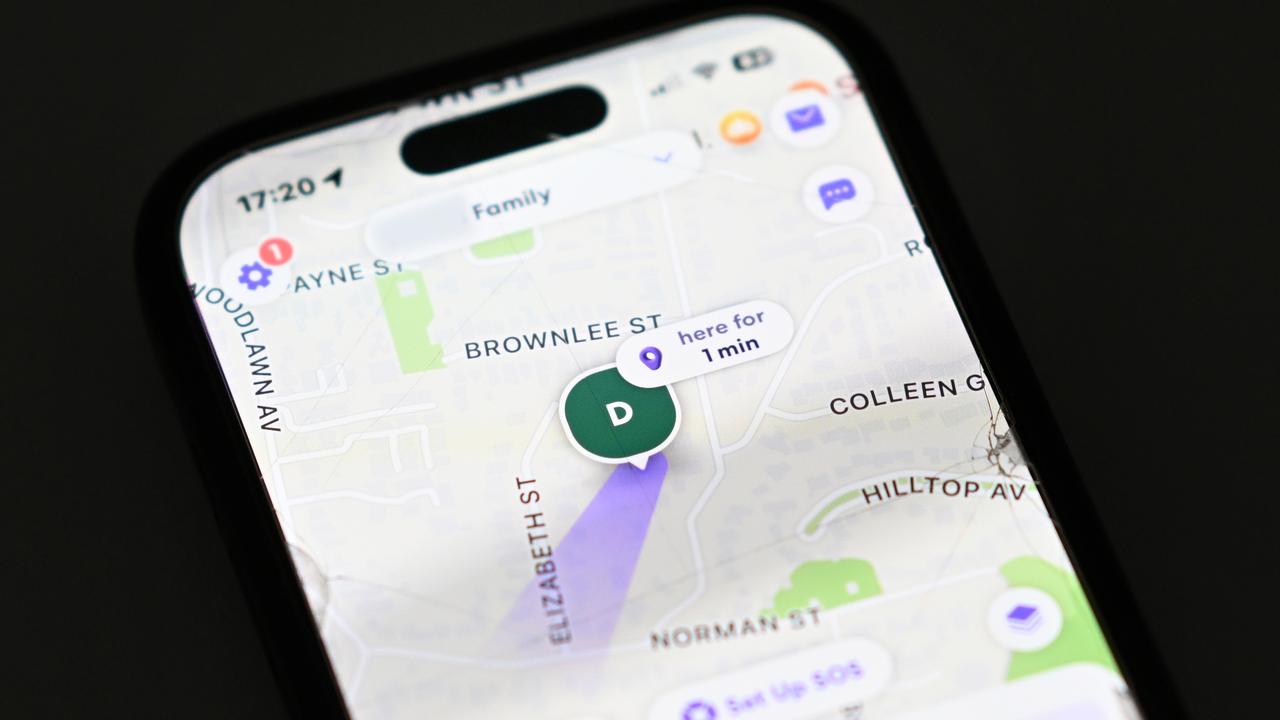

An ASX-listed tech company that lets family members share their location with one another has opened up its platform to third-party AI agents to help its members manage daily life.
Life360 quietly gave virtual AI assistants access to its Family Intelligence platform last week, allowing agents like Meta’s Muse to connect and query the service about what a user’s family members are up to.
“These assistants are really fun because they can connect to all sorts of services and do things for you,” Life360 chief executive Lauren Antonoff told AAP on Tuesday as the company released its quarterly earnings.
Meta’s Muse personal assistant launched in early September and quickly reached more than 10 million users, chief executive Mark Zuckerberg said during his company’s October 22 earnings call.
While people are still exploring the potential of these AI personal assistants, one common use case that people talk about is ordering dinner.

“When you can combine that with something like Life360, you can imagine that you’ve got the whole family and you’re meeting up in the city, and the question is, where should we have dinner?” Ms Antonoff said.
Because Life360 knows its members’ locations, an agent connected to its platform could easily triangulate their whereabouts and suggest a restaurant convenient to everyone.
An agent that connects to a home automation system could also turn on the porch lights as the kids arrive home from sports practice.
Life360 intends to learn from how people use these agents, so it can build similar services directly into the app itself.
The company’s services are especially popular with the parents of pre-teens and teenagers, allowing them an easy way to keep tabs on where their kids are and even monitor their driving.
The California-based company announced on Tuesday it had added 5.3 million net active users during the third quarter, taking its global total to 107.7 million. Paid users grew 188,000 to 3.4 million.
Life360 made $US174.1 million ($251.5 million) in revenue in the quarter, up 40 per cent from the same period in 2025.
Its earnings before interest, tax, depreciation and amortisation grew 41 per cent to $US34.6 million ($50 million), leaving Life360 with $US465 million ($672 million) in cash and short-term investments at the end of the quarter.

RBC Capital Markets analyst Julian Mulcahy said it was a neutral update and results were in line with consensus expectations.
However, Life360 shares had dropped 10.3 per cent to a three-week low of $20.03 around midday on Tuesday, and have fallen 38 per cent since the start of the year.
“Life360 has delivered the growth investors were looking for, but the market isn’t quite ready to give it credit,” said Josh Gilbert, lead APAC analyst at eToro.
The results are encouraging for a business that has been punished for spending ahead of its growth, but one quarter of improvement clearly hasn’t put those concerns to bed, Mr Gilbert said.

Australian Associated Press is the beating heart of Australian news. AAP is Australia’s only independent national newswire and has been delivering accurate, reliable and fast news content to the media industry, government and corporate sector for 85 years. We keep Australia informed.