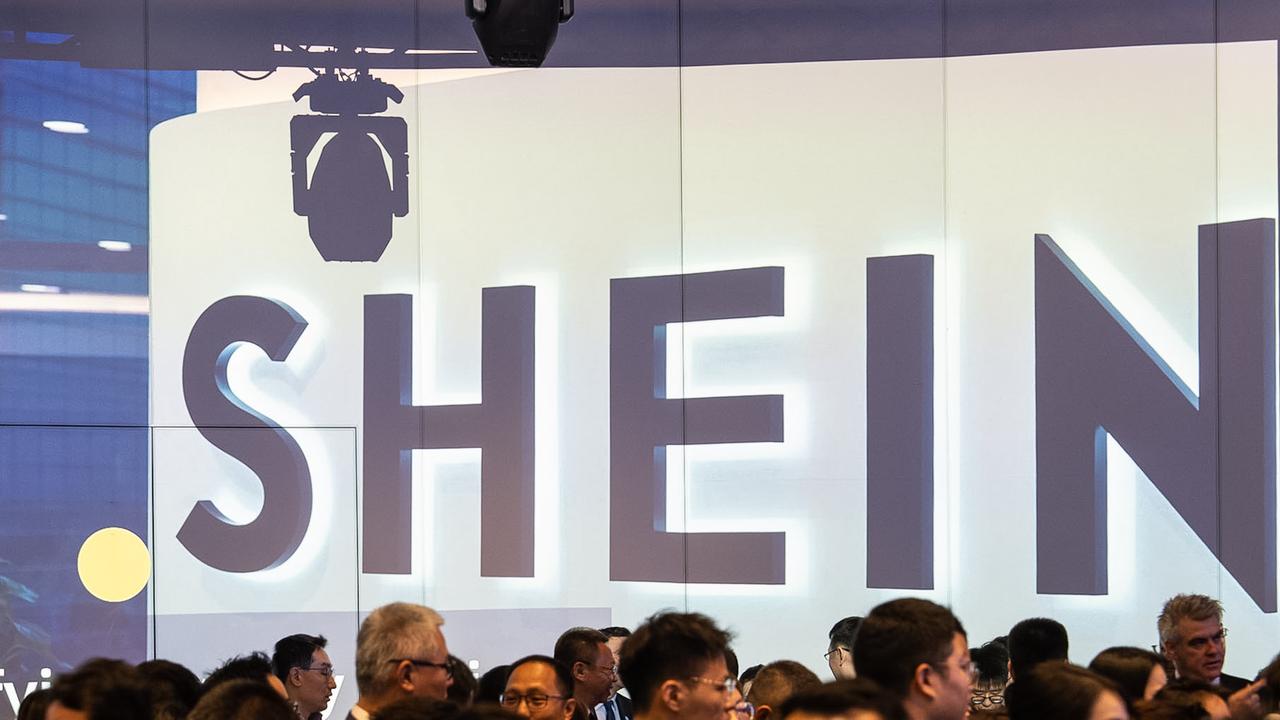

Shares in online fast-fashion retailer Shein have fallen eight per cent in their first day of Hong Kong trade as investors worry about the impact of setbacks that long delayed its listing and have undermined its competitive advantages.
Known globally for selling $US5 ($A7) tops and $US10 ($A14) dresses, Shein has been humbled by tariff and duty changes in the US and Europe.
Intense scrutiny of its business practices in the West also hampered its attempts to list in New York and London, which were ultimately blocked by Chinese authorities.
The stock was trading at around HK$US44.6 ($A62.2) in morning trade on Tuesday, valuing the company at around $US24 billion ($A33 billion), far below its 2022 peak of nearly $US100 billion ($A140 billion). Hong Kong’s Hang Seng Index was down 0.6 per cent.
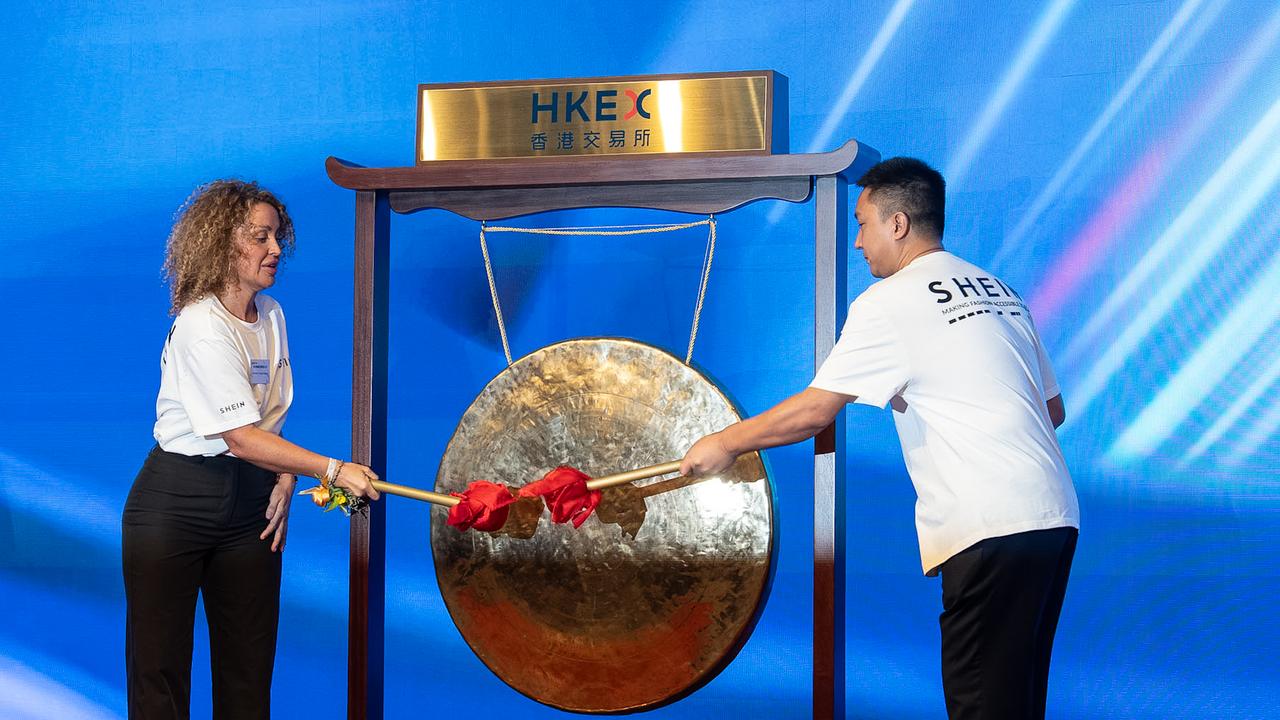
“As a new company listed in Hong Kong, we will continue to innovate, optimise, and co-operate with our supply chain partners for mutual benefit and win-win results,” Shein Chief Financial Officer Leigh Gui said at the opening gong ceremony.
Founder and CEO Sky Xu, known for disliking the limelight, did not speak at the event though later took pictures with Shein employees on stage. He declined to respond to Reuters’ questions.
“I think the weak debut shows that even after the huge valuation reset, investors still don’t see Shein as obviously cheap,” said Charu Chanana, chief investment strategist at Saxo.
Chanana said Shein was valued at 15 times forward earnings, more than double the multiple for PDD, the owner of rival Temu, which meant “investors were being asked to pay a premium despite weaker growth visibility and significant regulatory and trade risks”.
Demand for Shein’s stock during the IPO was tepid compared to high-profile offerings from the AI and robotics sectors.
The retail tranche was subscribed 5.63 times, while the international portion was subscribed 2.59 times. Some deals have been hundreds of times oversubscribed, especially from Hong Kong’s army of retail investors who track IPOs very closely.
The amount sold in the IPO represents about 6.6 per cent of Shein’s enlarged share capital. Cornerstone investors took about one-fifth of the IPO and are locked up for six months, leaving roughly five per cent freely tradeable.
Last year, the US ended the de minimis duty exemption for e-commerce shipments under $US800 ($A1116) that had powered Shein’s direct-shipping model. The European Union recently followed suit, imposing fees on low-value packages.
Shein’s net income slid 39 per cent last year and it swung to a loss in the first quarter.
Shein has said it expects first-half operating profit margin to be slightly lower than in the first quarter, hurt by higher customs duties, tariffs, fees and logistics costs in Europe and the Middle East.
“New markets could help offset slower growth in the US and Europe, but lower spending power in developing markets may limit the benefit if delivery costs stay high,” said Lorraine Tan, director of equity research at Morningstar.
Shein has been trying to widen beyond its own-label ultra-cheap fast fashion, having expanded its third-party marketplace and bought US apparel brand Everlane in May.
In its prospectus it said it aims to offer marketplace and supply chain services to more brands, in the footsteps of French brand Pimkie and British brand Missguided, which it bought in 2023.
The IPO has helped Shein compensate early investors who invested at much higher valuations. The company has agreed to make cash payments totaling about $US3.5 billion ($A4.9 billion) and share adjustments to some preferred shareholders.
“This IPO is not just a fundraising event — it is also, and probably more of, a capital-structure event,” said Jianggan Li, CEO of consultancy Momentum Works.

Australian Associated Press is the beating heart of Australian news. AAP is Australia’s only independent national newswire and has been delivering accurate, reliable and fast news content to the media industry, government and corporate sector for 85 years. We keep Australia informed.