

In a lacklustre year for Australian equities, superannuation funds have provided a bright spot for those members securing double-digit returns.
The financial year began with residual worries about US tariffs, with the US-Israeli war with Iran sending equities into a tailspin in the final months.
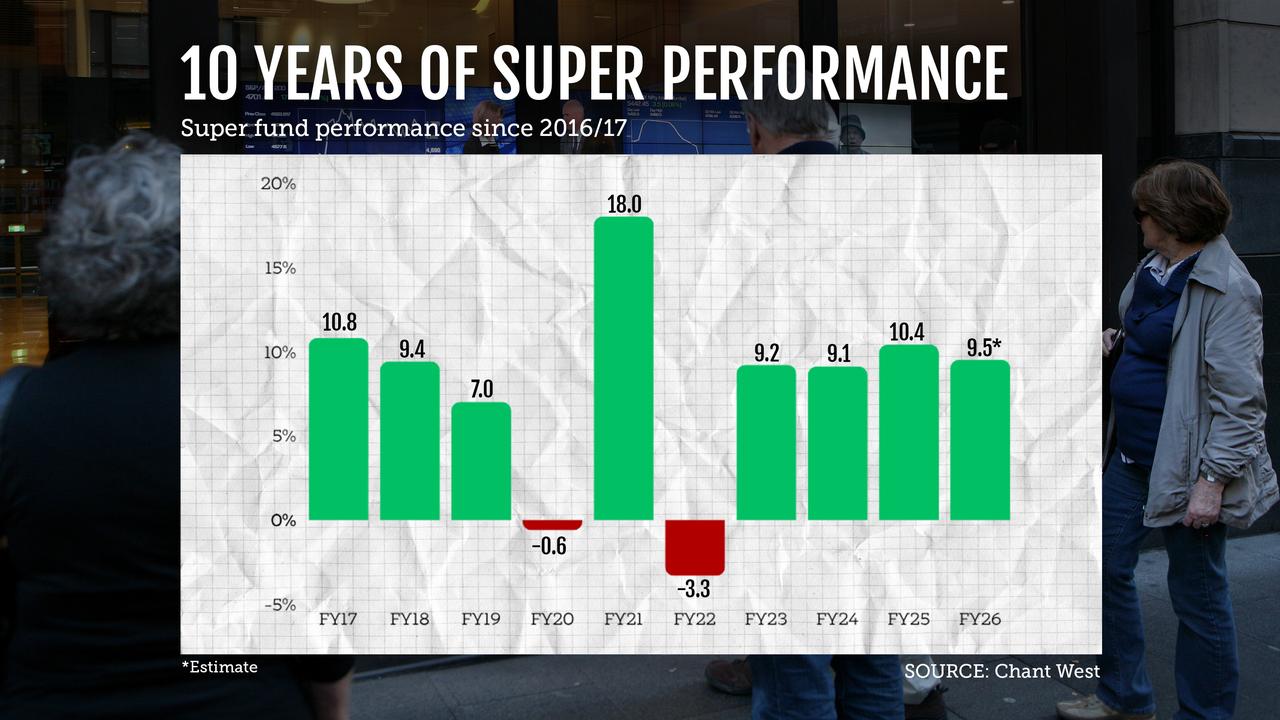
Final data on Australian superannuation funds’ performance for 2025/26 is still a few weeks away, but research provider Chant West’s preliminary figures indicate the median growth fund delivered a 9.5 per cent return, senior investment manager Mano Mohankumar said.
“We describe it as a tremendous result, particularly given the circumstances,” he said.
“If you think back to late May, getting in the vicinity of nine, 10 per cent, would have been very unlikely, given the significant bear market pullback sparked by the US-Iran conflict.”
Following a 3.3 per cent loss in 2021/22, the average superannuation growth fund rose 9.2 per cent in 2022/23, 9.1 per cent in 2023/24 and 10.4 per cent in 2024/25, according to Chant West’s data.
The biggest factor influencing how well a super fund performed was likely to be the extent of its exposure to overseas markets, Mr Mohankumar said.
On average, growth funds have about 31 per cent of their portfolio allocated to international shares, which delivered a return of about 25 per cent after accounting for currency hedging, he said.
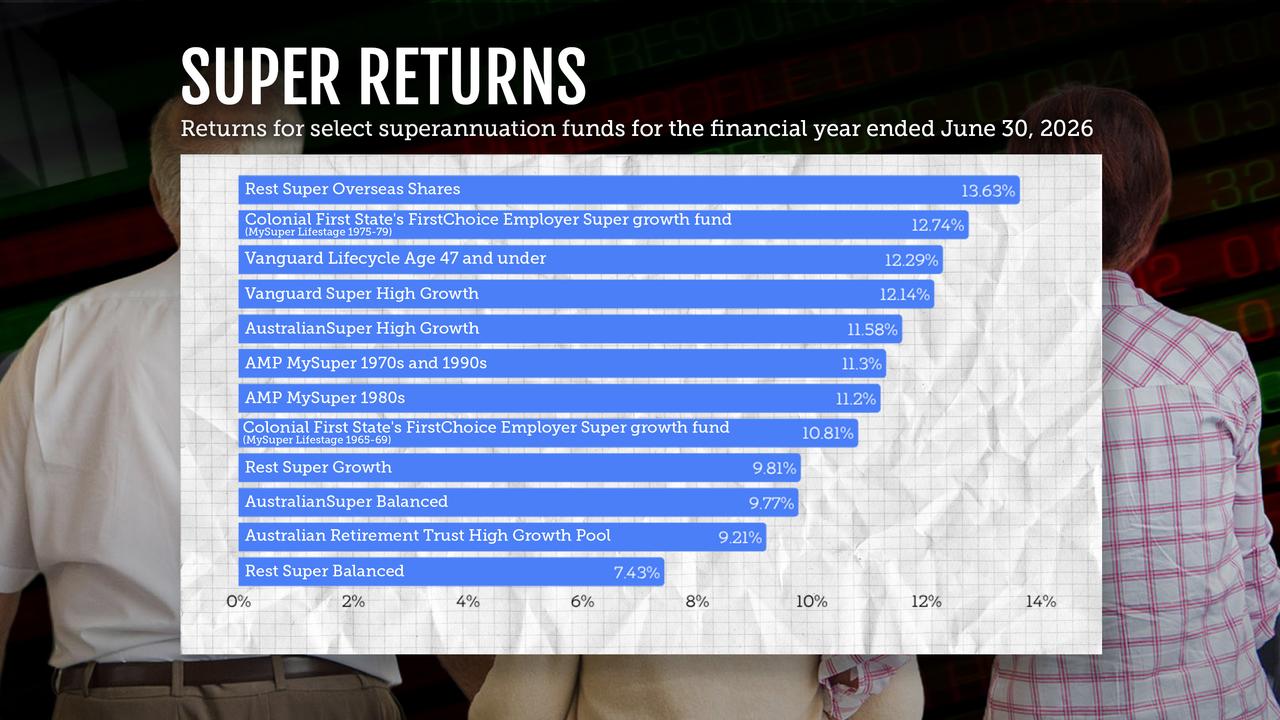
Lifecycle MySuper funds run by Colonial First State and Vanguard delivered returns of more than 12 per cent for members in 2025/26, while most of AMP MySuper’s funds grew more than 11 per cent.
“We’re really pleased – it’s been a very good period for members, very good time to be investors,” AMP chief investment officer Anna Shelley told AAP.
Being overweight in global equities and emerging markets were the two biggest factors that drove returns for the financial year, she said.
Ms Shelley said AMP would normally expect more modest returns from now on.
“But we’re quite constructive on equities, quite confident in the resilience, in particular about the US economy,” she said.
Australia’s ASX200 index grew just 6.1 per cent over the financial year, against a benchmark for 23 developed nations’ markets that soared more than 21 per cent during the same period.
The nation’s largest super fund, AustralianSuper, returned 9.77 per cent for its balanced option and 11.58 per cent for its high-growth option.
“This is a strong result and a great outcome for members,” chief investment officer Shaun Manuell said.
But he said 12 months was not long in the context of investment timeframes, particularly for people building their superannuation over decades.
Colonial First State said its strong year was due in part to huge gains from chip makers such as SK Hynix and Taiwan Semiconductor, whose shares were up eightfold and 14-fold in the past 12 months.
“These are companies which our members had good exposure to and they’ve performed exceptionally strongly,” chief investment officer Jonathan Armitage said.
While it was Colonial First State’s fourth straight year of double-digit returns, Mr Armitage said members should not necessarily expect the same result again, with a long-term average for share market funds of six to eight per cent.
MLC Superannuation delivered 10.2 per cent returns for its high-growth option and a 9.9 per cent return for its MySuper growth portfolio.
MLC used private credit and co-investments to provide strong returns for members while also diversifying its portfolio, chief investment officer Dan Farmer said.
For example, it helped fund litigation on behalf of opioid victims in the US, a co-investment with a law firm that delivered a 15 per cent return.

Australian Associated Press is the beating heart of Australian news. AAP is Australia’s only independent national newswire and has been delivering accurate, reliable and fast news content to the media industry, government and corporate sector for 85 years. We keep Australia informed.