
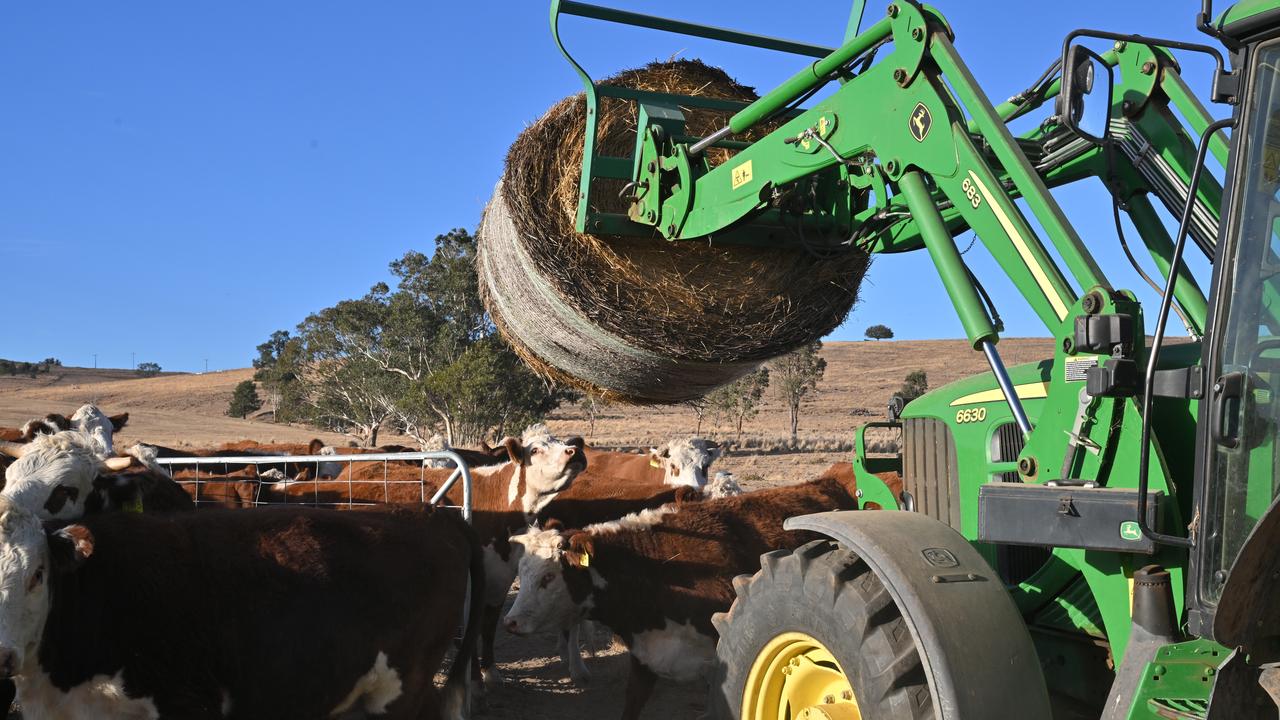
Artificial intelligence, robot vehicles and drones are transforming Australian farming in a bid to boost efficiency, overcome labour shortages, and improve sustainability.
Yet innovators say the agriculture-technology (AgTech) industry needs stronger backing to truly thrive, with development depending on research, innovation, and taking risks that translate into a real-world impact.
Queensland-based company SwarmFarm Robotics took that leap more than a decade ago, investing early in the promise of autonomous agriculture.
The company discovered how emerging technologies could play a significant role in helping farming adapt to a changing climate and landscape.
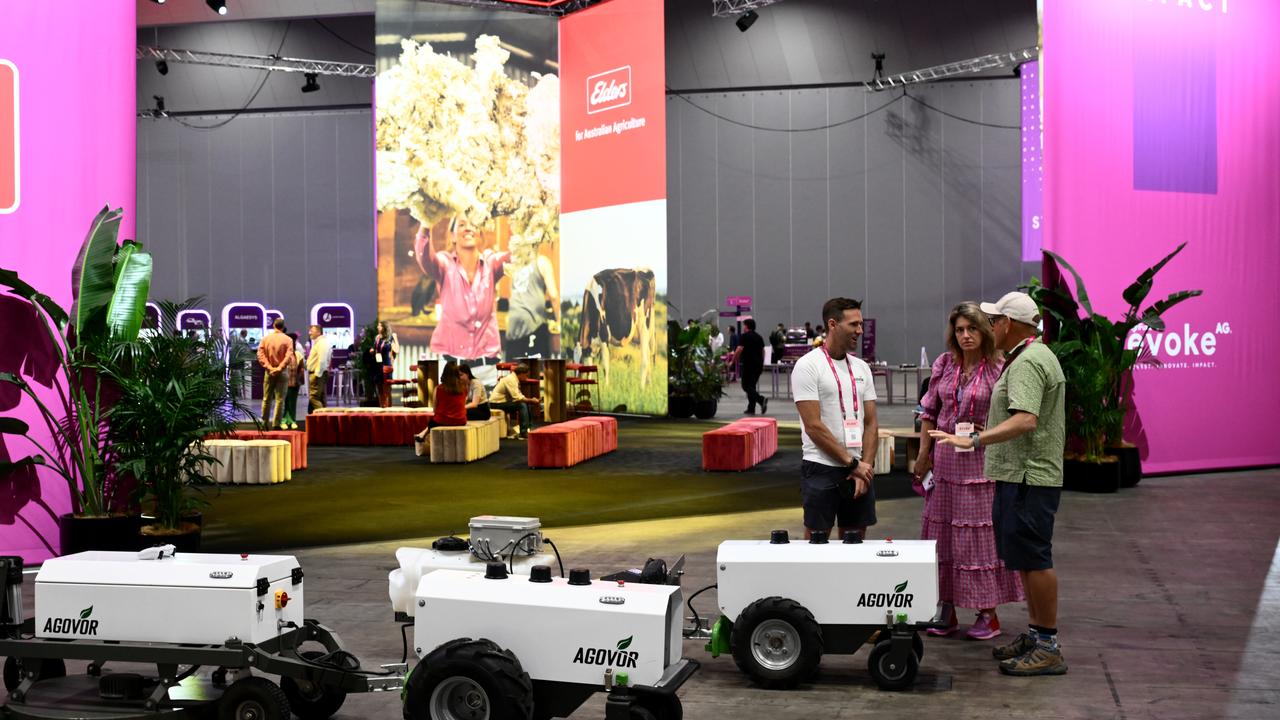
“Breakthroughs don’t start by asking farmers what they want. They start by noticing what everyone else thinks is fixed and can’t be changed,” the company’s chief executive and co-founder, Andrew Bate, said.
“Those moments didn’t just start a company, they revealed a way of seeing things differently.”
Robotics are revolutionising agriculture, with technology enabling precision farming through automated planting, harvesting and crop monitoring, while reducing labour costs and increasing efficiency.
The technology seeks to work with farmers and streamline their daily tasks.
While adoption of these tools is becoming more mainstream, Mr Bate said Australia’s AgTech industry could be further strengthened through greater investment in research.

Speaking on a panel of innovators at AgriFutures Australia’s evokeAG event in Melbourne on Tuesday, he explained that research has the potential to elevate products and refine their quality.
George Peppou, chief executive and co-founder of Vow – a food tech start-up specialising in cell-cultured meat – told the panel that Australia’s innovation sector needs to embrace failure in order to take its next step forward.
“We don’t have an innovation culture that embraces risk and tolerates failure very well,” he said.
AgTech development needs to be backed at government levels, Mr Peppou said, adding that Australia was a difficult place to get a manufacturing startup off the ground.
In terms of farming, Mr Bate said he was knocked back multiple times in the early stages of building his business, adding that he and his team built 100 robots in a farm workshop before establishing a fully operational facility.
“I look back and that journey has hardened us and taught us things and now we have the IP around manufacturing,” he added.
Since its launch in 2012, the company has deployed autonomous robots to farmers who have used them to commercially farm more than 5.1 million acres.
Looking ahead, Mr Bate said it is essential for innovators to keep pushing ideas, even if they do not necessarily make sense at first.
“Progress stalls when we optimise outside inherited constraints,” he said.
“SwarmFarm isn’t really even about robots or autonomy; it’s an entire new farming system.”

Australian Associated Press is the beating heart of Australian news. AAP is Australia’s only independent national newswire and has been delivering accurate, reliable and fast news content to the media industry, government and corporate sector for 85 years. We keep Australia informed.