To hike or not to hike?
The Reserve Bank’s first interest rate decision of the year comes down to one figure in Wednesday’s Australian Bureau of Statistics inflation print.
While the central bank will take a range of factors into account at its upcoming meeting on February 3, hotter-than-expected household spending and jobs figures have sharpened the focus on the RBA’s preferred measure of inflation – the trimmed mean.
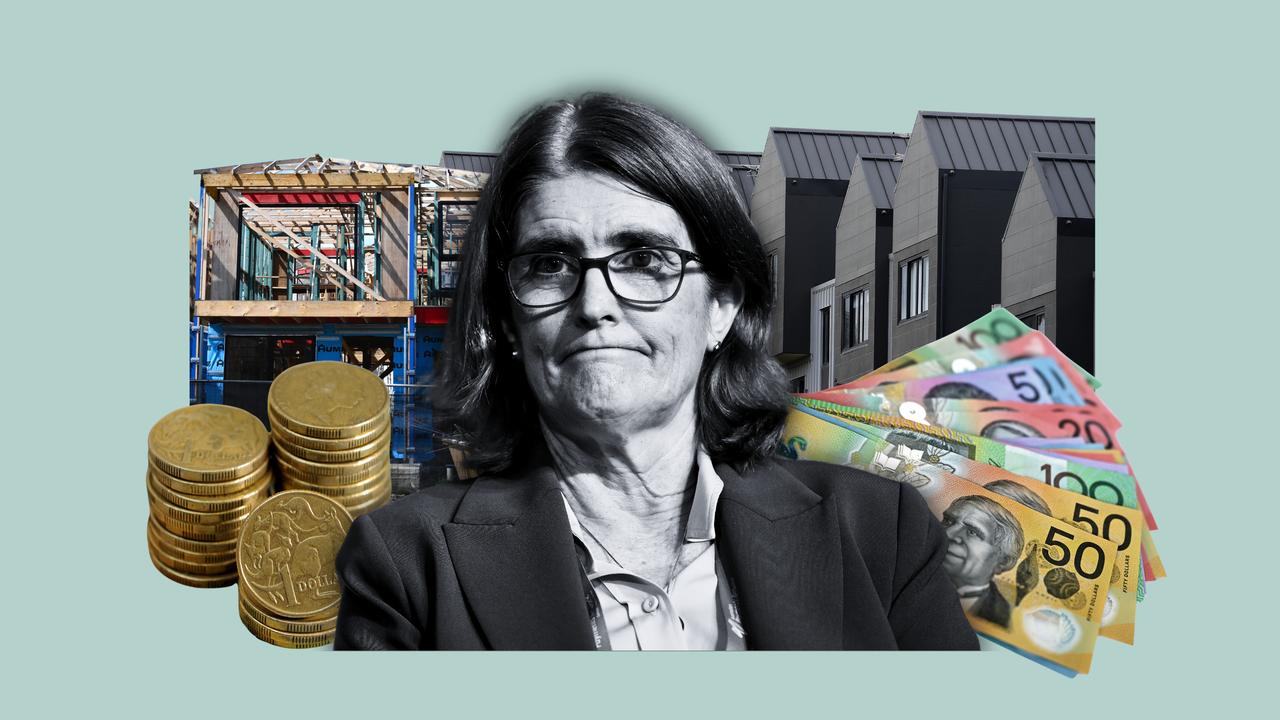
Analysts widely expect another forecast beat, compared to the RBA’s latest estimates in November, would force governor Michele Bullock’s board into an embarrassing about face on interest rates.
Economists at NAB are tipping the trimmed mean to come in at 0.9 per cent for the December quarter, which would push the annual figure up to 3.3 per cent – above the RBA’s forecast of 3.2 per cent.
As a result, NAB expects the RBA to hike in February and again in May.
Following a surprisingly strong jobs report last week, money markets have swung in behind NAB’s hawkish view, with traders pricing in about a 60 per cent chance of a February hike and two rises priced in by the end of the year.
But the forecaster consensus is for the trimmed mean to come in 0.8 per cent, which would be in line with the RBA’s prediction.
That’s what Harry Murphy Cruise, Oxford Economics Australia’s head of economic research, is predicting too.
If borne out on Wednesday, he expects it to make the RBA’s call a line-ball affair.
But much of the resurgence in spending and inflation came from data that pre-dates the rise in interest rate expectations.
“I think that warrants just waiting to see, because all of the forward indicators suggest that households have been spooked by this talk of rate hikes, and are likely to then flow that into their behaviour around spending,” Mr Murphy Cruise told AAP.
“And it’s where communication is so, so important for the RBA.
“They can get responses from households and businesses without necessarily hiking and a really hawkish hold can also be enough to sway households.”
Westpac economists, meanwhile, are expecting the trimmed mean to come in below the RBA’s forecast at 0.7 per cent quarter-on-quarter.
“An outcome at this level or lower should be enough to stay the RBA’s hand, at least for now,” Westpac chief economist Luci Ellis said.
“The rhetoric would remain hawkish, but such a result would support the RBA’s earlier assessment that some of the surprise September quarter inflation result reflected temporary factors.”

Australian Associated Press is the beating heart of Australian news. AAP is Australia’s only independent national newswire and has been delivering accurate, reliable and fast news content to the media industry, government and corporate sector for 85 years. We keep Australia informed.