
The US economy grew faster than expected in the third quarter, driven by robust consumer spending, but momentum appears to have faded amid the rising cost of living and recent government shutdown.
Gross domestic product increased at a 4.3 per cent annualised rate last quarter, the Commerce Department’s Bureau of Economic Analysis said in its initial estimate of third-quarter GDP on Tuesday.
The economy grew at a 3.8 per cent pace in the second quarter.
Economists polled by Reuters had forecast GDP would rise at a 3.3 per cent pace.
The data was delayed by the 43-day government shutdown and is now outdated.
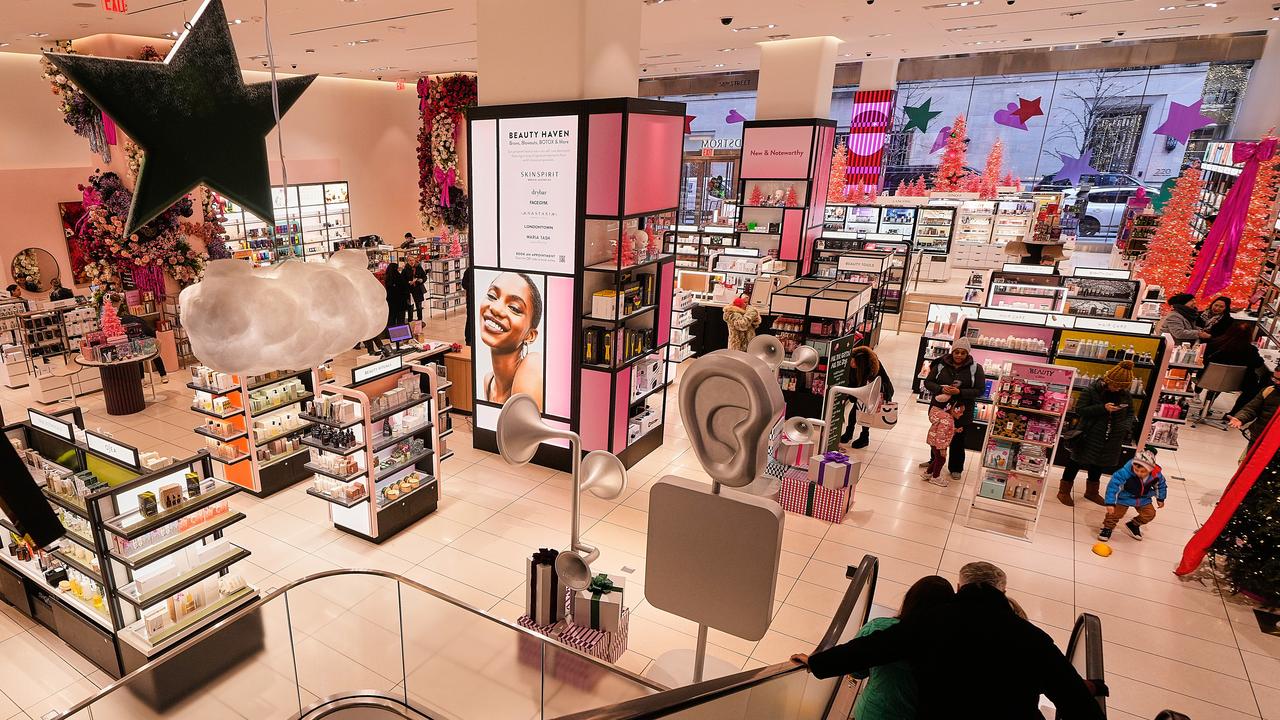
Consumer spending increased at a 3.5 per cent rate last quarter after advancing at a 2.5 per cent pace in the second quarter.

Much of the consumer spending acceleration resulted from a rush to buy electric vehicles before the September 30 expiration of tax credits.
Motor vehicle sales dropped in October and November, while spending elsewhere was mixed.
The non-partisan Congressional Budget Office has estimated the shutdown could slice between 1.0 percentage point and 2.0 percentage points off GDP in the fourth quarter.
It projected most of the GDP drop would be recovered, but estimated that between $US7 billion ($A10 billion) and $US14 billion ($A21 billion) would not.
Surveys suggest consumer spending is being driven by higher-income households, thanks to a stock market boom that has inflated household wealth.
In contrast, middle and lower-income consumers are struggling amid the rising cost of living resulting from President Donald Trump’s sweeping tariffs, economists said, creating what they call a K-shaped economy.
That phenomenon is playing out among businesses.
Economists said large corporations have mostly managed to withstand the blow from the import duties, which have increased costs, and are investing in artificial intelligence.
But smaller businesses are struggling with tariffs.
Trump’s policies are contributing to what economists have termed an affordability crisis that is denting his approval ratings.
Households also face higher utility bills as the rapid growth of AI and cloud computing data centres boosts electricity demand.
Some will face skyrocketing health insurance premiums in 2026.
The Federal Reserve this month cut its benchmark overnight interest rate by another 25 basis points to the 3.50 per cent-3.75 per cent range, but signalled borrowing costs were unlikely to fall in the near term as policymakers await clarity on the direction of the labour market and inflation.

Australian Associated Press is the beating heart of Australian news. AAP is Australia’s only independent national newswire and has been delivering accurate, reliable and fast news content to the media industry, government and corporate sector for 85 years. We keep Australia informed.