Donald Trump’s mounting siege of Federal Reserve chair Jerome Powell will be closely watched by Australian fund managers, even as markets take the latest assault on the independence of the US central bank in their stride.
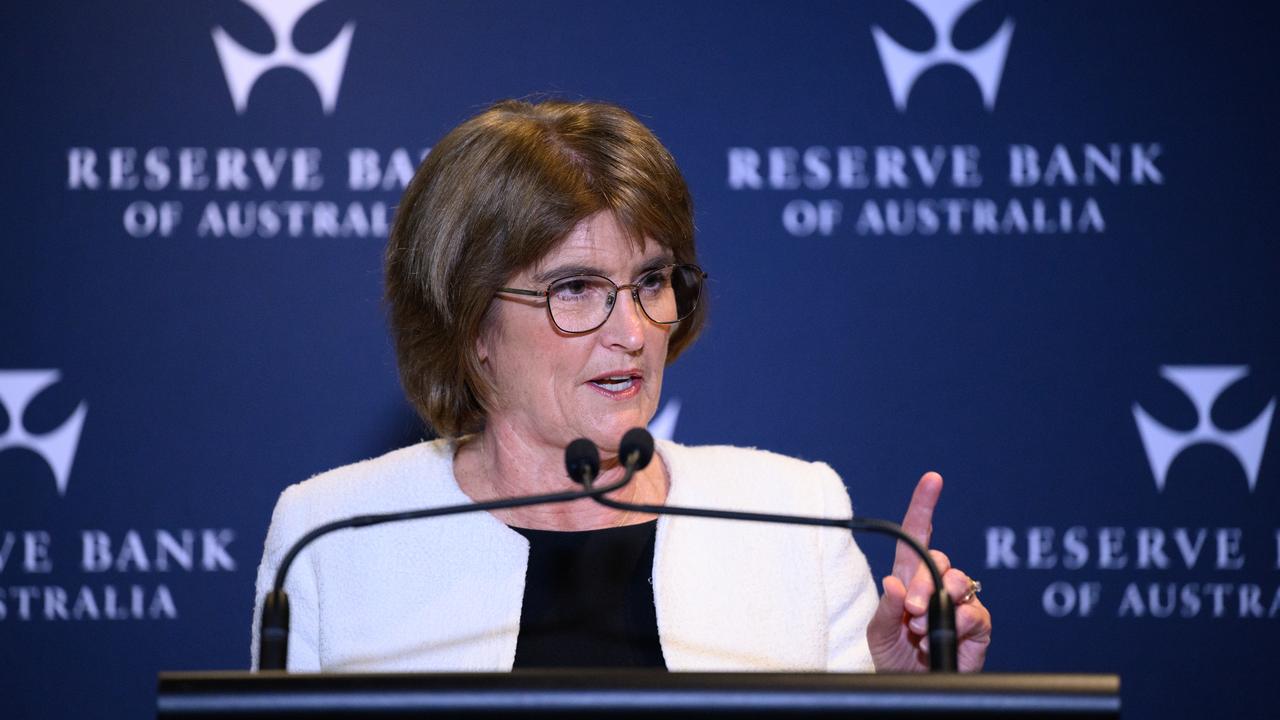
The US president’s attempts to pressure the Fed to cut interest rates prompted an unprecedented intervention by 12 international central bankers, including Reserve Bank of Australia governor Michele Bullock, who issued a statement in solidarity with Mr Powell and the Fed.
Former RBA veteran Jonathan Kearns, now chief economist at annuities giant Challenger, said it was a historically unusual move by the central bankers who tend to shy away from politics.
“The independence of central banks is a cornerstone of price, financial and economic stability in the interest of the citizens that we serve,” read the statement, which was also signed by Bank of England governor Andrew Bailey and the European Central Bank’s Christine Lagarde.
The subdued reaction of equities and bonds traders is unsurprising.
Other than the bond market meltdown following the liberation day tariff shock last April, markets have mostly brushed off developments out of the White House.
Ms Bullock has warned that low risk premiums, despite heightened geopolitical instability and the threat of tariffs, mean a worse outcome than expected could catch traders off guard and ultimately end in tears.
Dr Kearns doubted Mr Trump would pay much attention to the central bankers’ statement, but could be forced to rein in his attack if the bond market responds violently to the prospect of a politicised Fed resulting in higher-for-longer inflation.
“A lot of analysts believe that the risks are greater than seems to be being priced by the bond market,” he told AAP.
“If you were to see a larger reaction from the bond market, then maybe you do get some sort of pullback in the way that you did see after liberation day.”
JP Morgan chief executive Jamie Dimon, one of the most influential voices on Wall Street, said chipping away at Fed independence to lower rates would have the reverse consequence, by raising inflation expectations and interest rates over time.
Super funds have more than $600 billion tied up in US assets, according to IFM Investors and the Super Members Council, and have increasingly turned to the US to park their funds as they have outgrown the Australian market.
Dr Kearns said Australian fund managers should be changing the way they perceive the risks of US investments, given the risk of higher inflation.
But there’s also the risk of overreacting and missing out on the AI bonanza turbocharging US equities.
“What we’ve seen investors doing is saying, ‘well, I can’t completely reduce my exposure to the US, but I’m going to tweak it at the margin’,” he said.
“So we’ve heard statements from some of the super funds that say they’re redirecting a larger share of their flows to other markets, rather than the US, because of their assessment of the prospects and the risks.”

Australian Associated Press is the beating heart of Australian news. AAP is Australia’s only independent national newswire and has been delivering accurate, reliable and fast news content to the media industry, government and corporate sector for 85 years. We keep Australia informed.