

Vapes may cause cancer despite safer than smoking claim
People who vape are at higher risk of cancer than those who do not, a landmark study has found, casting doubt over whether the habit is safer than smoking.
Public health experts and scientists generally don’t consider e-cigarettes to be safe but early marketing has offered nicotine-based vapes as a less harmful alternative to cigarettes that could supposedly help people quit.
The review, led by the University of NSW and released on Tuesday, has found these kinds of vapes are likely to cause lung or oral cancer.
People who use nicotine-based vapes were found to have changes in their tissue indicative of cancer development, including DNA damage, oxidative stress and inflammation.
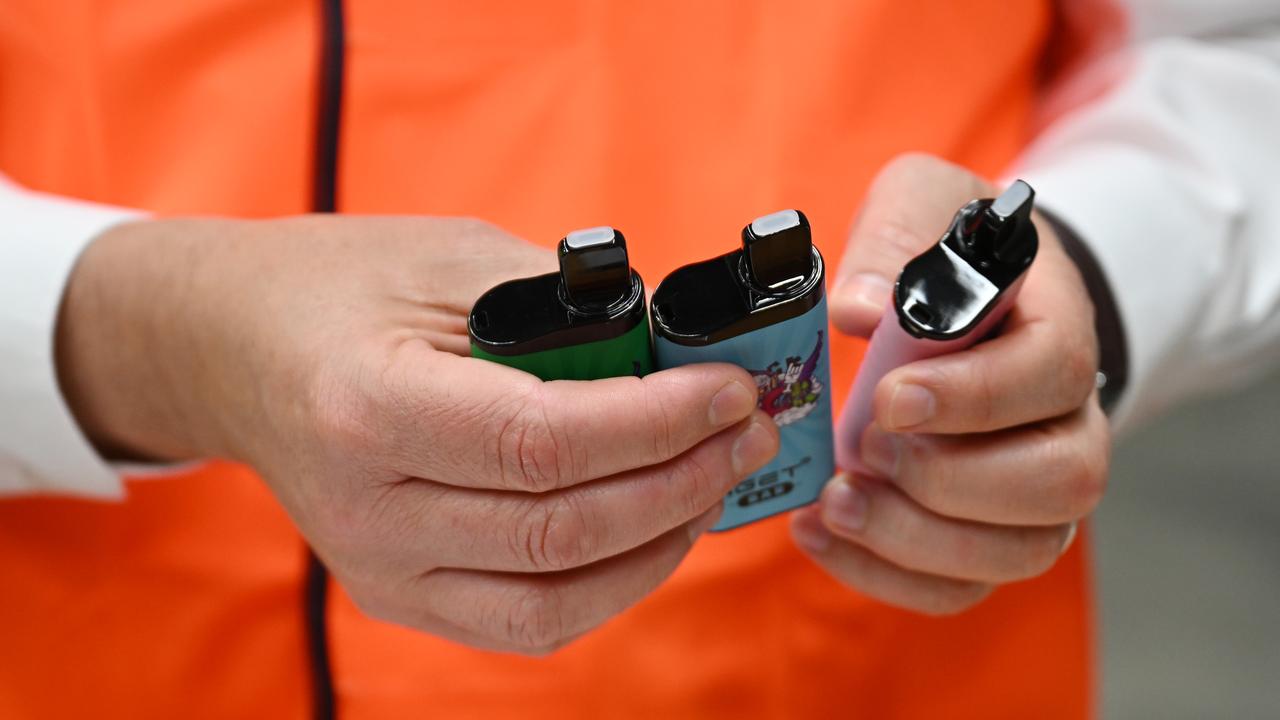
Researchers also examined case studies of oral cancer in those who only vaped and looked at animal experiments, including one where mice that breathed in aerosols from e-cigarettes developed lung cancer and changes in the bladder consistent with the eventual occurrence of cancer.
“Objectively and from the totality of available literature … e-cigarettes are likely to cause lung cancer and oral cancer,” lead researcher Bernard Stewart told reporters.
“Not only are we concerned about cancer development, but we cannot definitively say these things are safer than smoking.”
Vapes can only be sold in Australian pharmacies to help people quit smoking or manage nicotine dependence.
However, the study also showed growing evidence smokers who switch to vapes don’t necessarily give up cigarettes, meaning they are stuck in a “dual-use-limbo” that means they are at a four-fold increased risk of developing lung cancer.
As vapes have only been available for sale in Australian since about 2008, it will take decades for scientists to gather enough long-term information from people who have only vaped to definitively prove e-cigarettes cause cancer.
But this study has enough data for its authors to urge regulators to act, comparing the situation to early studies on cigarettes.
It took about a century before smoking was officially recognised as a cause of lung cancer in 1964, even after reports from the 1860s showed links between tobacco and tuberculosis, emphysema and more.

“Vapes have only been going for 20 years here, we don’t have to wait 80 years to get a response,” co-author Freddy Sitas said.
“We have a very good opportunity to be proactive.”
Large, nation and statewide studies must be funded to get early results about the potential for early onset cancer among young Australians, Prof Sitas said.
Rather than examining the impact of e-cigarettes alone, previous studies have focused on comparing vaping to smoking, delaying progress on e-cigarette awareness, according to Prof Stewart.
“Being approached from the perspective of ‘is this safer than smoking’ is as crazy as saying we’ll assess the safety of knives by seeing whether they’re more or less dangerous than sub-machine guns,” he said.
RBA minutes to be scrutinised as rate fears rise
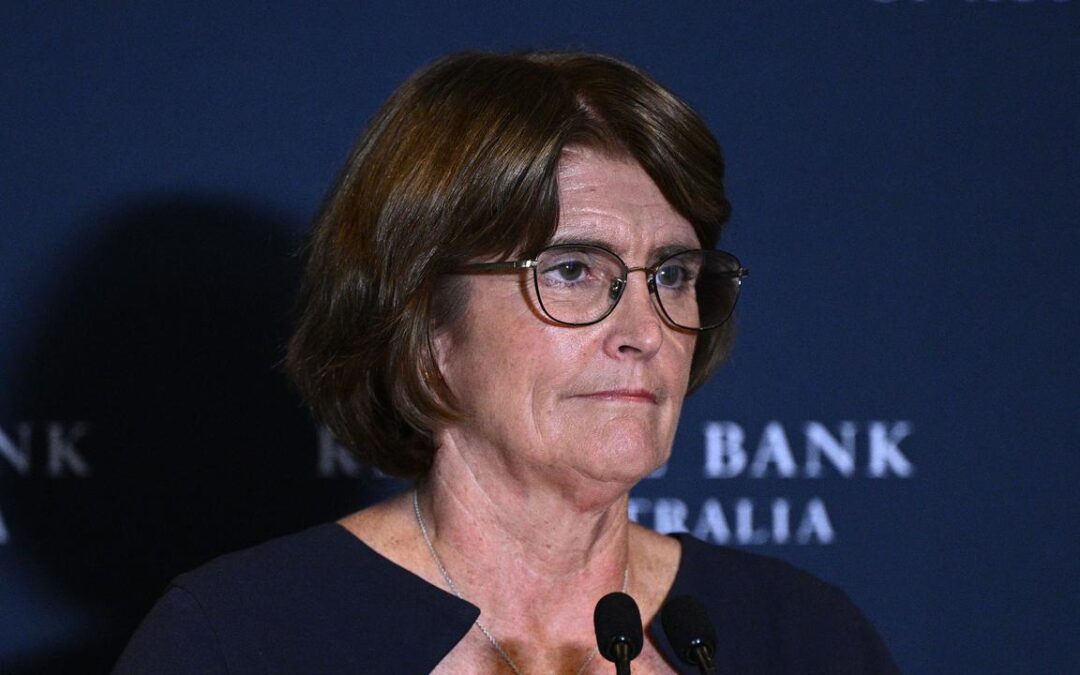
Central bank watchers are waiting on more colour from the “robust” conversation at the Reserve Bank’s last board meeting as they try to predict its next move.
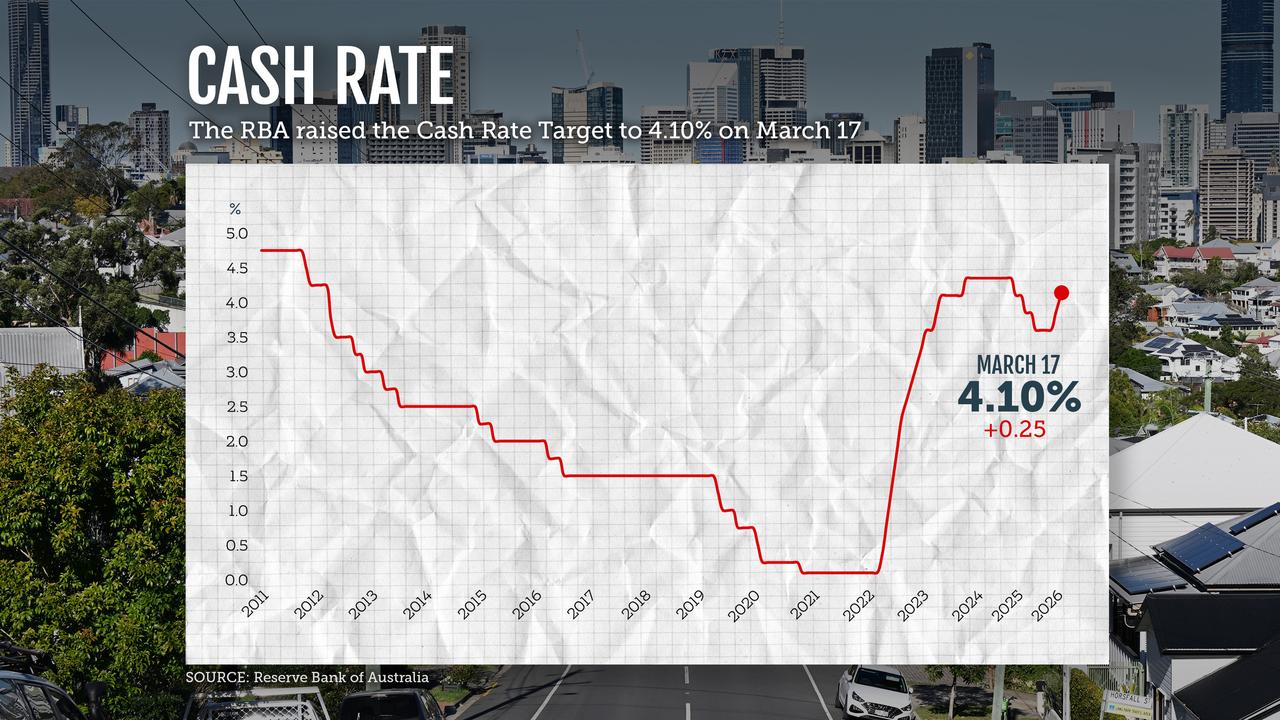
Minutes from the RBA’s March meeting will be released on Tuesday and will be closely picked over after it ended in a 5-4 split in favour of a hike – the narrowest decision since the RBA started publishing unattributed votes in July 2025.
“The RBA’s meeting minutes … will attract attention for additional information on the ‘robust discussion’ behind the Board’s split 5-4 decision earlier this month,” said analysts at JP Morgan, quoting governor Michele Bullock’s characterisation of the meeting.
Ms Bullock said the disagreement was a question of timing rather than direction, with the four doves arguing to wait until May to get a clearer picture of the impact of the Iran war, but agreeing that more tightening was required to get inflation under control.
Forecasters at all of Australia’s big four banks expect the RBA to hike again in May, which would put the cash rate back at its peak before the start of the cutting cycle in February 2025.
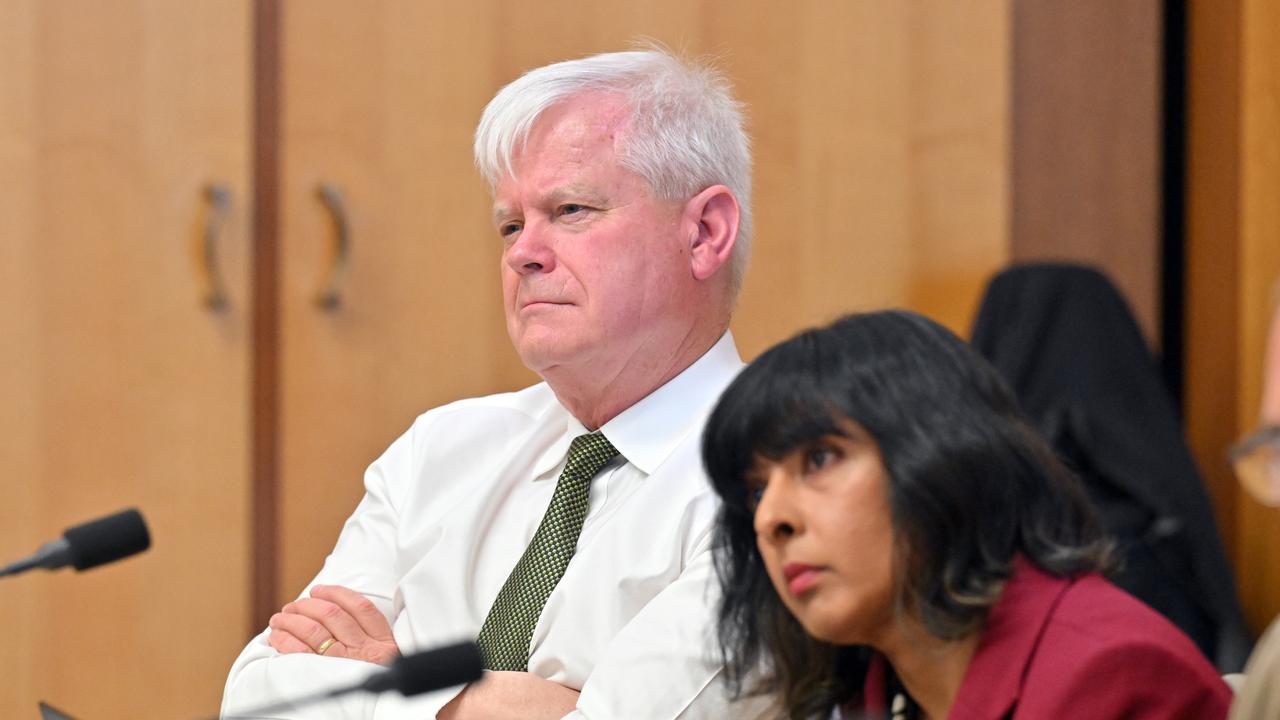
Westpac chief economist now predicts the central bank to go five from five, with additional hikes in June and August, which would leave the cash rate at the highest level in 18 years.
The RBA’s inflation fears would have been heightened further by the federal government’s decision to halve the fuel excise, ostensibly to support households as the cost of living bites.
“There’s a chance that, what governments give us via extra handouts, the Reserve Bank will taketh away by having rates higher than they’d otherwise be,” said independent economist Chris Richardson.
Handing more money to consumers will only increase demand without adding to supply at a time when the RBA is already concerned that the economy is over capacity, economists warn.
Fuel tax cuts could mean interest rate pain
Australians could face worse cost-of-living pressures over the coming months despite temporary relief through a cut to the fuel excise.
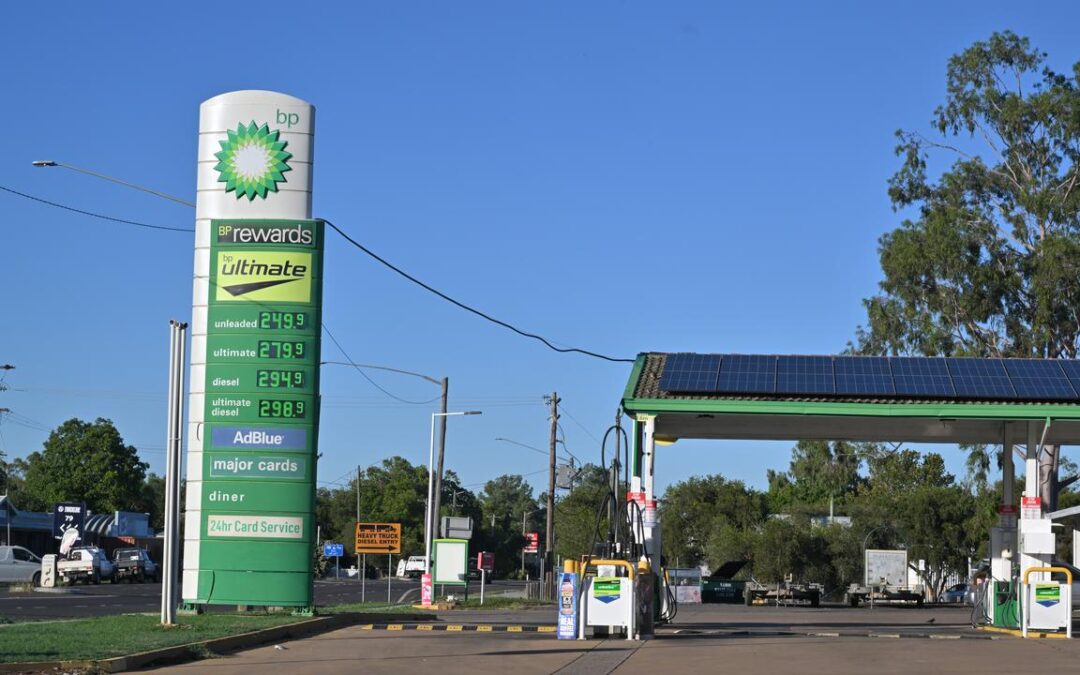
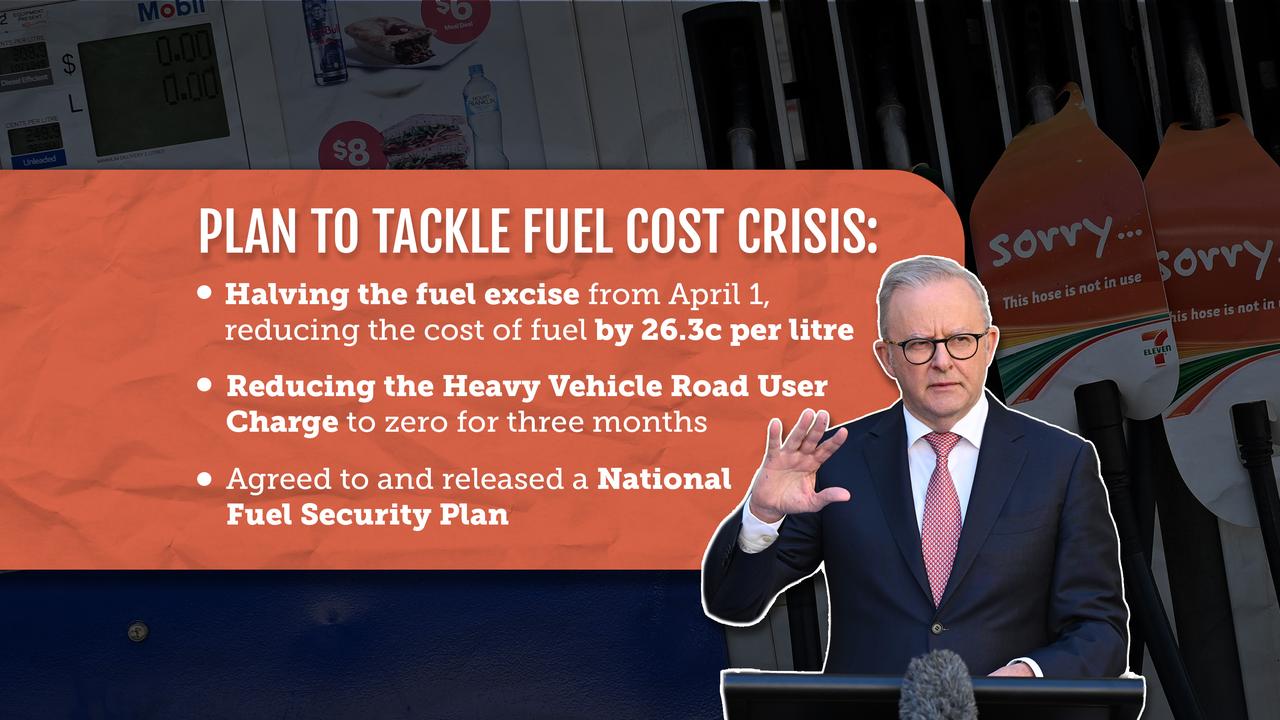
From Wednesday, petrol and diesel costs around the nation will be slashed by 26.3 cents a litre as the federal government moves to head off the worst effects of the war in the Middle East.
That equates to $10.50 on a small 40-litre tank or $21 for Australia’s best-selling new car – the Ford Ranger – which has an 80-litre tank.
Independent economist Saul Eslake said while the move would be welcome relief for motorists battling high fuel prices, it would likely lead to higher interest rates over the longer term.
The tax cut would leave drivers with more money in their pockets which they would likely spend in other parts of the economy, driving up inflation, Mr Eslake said.
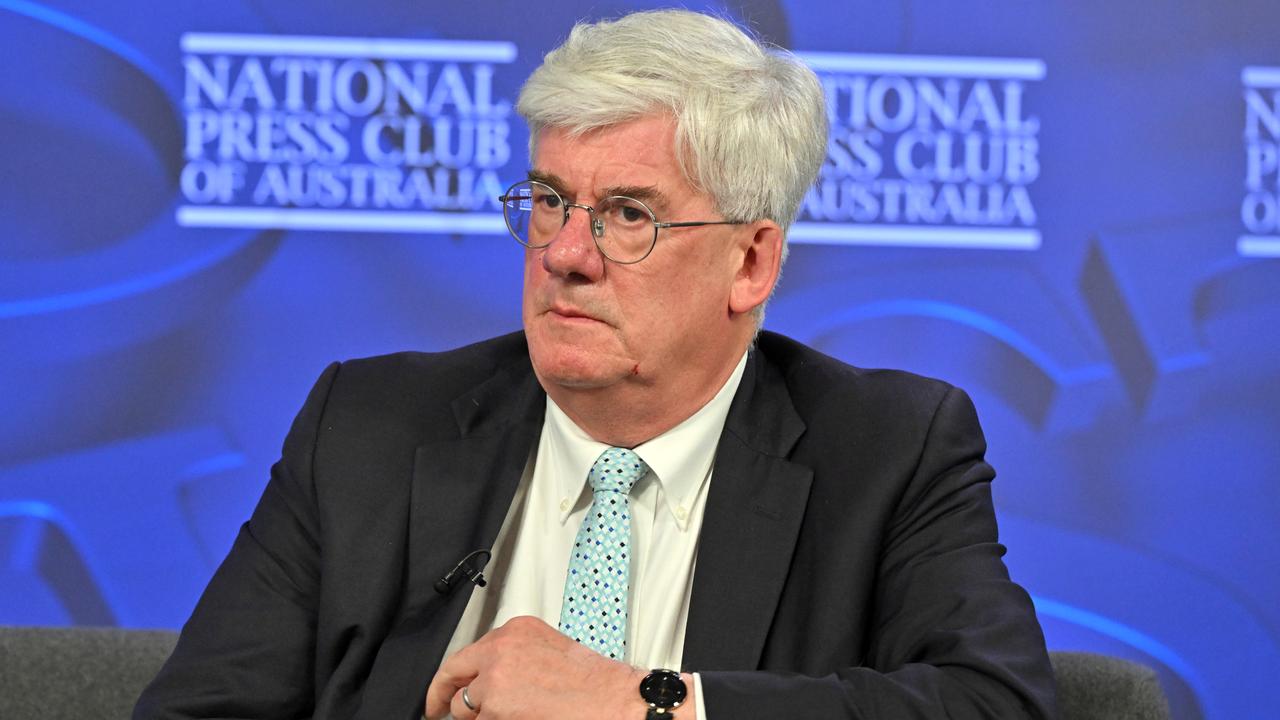
“What the government giveth in these circumstances, the Reserve Bank may taketh away,” he told AAP.
Treasurer Jim Chalmers has said the policy would likely reduce headline inflation by half a percentage point, but the Reserve Bank prefers to rely on underlying inflation, which often ignores fuel prices due to their volatile nature.
Mr Eslake said the fuel tax could also exacerbate existing shortages by driving up demand for cheaper petrol and diesel.
“You would have thought that a part of any sensible response to a threat to supply is to try to reduce demand where you can. (This will) do the opposite,” he said.
Fellow economist Chris Richardson said while he understood the politics of cheaper petrol, the economics of the policy were poor.
“There will be joy at the new round of handouts. But they’ll come with a sting in their tail. They’ll keep inflation higher here for longer,” he said.
The Spirit of Tasmania ferry is one of the latest operators to pass on higher costs to customers, imposing a 15 per cent fuel surcharge on all voyages between Geelong and Devonport.
The company was facing an 80 per cent rise in fuel prices, projected to hit its bottom line by more than $50 million, TT-Line chairman Ken Kanofski said in a statement.
Asked about Australia’s policy of cutting the fuel excise, New Zealand’s Prime Minister Christopher Luxon blasted the idea.
“Our advice is pretty clear: it’s poorly targeted, It actually benefits high-income households and it actually encourages fuel use when it’s constrained,” he told reporters in Wellington.
Alongside the fuel excise cut, the government will also pause the road user charge for heavy vehicles, easing some financial pressure on already-stretched supply chains.
The two policies are expected to cost taxpayers $2.55 billion between April and June.
NRMA spokesman Peter Khoury said despite the cut, petrol prices were likely to continue rising for as long as the war drags on.
“We’ve broken the record several times, we break it on a daily basis, so cutting the excise won’t take long before those prices get back up, and that’s going to be the challenge,” he said.
State leaders are planning to give up any windfall GST revenue from higher petrol prices and were due to discuss the idea at a meeting on Monday evening.
Fresh shooting details as Dezi Freeman to be identified
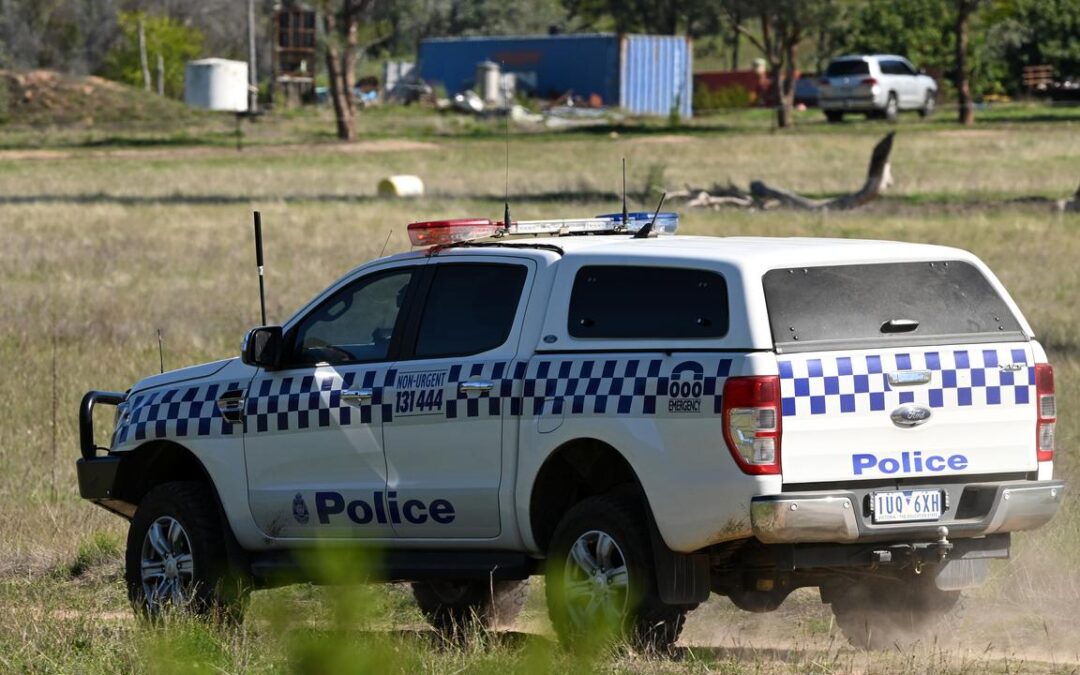
A gun pulled by Dezi Freeman in his final moments belonged to one of the officers the self-proclaimed sovereign citizen executed, as authorities await formal identification of his body.
Police tracked the 56-year-old to a rural property in Thologolong, near Walwa on the Victorian-NSW border.
Freeman was wrapped in what appeared to be a blanket when he emerged from a container-like structure on Monday morning following a three-hour stand-off with heavily armed officers.
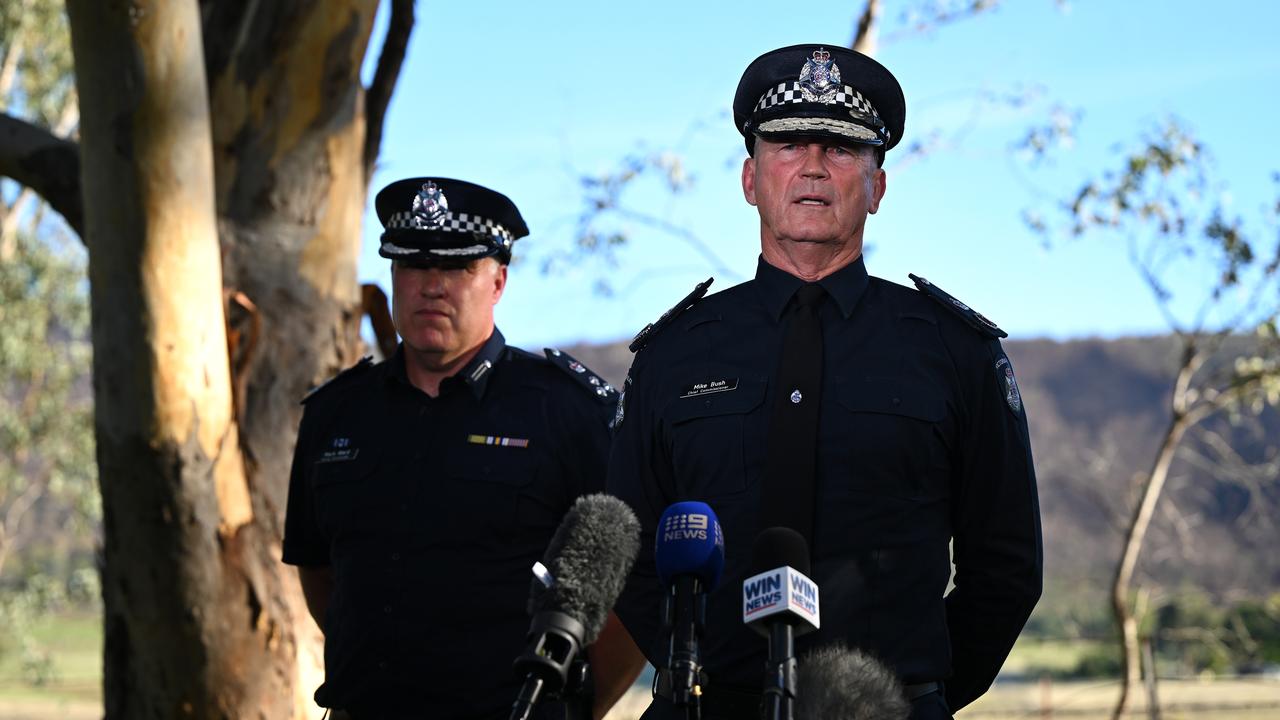
Victoria Police Chief Commissioner Mike Bush said he had viewed footage of Freeman pulling the gun from underneath the cloth and turning it towards police.
“I can now confirm that it is a police firearm, and we believe it was taken from one of our murdered officers on the 26th of August,” he told reporters in Wodonga on Monday evening.
It is not known if Freeman fired the gun before multiple officers discharged their weapons.
Freeman was wanted over the fatal shootings of Neal Thompson and Vadim de Waart-Hottart, who were among a team of officers serving a warrant at his home in the small town of Porepunkah in late August.
The property is about 150km from where Freeman was shot dead.
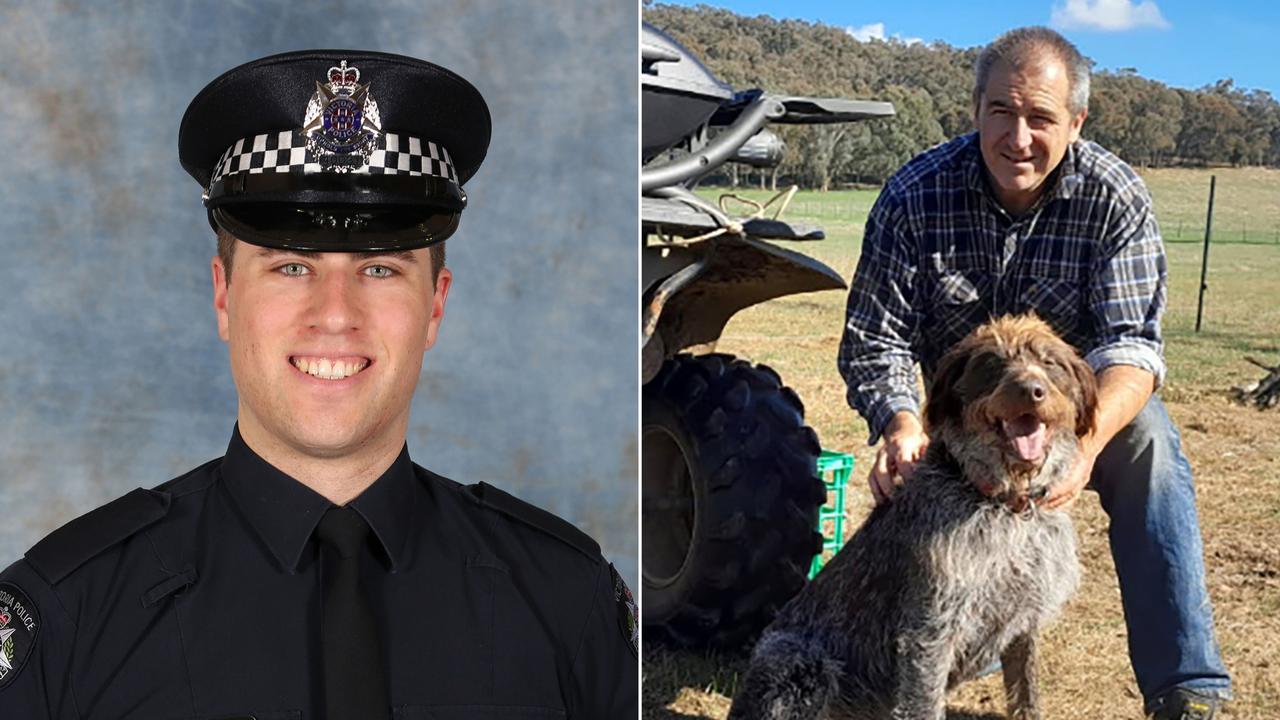
Officers moved into position on Sunday but Mr Bush would not confirm whether they received a tip-off about Freeman’s whereabouts.
Police are investigating how the fugitive evaded capture for 216 days and exploring the possibility he received help.
“We’re very keen to learn who, if any, but I’m sure some, actually assisted him getting away from Porepunkah to where he was located,” Mr Bush said.
Mr Bush said Freeman’s appearance was slightly altered from his last confirmed sighting, fleeing into dense bushland the day of the shooting.
“His hair was a little bit longer and he had a beard,” he said.
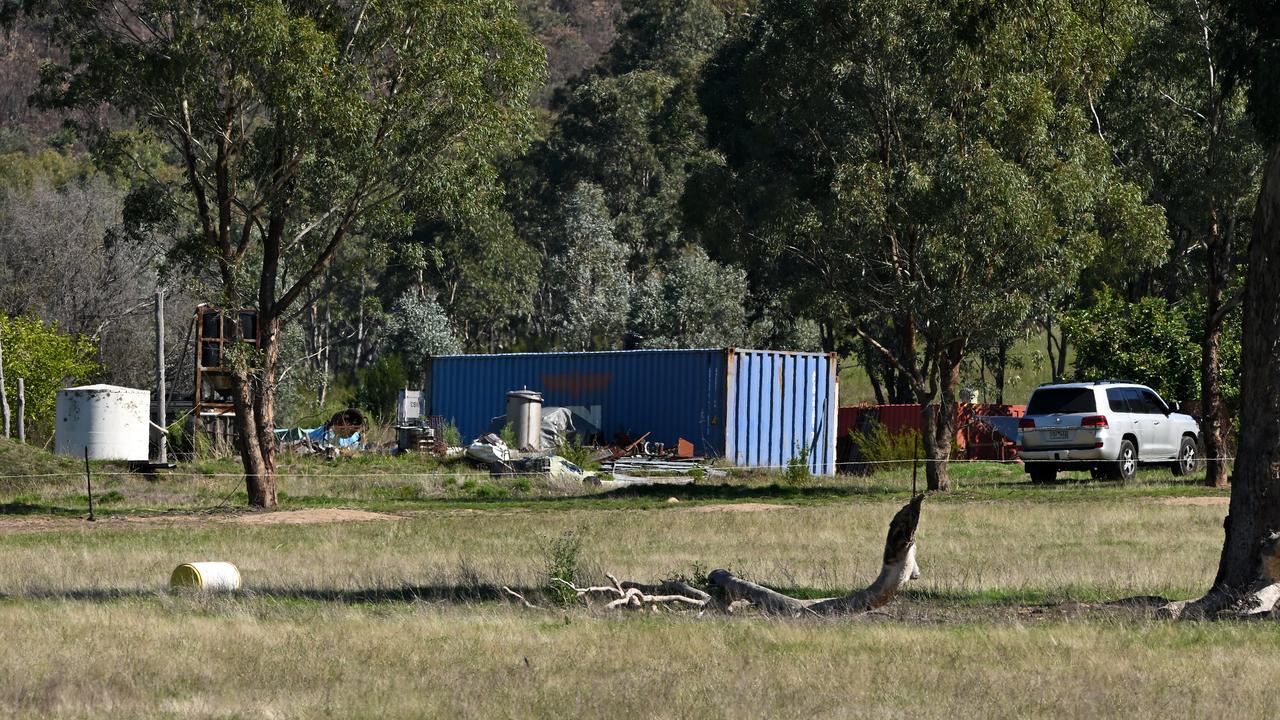
State Coroner Liberty Sanger visited the scene on Monday to formally confirm the man’s identity.
The commissioner said he expected the process to take 24 to 48 hours.
“The deceased is still on site so that will take some time,” Mr Bush said.
“We’re confident of who that person is.”
Premier Jacinta Allan rejoiced at police bringing the manhunt to a close, declaring an “evil man” was dead.
“It is over in terms of the operation but it will never be over for those families,” she said.

Police Association secretary Wayne Gatt said the memories of the fallen officers would live forever.
“The memory of cowards fades quickly but with heroes it lives on forever,” he said.
Hundreds of police from across Australia took part in the search for Freeman in extreme conditions, including snow and heat, and dense bushland in mountainous terrain.
Investigators in December revealed they had shifted their search efforts to locating the killer’s body.
Victoria Police offered a $1 million reward and the possibility of indemnity for information leading to his capture – the largest financial offer in the state’s history for facilitating an arrest.
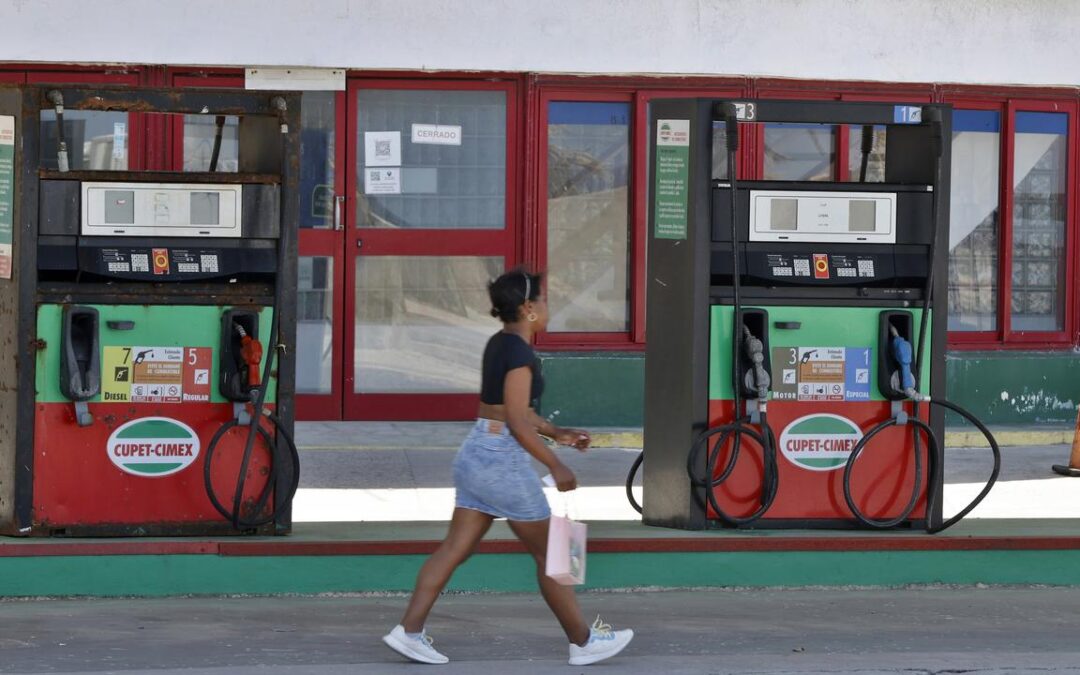
Russian oil tanker arrives in Cuba after US approval
Russia says an oil tanker carrying 100,000 metric tons of crude oil has arrived in Cuba and that it will stand by its friends by working on further supplies despite a US blockade of the Communist-run island.
The United States cut off Venezuela’s oil exports to Cuba after toppling Venezuelan president Nicolas Maduro on January 3, and US President Donald Trump threatened to slap punishing tariffs on any other country that sent crude to Cuba.
But Trump on Sunday signalled he was reversing course and expressed sympathy for the Cuban people’s need for energy.
“If a country wants to send some oil into Cuba right now, I have no problem, whether it’s Russia … and if other countries want to do it,” Trump told reporters aboard Air Force One.
“One boatload of oil, that’s all it is,” Trump added.
The Anatoly Kolodkin was waiting to offload at the port of Matanzas, Russia’s transport ministry said.
The Kremlin said it had raised the issue of the tanker during talks with the US but that Russia felt it had a duty to support “friends” in Cuba.
“This issue was indeed raised in advance during contacts with our American partners,” Kremlin spokesman Dmitry Peskov told reporters.
Cuba has not received an oil tanker in three months, according to President Miguel Diaz-Canel, and its energy crisis has caused blackouts across the country of 10 million.
Health officials say the crisis has increased the mortality risk for cancer patients, especially children.
Cuba became dependent on the Soviet Union for oil after its communist revolution in 1959, and needs imported fuel oil and diesel to generate power.
Asked if further Russian shipments would follow, Peskov said: “In the desperate situation that Cubans now find themselves in, this, of course, cannot leave us indifferent so we will continue to work on this.”
LSEG ship-tracking data showed the Russian tanker had left the Russian Baltic Sea port of Primorsk on March 8 and was now moving along Cuba’s northern shore.
with DPA
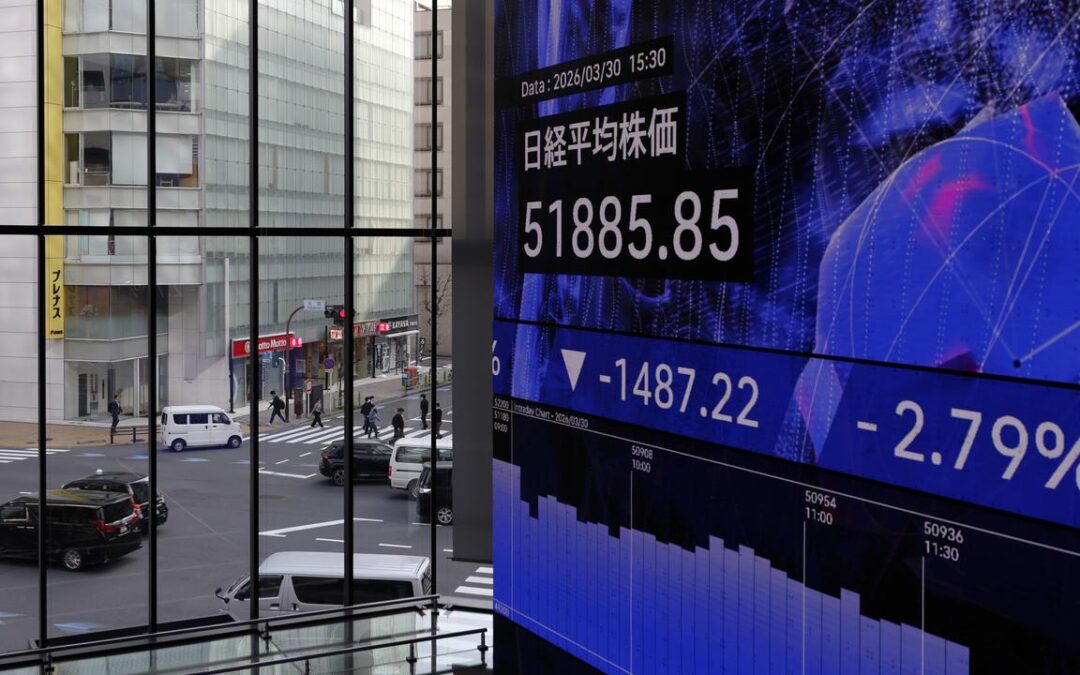
Brent oil heads for record month, stocks in limbo
Brent crude oil has risen three per cent and is on track for a record monthly rise , while global stocks are in limbo as investors dig in for a Gulf conflict they fear will bring a spike in inflation and the risk of recession to much of the globe.
Shares across Asia fell on Monday, with Japan’s Nikkei index closing down 2.8 per cent, in a region more reliant on Gulf oil exports.
European stock markets were firmer in early trading and Wall Street futures pointed to gains, although they were slim given a recent sell-off.
Investors were assessing conflicting developments.
The Financial Times late on Sunday quoted President Donald Trump saying the US could seize Kharg Island in the Persian Gulf, from where Iran exports much of its oil, but also that a ceasefire could come quickly.
Pakistan said it was preparing to host “meaningful talks” to end the conflict over Iran in the coming days, even though Tehran accused Washington of preparing a land assault as the US military builds up forces in the region.
“Oil is the lightning rod right now,” said Eren Osman, managing director of wealth management at Arbuthnot Latham, adding a reopening of the Strait of Hormuz was the key to calming world markets.
“The biggest challenge for us as investors today is that you’ve got one of the widest ranges of potential outcomes,” he said, adding he did not expect a prolonged conflict as he believed Trump had a “pain threshold” for market losses.
Madison Cartwright, senior geo-economics analyst at Commonwealth Bank of Australia, said Iran’s control of the Strait of Hormuz nonetheless gave it little incentive to concede and the bank expected the war to run until at least June.
The clampdown on the Strait has sent prices for oil, gas, fertiliser, plastic and aluminium surging, along with fuel for planes and shipping.
Prices for food, pharmaceuticals and petrochemical products are all set to rise.
That is particularly bad news for Asia, as much of the region is highly dependent on energy from the Middle East.
MSCI’s broadest index of Asia-Pacific shares outside Japan dropped 1.8 per cent.
European stocks were last up 0.3 per cent, while S&P 500 futures and Nasdaq futures pointed to gains of about 0.5 per cent each.
“The longer the Strait remains closed, the sharper the drawdown in buffer supplies that could spark dramatic increases in the price of crude oil, natural gas and other commodities,” warned Bruce Kasman, global head of economics at JPMorgan.
“A scenario in which the Strait remains closed for an additional month would be consistent with oil prices rising towards $US150 ($A219)/bbl and constraints on industrial consumers of energy supply.”
Brent crude rose three per cent to $US116 ($A169) a barrel, on course for a 60 per cent gain in March that would outpace the monthly jump that followed Iraq’s invasion of Kuwait in 1990.
US crude climbed two per cent to $101.67.
The inflationary threat has led investors to revise up the outlook for interest rates almost everywhere.
US Federal Reserve Chair Jerome Powell will have a chance to air his views at an event later on Monday and the influential head of the New York Fed, John Williams, is also speaking.
Data on US retail sales, manufacturing and payrolls this week will provide an update on how the economy is faring.
The energy shock, combined with pressure on fiscal budgets from higher borrowing costs and the need for more defence spending, has hit sovereign bond markets.
Ten-year US Treasury yields were last at 4.3959 per cent.
Heightened volatility in markets has tended to benefit the US dollar as the world’s most liquid currency.
The US is also a net energy exporter, giving it a relative advantage over Europe and much of Asia.
The dollar index was trading near a 10-month high at 100.26, broadly flat on the day.
Yet more warnings of possible intervention from the Japanese authorities did see the dollar ease 0.3 per cent to 159.775 yen.
It crossed the 160 barrier last week for the first time since July 2024, when Japan last acted to buy yen.
The euro dipped 0.1 per cent to $1.1493, not far from a March trough of $1.1409.
In commodity markets, gold gained 0.9 per cent to $4534 an ounce, having recently drawn scant support as a haven or as a hedge against inflation risks.

China’s DeepSeek AI chatbot suffers major outage
China’s popular DeepSeek artificial intelligence chatbot has suffered its longest outage since the viral rise of its flagship R1 and V3 models.
DeepSeek’s status website showed the chatbot suffered a “major outage” lasting seven hours and 13 minutes from the early hours of Monday until 10.33am local time (0233 GMT), when the incident was marked as resolved.
As per company protocol, no reason was given for the outage.
Such incidents can be caused by a wide range of issues, from malfunctioning servers to bugs stemming from an update to the AI chatbot.
DeepSeek data shows its API service, a function mostly used by developers to integrate the chatbot into custom applications, was hit by consecutive day-long outages in late January 2025 at the height of its viral moment.
But its webpage, where ordinary users can ask the chatbot questions directly, had not experienced a major outage longer than two hours until Monday, according to the startup’s status website.
The global AI industry is eagerly awaiting the release of DeepSeek’s next-generation model, but the company has yet to indicate a timeline.
Rio Tinto resumes Pilbara port operations after cyclone
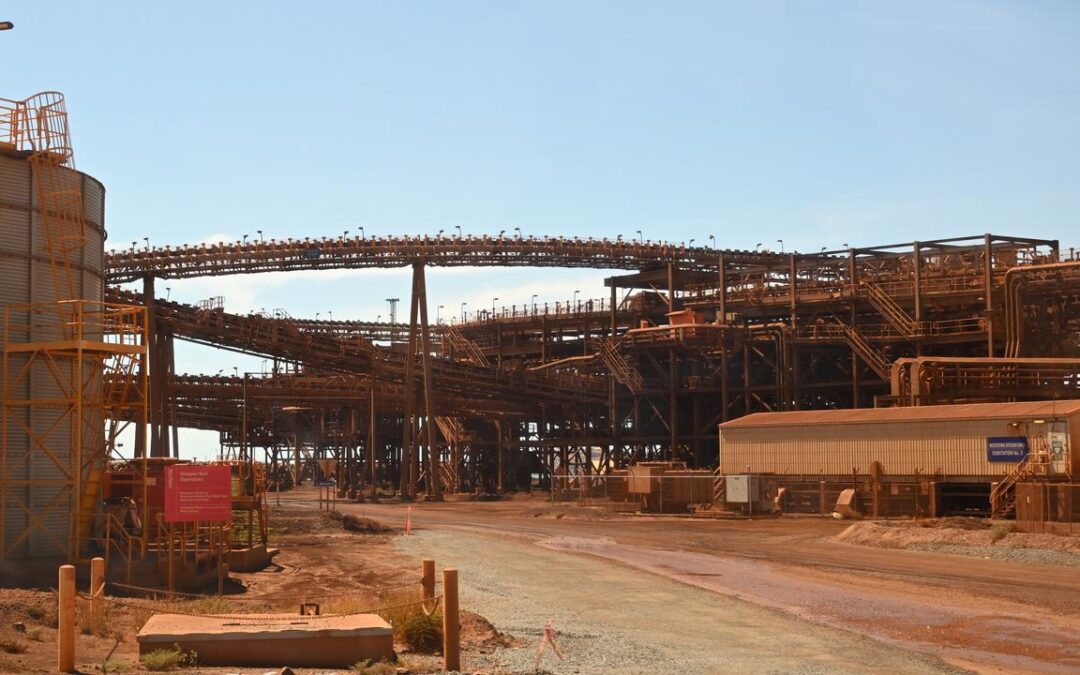
Rio Tinto says operations at three of its four Pilbara iron ore port terminals have resumed after Tropical Cyclone Narelle swept through Western Australia’s Pilbara region, disrupting shipments but leaving its annual guidance unchanged.
Cyclone Narelle brought heavy rain and power outages to Australia’s northeast coast in March, forcing the miner to temporarily shut two bauxite mines.
South32 also suspended operations at its Gemco manganese mine, co-owned by Anglo American.
Narelle barrelled into WA’s northwest coast, causing port closures in the iron-rich Pilbara region.
Rio, the world’s largest iron ore producer, said ship loading at three terminals resumed on Saturday following port closures on March 24.
Shipping at Cape Lambert A, the fourth terminal currently undergoing repairs, is expected to recommence “in the coming days”, the miner said.
Two tropical cyclones in February and March are estimated to have affected iron ore shipments for the firm by about eight million metric tons, Rio said, adding it has “identified a pathway to recover around half of these losses”.
Rio’s guidance for its Pilbara iron ore shipments for 2026 remained unchanged at 323 million tons to 338 million tons.

Ex-nanny’s fight over crimes against humanity claims
A former Sydney nanny accused of carrying out torture and kidnapping for a notorious Chilean dictator claims she will be tried for crimes against humanity if she is extradited to her home country.
Adriana Elcira Rivas, who emigrated to Australia in the late 1970s and worked as a nanny in Bondi, has been locked in a seven-year legal battle since her arrest by NSW Police in 2019 at the request of Chile.
She is accused of working for intelligence services during the dictatorship of Augusto Pinochet and playing a role in the disappearance and torture of seven people, including a woman who was five months’ pregnant.
Rivas, now in her 70s, denies the allegations and has fought for years to block her extradition to the South American nation on seven charges of aggravated kidnapping.
In her last-ditch fight in the Federal Court on Monday, her barrister said the Australian government failed to appreciate how the offences had been characterised by Chile.
“It is evident that the Chilean legal system would prosecute or sentence the applicant on the basis she committed crimes against humanity,” Sean Baron Levi argued.
Such a prosecution means Rivas could theoretically face the death penalty, he added while noting there was no suggestion such a charge would actually be sought.
Chile had provided assurances to the Australian government the elderly woman would not be tried for any offences other than the seven counts of aggravated kidnapping, the court was told.
Extradition was sought for those charges, which allegedly took place in the context of broader crimes against humanity, Australian government lawyer Trent Glover SC said.

Kidnapping was an offence in both Chile and Australia at the time of the alleged offences and thus satisfies the requirements of extradition, unlike crimes against humanity, he said.
If kidnapping is the proper characterisation of the charges, then the extradition is still invalid because the time limitation on prosecuting such offences had lapsed, the ex-nanny’s barrister argued.
However Chile advised the Australian government the statute of limitations would not apply to her charges because they fell under the definition of crimes against humanity, the court was told.
The characterisation of Rivas’ alleged offending is the central question in her two-day legal battle to remain in Australia.
The courtroom was filled with families and loved-ones of people who were killed or vanished during the Pinochet regime.
Adriana Navarro, who represents the families, said they were eager to see a speedy resolution to the matter after years of waiting for justice and truth.

“It’s been a difficult task for the families … we haven’t been able to obtain much information,” she said outside court.
“We know there’s a commitment now by the Australian government to send Rivas to Chile and that’s what we want, that’s what the families want.”
Answers have been elusive for many, with Ms Navarro noting 1100 Chileans’ remains have still not been found after 50 years.
“We have a very good idea of what happened to them and we think Ms Rivas may do too,” she told AAP.
Rivas is accused of being part of a Direccion de Inteligencia Nacional brigade that physically and psychologically tortured members of the communist party, which opposed Pinochet’s regime.
Pinochet violently overthrew the elected socialist government in a 1973 coup and ruled the country with an iron fist until 1990, outlawing political parties and exiling thousands of dissidents.
About 40,000 people were killed, tortured or imprisoned for political reasons during the dictator’s reign.

Top forecaster’s dire prediction if Iran war drags on
One of Australia’s top economic soothsayers has a grim prediction if the war in the Middle East is not resolved soon.
HSBC chief economist Paul Bloxham forecasts Australia’s economy will contract in the June and September quarters if oil prices spike to $US140 a barrel and stay above $US100 a barrel through 2026.
That would mean the nation’s first recession, excluding the COVID-19 pandemic, since the early 1990s and Paul Keating’s “recession we had to have”.
In the “ugly scenario” envisaged by Mr Bloxham, higher-for-longer inflation as a result of elevated oil prices and higher interest rates eat away at household income and dampen consumption.
Unemployment jumps to 5.5 per cent, as the Reserve Bank, fearful of rising inflation expectations, hikes interest rates a further two times.
“Clearly, we see tougher times ahead,” said Mr Bloxham, who was previously crowned Australia’s top economic forecaster by the Australian Financial Review.
“How tough is uncertain.”
Reserve Bank governor Michele Bullock recently warned a recession was possible if inflation proved too hard to get under control.
HSBC’s base case is less dire than its worst-case scenario with unemployment peaking at five per cent from its current 4.3 per cent.
But that outcome depends on the Middle East conflict being resolved at some point and oil prices declining.
In that case, Australia’s economy was predicted to contract for only one quarter and the RBA to hike interest rates once more.
Other forecasters also see some relief in oil prices within the next few months but are starting to countenance similar doomsday scenarios if the war drags on.
Economists at Commonwealth Bank have produced a downside scenario in which the benchmark oil price hits $US150 a barrel and inflation rises as high as 6.4 per cent by June.
Brent crude oil futures climbed 4.8 per cent to more than $US112 a barrel over the weekend as the Iran-backed Houthis threatened to close shipping in the Red Sea and the market braced for a more protracted conflict.
Given expectations of a longer conflict and early signs of strong pass-through of oil costs to consumer prices across the economy, Westpac upped its interest rate forecast from one to three more hikes.
“This shift reflects the longer disruption to and slower recovery in fuel supply (previously) … with the Strait of Hormuz essentially closed for eight weeks and traffic recovering only slowly after that,” the bank’s chief economist Luci Ellis said.
“It also reflects the surprisingly rapid pass-through of higher fuel and other oil-derived product prices into other prices in Australia.”
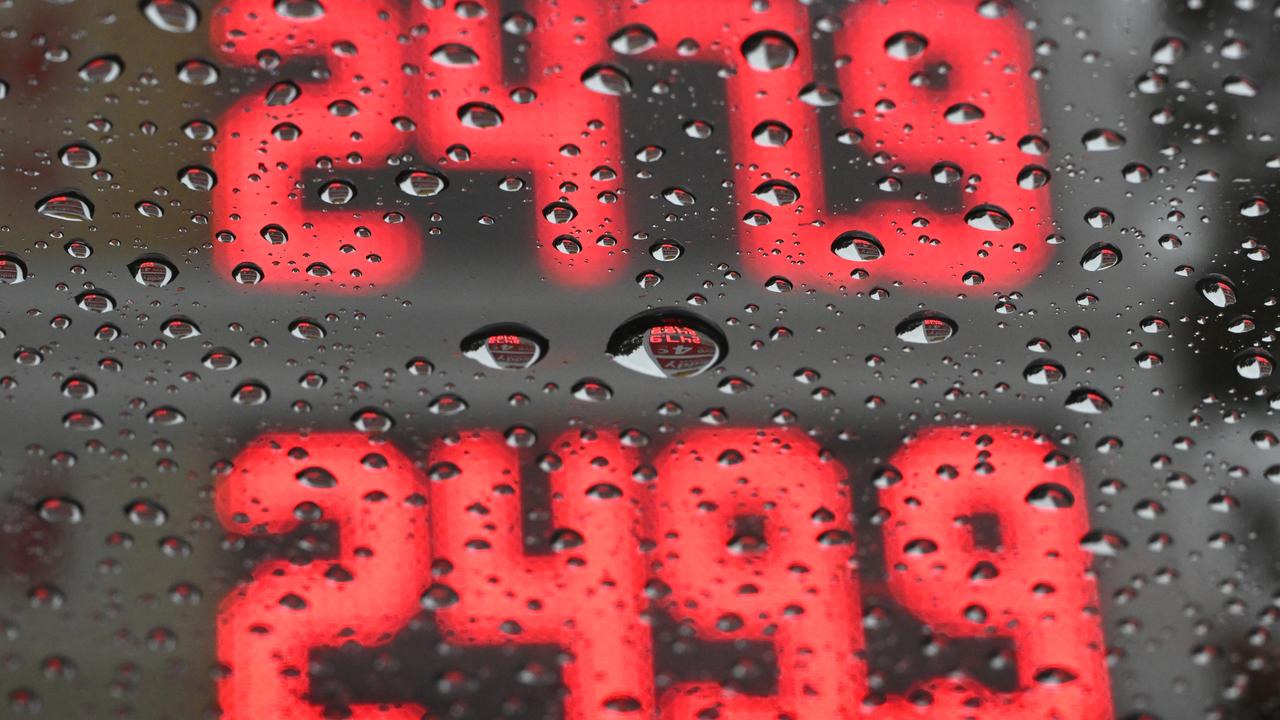
The government’s decision on Monday to halve the fuel excise reduced the headline inflation forecast in the near-term, but only pushed the peak of 5.4 per cent out to later in the June quarter, Dr Ellis said.
For firms already struggling with rising inflation before the war, the energy shock has kicked off a damaging new business cycle, Deloitte Access Economics partner David Rumbens said.
“The Australian economy is running on empty,” he said in a business outlook report on Monday.
“Higher fuel prices and a domestic economy that struggles to contain inflation at modest rates of economic growth are different dimensions of a supply crisis story.”
Dr Ellis noted there was a possibility the forecasts were overly pessimistic and fuel supplies recovered faster than current assumptions.