
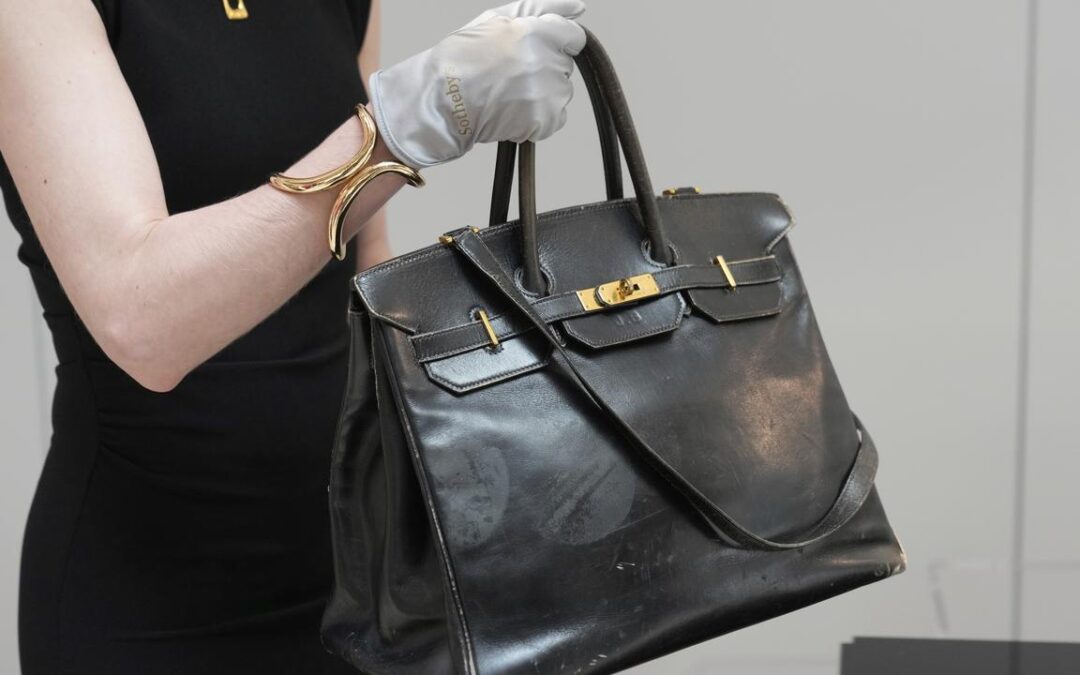
Hermes hit as war deters shoppers from Dubai to Paris
French luxury group Hermes has reported weaker-than-expected first-quarter sales as the Iran war hit spending in the Middle East as well as in Europe, with fewer tourists visiting Paris or London and buying designer items.
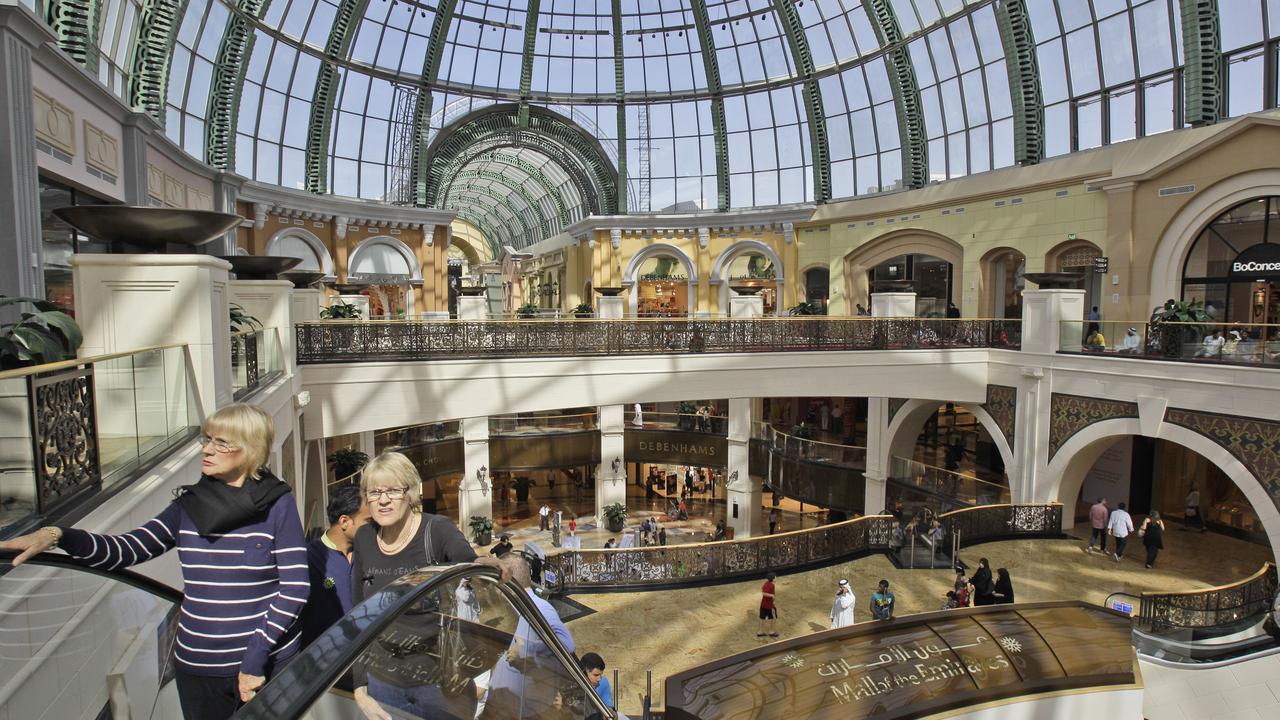
Investors’ hopes for luxury demand to recover have been dashed by the conflict, which has dented Dubai mall sales and sent energy prices soaring, hitting consumer confidence.
Hermes, which carefully controls production and sales to maintain exclusivity, has been the most resilient company in an industry-wide slowdown, but even it was not immune to the conflict’s impact.
LVMH and Kering this week reported sales were hit by the war.
Overall sales of products including Birkin and Kelly bags, silk scarves and perfume rose by 5.6 per cent in currency-adjusted terms, Hermes said, lower than a Visible Alpha analyst consensus of 7.1 per cent growth.
Sales in the Middle East region fell six per cent in currency-adjusted terms to 160 million euros ($A264 million), from 185 million euros in the first quarter in 2025.
“We had very good growth, double-digit growth in January and February and then the month of March was an abrupt halt,” said chief financial officer Eric du Halgouet, adding that sales in luxury malls in Dubai and other Gulf shopping hubs dropped by 40 per cent in March.
Though only accounting for 4.4 per cent of sales, the Middle East was the fastest-growing region for Hermes in 2025.
Hermes, which caters to the ultra-wealthy with handbags over $US10,000 ($A14,000), said a drop in tourist numbers had hit sales in concession stores at airports and in the Middle East, as well as in Britain, Italy and Switzerland, where Gulf shoppers are a key driver.
Sales in France declined 2.8 per cent due to the drop in tourism.
In Asia, the biggest region by sales for Hermes, revenue grew by just 3.5 per cent in currency-adjusted terms as air travel disruption also had an impact there, du Halgouet said, particularly Singapore and Thailand.
The US was a bright spot, with currency-adjusted sales up 17.2 per cent.
Currency fluctuations took 290 million euros off Hermes’ revenue in the quarter, leading to a one per cent drop in reported sales to 4.07 billion euros, from 4.13 billion euros a year ago.

Rebel Wilson to be grilled over ‘disgusting’ smear site
Aussie A-lister Rebel Wilson has been accused of lying about her involvement in a smear website days before a defamation hearing brought by the star of her troubled directorial debut.
The Pitch Perfect star directed, co-produced and starred in The Deb, a recently released musical comedy set in rural NSW that has sparked a number of legal battles.
The lead actor in the film, Charlotte MacInnes, is suing Wilson for defamation over social media posts that claimed the younger performer confided in her that she had been sexually harassed by producer Amanda Ghost.

MacInnes has consistently denied any sexual misconduct took place and says she has been harmed by Wilson’s suggestions she retracted the alleged complaint in return for a lead role and a record label.
Both actors are set to testify in the Federal Court when the dispute is aired in a nine-day hearing beginning on Monday.
One of the issues to be canvassed is whether Wilson is telling the truth about not being involved in creating a smear website attacking Ms Ghost, a preliminary hearing on Wednesday was told.
MacInnes alleges the Bridesmaid actress asked a US publicist to set up malicious websites about Ms Ghost, claiming she was a sex trafficker and referring to the alleged sexual harassment complaint.
Wilson has denied the allegations, telling Nine’s 60 Minutes program in November that she had “zero to do with the websites”.
“We have made it very plain that our case is that Ms Wilson is lying,” MacInnes’ barrister Sue Chrysanthou SC told the court on Wednesday.
“It is highly coincidental that Ms Wilson makes allegations in public interviews and on Instagram which very closely mirror the content of those websites.”
She sought to obtain communication between Wilson and her previous lawyer regarding the websites.
If Wilson was telling the truth about her lack of involvement in publishing the “shocking and disgusting” allegations, Ms Chrysanthou said there wouldn’t be any documents to produce.
But Wilson’s barrister argued the actor’s communication with her previous lawyer may be protected from disclosure under legal privilege.
The request was oppressive so close to the hearing and the question of who created the website was not one to be answered in the proceedings, he said.
The judge ruled in MacInnes’ favour, noting the issue was relevant to her push for an award of aggravated damages and an injunction to stop Wilson repeating the allegedly defamatory claims.
Wilson was also ordered to hand over her conversations with internationally acclaimed performer FKA Twigs about Ms Ghost.
The Australian actor and her pregnant partner are set to appear in the Federal Court during the second week of the hearing.
Wilson is also facing a separate lawsuit brought by Ms Ghost and The Deb’s other co-producers, Gregor Cameron and Vince Holden, over alleged contract breaches and damaging statements
That dispute will be fought over two weeks in the NSW Supreme Court in September.
The ongoing legal action has blocked The Deb from wider distribution after it premiered at Toronto International Film Festival in September 2024.
The film was finally released in Australia earlier in April and garnered a warm reception with some critics describing it as “joyous” and “filthy, fun, but most of all moving”.
1800 RESPECT (1800 737 732)
National Sexual Abuse and Redress Support Service 1800 211 028
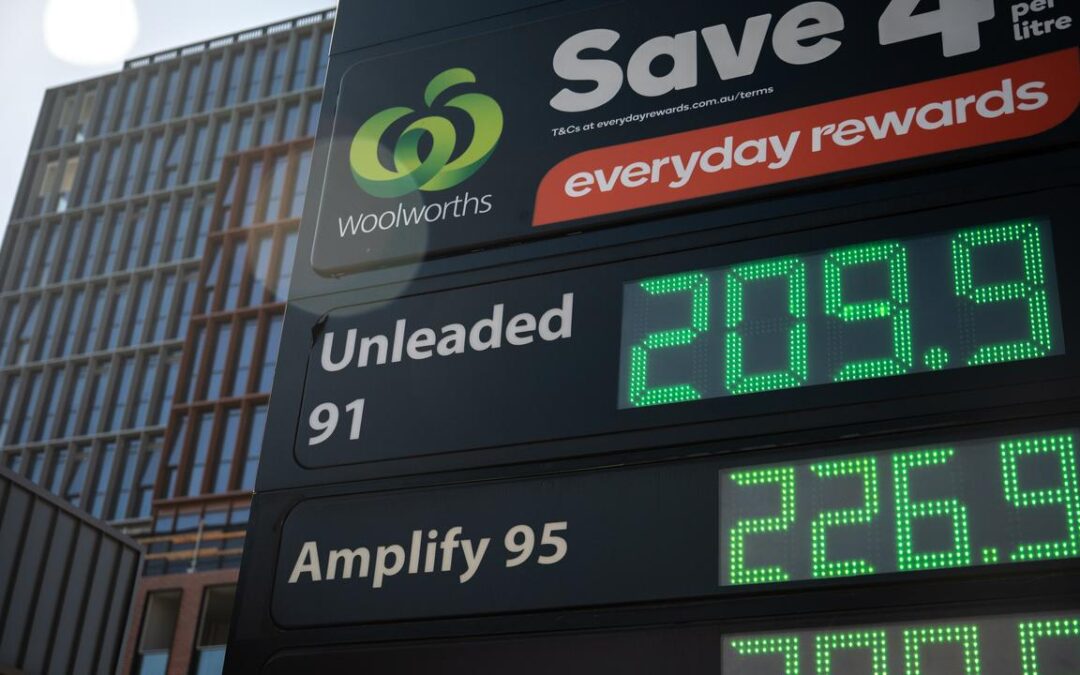
‘Oil doesn’t discriminate’: businesses on shaky ground
Australian businesses were already feeling the pressure before the Middle East plunged them into further uncertainty, according to a business risk group.
Trade payment failures, tax defaults and insolvencies were rising in late 2025 and early 2026, before the Persian Gulf conflict effectively blocked a key oil route and sent crude prices soaring, hammering global growth expectations, CreditorWatch said.
“Things were not disastrous, to be clear, but they were probably a little bit more challenged in the later part of 2025 and early 2026 before the latest pressures,” its chief economist Ivan Colhoun told AAP.
“Interest rates and energy prices are two very important explanators or variables that drive insolvency, and both have moved in the wrong direction in the last two months.”
The retail and transport sectors had been under particular pressure ahead of the conflict, due to already slim margins in freight and long running-cost pressures dragging on consumer confidence, CreditorWatch data released on Wednesday show.
Several major Australian companies have flagged concerns this week around the conflict’s impact on rising costs and supply chain issues, including Qantas, Westpac, A2 Milk and Cleanaway.
“Oil doesn’t discriminate,” Mr Colhoun said.
“Some sectors are more affected (than others) by higher oil prices and higher energy prices, but it pretty much affects the whole economy.”
Everything hinges on how soon traffic volumes in the Strait of Hormuz – a choke point for a fifth of global oil and gas shipments – can return to normal.
An extended period of elevated crude prices would flow through to higher inflation, tighter credit, rising insolvencies, potential fuel rationing, and a likely recession.
“A quicker resolution would prevent a much bleaker outcome, but even then, the margin for error has narrowed,” Mr Calhoun said.
Local small businesses and sole traders were at greater risk than their larger counterparts, as they usually lack the capital buffers available to bigger firms to cushion the impacts of higher costs.
Sole traders, while making up 30 per cent of all Australian businesses, account for more than half of ATO tax defaults over $100,000.
The survival rate for sole-trader businesses from June 2021 to June 2025 was just one-in-two, compared to 68 per cent for all companies, according to ABS data.
Following warnings from International Monetary Fund on Australia’s economic growth prospects, federal Treasurer Jim Chalmers noted the shock’s fallout would be felt for some time, even in a best-case scenario.
“This is a very serious, very dangerous time for the world,” Dr Chalmers told reporters on Wednesday.
“Australia is better placed and better prepared than a number of other countries, but we won’t be spared the fallout from this very substantial economic shock.”
The Albanese government will hand down its fifth annual budget in May.
“I’m really confident that we can strike the right balances in the budget between near‑term pressures and intergenerational obligations,” Dr Chalmers said.
China-linked firm takes majority stake in Qld coal mine
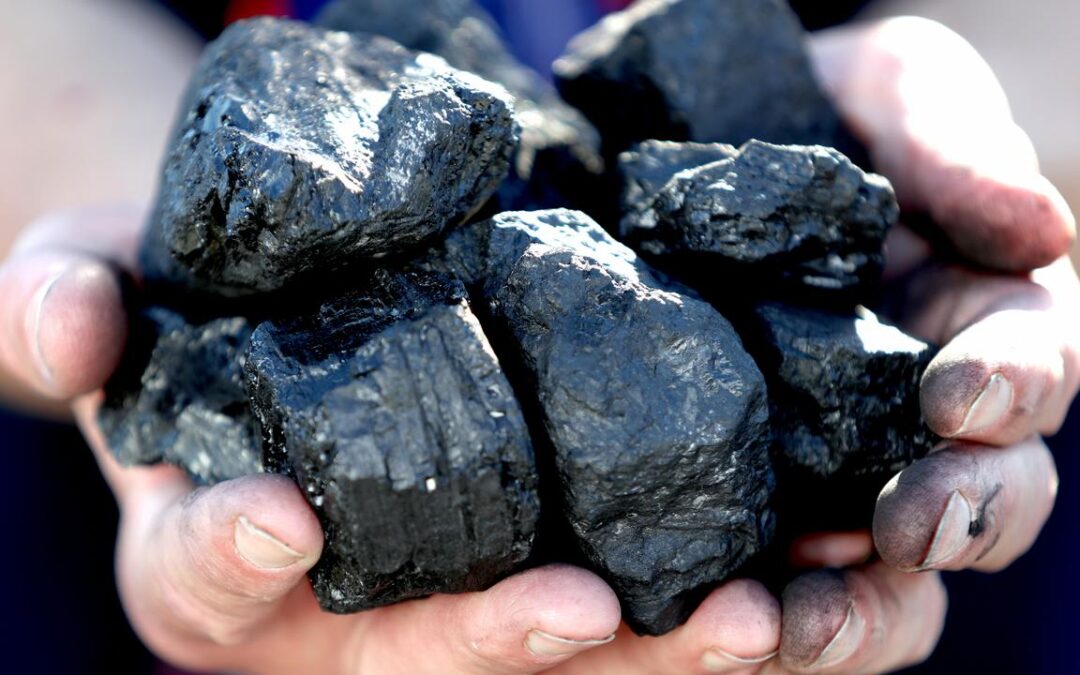
A China-linked group is buying a majority stake in Australia’s largest underground coal mine in a deal worth $US2.4 billion ($3.4 billion) to boost its portfolio.
The stock exchange-listed Yancoal Australia, majority owned by China’s Yankuang Energy Group, will pay $US1.85 billion ($2.6 billion) upfront for an 80 per cent stake in the Kestrel coking coal mine northeast of Emerald in central Queensland.
Yancoal will also make up to $US550 million ($A771 million) over the next five years in contingent payments depending on whether coking coal prices rise by about $US225 a tonne.
Yancoal is buying the stake from Hong Kong-based private equity manager EMR Capital and Indonesian coal company Adaro Group, which had bought it from Rio Tinto for $US2.25 billion ($2.9 billion) in 2018.
Japan’s Mitsui is retaining its 20 per cent stake in the operation.
Yancoal chief executive Sharif Burra said the acquisition was a “strong strategic fit for Yancoal,” which has two other coal mines in the area – its Middlemount joint venture and the Yarrabee mine.
“Kestrel delivers increased scale and diversification to Yancoal’s portfolio and is expected to contribute premium metallurgical coal into our product mix,” he said.
Coal analyst Matt Warder, who runs the Coal Trader website, posted that Kestrel was a “great fit” for Yancoal “and the acquisition I’ve frankly hoped for them for a long time.”
Kestrel produced 5.9 million tonnes of coal in 2025 and is expected to be in production for another 25 years.
Mining began at Kestrel in 1992, when it was known as the Gordonstone mine.
Yancoal shares were down 3.7 per cent to $6.96 around midday on Wednesday.
Virgin follows Qantas on fuel, but impact is lower
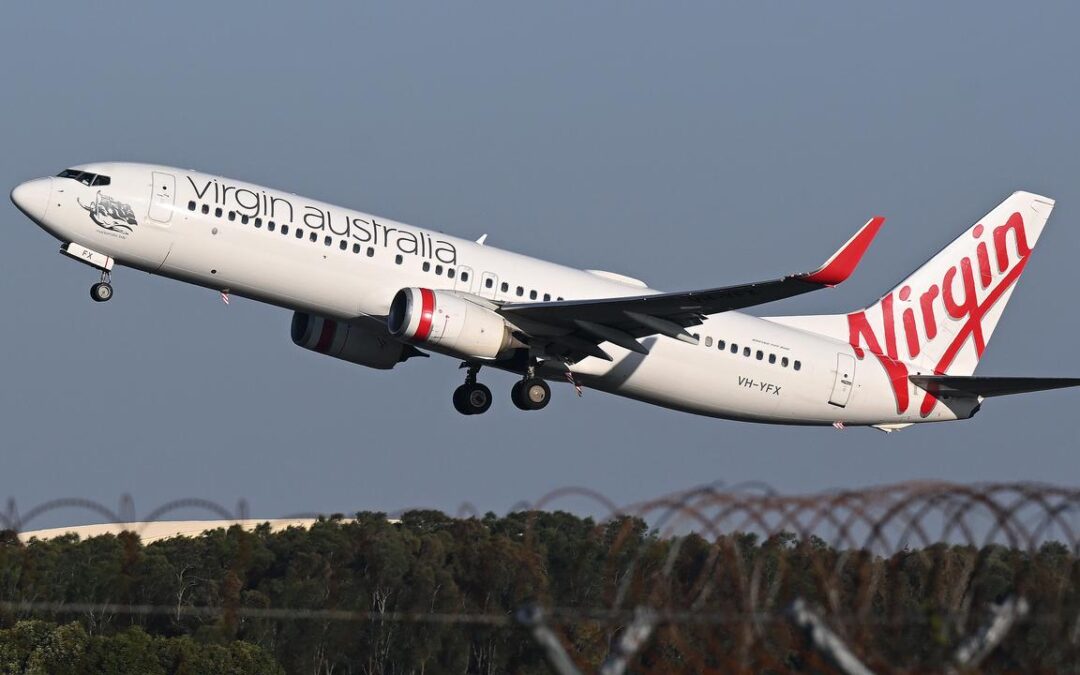
Australia’s second-largest airline has followed Qantas in cutting travel capacity and raising airfares in the wake of the conflict in the Middle East.
But Virgin Australia is more confident about the effectiveness of its fuel hedging, even though it’s currently facing an increased cost of between $30-40 million in the second half of its financial year.
Qantas on Tuesday revealed its second-half fuel bill would rise by $800 million to $3.3 billion.
Virgin Australia also said fare increases and capacity cuts would help protect earnings and left its profit outlook unchanged.
The carrier, which will report its fiscal 2026 results in August, still expects second-half underlying earnings to be higher than the previous corresponding half, when it reported annual earnings of $664.4 million.
“In FY26, the group continues to experience strong customer demand, with higher fuel costs largely mitigated through effective fuel hedging and recent airfare and capacity adjustments,” Virgin told the stock exchange on Wednesday.
For the rest of its fiscal year, Virgin is hedged 92 per cent for Brent crude oil and 71 per cent for refining margins.
This means its exposure is limited to the unhedged portion of crude and refining margins.
In contrast, Qantas said it had hedged 90 per cent of its exposure to crude oil costs but remained exposed to the cost of refining crude into jet fuel.
Refining costs have soared from around $US20 a barrel in February, when the conflict began, to a peak of around $US120.
Like all airlines, fuel is one of Virgin’s highest costs.
In the first half, fuel accounted for 21 per cent of total operating expenses with the equivalent of 3.4 million barrels of oil consumed at a cost of about $555 million.
“To offset the impact from increased fuel and other operating costs, such as airport charges, Virgin Australia has adjusted airfares and capacity” in the current half.
Domestic capacity will fall by one per cent in the June quarter, but will still be one per cent higher across the half.
At the same time, revenue per available seat kilometre – a key metric that reflects how much money is generated for each seat – will rise by five per cent across the second half, and six per cent in the June quarter.
Looking ahead to the new financial year, Virgin said ongoing volatility meant its capacity setting would continue to be under review.
“The group continues to monitor the external environment and retains flexibility to take further actions if required,” it added.

Finance giant lashed again for sending unstoppable spam
A financial services giant has been fined millions of dollars for a repeated breach of spam laws, including promoting credit cards without giving recipients a way to opt-out.
Latitude Financial was forced to pay $3.96 million after the Australian Communications and Media Authority found it had broken the laws more than 2.7 million times, the regulator revealed on Wednesday.
The company sent more than 2.3 million spam messages between March 2024 and April 2025 which failed to include accurate contact information for the company as required by law.
Of those messages, 344,416 also lacked a working unsubscribe function.
Latitude, which is the largest non-bank consumer finance company in Australia, was forced to pay a $1.5 million fine for similar breaches in 2022.
Authority member Samantha Yorke said there was no excuse for Latitude’s repeated compliance failures, as reflected by the scale of the latest fine.
“Latitude is now a two-time offender and it is disappointing that it let consumers down again,” Ms Yorke said.
The messages, which promoted Latitude credit card products and financial services, told recipients they could reply ‘STOP’ to unsubscribe, however in many circumstances the function simply did not work.
Under Australian law consumers must have the option to unsubscribe from commercial messages which must also provide accurate contact information for the sender.
Latitude is now legally required to appoint an independent consultant to review its compliance with the spam laws and undertake regular and comprehensive reporting to the communications authority.
“Given Latitude’s history of non-compliance, we will be very closely monitoring how it meets its obligations,” Ms Yorke said.
In March 2023, Latitude was the target of a major cyber attack in which the data of 7.9 million customers was stolen, including names, addresses, telephone numbers, dates of birth and driver’s licence numbers.
Income and expense information for around 900,000 loan applications, including bank and credit card account details were also stolen.
A $1 million lawsuit brought against the company by an individual who claimed their information had reached the dark web following the breach was dismissed after a judge found it had little chance of succeeding.
Latitude declined to comment ahead of the penalty being made public.
Migrants ‘dehumanised and blamed’ in coalition’s plan
Australia’s multicultural communities are tired of being dehumanised as politicians are accused of using migrants for their own ends.
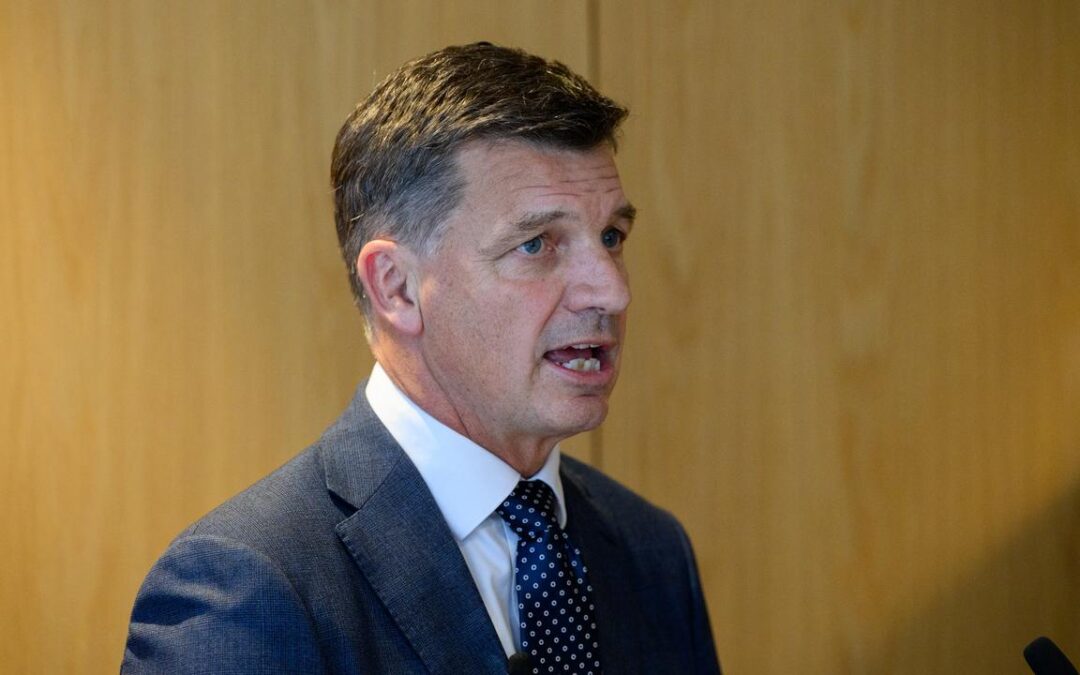
Opposition Leader Angus Taylor on Tuesday unveiled a plan to boot migrants from the country if they do not exhibit enough belief in “Australian values”, shut the door on some asylum seekers and screen the social media of visa applicants.
It is seen as attempt to claw back ground from Pauline Hanson’s conservative One Nation party, which has hoovered up swathes of disillusioned former Liberals and Nationals voters in the aftermath of the coalition’s worst-ever election defeat.
But the plan has been widely panned by human rights groups, Labor and communities the coalition once attempted to court.
The opposition has previously tried to repair relations with the Chinese-Australian community, with Liberal senator Jane Hume issuing an apology after she said “Chinese spies” were volunteering for Labor in a clip that went viral on WeChat.
However, Mr Taylor’s latest speech has only added to the diaspora’s concerns.
“I feel like nothing has changed since the last election,” Chinese Community Council of Australia’s Victorian chapter committee member Eric Yan Ma told AAP.
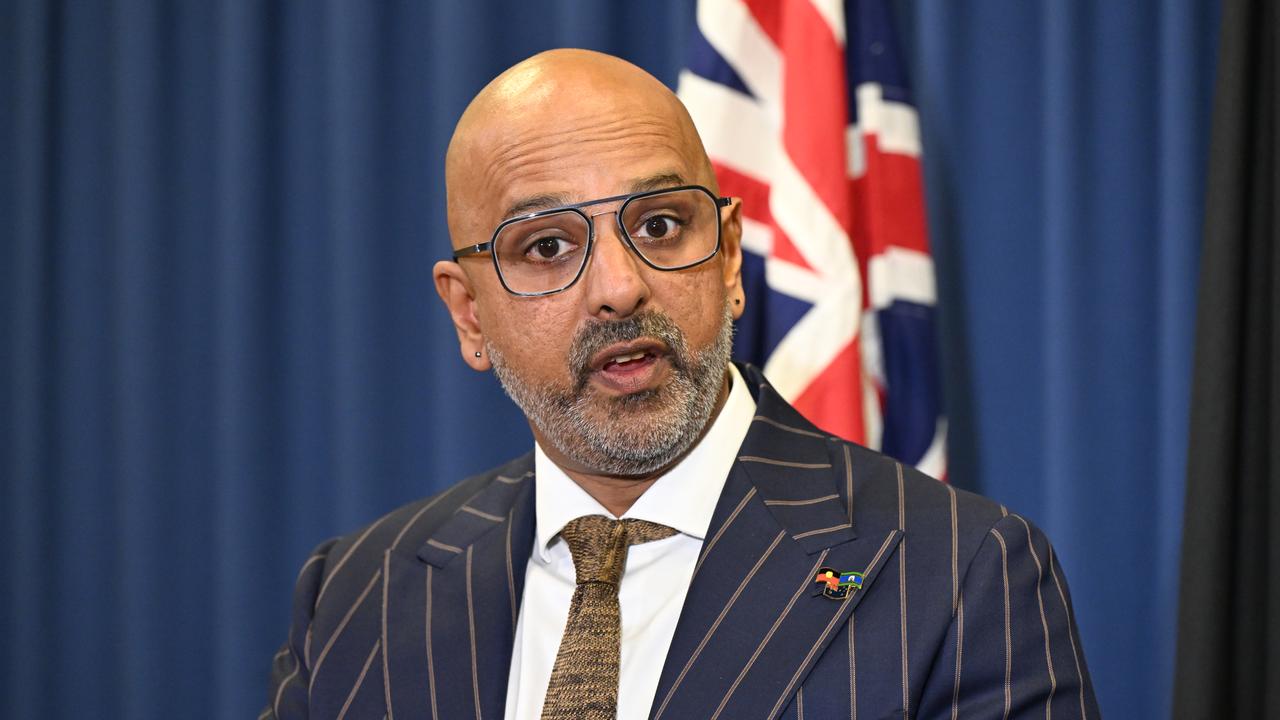
The policy also emboldens Nazis and white supremacists, and paves the way for hate against diverse communities, Race Discrimination Commissioner Giridharan Sivaraman warned.
“Whenever migrants are singled out, dehumanised or blamed, it gives permission for racism towards those people,” he told AAP.
“Often the only signal as to whether someone is a migrant is the colour of their skin or their accent or their name, so it taps into a deep undercurrent of racism that is still very much flowing in this country.”
While Labor has condemned Mr Taylor’s speech as “desperate dog-whistling”, the party has played a part in scapegoating immigrants, the commissioner said.
The federal government in March barred thousands of Iranian visa holders from entering the country while their homeland is under attack from the US and Israel, months after passing laws that make it easier to deport immigration detainees.
Migrants also find it hard to feel seen by Labor, with Mr Ma noting SA Labor Premier Peter Malinauskas said “who’s going to feed you and bathe you and wipe your bum when you’re 90?” when asked how he could “win the day on immigration”.
“It is disheartening to see that one side of politics portrays us as a liability and the other side only see the utility of us,” Mr Ma said.
“How about just see us as humans?”
The coalition in September lost favour with Australia’s Indian diaspora when Liberal senator Jacinta Nampijinpa Price insinuated Labor was bringing in more Indian migrants to bolster its vote.
Though United Indian Associations president John Kennedy backed its proposal for a stricter screening process, he urged the coalition to have compassion and not single out particular communities.
PM to meet Brunei’s sultan in palace fuel talks
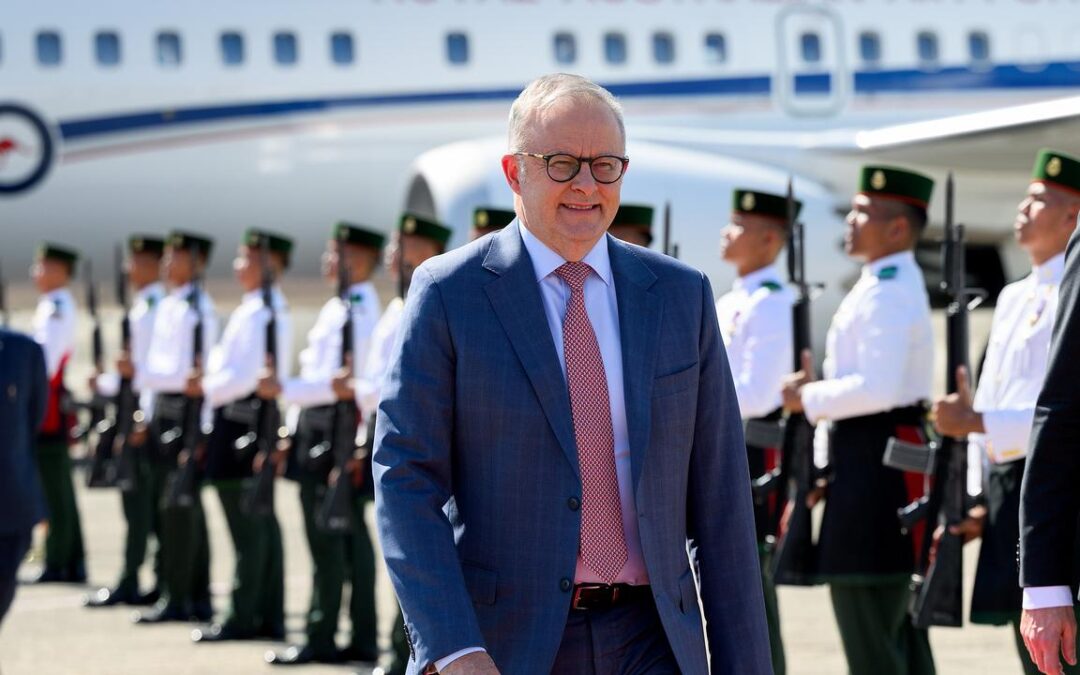
One of the world’s richest men will welcome Anthony Albanese to the gold-studded royal palace of Brunei Darussalam, with the prime minister seeking to leverage Australia’s food exports in a bid to shore up long-term fuel supplies.
Sultan Haji Hassanal Bolkiah, currently the world’s longest-serving head of state, is expected to discuss the oil crisis driven by the war in the Middle East with Mr Albanese, during the pair’s official talks on Wednesday.
While Brunei is a smaller fuel producer than other countries in the region such as Singapore and Malaysia, Australia still imports nine per cent of its diesel, 11 per cent of its crude oil and 11 per cent of its fertiliser-grade urea from the tiny sultanate.
Australia is also a large provider of food to Brunei, having supplied around three quarters of its meat imports in 2024.
Mr Albanese’s approach of focusing on what Australia brings to the table echoes his negotiations with other Southeast Asian nations including Singapore, where he has sought priority access to fuel supplies by guaranteeing shipments of critical goods like liquified natural gas.
Alongside Foreign Minister Penny Wong, the prime minister will also tour Brunei Fertilizer Industries, meeting with chief executive Harri Kiiski as part of the government’s push to secure long-term fertiliser stocks which have also been impacted by interruption of trade through the Middle East.
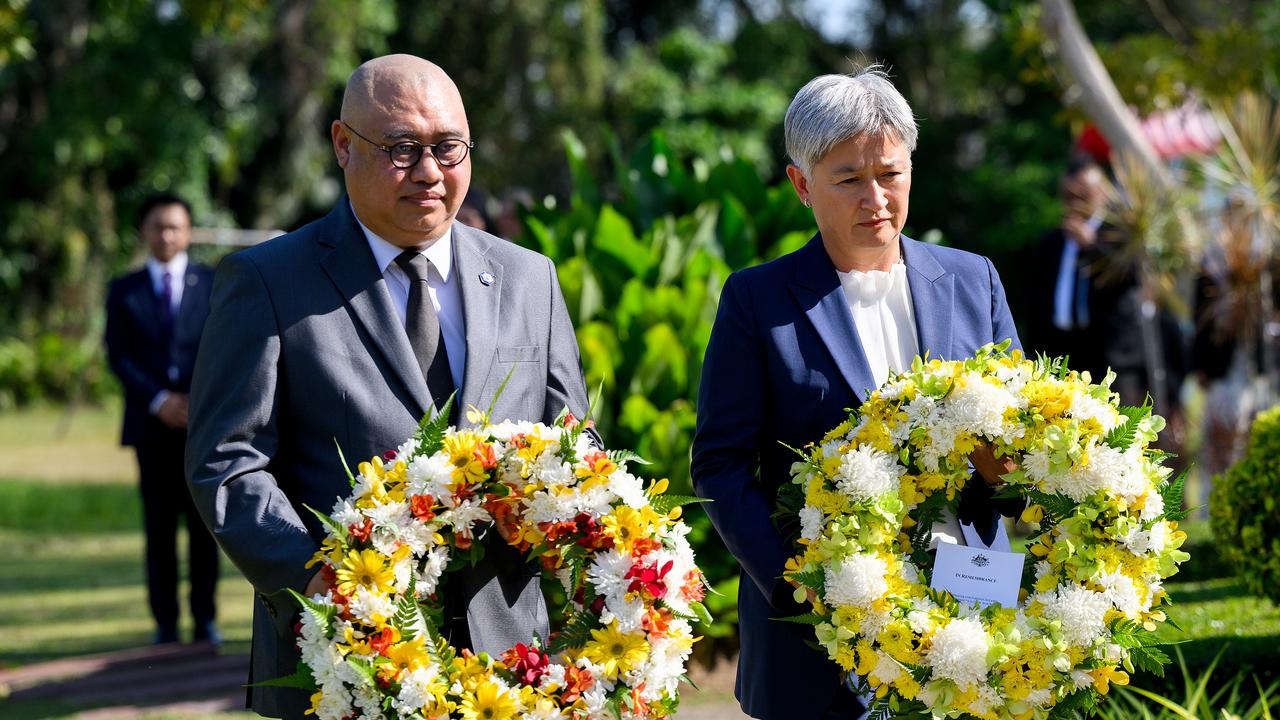
Mr Albanese touched down in Brunei on Tuesday afternoon and laid a wreath at a memorial to Australian soldiers who helped liberate much of the nation, along with then-British Borneo, from Japanese forces during World War II.
For Senator Wong the visit is also sentimental: during her childhood the Malaysian-born politician lived in Borneo and visited the memorial.
The pair’s visit is front-page news in the local newspapers, with the English language daily Borneo Bulletin reporting on a visit to “strengthen energy and supply chain ties”.
Mr Albanese said it was a great honour to visit the country and meet the sultan, who lives in the world’s largest residential palace which includes a private zoo, reportedly containing Bengal tigers, and has ruled the strict Muslim monarchy since 1967.
His majesty’s extraordinary net worth, reported to run into the tens of billions of dollars, is largely derived from Brunei’s petroleum industry.
“I’m very much looking forward to meeting with His Majesty the Sultan of Brunei, and having the opportunity to reinforce what is a very constructive and positive relationship between our two nations,” Mr Albanese told reporters during brief remarks at the Muara Beach Memorial.
IMF cuts outlook, warns of potential global recession
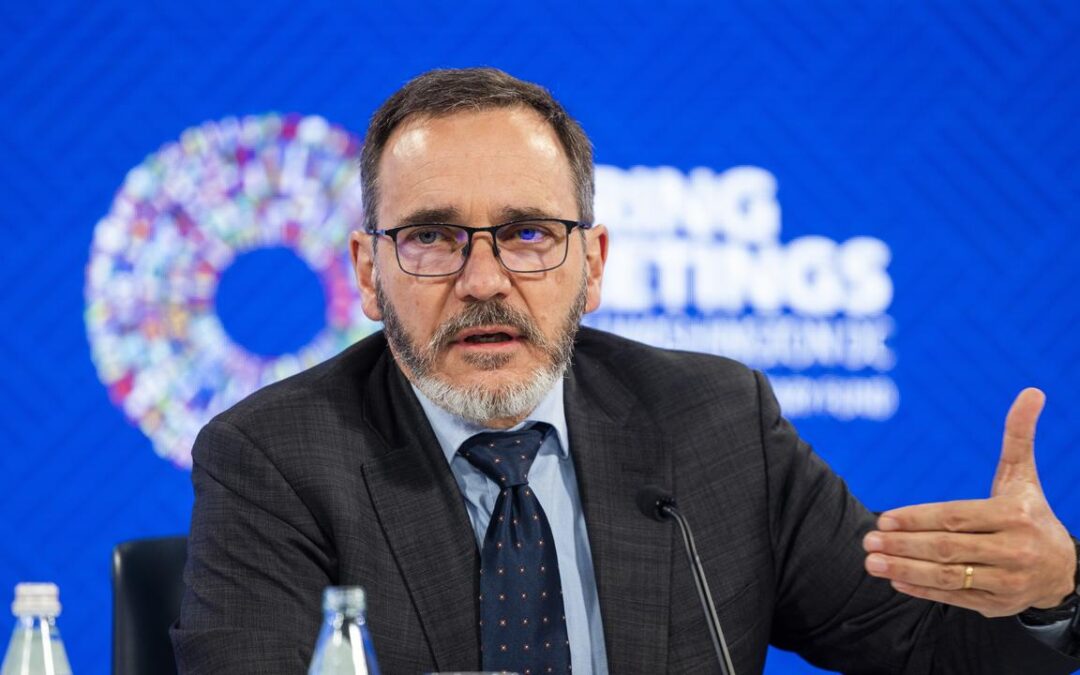
The International Monetary Fund has cut its growth outlook due to Iran war-driven energy price spikes and supply disruptions and warned that the global economy would teeter on the brink of recession if the conflict worsens and oil stays above $US100 per barrel through 2027.
With massive uncertainty over the Middle East conflict gripping finance officials gathering for IMF and World Bank northern hemisphere spring meetings in Washington DC, the IMF presented three growth scenarios: weaker, worse and severe – depending on how the war unfolds.
The World Economic Outlook’s most optimistic “reference scenario” assumes a short-lived Iran war and forecasts 3.1 per cent real GDP growth for 2026, down 0.2 percentage point from its previous forecast in January.
Under this scenario, oil prices average $US82 per barrel for all of 2026, a decline from recent levels of about $US100 for the Brent benchmark futures price.
Absent the Middle East conflict, the IMF said it would have upgraded its growth outlook by 0.1 percentage point to 3.4 per cent, due to a continued technology investment boom, lower interest rates, less-severe US tariffs and fiscal support in some countries.
But the war has created a far bigger risk to the global economy than US President Donald Trump’s initial wave of steep tariffs did a year ago, IMF chief economist Pierre-Olivier Gourinchas told Reuters in an interview.
“What’s happening in the Gulf is potentially much, much larger, and that’s what our scenarios are kind of documenting,” he said.
Under an “adverse scenario” of a longer conflict that keeps oil prices at about $US100 per barrel this year and $US75 in 2027, the IMF predicts global GDP growth would fall to 2.5 per cent this year.
The IMF in January had forecast that oil would decline to about $US62 in 2026.
And the IMF’s worst-case “severe scenario” assumes an extended and deepening conflict and much higher oil prices that prompt major financial market dislocations and tighter financial conditions, slashing global growth to two per cent.
“This would mean a close call for a global recession,” the IMF said, adding that growth has been below that level only four times since 1980 – with the last two severe recessions in 2009, following the financial crisis, and in 2020 as the COVID-19 pandemic raged.
Gourinchas said that a number of countries would be in outright recessions under this scenario, with oil prices averaging $US110 per barrel in 2026 and $125 in 2027.
Prices at this level for an extended time would also increase expectations “that inflation is here to stay,” prompting wider price increases and wage hike demands.
“That change in inflation expectations is going to require central banks to step on the brakes and try to bring inflation back down,” he said, adding that this may require more pain than in 2022.
The IMF said, however, that central banks may be able to “look through” a short-lived energy price surge and hold rates steady amid weaker activity, which would be a de facto monetary easing, but only if inflation expectations remain anchored.
Global inflation for 2026 would top six per cent in the severe scenario, compared to 4.4 per cent in the most-optimistic reference scenario, which is the assumption for the IMF’s country and regional growth forecasts.
The IMF said that governments will be tempted to implement fiscal measures to ease the pain of higher energy prices including price caps, fuel subsidies or tax cuts but cautioned against these urges amid still-elevated budget deficits and rising public debt.
Gourinchas said it was “perfectly legitimate” to want to protect the most vulnerable but subsidies in one country could lead to fuel shortages in others that cannot afford them.
Global fund tips Australia to lead world in inflation
Australia is projected to have one of the highest inflation rates in the developed world as the Middle East conflict threatens a global recession, according to a dire scenario forecast by the International Monetary Fund.
In the latest update to its World Economic Outlook, released late on Tuesday AEST, the global lender of last resort said the world economy was in for more pain without a speedy resolution to the conflict.
The IMF revised its economic growth projections for Australia slightly down from January.
The national GDP growth rate is expected to come in at two per cent in 2026, down from 2.1 per cent, and 1.7 for 2027, from 2.2 per cent.
But Australia’s inflation outlook was revised significantly higher, with consumer price growth of four per cent in 2026 exceeding most advanced economies, including the US, the UK and New Zealand.
The IMF had been preparing to revise its growth forecasts upwards before the war.
But the closure of the Strait of Hormuz and attacks on oil and gas facilities halted the positive momentum and raised the prospect of a major energy crisis should hostilities continue, IMF chief economist Pierre-Olivier Gourinchas said.
Under a severe scenario, in which an extended conflict results in more damage to energy infrastructure, global growth would fall to two per cent in 2026 and perilously close to a global recession.
“What should we avoid?” Mr Gourinchas said.
First and foremost, governments should refrain from wasteful and untargeted fiscal measures such as energy caps or subsidies, designed to ease cost pressures for households and businesses.
“While such measures are popular, evidence suggests they are often both poorly designed and very costly for the public purse,” he said.
“Moreover, avoiding fiscal stimulus at a time of rising inflation is another critical component so as not to complicate the task of central banks.”
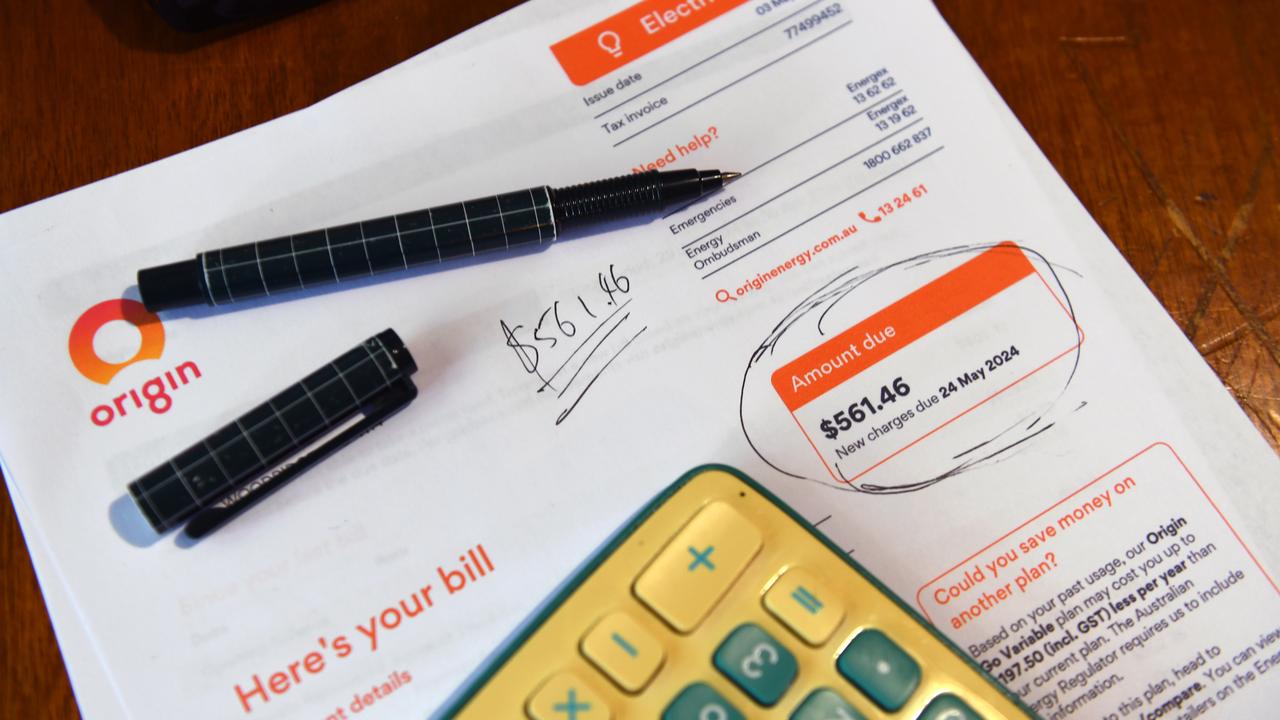
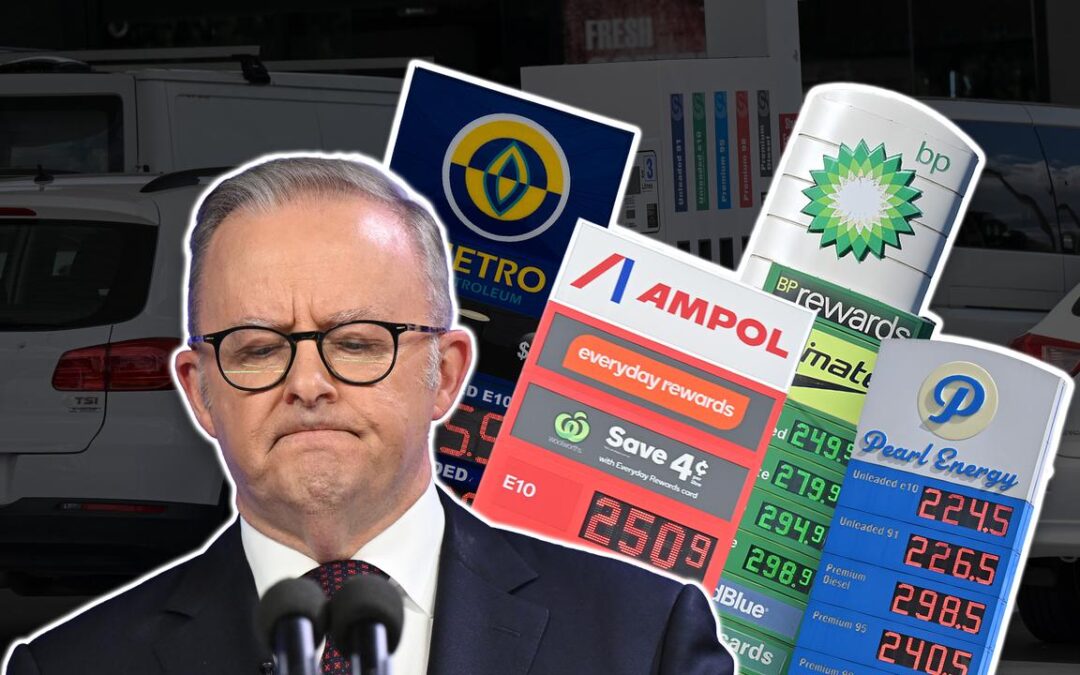
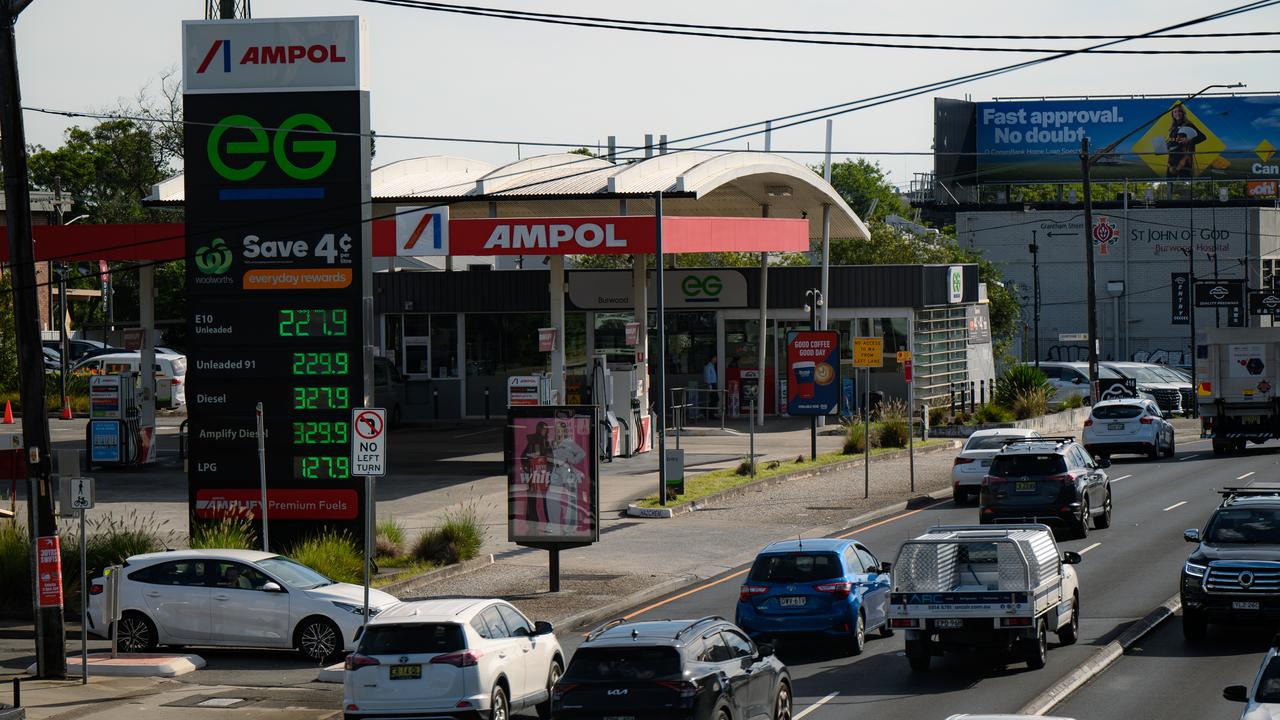
Economists have warned the Albanese government’s cuts to the fuel excise would keep inflation higher for longer and would diminish price signals encouraging Australians to preserve fuel by driving less, catching public transport or riding a bike, for example.
“Preserving price signals is important: high prices signal scarcity, encouraging demand restraint and supply expansion,” Mr Gourinchas said.
He urged central banks to look through the surge in energy prices, as long as inflation expectations remained well anchored and monetary policy settings were already calibrated.
On inflation expectations, RBA deputy governor Andrew Hauser noted in a speaking event in New York on Tuesday that inflation expectations were picking up in the short term, but remained anchored long term.
However, he admitted he was not confident rates were at the right level.
Looking beyond the conflict, the AI revolution promised hope of higher economic growth, productivity and ultimately living standards, but the scars of war would be long-lasting, the IMF said.
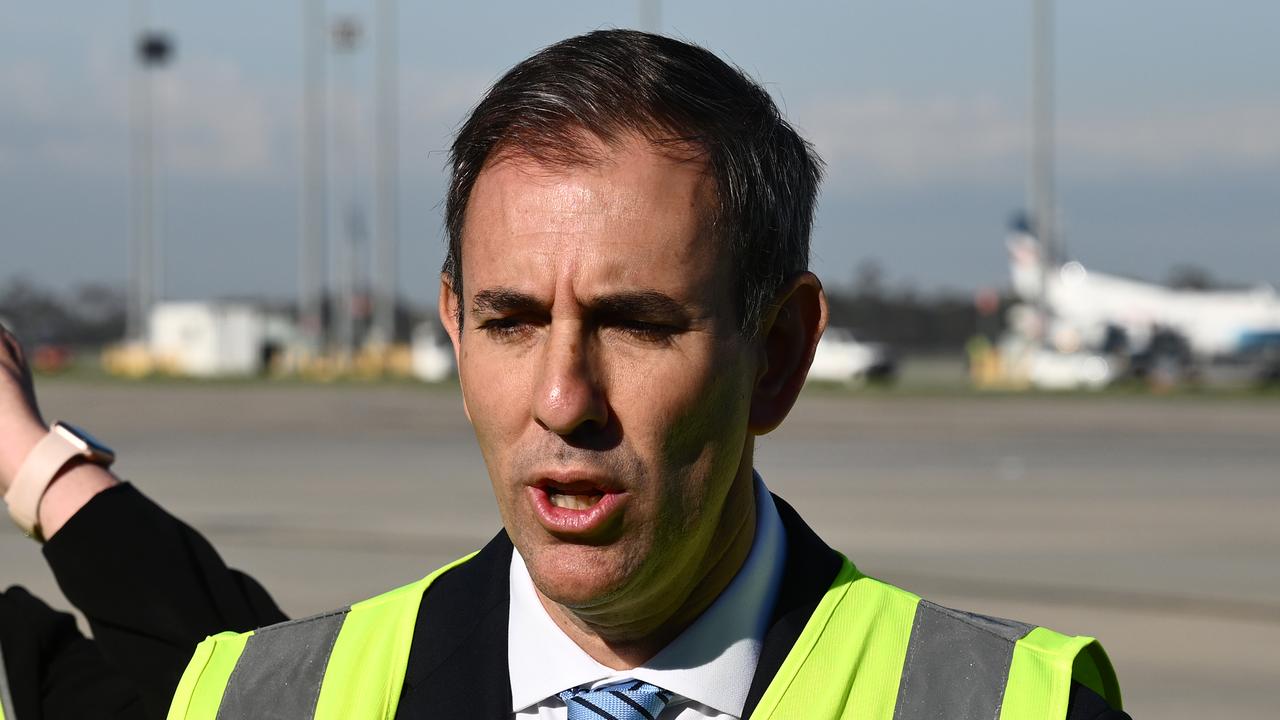
Treasurer Jim Chalmers will head to Washington, DC, on Wednesday to discuss the economic maelstrom with international counterparts, including UK counterpart Rachel Reeves and Chinese Finance Minister Lan Foan, at the IMF-World Bank Spring Meetings.
The report showed it was “a dangerous moment for the global economy”, Dr Chalmers said.
“We’re weighing all of this extreme uncertainty as we prepare a budget focused on resilience and reform.”