
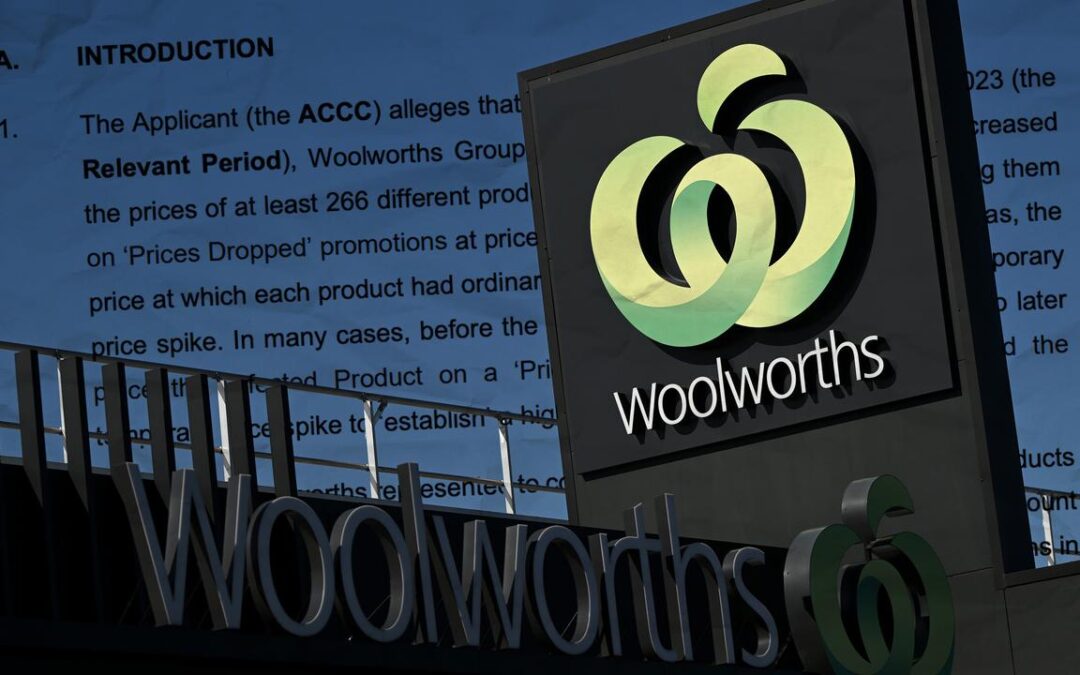
Woolies accused of ‘fanciful’ price drops by watchdog
Woolworths used short-term price hikes and subsequent discounts to hide higher prices and mislead Australian consumers, the Federal Court has been told.
The Australian Competition and Consumer Commission’s joint case against Woolworths and Coles discounting policies is approaching its end after 17 sessions.
The watchdog has alleged the two supermarket giants hiked prices for hundreds of products by at least 15 per cent before reducing them to at or above their initial price, but below the spiked price as part of their “Prices Dropped” and “Down Down” promotions.
The short-term hikes made the price drops “fanciful”, ACCC barrister Michael Hodge KC told the court in his closing arguments.

“Whether the representation of the price had dropped was true or not … is fanciful, because when one actually looks at what has actually happened with the particular price of this product, it has not dropped it has increased,” Mr Hodge told the hearing in Sydney.
Woolworths has argued an extended period of inflation following from the COVID-19 pandemic prompted a series of price increase requests and negotiations with suppliers.
But the ACCC said the supermarket giant’s pricing scheme and its temporary price hikes told suppliers and consumers two incompatible things.
“The commission says the fact that you agree to pay more to your supplier does not make it true when you tell your customers that the customers will now pay less for the product,” Mr Hodge said.
Matters around Woolworths’ margins were confidential and not able to be assessed by the court.
But Justice Michael O’Bryan questioned whether the initial prices, sometimes in place for more than 12-months before being temporarily hiked for as little one week, were relevant at all.
“Because the commission’s case properly starts and ends at the reasonableness of price-two,” Justice O’Bryan said.
“The real question is: was it genuine, not artificial, not temporary in an artificial way, illusory, all of these adjectives to describe what might otherwise be going on?”

Justice O’Bryan said he did not find the promotional strategy inherently misleading or nefarious.
In its closing arguments, Woolworths’ barrister Robert Yezerski SC said the watchdog had tried to argue two different cases, one which fell outside its original concise statement.
The commission had shifted its argument to include matters of profit maximisation and price competitiveness.
“Mr Hodge this morning … correctly anticipated our concern as to the extent of what I think even the ACCC accepts as a departure from its concise statement,” he said.
The case failed for two reasons, Mr Yezerski said.
“The first, the alleged misleading or deceptive representation was not conveyed to ordinary and reasonable consumers by the ‘Prices Dropped’ tickets,” he told the court.
“And second, even if it was the period for which that ‘was’ price was charged … was sufficiently long to constitute the products’ previous regular price, and we say in each case the period was reasonable.”
The hearing continues.

Microsoft earnings surge on cloud revenue growth
Microsoft has reported better-than-expected quarterly results and told investors that capital expenditures for the year will reach $US190 billion due to soaring memory costs.
Microsoft’s revenue grew 18 per cent year over year for the third quarter, which ended on March 31, according to a statement.
The tech giant’s net income of $US31.78 billion, was up from $US25.82 billion, in the same quarter a year earlier. Adjusted earnings exclude a $US14 million decrease in net income from Microsoft’s OpenAI investments.
Microsoft’s cloud-computing unit posted 40 per cent revenue growth in the January-March quarter, matching consensus estimates.
Microsoft Cloud revenue reached $US54.5 billion overall – a rise 29 per cent year-over-year.
Microsoft’s Productivity and Business Processes segment, which includes Office productivity software, LinkedIn and Dynamics business software, totalled $US35 billion in revenue.
Microsoft’s More Personal Computing unit, which includes the Windows operating system, Xbox, Surface devices and Bing search advertising, contributed $US13.19 billion in revenue, down one per cent.
Sales of Windows licences to device makers and Microsoft’s own devices were down two per cent.
With respect to guidance, Microsoft’s finance chief, Amy Hood, called for $US86.7 billion to $US87.8 billion in fiscal fourth-quarter revenue.
In forecasting $US190 billion in capex for 2026, Hood said she anticipates a $US25 billion impact from higher component prices.
Microsoft foresees Azure cloud growth between 39 per cent and 40 per cent.
Microsoft’s headcount will go down year over year in the 2027 calendar year.
“We continue to evolve how we operate, to increase our pace and agility,” Hood said.
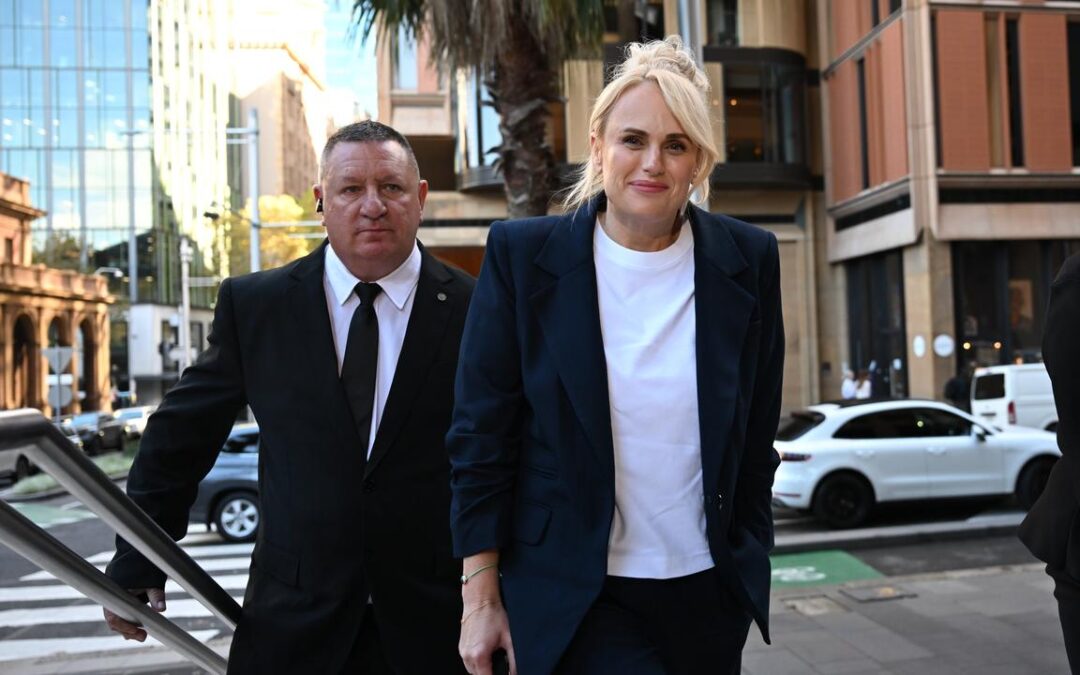
Rebel Wilson’s film feud testimony kicks off third day
Hollywood star Rebel Wilson has spoken about the upcoming birth of her second child as she entered the courthouse to give evidence for a third day in her blockbuster defamation battle.
The Pitch Perfect star is being sued for defamation by Charlotte MacInnes, the 27-year-old lead actor of the musical comedy The Deb.
MacInnes claims she was defamed by Wilson in social media posts that suggested she is a liar who retracted a sexual harassment complaint to further her acting and music career.
Wilson alleges the young actor confided she felt uncomfortable when the film’s co-producer Amanda Ghost asked to have a shower and a bath together in September 2023 but later reneged.
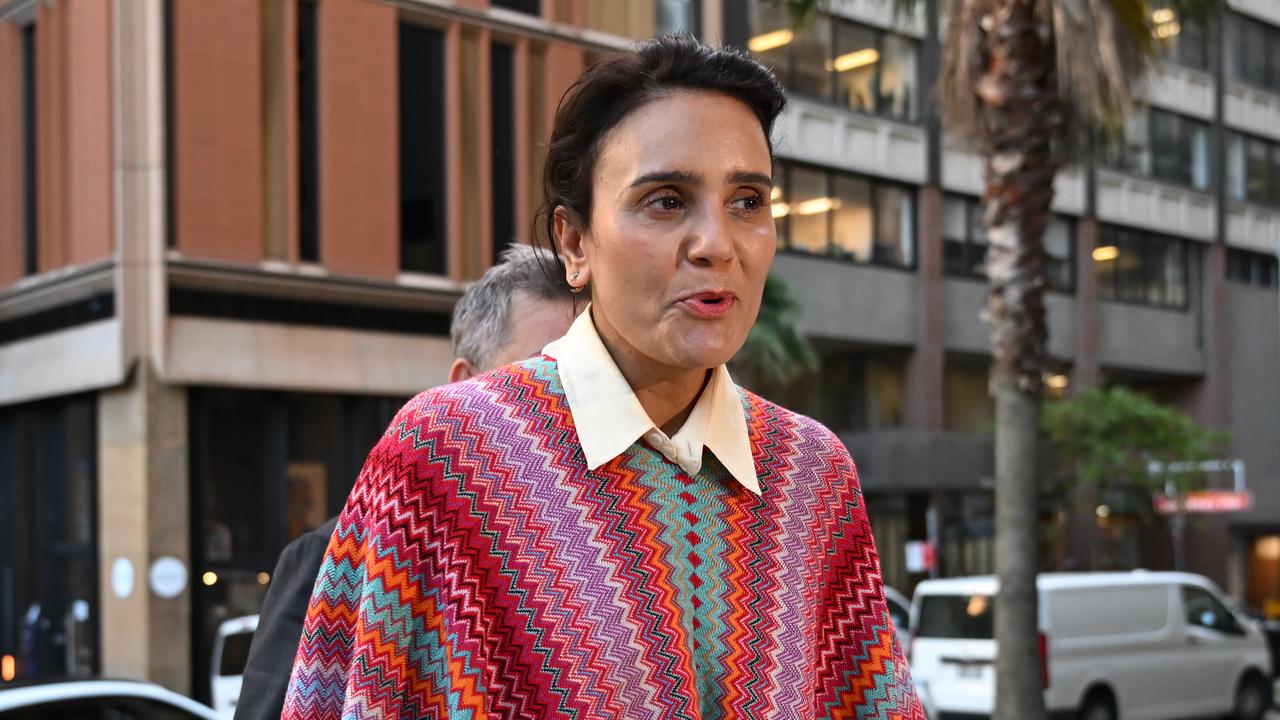
MacInnes denies making or walking back a complaint, insisting she never said she felt uncomfortable.
The young actor’s self-professed confidante will continue to be grilled about her version of events when she returns to the witness box in the Federal Court on Thursday.
Asked about the impending birth of her second child as she entered the courthouse, Wilson said her wife luckily hasn’t given birth yet in the US.
She may be quizzed on documents MacInnes’ lawyer Sue Chrysanthou SC previously requested, including communications that may relate to smear websites attacking Ms Ghost.
Wilson has denied having any involvement in ordering or authoring the websites which described the producer as the “Indian Ghislaine Maxwell” and a sex trafficker.

She said her former US lawyer hired The Agency Group to assist her in a legal dispute with her co-producers but insisted the firm had not been commissioned to work for her.
The firm is also accused of creating smear websites attacking Hollywood actor Blake Lively on behalf of her co-star Justin Baldoni.
Wilson was asked earlier in the week to produce communications between her and the employees of The Agency Group, including a text chain with chief executive Melissa Nathan.
Ms Chrysanthou also called for any receipts for payments to the PR firm in an attempt to discern who paid for the services rendered by Ms Nathan.
An agreement tendered to the court shows Wilson’s US lawyer – with whom she has now parted ways – retained The Agency Group for strategic communication services in connection with the star.
“As consideration for the Services, Rebel Wilson hereby agrees to pay Agency a sum of $25,000 USD per month,” the unsigned letter of agreement records.
When asked about the agreement dated July 2024, Wilson said it had been sent to her lawyer despite being addressed to her.
She rejected suggestions from Ms Chrysanthou that she was being utterly dishonest and had lied for a year about the topic.
Wilson also denied accusations that she raised MacInnes’ alleged complaint after it had been resolved in order to get her way during a dispute with her co-producers.

Wilson’s barrister Dauid Sibtain SC contends that MacInnes made the complaint and then changed her story to ensure her career thrived with Ms Ghost’s assistance.
He has argued MacInnes’ career has progressed and she hasn’t suffered any harm to her reputation at all as a result of the social media posts, contrary to her allegations.
Customers feeling war impact, supermarket giant warns
Australian shoppers are feeling the impact of higher petrol prices on top of ongoing cost-of-living pressures, the country’s biggest supermarket chain warns.
Woolworths, which claims close to a third share of the market through almost 1000 stores, on Thursday reported a 4.5 per cent lift in total sales for its third quarter to $18.1 billion.
Most of the revenue was driven by food sales, which rose almost six per cent to $13.8 billion.
But the outlook for fourth-quarter earnings is less clear, particularly if the Middle East conflict drags on, chief executive Amanda Bardwell signalled.

“We are seeing early signs that the conflict in the Middle East is impacting our customers and team, many of whom were already experiencing significant cost-of-living pressures,” Ms Bardwell said.
“Our primary focus since March has been to take the necessary steps across the group to minimise the impact on customers.”
Since the US attacked Iran on February 28, oil prices have soared after the Strait of Hormuz, a key shipping lane for about 20 per cent of the world’s crude, was blocked.
The upward pressure on the price of Brent crude, which on Thursday hit $US120 a barrel, has pushed up the cost of petrol and diesel used by consumers and businesses.
“The group has mobilised rapidly to respond to this environment and we are engaging regularly with government as their response plans are developed,” Ms Bardwell said, referring to the push to secure fuel supplies for Australia.
“It is still too early to predict with any certainty the direct and indirect impacts on fiscal 2027 from the conflict in the Middle East and how this will impact customer shopping behaviours.”

Amazon reports strong Q1 profit, cloud unit sales rise
Amazon has reported strong increases in profits and net sales during its fiscal first quarter, helped by surging growth in its prominent cloud computing unit.
The e-commerce and technology company said sales in its cloud computing unit were up 28 per cent in the January-March period, the fastest increase in 15 quarters.
Amazon Web Services had 24 per cent sales growth in the fourth quarter, which followed the division’s 20 per cent growth in the third quarter.
Net sales increased by 17 per cent year-over-year to $US181.5 billion, with growth across North America and international segments.
The Seattle-based company also offered a bullish outlook for net sales in the current quarter, surpassing analysts’ estimates. However, shares slid nearly two per cent in after-hours trading.
Investors were closely watching Amazon’s quarterly earnings to see if the company’s $US200 billion investment in artificial intelligence, robots, semiconductors and satellites is starting to pay off.
The planned expenditure for the year marked a 60 per cent increase from Amazon’s $US128 billion in capital spending last year and spooked investors, sending the stock down 11 per cent in after-hours trading when it was announced in February.
CEO Andy Jassy defended the spending during the previous quarterly earnings call, saying Amazon expected long-term returns on its invested capital.
The results from the latest quarter underscored that demand keeps growing for Amazon’s services and technology.
“We’re in the middle of some of the biggest inflections of our lifetime, we’re well positioned to lead, and I’m very optimistic about what’s ahead for our customers and Amazon,” Jassy said in a release on Wednesday.
Big deals that Amazon signed with OpenAI, Anthropic and Meta this month gave the company solid momentum.
Amazon announced what it called a “major expansion” of its partnership with ChatGPT maker OpenAI on Tuesday, a day after the AI company said it was loosening its ties to longtime backer Microsoft.
Last week, Anthropic agreed to commit more than $US100 billion to Amazon’s AWS cloud platform over the next 10 years to train and run the artificial intelligence company’s Claude chatbot. The partnership will allow Anthropic to secure up to five gigawatts of Amazon’s Trainium chips to train and power their artificial intelligence models, Amazon said.

Alphabet Q1 tops estimates, Google Cloud revenue soars
Alphabet topped Wall Street estimates for quarterly revenue on Wednesday, as enterprise spending on artificial intelligence delivered the best quarter of growth for its cloud unit since the start of the AI boom.
The Google parent company’s total revenue rose 22 per cent to $109.9 billion in the first quarter, above an estimate of $107.2 billion, according to LSEG data.
Shares of the company were up more than seven per cent in extended trading.
Revenue at Google Cloud grew 63 per cent to $US20 billion in the first quarter ended March, well above analysts’ average estimate of a 50.1 per cent increase, according to data compiled by LSEG.
That growth rate is the best since the company began breaking out the segment’s revenue in 2020, according to LSEG data. Operating income for the cloud unit tripled to $US6.6 billion in the first quarter from $US2.2 billion a year earlier.
Alphabet’s overall consolidated operating income increased 30 per cent to $US39.7 billion.
Google began selling its TPU chips, which compete with Nvidia’s GPUs, directly to some customers, CEO Sundar Pichai announced on a conference call with analysts.
For years Google reserved its TPUs, which stand for “tensor processing units,” only for internal use to develop technologies such as its Gemini AI model. Its decision to lease TPUs to cloud customers helped drive growth for Google Cloud, but the company had held off on directly selling those chips until now.

“Our enterprise AI solutions have become our primary growth driver for Cloud for the first time,” Pichai said on the call.
At the same time, its Gemini chatbot drove the “strongest quarter ever” for consumer AI, Pichai said.
He said the company was enjoying growth across the board thanks to its full-stack AI approach, referring to every layer of the AI technology chain including chips, data centres, AI models and developer tools.
In turn, CFO Anat Ashkenazi said Alphabet increased its capital expenditure projection for 2026 to between $US180 billion and $US190 billion, a $US5 billion bump compared to what it announced last quarter.
Capital spending in the first quarter more than doubled from a year earlier to $US35.67 billion.
“Perhaps even more importantly than Alphabet’s massive cloud growth pace is the broader justification that the $US180 billion capex plan – that surprised the market last quarter – is well within the company’s spending power, considering the durability and quality of the revenue curve shown today,” said Thomas Monteiro, a senior analyst at Investing.com.
The third-largest cloud services provider globally, behind Amazon Web Services and Microsoft’s Azure, Alphabet has continued to land major deals, including expanded AI infrastructure partnerships with Meta and cybersecurity firm Palo Alto Networks.
The results underscore Alphabet’s position as a key beneficiary of global spending on AI, even as investors worry whether massive outlays on infrastructure will translate into sustained growth and market share gains.
Meta raises spending forecast to $US145b in AI push
Meta Platforms has raised its annual capital spending forecast, doubling down on its decision to plough billions into artificial intelligence infrastructure even as it seeks to cut costs with planned layoffs.
The Facebook-parent projects 2026 capital expenditure between $US125 billion and $US145 billion, compared with its prior forecast of $US115 billion to $US135 billion.
Shares of the company fell around five per cent in extended trading.
The company also warned that legal and regulatory blowback in the EU and the US “could significantly impact our business and financial results.”
“We continue to see scrutiny on youth-related issues and have additional trials scheduled for this year in the US, which may ultimately result in a material loss,” the company said.
Meta reported first-quarter revenue of $US56.31 billion, beating the LSEG-compiled analysts’ average estimate of $US55.45 billion.
It expects second-quarter revenue of $US58 billion to $US61 billion, largely in line with estimates of $US59.5 billion.
Family daily active people (DAP), a metric Meta uses to track unique users who open any one of its apps in a day, rose four per cent in the first quarter from a year earlier to 3.56 billion.
The results come weeks after Reuters reported first about Meta’s plans for sweeping layoffs, as CEO Mark Zuckerberg attempts to aggressively integrate AI into the company’s workflows and reshape its workforce around the technology.
Meta, which owns Instagram, WhatsApp and Threads, has been spending heavily on AI infrastructure and high compensation for employees such as those working in its Meta Superintelligence Labs, which released its first AI model called Muse Spark earlier this month.
The company’s robust ad platform, which offers tools for automating and personalising advertisers’ campaigns, has remained its growth engine and has helped support its investments in AI infrastructure.
Meta launched ads on messaging service WhatsApp and microblogging platform Threads last year, intensifying competition with platforms such as Elon Musk’s X. Simultaneously, Instagram’s Reels continue to jostle with TikTok and YouTube Shorts in the lucrative short-video market.
For the first time, Meta is projected to overtake Alphabet as the world’s biggest online advertiser, with an expected $US243.46 billion in global net ad revenue this year, excluding traffic acquisition costs. The forecast, by research firm Emarketer, puts the Google- and YouTube-parent’s annual ad revenue at $US239.54 billion.

Last week, the company expanded the availability of its Meta AI business assistant, designed to help advertisers optimise campaign performance and resolve technical issues through real-time guidance.
Meta is installing new tracking software on US-based employees’ computers to capture mouse movements, clicks and keystrokes to train its AI models, part of a broad initiative to build AI agents that can perform work tasks autonomously, Reuters reported last week.
Meanwhile, China ordered Meta to unwind its $US2 billion-plus acquisition of AI startup Manus on Monday, as Beijing tightens scrutiny of US investment in domestic startups developing frontier technologies.
Meta raises spending forecast to $US145b in AI push
Meta Platforms has raised its annual capital spending forecast, doubling down on its decision to plough billions into artificial intelligence infrastructure even as it seeks to cut costs with planned layoffs.
The Facebook-parent projects 2026 capital expenditure between $US125 billion and $US145 billion, compared with its prior forecast of $US115 billion to $US135 billion.
Shares of the company fell around five per cent in extended trading.
The company also warned that legal and regulatory blowback in the EU and the US “could significantly impact our business and financial results.”
“We continue to see scrutiny on youth-related issues and have additional trials scheduled for this year in the US, which may ultimately result in a material loss,” the company said.
Meta reported first-quarter revenue of $US56.31 billion, beating the LSEG-compiled analysts’ average estimate of $US55.45 billion.
It expects second-quarter revenue of $US58 billion to $US61 billion, largely in line with estimates of $US59.5 billion.
Family daily active people (DAP), a metric Meta uses to track unique users who open any one of its apps in a day, rose four per cent in the first quarter from a year earlier to 3.56 billion.
The results come weeks after Reuters reported first about Meta’s plans for sweeping layoffs, as CEO Mark Zuckerberg attempts to aggressively integrate AI into the company’s workflows and reshape its workforce around the technology.
Meta, which owns Instagram, WhatsApp and Threads, has been spending heavily on AI infrastructure and high compensation for employees such as those working in its Meta Superintelligence Labs, which released its first AI model called Muse Spark earlier this month.
The company’s robust ad platform, which offers tools for automating and personalising advertisers’ campaigns, has remained its growth engine and has helped support its investments in AI infrastructure.
Meta launched ads on messaging service WhatsApp and microblogging platform Threads last year, intensifying competition with platforms such as Elon Musk’s X. Simultaneously, Instagram’s Reels continue to jostle with TikTok and YouTube Shorts in the lucrative short-video market.
For the first time, Meta is projected to overtake Alphabet as the world’s biggest online advertiser, with an expected $US243.46 billion in global net ad revenue this year, excluding traffic acquisition costs. The forecast, by research firm Emarketer, puts the Google- and YouTube-parent’s annual ad revenue at $US239.54 billion.

Last week, the company expanded the availability of its Meta AI business assistant, designed to help advertisers optimise campaign performance and resolve technical issues through real-time guidance.
Meta is installing new tracking software on US-based employees’ computers to capture mouse movements, clicks and keystrokes to train its AI models, part of a broad initiative to build AI agents that can perform work tasks autonomously, Reuters reported last week.
Meanwhile, China ordered Meta to unwind its $US2 billion-plus acquisition of AI startup Manus on Monday, as Beijing tightens scrutiny of US investment in domestic startups developing frontier technologies.

Australia’s co-working boom moves from city to suburbs
More Australians are taking up desks in coworking spaces, as the flexible venues move beyond Australia’s capital cities and into the suburbs and regional areas.
Flexible Workspace Australia’s 2026 industry report shows the client base of flexible workspaces has moved beyond startups, small businesses, and freelancers to include established corporations.
“Co-working is no longer a phenomenon or fad but an established and expected way of working,” the report released on Thursday said.
Desk rates have trended higher, vacant flexible floorspace has tightened dramatically, and operator sentiment is overwhelmingly positive, according to the report, which is based on a national survey of flexible workplace operators, industry data and expert contributions.
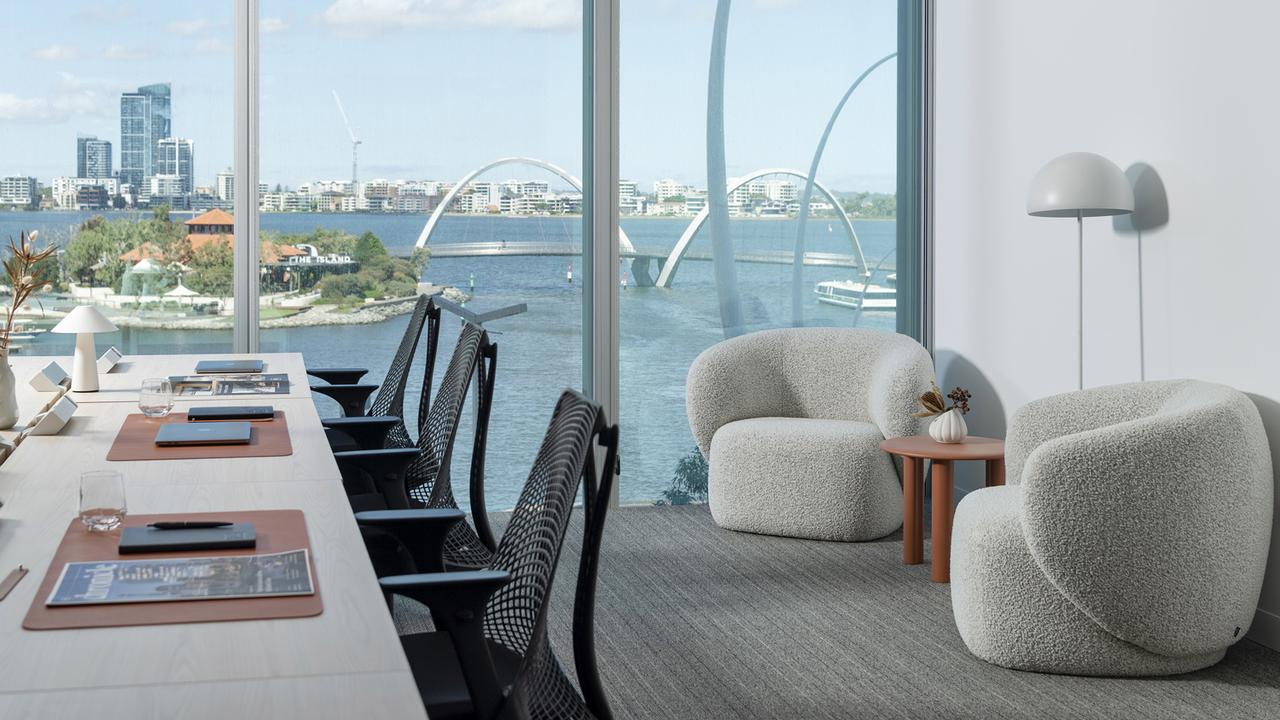
As hybrid work and AI become embedded in businesses, the role of flexible space will only expand.
“We expect to see continued growth across suburban and regional markets, increased adoption by enterprise organisations, and further innovation in how spaces are designed and adopted,” the report said.
Ophelie Cutier, the report’s main author and the chief executive of Perth and Sydney based startup hub Spacecubed, has been in the flexible workspace industry for 14 years.
“In Australia, the industry was definitely in its infancy when I started, and there had been huge growth before COVID,” Ms Cutier told AAP.
But many smaller operators didn’t survive the pandemic lockdowns, with half of all spaces in Sydney and Melbourne shutting down.
The report found the industry has rebounded and is growing once again, although slower than it did before the pandemic.
“One of the trends we’ve seen in the last three years is that the allocation from landlord to flex space has doubled in the last three years,” Ms Cutier said.
“So that’s a very big uptick.”
The report also found that pricing had normalised above pre-pandemic levels and remains resilient.
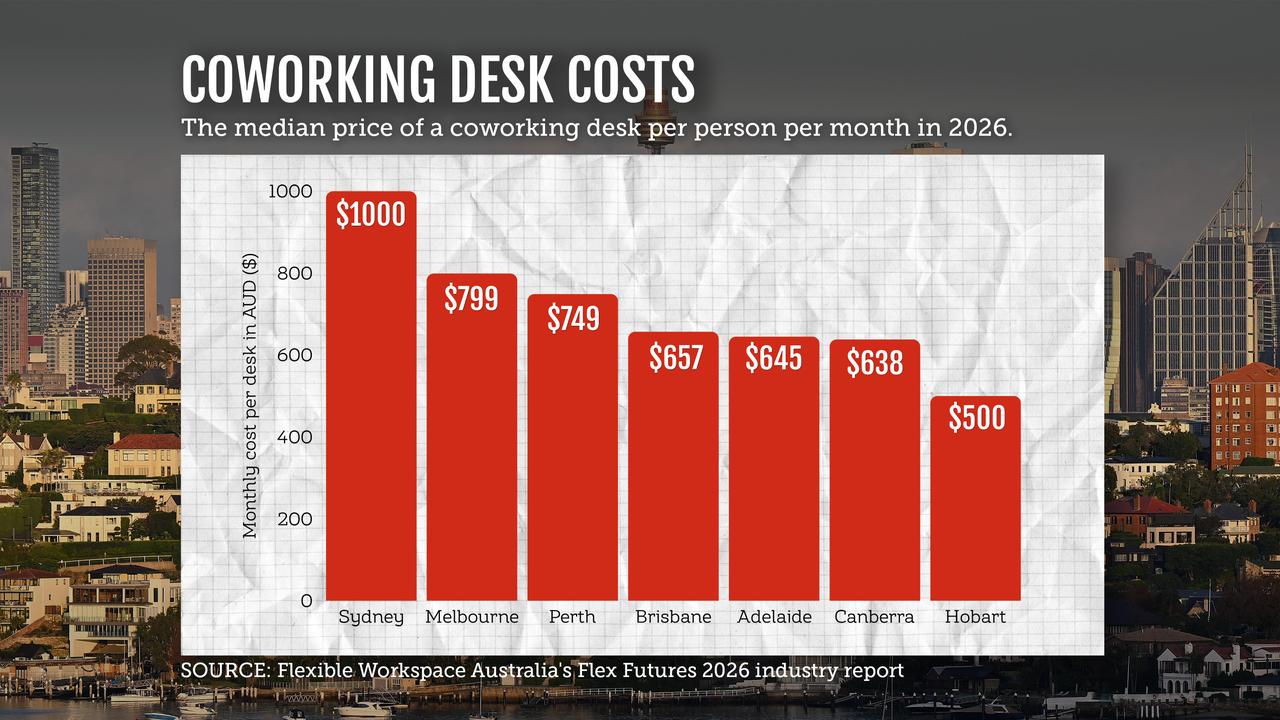
The median desk rate for a co-working space ranges from around $500 per person in central Hobart to $1000 per person per desk in Sydney’s CBD, although spaces outside CBDs are considerably cheaper.
“What I am noticing a lot is a real desire for suburban and flexible co-working operators, and I love that because it’s a field we play in,” said Jessie Glew, co-chair of Flexible Workspace Australia.
Ms Glew is also chief executive of Wotso, which has 42 coworking hubs across Australia and New Zealand.
“We are seeing a growing number of landlords wanting to put coworking into their assets, in particular in the suburbs and regions, because they’re looking for this service,” she said.
“It’s become like the gym or the childcare centre or the coffee shop, it’s needed as part of an asset’s genetic makeup, because it helps bring people to the asset.”
Wotso is looking to expand into Bundaberg and Harvey Bay in Queensland and out in NSW as far as Orange, Ms Glew said.
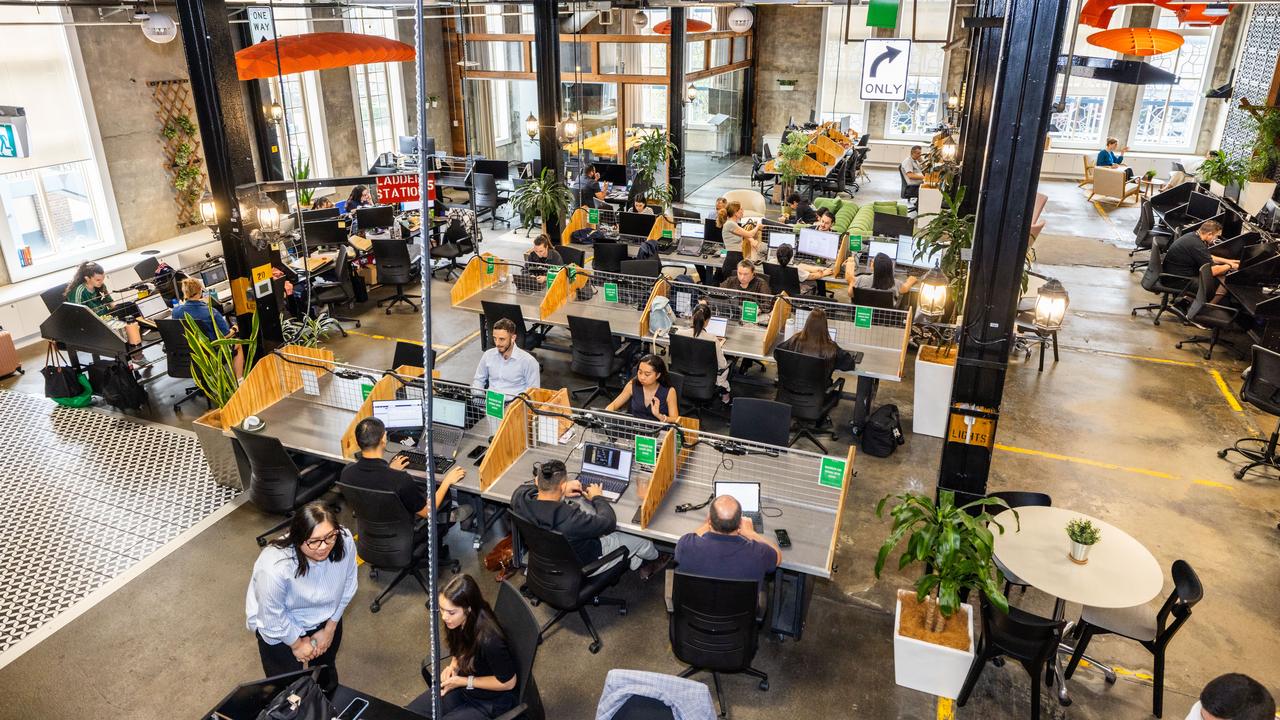
“We feel like we have a really big impact in those areas, because there’s often not a purpose-built space for small to medium businesses.”
Given higher fuel costs, larger businesses are also looking at dispersing their workforce, and offering employees a central CBD office as well as closer-to-home solutions a couple of days a week.
The typical user of a coworking space varies quite a bit by location with some of Wotso’s hubs attracting plumbers and builders and others popular with tech workers.
A two to four person office tends to be the most popular offering.
Hub Australia, a major coworking player that’s more active in central business districts, boasts well-known corporate clients including Fujitsu, Monday.com, Xero, Village Roadshow Pictures and Vanguard.
While flexible workspaces make up only a tiny fraction of the 5.3 million square metres of office space in Sydney’s CBD, they’re starting to dominate.
Slightly more than half, or 53 per cent, of all five to 10 person offices in Sydney are flexible workspaces, as are more than three-quarters of all one to four person offices, the report said.
The report also found most coworking spaces were used by local small businesses, as well as freelancers, remote workers and startups.
Corporations made up about a third of tenants.
Brett McAllen, the chief executive of @WORKSPACES, which offers serviced offices in Melbourne, Brisbane and the Gold Coast, said that demand had accelerated significantly from businesses of all sizes.

“We are seeing a fundamental shift in how businesses think about office space,” he said.
“Long-term leases are being viewed as a liability.
“Businesses want premium environments, but they want flexibility, control and the ability to scale up or down without being locked in.”
Workforces are more dynamic, teams are more distributed and business conditions are less predictable, so companies want the ability to respond quickly to changing business conditions.
“This is about agility,” Mr McAllen.
“If your workspace cannot adapt, it becomes a constraint rather than an asset.”

Batteries undercutting gas, keeping lid on power bills
Australian power grids have proven far more resilient to the latest global energy crisis compared with the Russia-Ukraine war, bolstered by battery boom and subdued local gas prices.
A ballooning battery fleet soaking up cheap, abundant solar to discharge in the evening peak have cut reliance on dearer gas and hydro generation, the market operator says.
More battery usage fed into lower year-on-year wholesale electricity prices in most regions.
Batteries set prices nearly a third of the time in the first three months of 2026, surpassing all other technologies.
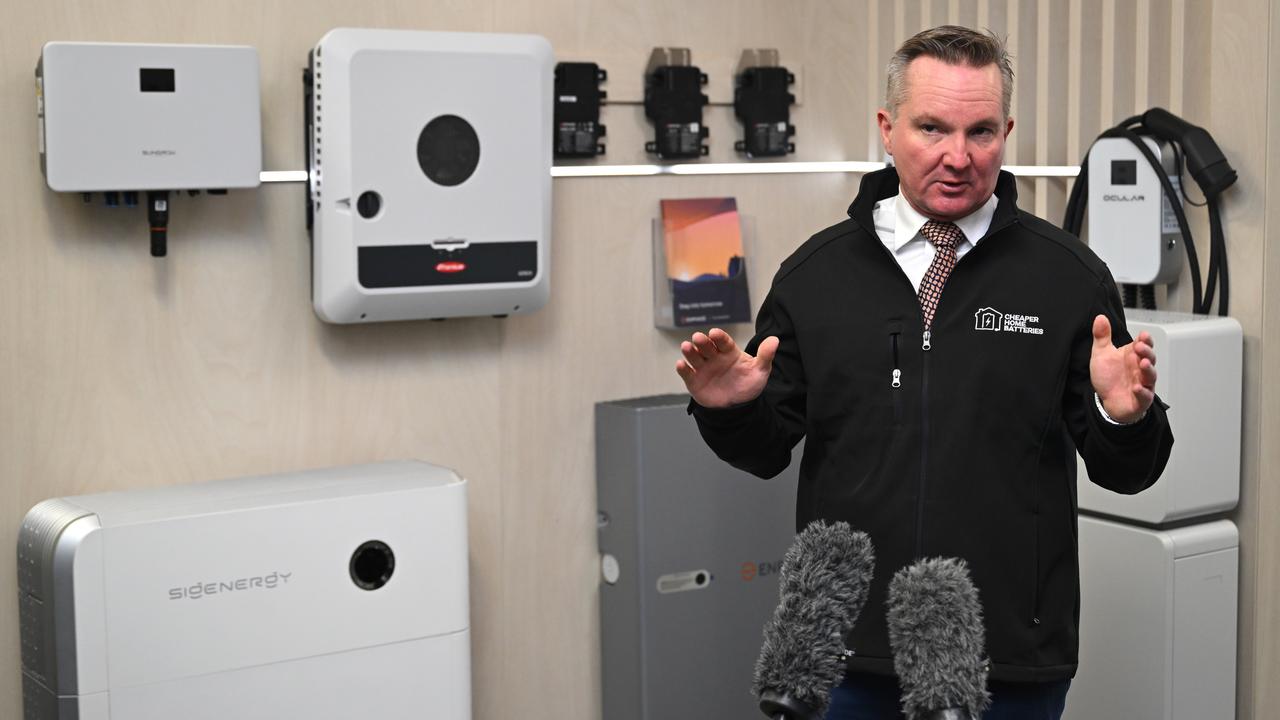
“Grid-scale batteries are increasingly absorbing excess renewable energy during the day and shifting it into the market during evening peaks, helping moderate prices during high-demand periods,” the Australian Energy Market Operator’s Violette Mouchaileh said.
The eastern grid has doubled its installed battery capacity in 12 months, as grid-scale projects and subsidised household systems entered the market at pace.
Wholesale spot prices across the main eastern network averaged $73/megawatt hour (MWh) in the first three months of 2026, down 12 per cent from the same period in 2025, but higher than the spring quarter before.
Summer quarters typically see higher prices as hot days push demand and prices higher.
Early 2026 prices were also well below the above $250/MWh averages of 2022 triggered by the Russia-Ukraine war, despite similar international price shocks following recent Middle East conflicts.
Gas prices, which typically drive east coast power bills when peaking plants cover evening demand spike, were also surprisingly subdued given the geopolitical context.
Wholesale gas prices averaged $10.61/GJ, lower than in the first three months of 2026.
Ms Mouchaileh said lower gas demand for electricity generation and a moderately lower Queensland LNG exports weighed on domestic prices, even as international prices surged.
Wood Mackenzie research analyst Natalie Thompson said Australia’s power system was undergoing a structural shift insulating it from global energy price shocks.
“Growth in renewables and batteries, reduced reliance on gas-fired generation, and the rise of distributed energy resources are materially lowering exposure to international fossil fuel markets,” she said.
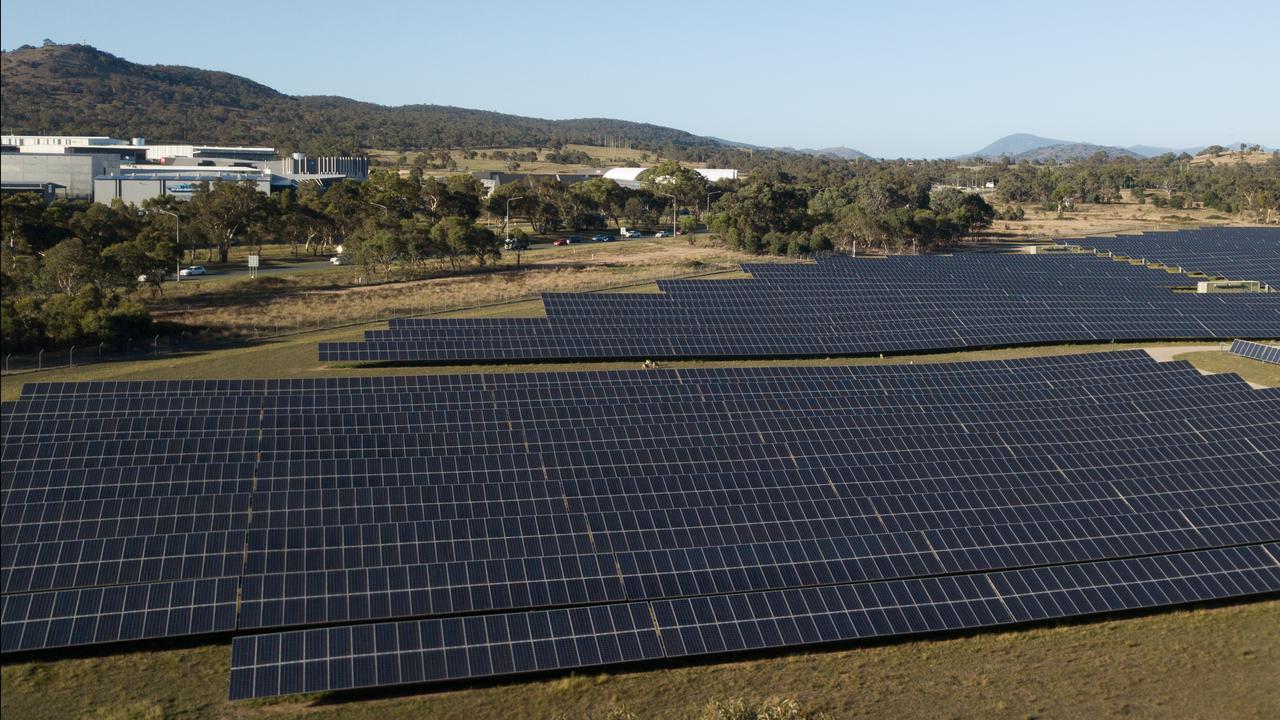
“Australia’s energy transition is now delivering tangible energy security benefits alongside emissions reductions.”
Solar and wind continue to supply a growing share of Australia’s total generation, AEMO’s quarterly electricity snapshot revealed, with the 46.5 per cent a record high for a first quarter.
Renewables share was lower than the 51 per cent of overall supply in the quarter prior, reflecting a jump in demand as airconditioners fired up during searing January temperatures, reaching 50C in some heatwave locations.
Ongoing electrification and data centre connections also added to a new quarterly record for electricity demand, with 11 big projects working through the connection process.