
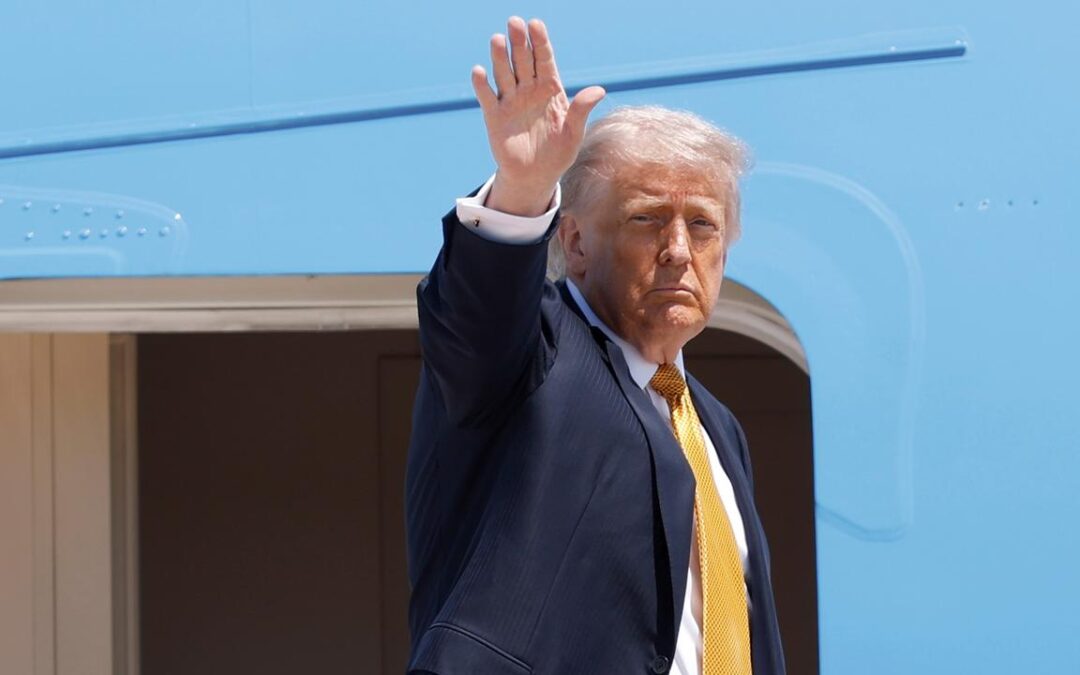
Trump hoping to seal trade deals in Beijing with Xi
President Donald Trump is set to arrive in Beijing for a state visit with Chinese leader Xi Jinping at a restless moment for a world worried about war, trade and artificial intelligence.
“We’re the two superpowers,” Trump told reporters as he departed the White House on Tuesday.
“We’re the strongest nation on earth in terms of military. China’s considered second.”
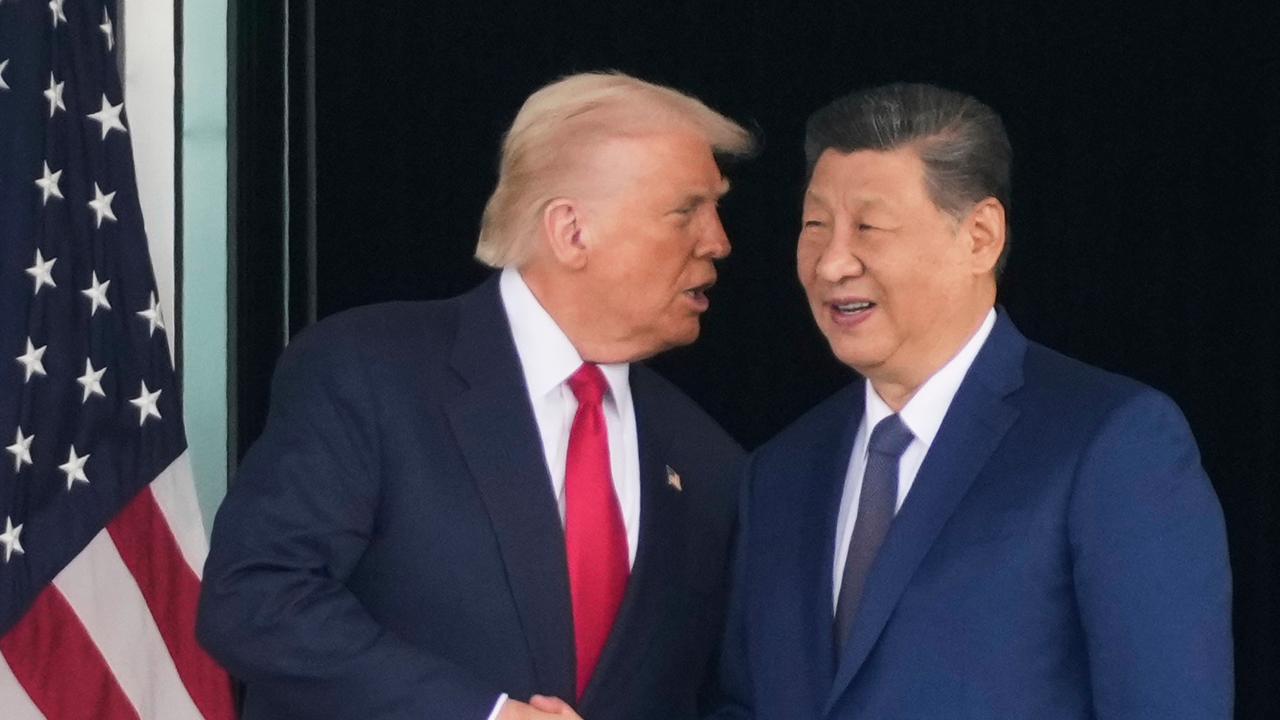
While Trump likes to project a sense of strength, the state visit occurs at a delicate moment for his presidency as his popularity at home has been weighed down by the US and Israel’s war with Iran and rising inflation as a consequence of that conflict.
The president is seeking a win by signing deals with China to buy more American food and aircraft, saying he’ll be talking with Xi about trade “more than anything else”.
The Trump administration hopes to begin the process of establishing a “Board of Trade” with China to address differences between the countries.
The board could help prevent the trade war ignited last year after Trump’s tariff hikes, an action China countered through its control of rare earth minerals. That led to a one-year truce last October.
But Trump comes to Beijing at a time when Iran continues to dominate his domestic agenda.
The war has led to the effective closure of the Strait of Hormuz, stranding oil and natural gas tankers and causing energy prices to spike to levels that could sabotage global economic growth.
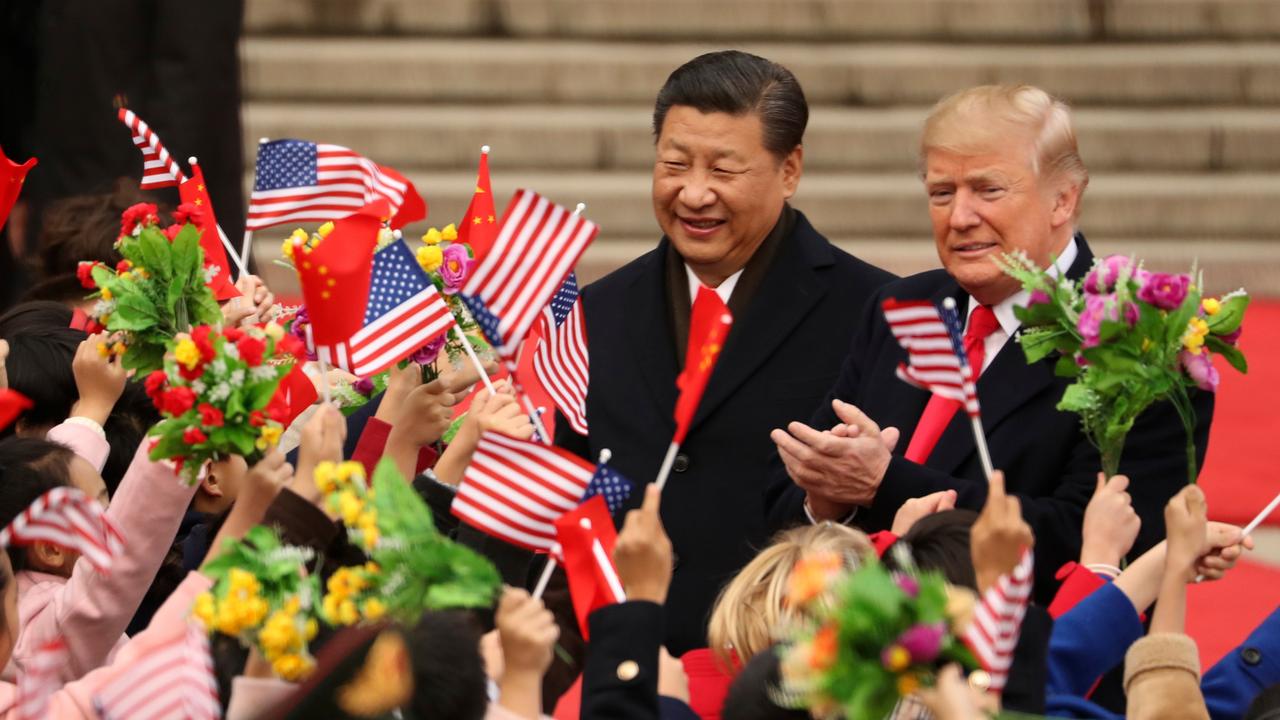
The US president declared that Xi didn’t need to help resolve the conflict, even though Iran’s Foreign Minister Abbas Araghchi was in Beijing last week.
“We have a lot of things to discuss. I wouldn’t say Iran is one of them, to be honest with you, because we have Iran very much under control,” Trump told reporters.
The status of Taiwan also appears to be a major topic as China is displeased with U.S plans to sell weapons to the self-governing island that the Chinese government claims as part of its own territory.
Trump told reporters Monday that he would be discussing with Xi an authorised $US11 billion ($A15 billion) weapons package for Taiwan.
At the same time, Taiwan – as the world’s leading chipmaker – has become essential for the development of AI, with the US importing more goods so far this year from Taiwan than China.
Trump has sought to use Biden-era programs and his own deals to bring more chipmaking to America.
But Trump was already portraying the trip as a success before he left White House grounds.
He openly mused about Xi’s planned reciprocal visit to the US, lamenting that the ballroom under construction won’t be completed in time.
“We’re going to have a great relationship for many, many decades to come,” Trump said of the US and China.
“As you know, President Xi will be coming here toward the end of the year. So that would be exciting. I only wish we had the ballroom finished.”
Commonwealth Bank’s quarterly profit dips to $2.7b
Commonwealth Bank turned a $2.7 billion cash profit in the March quarter, up four per cent from a year ago but down one per cent from its first-half quarterly average.
Operating income was flat in the three months to March 31 and underlying net interest margin was broadly stable.
CBA spent $3.36 billion on operating expenses, up one per cent from it did on average in the first half, reflecting higher cloud computing volumes and software licensing and investment in AI capabilities.
It incurred $316 million in loan impairment expenses, with higher provisions to reflect heightened geopolitical and macroeconomic uncertainty, but it actual losses remained low and its underlying portfolio credit quality was sound.
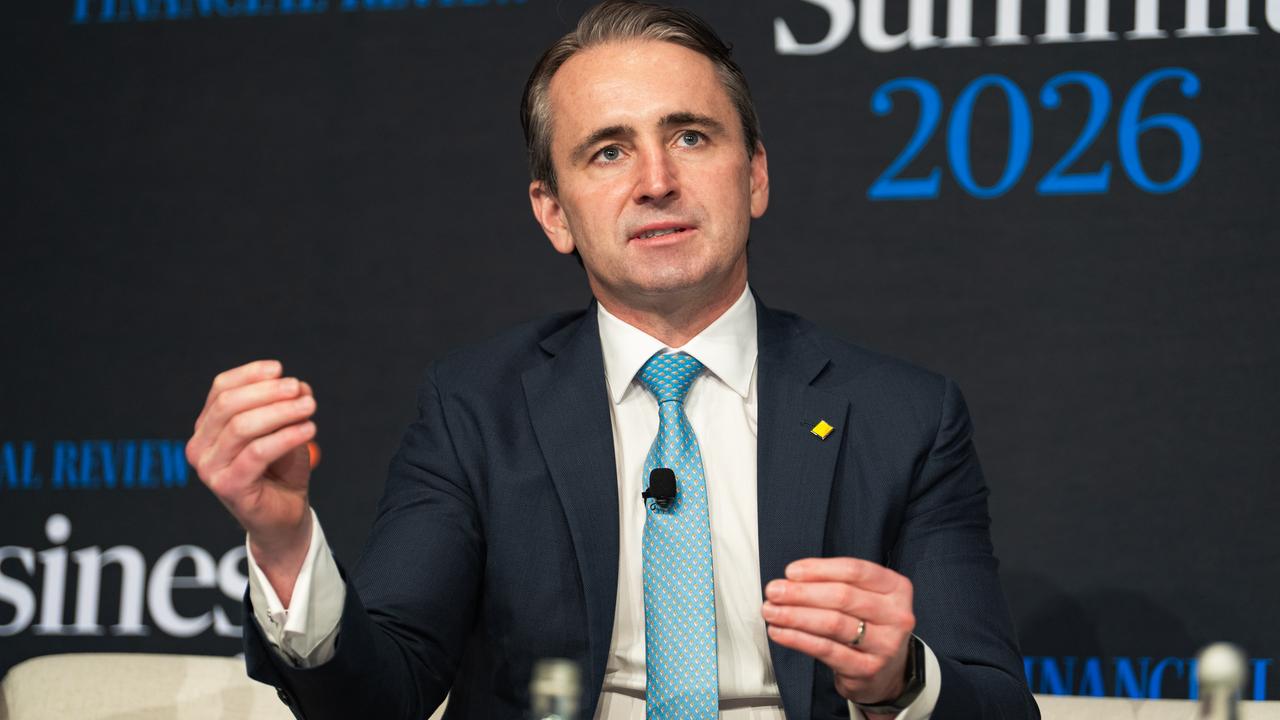
“Our balance sheet settings remain resilient with strong levels of capital, liquidity, deposit funding in the context of economic and geopolitical uncertainty,” chief executive Matt Comyn said.
During the quarter the percentage of consumers more than 90 days behind on their personal loans grew to 1.71 per cent, up from 1.51 per cent in the December quarter and their highest level in since before the pandemic.
CBA said this reflected both seasonal factors and deliberate decisions by CBA involving credit, pricing and acquisition mix.
The percentage of consumers behind on their home loans and credit cards remained low and broadly stable, at 0.69 per cent and 0.68 per cent, respectively.
Australia’s economy continues to demonstrate resilience, but supply chain disruptions, higher prices and interest rates are expected to weigh on household spending and business activity, Mr Comyn said.
“We will continue to adjust our settings as appropriate and remain focused on executing our strategy,” he said.
CBA gained market share in business lending and household deposits during the quarter, while its growth in home lending kept pace with the market.

Canberra embraces AI data crunch for medicines to tax
Artificial intelligence will be deployed across the federal government for everything from evaluating medicines to identifying tax fraud in a bid to boost the nation’s productivity.
A long list of AI trials were named in the federal budget on Tuesday for agencies ranging from Veterans’ Affairs to the National Library, with some programs expected to save hundreds of millions of dollars.
The government also revealed plans to create a $70 million AI Accelerator program to boost research into the technology.
The announcements come days after the government launched an AI online resource to help businesses, and after it released its national plan for the burgeoning technology with a focus on building domestic capability and infrastructure.
Funding for an AI Accelerator will be delivered through the Co-operative Research Centre program, the budget revealed, with grants awarded to projects in 2026 and 2027.
The technology is tipped to add at least $116 billion in economic growth over the next decade, according to the Productivity Commission, and 4.3 per cent to productivity levels.
The government would also deploy the technology in multiple departments, Treasurer Jim Chalmers said, to make them “more efficient”.
The Therapeutic Goods Administration, for example, will use AI to evaluate medicines approved for use by similar regulators overseas.
If successful, the project is expected to save $340 million a year in administrative costs and time savings.
AI tools are already being used by the Australian Taxation Office to identify and correct potential errors in its myTax program in real-time.
The new initiatives will allow the National Environmental Protection Agency to speed up project approvals, while the National Library of Australia will use AI to transcribe 58,000 hours of audio from its oral history collection.
Veterans’ Affairs will also use AI to process information from large compensation claims, although budget papers noted the trial would be voluntary and require the consent of claimants.
The trials will come as the government establishes agencies to regulate artificial intelligence technology, including the AI Safety Institute, Copyright and Artificial Intelligence Reference Group, and the AI Employment and Workplaces Forum.
Targets and tests firm up for migrants under budget
Skilled migrants already onshore are set to benefit from changes to how Australia processes arrivals from overseas, the federal budget reveals.
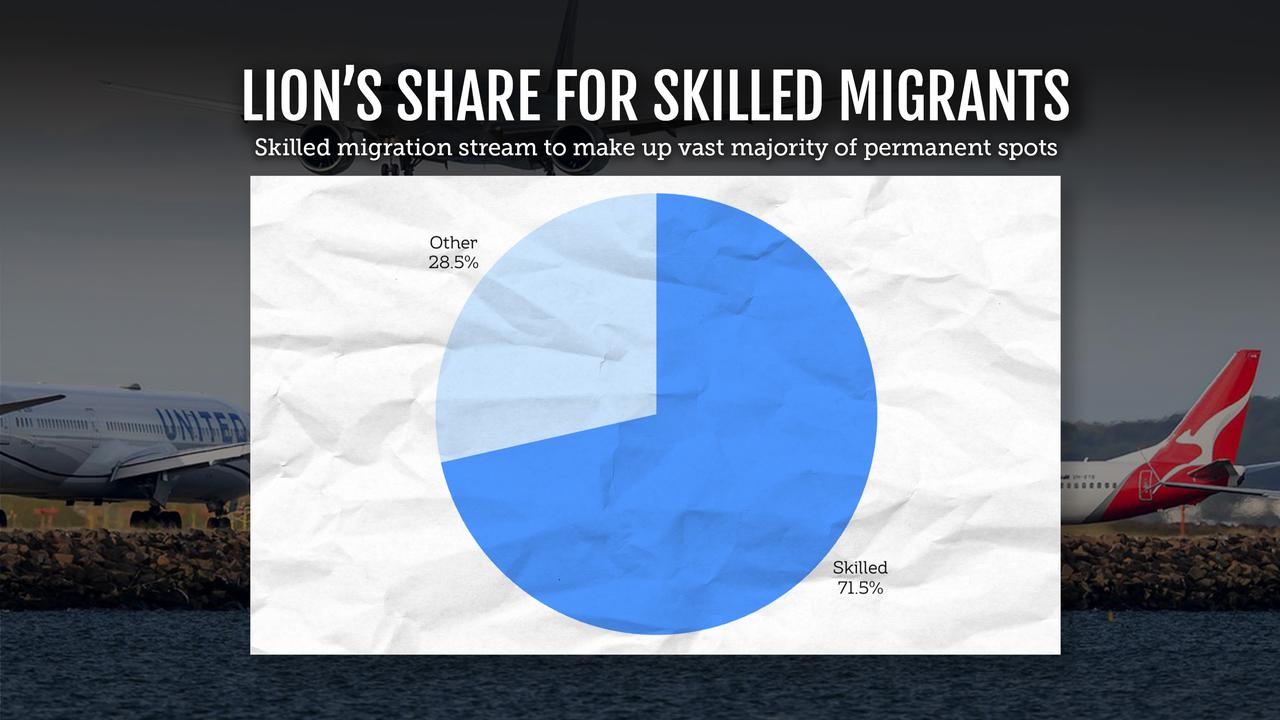
Of the 185,000 places allocated for permanent migrants, more than 70 per cent of those will be skilled workers.
Migrants already in Australia will also make up more than two-thirds of those allowed to stay, with the offshore applicants having to jostle for the remaining 55,000 visas dedicated to high-skilled individuals.
The measure will place downward pressure on net overseas migration, according to 2026/27 budget documents released on Tuesday night.
Most permanent skilled migrants are examined by a points test to determine their likely contribution to Australian society.
That test will be optimised to “select better educated, highly-skilled and younger migrants overall,” according to budget papers.
About $85.2 million will also be spread over the next four years to help speed up the process of assessing and licensing foreigners with overseas qualifications – such as electricians and plumbers – to work in Australia.
The budget also set aside $74.2 million for court systems to combat misuse of the protection visa system, and about $20 million to better scrutinising applicants for student visas.
These form part of a four-year, $167 million package to strengthen the migration system’s integrity.
The application fee for graduates seeking temporary visas doubled in March, a move expected to attract $1.2 billion more into federal coffers.
Labor has faced mounting pressure from One Nation and the coalition to put a lid on migration to reduce demand for housing and relieve burdens on services.
Support for One Nation swelled to new heights in the months after the Bondi massacre, with Pauline Hanson tying overseas arrivals to fraying social cohesion.
In April, federal Opposition Leader Angus Taylor also proposed imposing values tests and scouring the social media accounts of foreigners wishing to move to Australia.
Australians move to regions seeking affordable housing
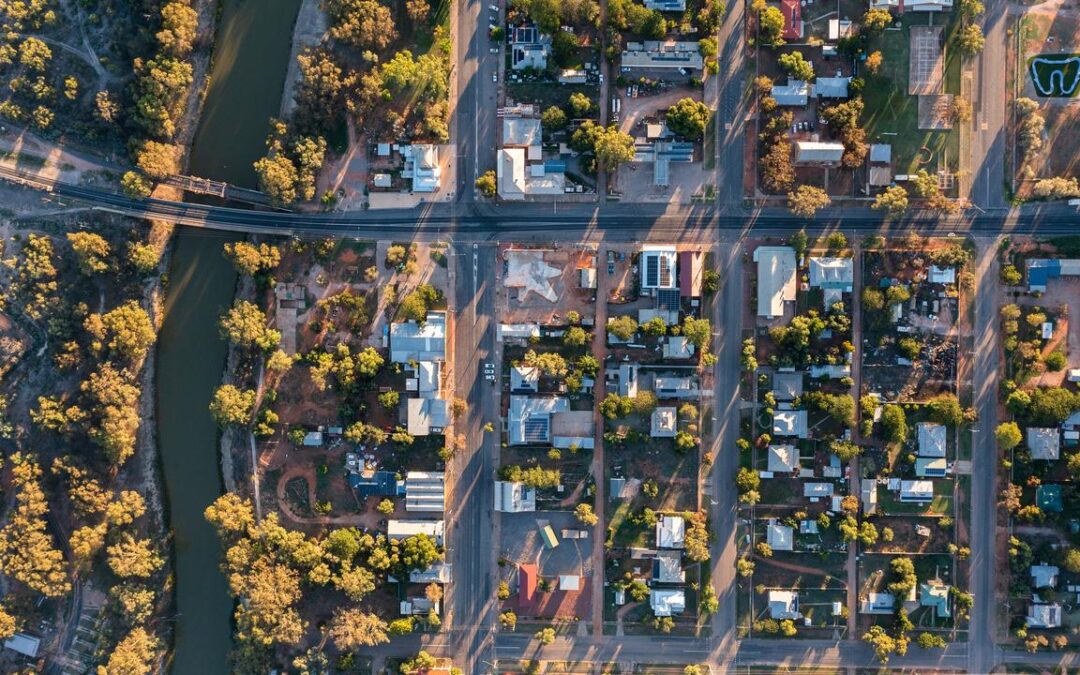
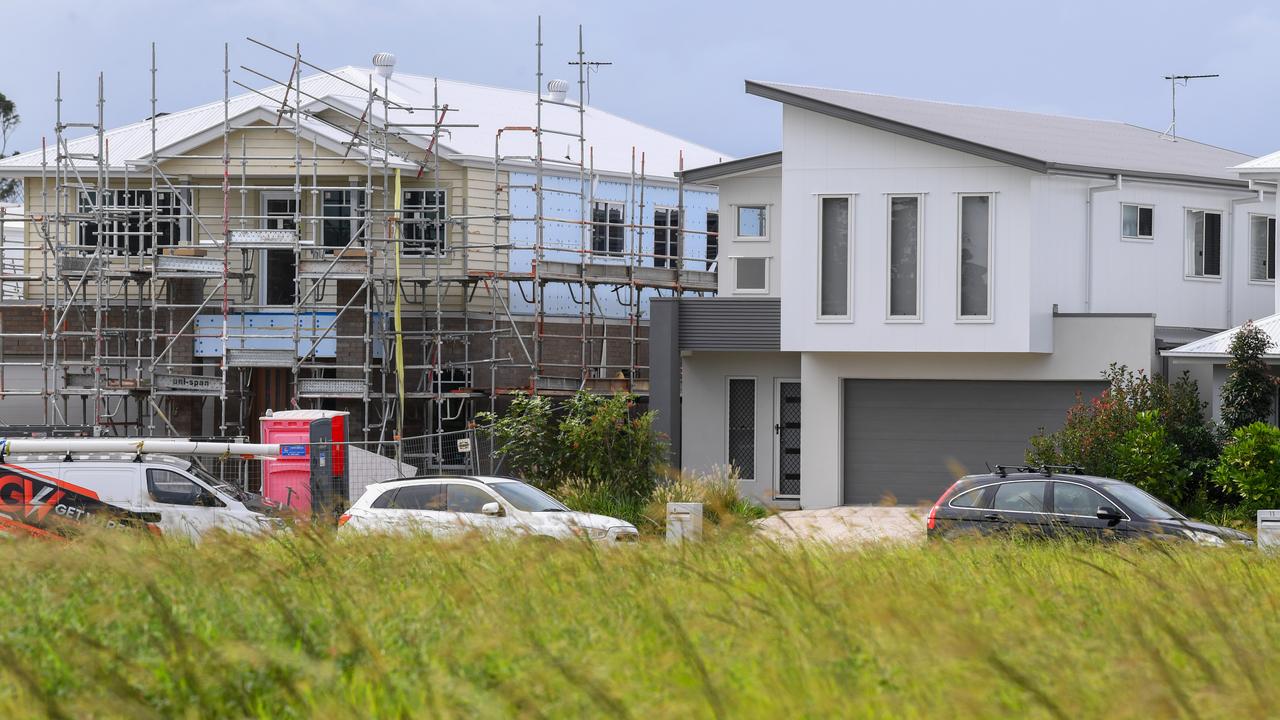
House prices in the regions are growing faster than the capitals as Australians abandon big cities in search of affordability.
In the three months to April, regional dwelling values increased by 3.3 per cent, outpacing the 1.1 per cent rise across Australia’s capital cities, according to Cotality’s Regional Market Update which was released on Wednesday.
City slickers have been flowing out to the country in waves for years, but since mid-2023, their motivations have changed.
“In the past, it’s been much more about the lifestyle markets on the coast,” Cotality’s head of research for Australia Gerard Burg told AAP.
“This time, it seems to be very much about affordability.”
Australians are now migrating to inland, regional towns as rising prices in cities force them out.
This is clear in some parts of regional WA, where values have risen 5.9 per cent over the three months to April, up from 5.6 per cent in the previous quarter.
Perth’s housing supply has been particularly low in recent years.
“That has caused demand to spill out from the boundaries of Perth and into the surrounding regions,” Mr Burg said.
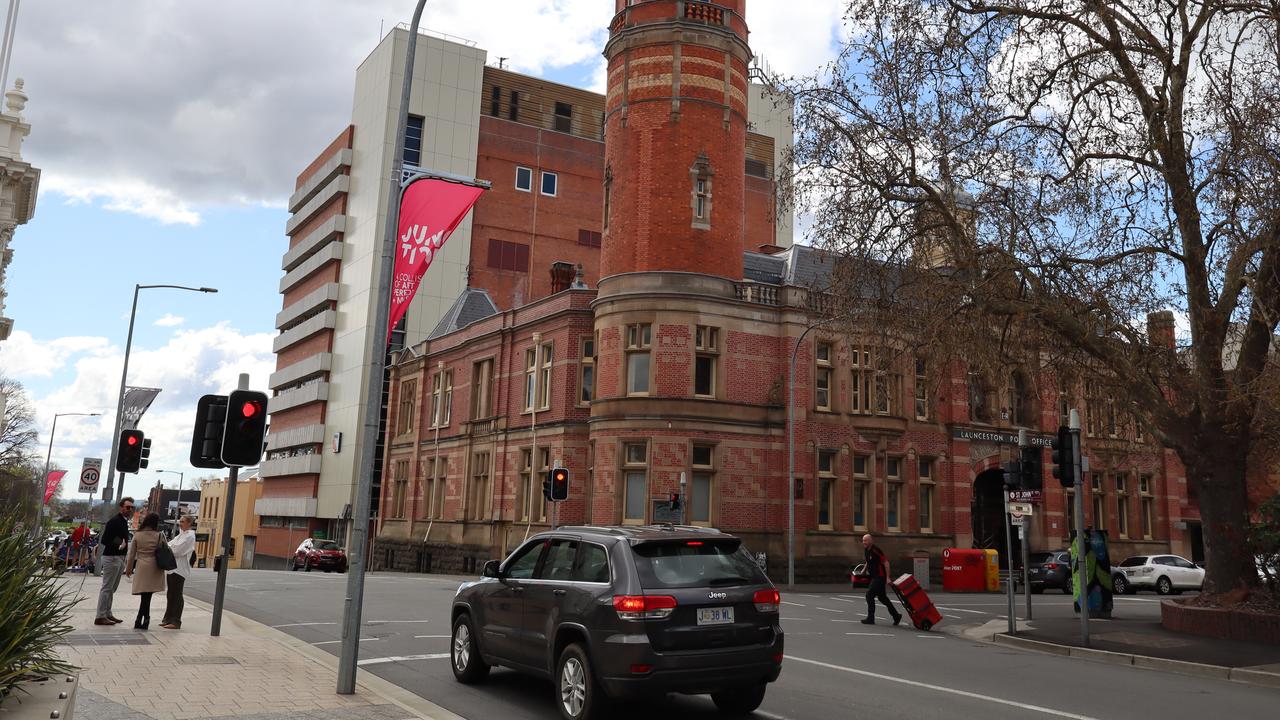
Similar stories are playing out in Tasmania, where prices are rising in Launceston and Burnie-Somerset, and Queensland, where strong conditions are evident in Townsville and Toowoomba.
Across the nation, rents have continued to rise, with regions recording a 1.8 per cent increase compared with 2.1 per cent in the capitals.
But regional vacancy rates remain extremely tight at 1.9 per cent.
Construction costs have also become significantly elevated in recent months due to inflation challenges posed by the US war in the Middle East, making it difficult to address the supply side of the housing crisis.
While migration to the regions could help towns struggling with dwindling populations, it could also further drive up rents and house prices, placing additional burdens on people who already live there.
Those moving out of the cities may be supported by hybrid working styles and metropolitan wages offering them advantages, though impacting housing affordability for others.

Trump’s ‘Golden Dome’ would cost seven times promise
President Donald Trump’s plan to put weapons in space – pitched as a “Golden Dome for America” missile defence program – would cost about seven times as much as originally promised.
The futuristic dome would likely cost about $US1.2 trillion ($A1.7 trillion), according to a new analysis from the Congressional Budget Office, a far heftier sum than the initial $US175 billion ($A242 billion) price tag Trump gave last year.
The nonpartisan CBO report, published Tuesday, is described as an analysis that reflects “one illustrative approach rather than an estimate of a specific Administration proposal.”
The dome was ordered by Trump in an executive order during his first week in office. He said then that he expected the system to be “fully operational before the end of my term,” which wraps up in January 2029.
“Over the past 40 years, rather than lessening, the threat from next-generation strategic weapons has become more intense and complex with the development by peer and near-peer adversaries of next-generation delivery systems,” Trump said in his executive order, justifying the need for the missile defence system.
The concept for the missile system is at least partly inspired by Israel’s multi-tiered defences, often collectively referred to as the “Iron Dome,” which played a key role in defending it from rocket and missile fire from Iran and allied militant groups as it prosecutes the war on Iran alongside the US.
The US Golden Dome is envisioned to include ground and space-based capabilities able to detect, intercept and stop missiles at all major stages of a potential attack.
Congress has already approved roughly $US24 billion ($A33 billion) for the missile defence initiative through Republicans’ massive tax and spending measure signed into law last summer.
Last May, the president said the Golden Dome would cost $US175 billion ($A242 billion). The CBO last year estimated that just the space-based components of the Golden Dome could cost as much as $US542 billion ($A750 billion) over the next 20 years.
Chalmers puckers up for fight over investor tax stings
Labor is readying for a bruising fight with property investors and wealthier Australians as it begins making the case for major tax reforms, including a crackdown on property investments.
Jim Chalmers’ fifth federal budget as treasurer attempts to rebalance the nation’s tax system, paring back investment property tax concessions and giving all workers an annual $250 sweetener from 2027.
The opposition has declared it will not support the package of changes, accusing the government of breaking its election promise not to touch negative gearing and the capital gains tax discount.
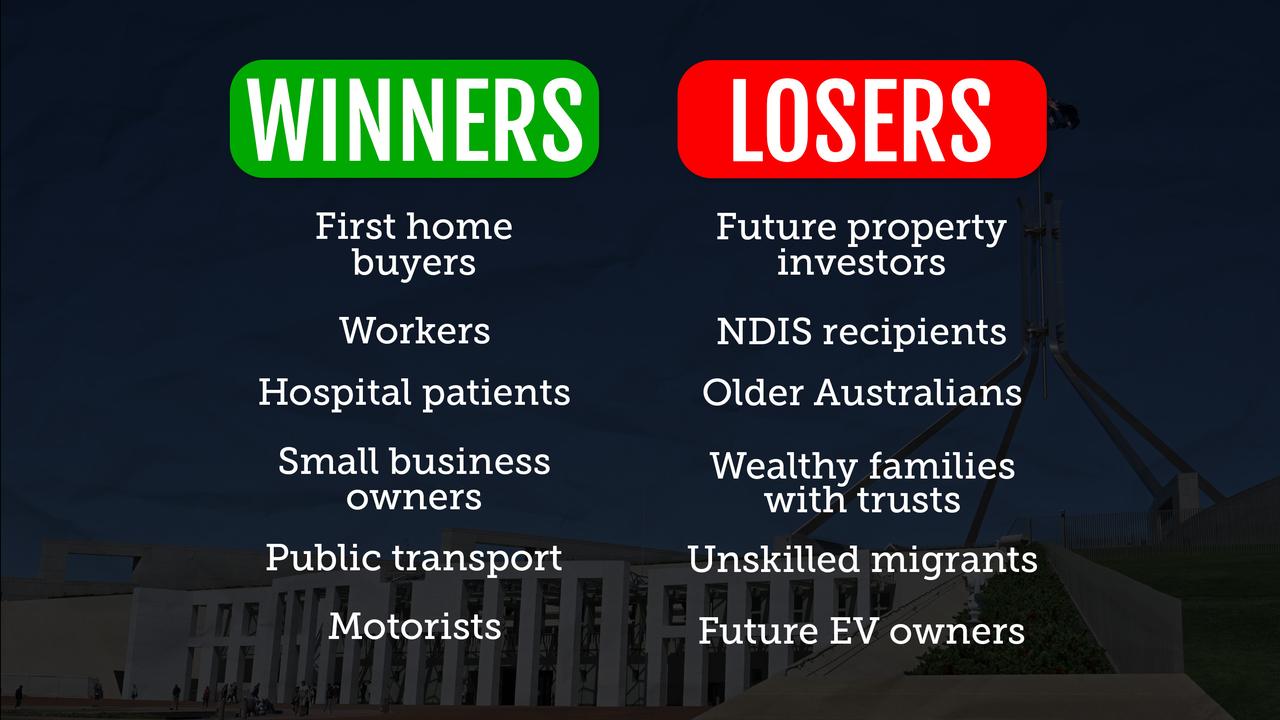
Dr Chalmers conceded the property tax changes would be controversial but argued they were worthwhile because they would help about 75,000 people into the housing market.
“I’m expecting a big campaign. There’ll be the usual scare campaign,” he told AAP.
“Whenever a government like ours attempts to improve the tax system it elicits strong views from people who would prefer the status quo to endure.”
As part of the budget, negative gearing – where a landlord can deduct losses on a rental property against their wages at tax time – will be limited to newly built homes from July 2027, with an exemption for properties bought before the announcement.
The 50 per cent discount on capital gains tax will also be overhauled, with the measure on existing properties to be linked to the current rate of inflation from July 2027, and a minimum tax rate of 30 per cent to be imposed.
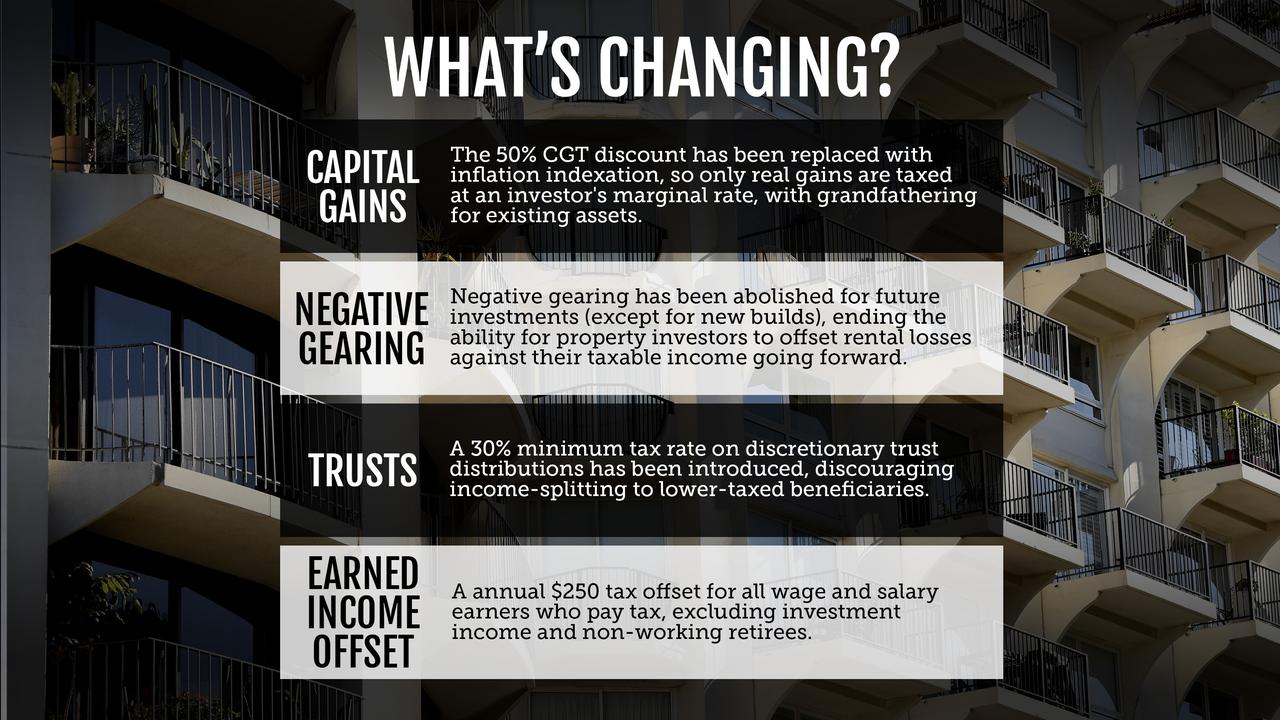
Gains on properties built before 1985 – which have previously been exempt from CGT – will also begin being taxed from July 2027 at the inflation-adjusted rate.
A 30 per cent minimum tax will also be imposed in discretionary trusts, which are often used by wealthy families to split income between family members and minimise tax.
Together, the changes to investment taxes will rake in an extra $8 billion, to be spent on the new offset for all workers and further relief for businesses and startups.
Master Builders Australia accused the government of deploying a “sleight of hand”, warning the changes would reduce housing supply and cause the government to miss its targets for new dwellings.
“While they have put up a sleight of hand to say there is a focus on new homes, the reality is that you are creating a tax hike, which means people vacate the property investment market,” chief executive Denita Wawn told AAP.
“We know from our modelling that we will see a reduction in supply.”
Investor tax hikes boost home ownership, hit supply
Tax hikes on property investors are projected to ease home price growth but hurt the government’s primary focus of boosting housing supply.
Scrapping negative gearing and the 50 per cent capital gains tax discount is forecast to cause home prices to grow about two per cent slower than they otherwise would have in the next few years, according to Tuesday’s federal budget.
By reducing investor demand, the tax package is expected to boost home ownership by about 75,000 over the next decade.
While acknowledging that the move would be controversial, Treasurer Jim Chalmers said the changes were needed because the interaction of the housing market and the tax system was locking too many young Australians out of the housing market.
But it will also reduce supply by about 35,000 homes over the same period, which would push up rents by about $2 a week, Treasury analysis found.
The government says the fall in supply will be more than offset by a $2 billion contribution in the budget for water pipes, roads and other infrastructure that enable about 65,000 more homes to be built.
The budget failed to deliver on Labor’s commitment to do everything it could to increase new housing supply, Master Builders Australia chief executive Denita Wawn said.
“The opportunity that exists to turbocharge housing supply has been lost,” she said.
The tax package, which also included higher taxes on trusts, is promised to boost the structural deficit by $77 billion over the next decade.
But in the near term, tax receipts are expected to be hit by a further fall in the tobacco excise.
The growing illicit tobacco black market was revised down $1.2 billion in 2026/27 and $8 billion over the five years to 2029/30.
That would represent a 73 per cent decline from the $7.8 billion take in 2024/25.
The budget is not expected to return to surplus until 2034/35, with $150 billion in cumulative deficits forecast until 2029/30.
Pressured media sector boosted by broadcast tax cuts
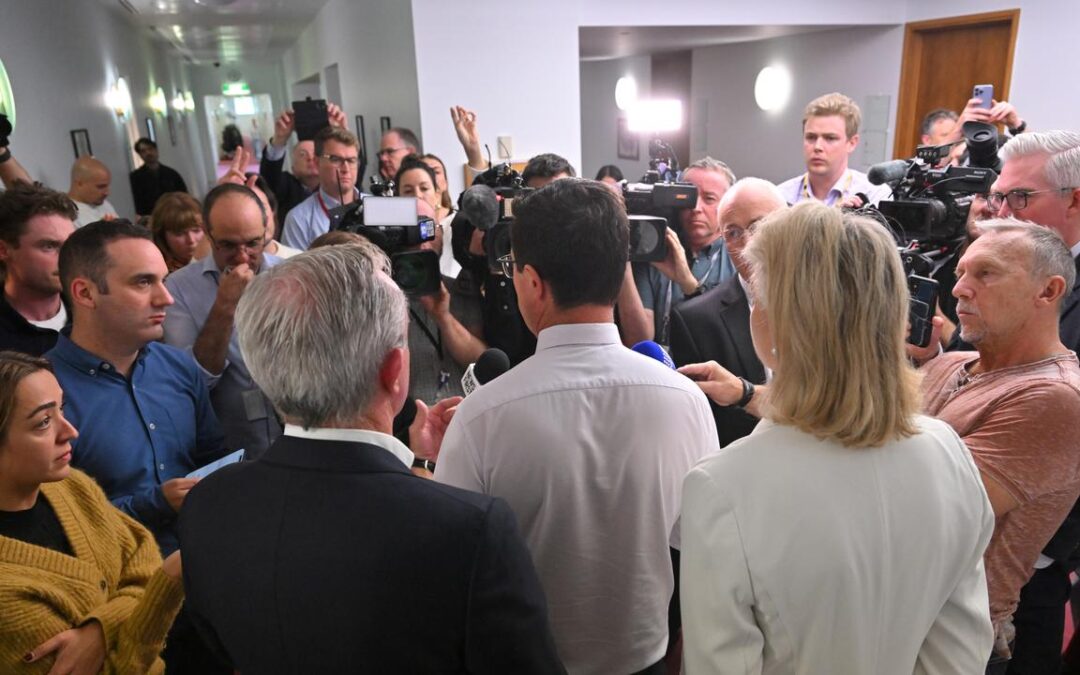
Australian media organisations including the nation’s independent newswire will receive a government funding injection to safeguard against industry upheaval.
Tuesday’s federal budget included funding boosts to the ABC, SBS and Australian Associated Press, along with $6.4 million for planned adjustments to media regulations.
The funding will also provide support for structural changes to the media market.
The Albanese government will also suspend the commercial broadcasting tax for two years to provide financial relief for TV and radio stations.
The measure will save broadcasters $111.3 million over five years, according to the budget papers.
Ahead of the budget, the government outlined changes to the news bargaining incentive, which encouraged social media giants like Google and Meta to strike deals with media companies to use content on their platforms.
If deals are struck between the companies for content, social media platforms will only pay 1.5 per cent of revenue to the government, compared with a higher amount of 2.25 per cent if no deal is made.
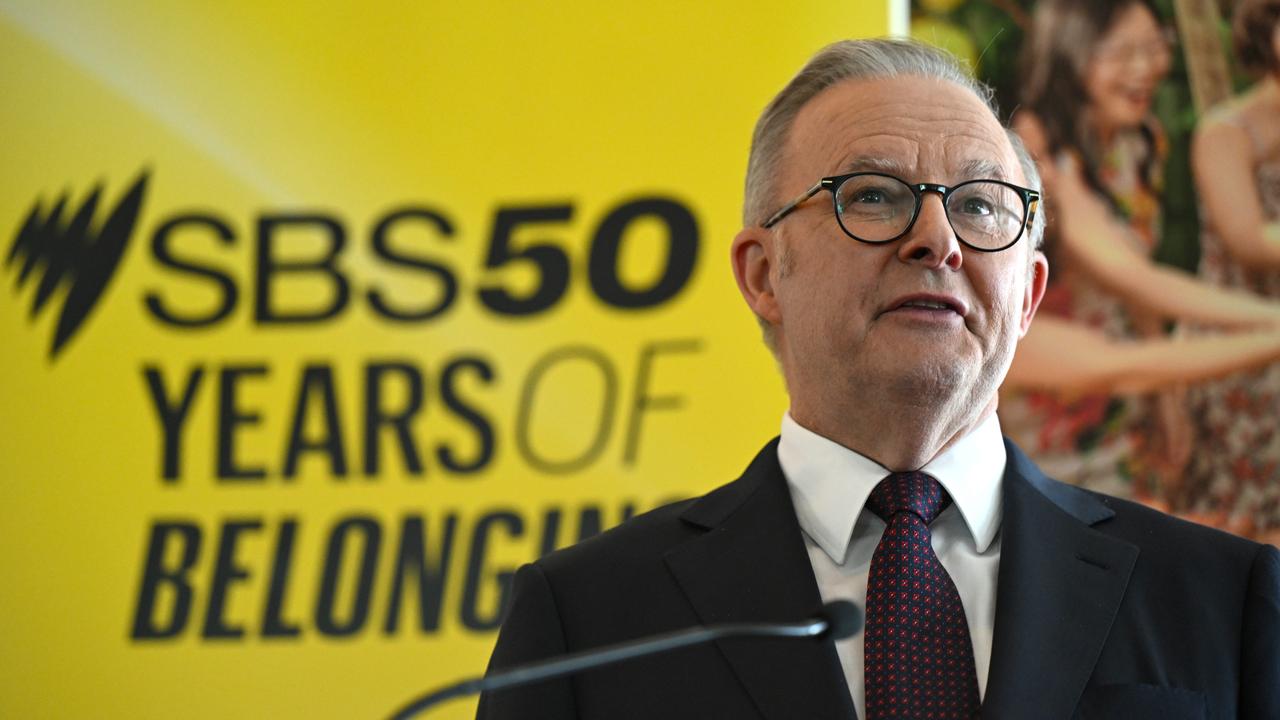
Funding for the ABC and SBS is set to increase under the budget.
The government will spend $1.28 billion on ABC in 2026/27, meaning the national broadcaster will get an increase of $58.5 million from the previous financial year.
The funding will boost Indo-Pacific broadcasting, news and media diversity, and producing Australian drama and children’s content.
However, salary and wages increases, as well as extra operating costs, will lead to a rise in expenses at the broadcaster, up $46.3 million on the year before.
SBS will also get $367 million for the next financial year, with $3 million over three years to extend a podcast series.
AAP will get a $15 million top up from the federal government to ensure its financial sustainability.
It brings the total federal funding for AAP for the 2026/27 financial year to $26 million.
AAP chief executive Emma Cowdroy said the additional funding would secure the newswire into the future.
“At a time when the news media industry around the world is in a perilous position, AAP’s role in feeding high levels of factual, accurate, primary-source journalism into the information ecosystem is of critical importance,” Ms Cowdroy said.
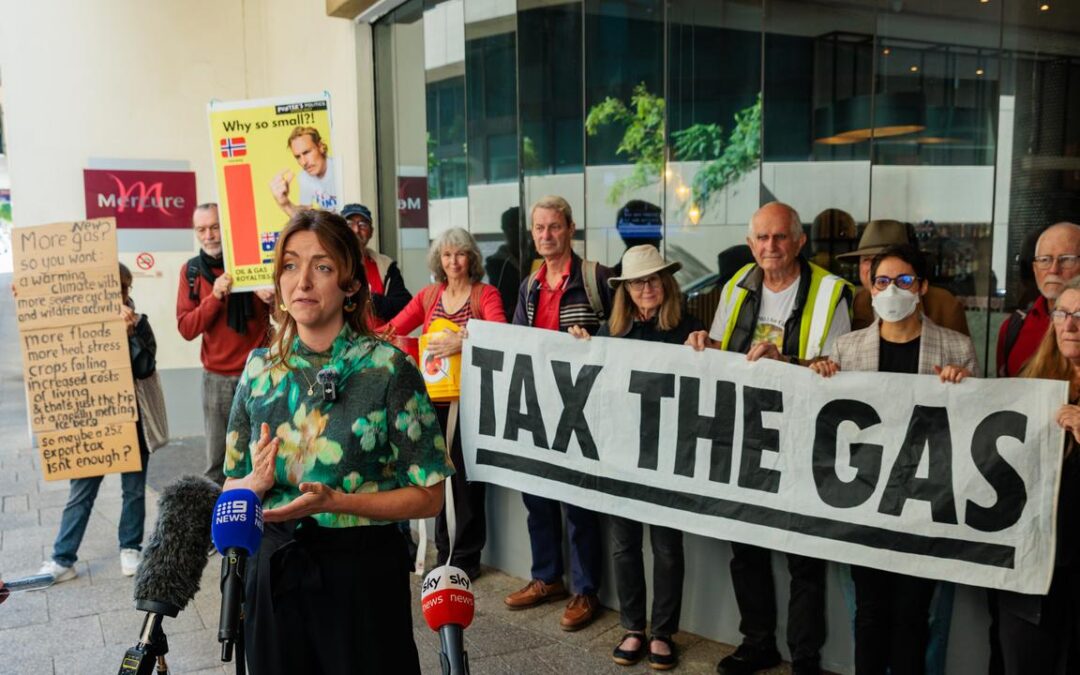
Small beer: revenue from gas export tax set to plummet
Australia’s gas export tax take is set to crater, despite a surge in liquefied natural gas prices driven by the Iran war.
Higher commodity prices are set to boost company tax receipts by $6.7 billion in 2026/27, according to fresh estimates released in the federal budget on Tuesday.
But despite oil and LNG prices surging since the start of the Middle East conflict, income from the petroleum resource rent tax has been revised down by $100 million to $1.4 billion for the current financial year, compared to forecasts in December’s mid-year budget update.
PRRT revenue is expected to climb to $1.9 billion in 2026/27, primarily due to the higher oil price, before falling each subsequent year until it hits $1.25 billion in 2029/30 as the oil price stabilises.
By contrast, the beer excise is forecast to bring in $3.1 billion in 2029/30.
A social media post by independent Senator David Pocock highlighting the disparity between the two revenue streams led to a groundswell of support ahead of the budget for changes to the way gas exports are taxed.
Despite a Senate inquiry finding the PRRT was ineffective, Labor decided not to touch the tax, citing concerns that it could anger key fuel suppliers who rely on Australian gas.
Treasurer Jim Chalmers has also pointed to changes made during Labor’s previous term of government that were designed to make gas companies pay the tax earlier in the life of projects.
But the government has left the door open further changes down the track.
Labor senators who took part in the inquiry recommended Treasury conduct a review of Australia’s tax settings once the fuel crisis was over.
Instead of lifting taxes on gas exports, the government has pushed ahead with moves to create an east coast domestic gas reservation, which will require gas companies to direct 20 per cent of supply to the local market from July 2027.
The government set aside $35.5 million in the budget to support the implementation of the reserve and streamline gas regulatory frameworks.