

Farmers eye yield gains as fertiliser, fuel costs surge
Farmers are choosing to skip laying down fertiliser for a year as costs rise, but are still willing to spend on seeds and crop-protection products, the nation’s main supplier says.
Nufarm chief executive Rico Christensen says farmers around the world are looking to offset rising fuel and fertiliser prices as a result of the conflict in the Middle East.
“Most farmers, they have options to reduce some of their fertiliser applications,” he told an earnings briefing on Wednesday.
Farmers who have done their work in previous years can skip fertiliser application for a year or reduce it without a significant impact on yield.
“What they do not seem to be compromising on is the quality of the yield that they deliver on farms,” Mr Christensen added.
Because farmers are focused on high yields, they’re willing to pay for the products that Nufarm sells.
“We’re not seeing a radical change in how farmers are spending on crop protection and seeds,” Mr Christensen said.
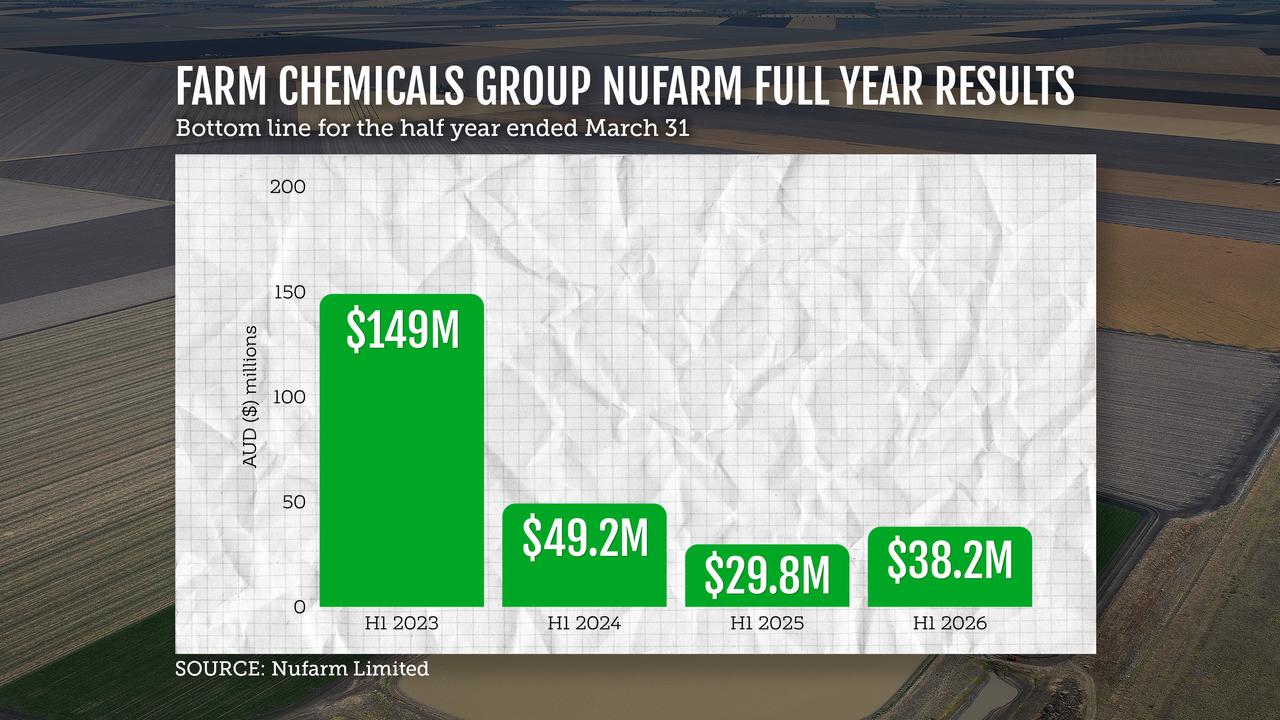
The Melbourne-based global seed and crop-protection business reported a first-half net profit of $38 million, up 28 per cent on a year ago.
Its share rose to a one-year high of $2.93 before falling back slightly, to be up 13.3 per cent at $2.90 as the stock market headed toward the close.
Nufarm cut its net debt by $135 million to $1.23 billion in the six months to March 31 and said it would cut spending in certain areas to become a leaner and more focused organisation.
It expects less than $200 million in capital expenditures over 2025/26, down from $246 million the year before.
Mr Christensen said while the industry had evolved into an “everything for everybody” business model, Nufarm was choosing to go in a different direction.
“We are sharpening our focus on where we can win and applying greater discipline on how we allocate capital and resources accordingly,” he said.
Unlike some businesses in other industries, Nufarm hasn’t seen much impact from the Middle East war.

“We had a little bit of difficulties in sourcing packaging materials in a couple of markets, but all those short-term impacts we saw at the time, we’ve worked through,” Mr Christensen said.
Nufarm reaffirmed its full-year guidance, saying it expects strong earnings growth and a reduction in its leverage to two times net debt, from 2.7 times a year ago.
RBC Capital Markets analyst Owen Birrell said the result was overall in line with expectations, with better-than-expected seed technology earnings and worse-than-expected crop-protection earnings.
As expected, Nufarm didn’t declare a dividend.
‘For us, by us’: Indigenous plea for truth-telling
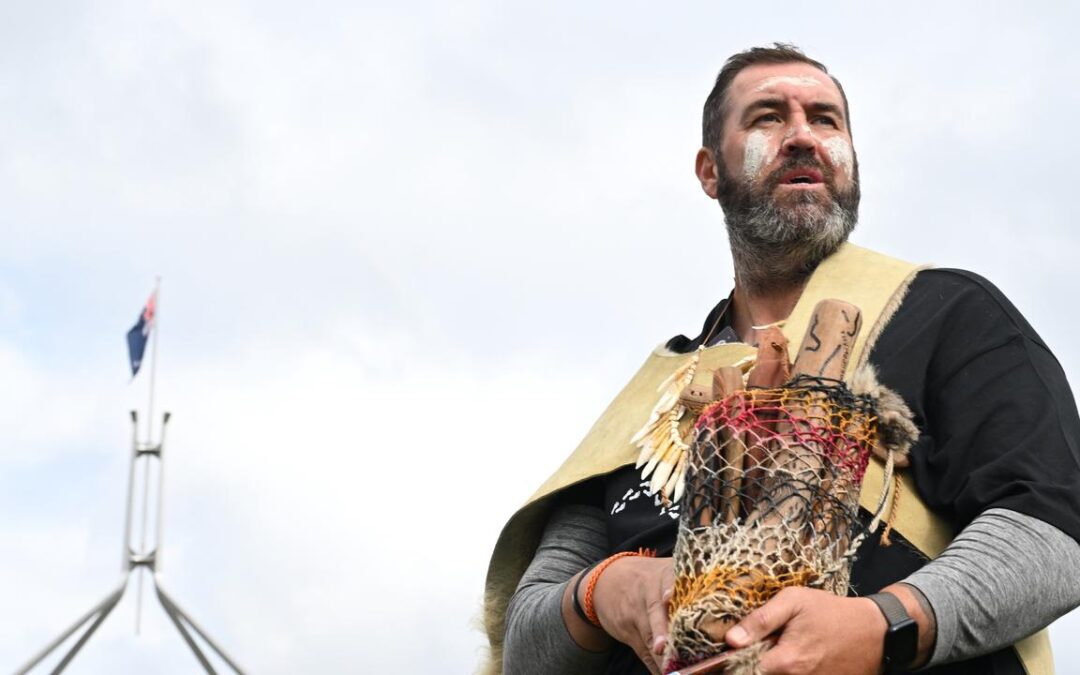
Travis Lovett has arrived at Parliament House with a plea from his Aboriginal elders.
“I have walked my part of the road. Now I ask this country to walk the next part with us,” he told a crowd of hundreds of people.
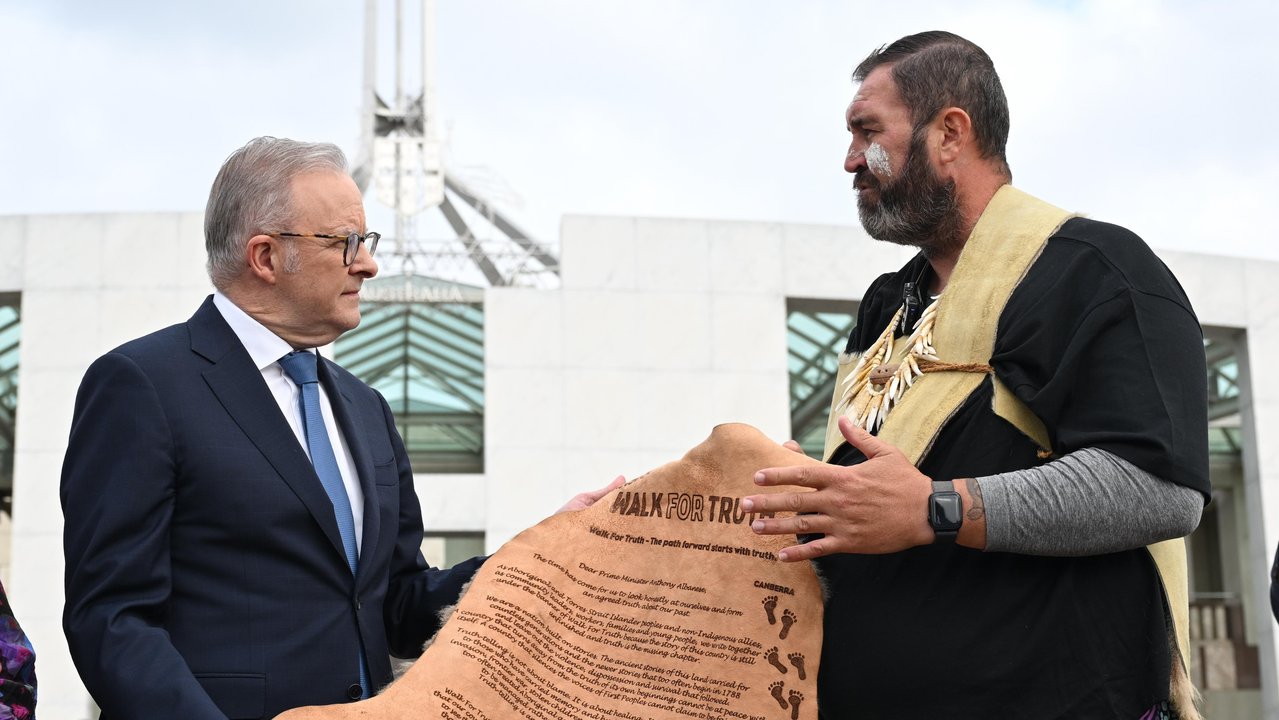
The Kerrupmara Gunditjmara man had just presented a kangaroo skin to Prime Minister Anthony Albanese, inscribed with a letter calling for national truth-telling.
“The time has come for us to look honestly at ourselves,” the first line reads.
Mr Lovett brought the message on a slow, 38-day walk, covering more than 500km of winding rivers from Melbourne to the nation’s capital.
The final part of the journey was completed alongside hundreds of people from Canberra’s Reconciliation Place to Parliament House, where he was met by the prime minister on Wednesday.
The walk, completed with wife Renata and their children, ended 59 years to the day after a successful 1967 referendum that led to Aboriginal people being included in the national census.
But Mr Lovett said many of the wants of Indigenous Australians were still being ignored.
Establishing a national truth-telling process was one of three requests made in the Uluru Statement from the Heart in 2017, which the Albanese government later committed to implementing.
The Indigenous voice to parliament, which failed at a referendum in 2023, was just one part.
Closing the Gap reports show no progress and critical issues facing some Indigenous communities have become drastically worse, architects of the Uluru statement say.
“Would a national truth-telling process hurt anybody? Of course, not,” Mr Travis said, suggesting the process was often misunderstood.
“No people can be free inside a story that is not true.
“Let’s be very clear; everything that has been achieved for the betterment of our people has been done by us, for us.”
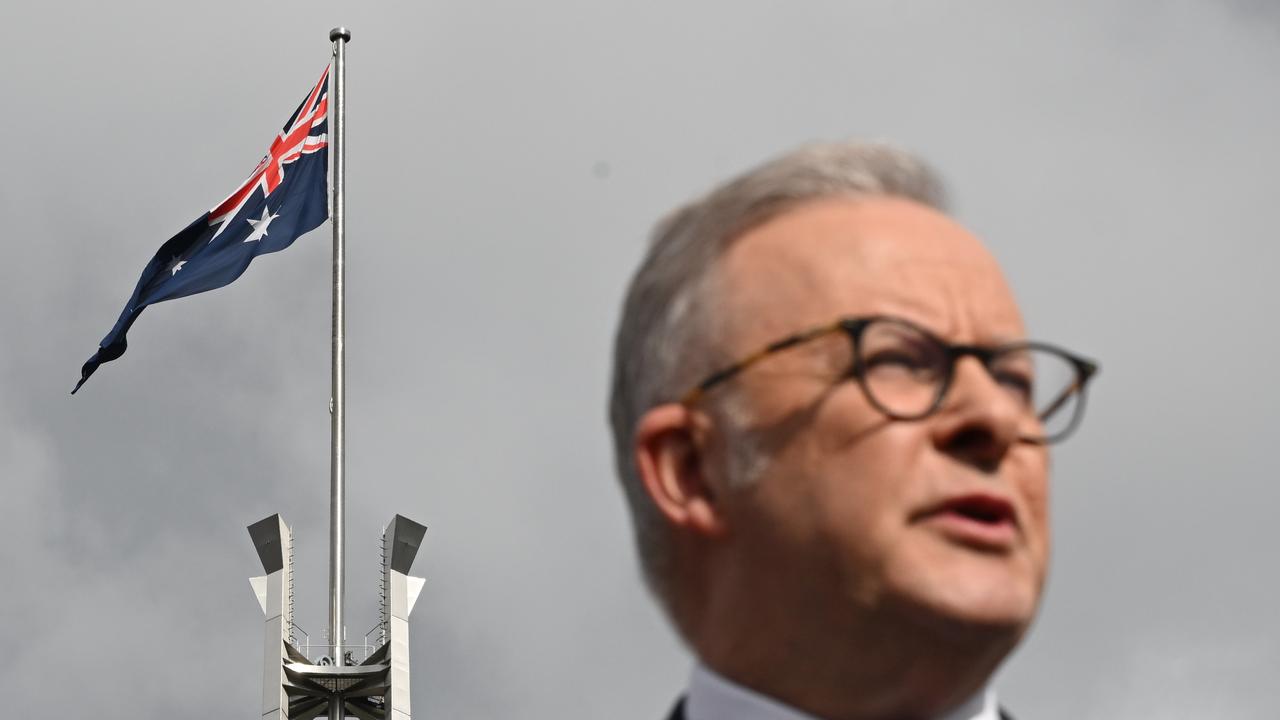
Mr Albanese said there was still a long way to go for reconciliation with Indigenous people.
“There are bumps in the road,” he said.
“It’s not a straight journey, as progress never is. But I assure you that we’ll continue to walk with you.
“We’ll be a stronger nation when there is proper and full recognition of First Nations people, and of course a full acknowledgement of our history, the pluses and the negatives.”
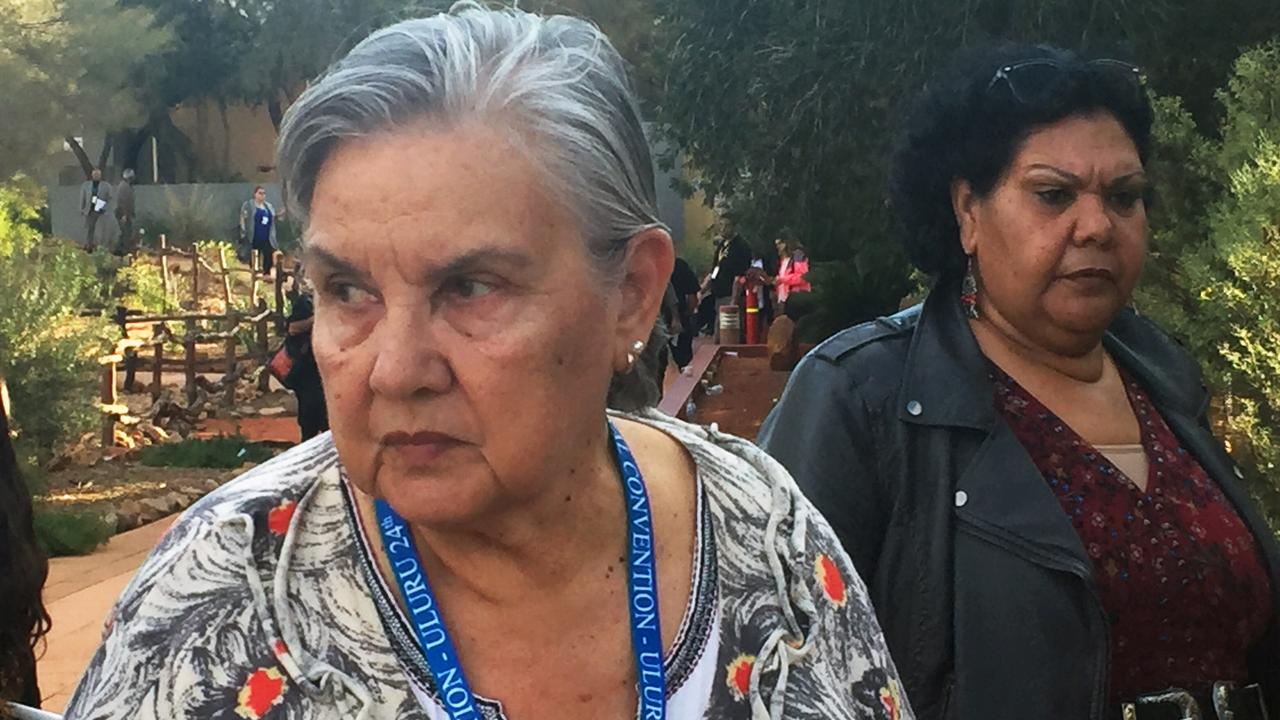
Uluru Dialogue co-chairs Pat Anderson and Megan Davis marked the start of National Reconciliation Week with a continuation of their call for constitutional recognition of Indigenous people.
The dialogue is the group of First Nations leaders who led work on the Uluru statement, issued as “an olive branch to the Australian people to move forward as a nation”.
Governments continued to announce policies, reviews, inquiries and programs without proper consultation with Indigenous communities, the co-chairs said, showing the need for a voice had not diminished.
“What has become increasingly clear since the referendum is that the problems and issues facing communities have not disappeared but are further entrenched and, in some respects, have become drastically worse,” they said in a statement.
Aunty Munya Andrews, of Evolve Communities, a group providing cultural awareness and reconciliation training, warned Australia was entering “a dangerous new phase of division”.
“The recent public backlash against Welcome to Country ceremonies should concern all Australians,” she said, noting booing of the procedures at recent Anzac Day services.
Aunty Munya added she was concerned by a growing narrative the ceremonies were divisive, when they were an act of reconciliation inviting people to come together through a shared love of Country.

Liquor firm cuts back on wine to focus on pubs growth
The owner of two of the nation’s best-known bottleshop chains is about to undergo major changes under its new leader to improve performance and attract more “energetic socialisers”.
Endeavour Group, which owns Dan Murphy’s and BWS retail liquor outlets and hundreds of pubs across Australia, plans to take $300 million in costs out of the business, including the $100 million already planned for the new financial year.
“We don’t have the operating model right,” chief executive Jayne Hrdlicka, who joined in January, told an investor strategy day on Wednesday.
“We now have clarity on why the operating model doesn’t work and what has to be different, and how we are going to deliver.”

Endeavour will now focus on growing its retail revenue “by reinforcing price leadership”, which signals potentially cheaper liquor prices, lifting its pubs’ performances, as it takes down the $300 million in costs.
In the hotels, or pubs’ arm it will increase investment through renewals, refurbishments and repositionings to meet the needs of “energetic socialisers”, gaming fans and others looking for relaxed and family-friendly environments, according to a slide pack presented to investors.
It will also exit the majority of its existing winery and vineyard portfolio, which includes wine brands Chapel Hill, Oakridge and Josef Chromy, held under the Pinnacle Drinks business.
The idea is to use the remaining Pinnacle business to support the bottleshops and venues by focusing on high-performing brands that generate the best returns.
However, Endeavour will also cut its dividend payout ratio to between 50-75 per cent of group underlying net profit, to ensure it has the funds it needs to support its planned turnaround.
This means potentially lower dividends for investors in the foreseeable future.
Endeavour shares had fallen by about 2.5 per cent to $3.01 just before noon, after hitting an all-time low of $2.95 soon after the stock market opened. Its all-time high was $8.40 reached in August, 2022.
The group’s bottom-line earnings have been trending lower over the past three years, along with its share price and quarterly sales.
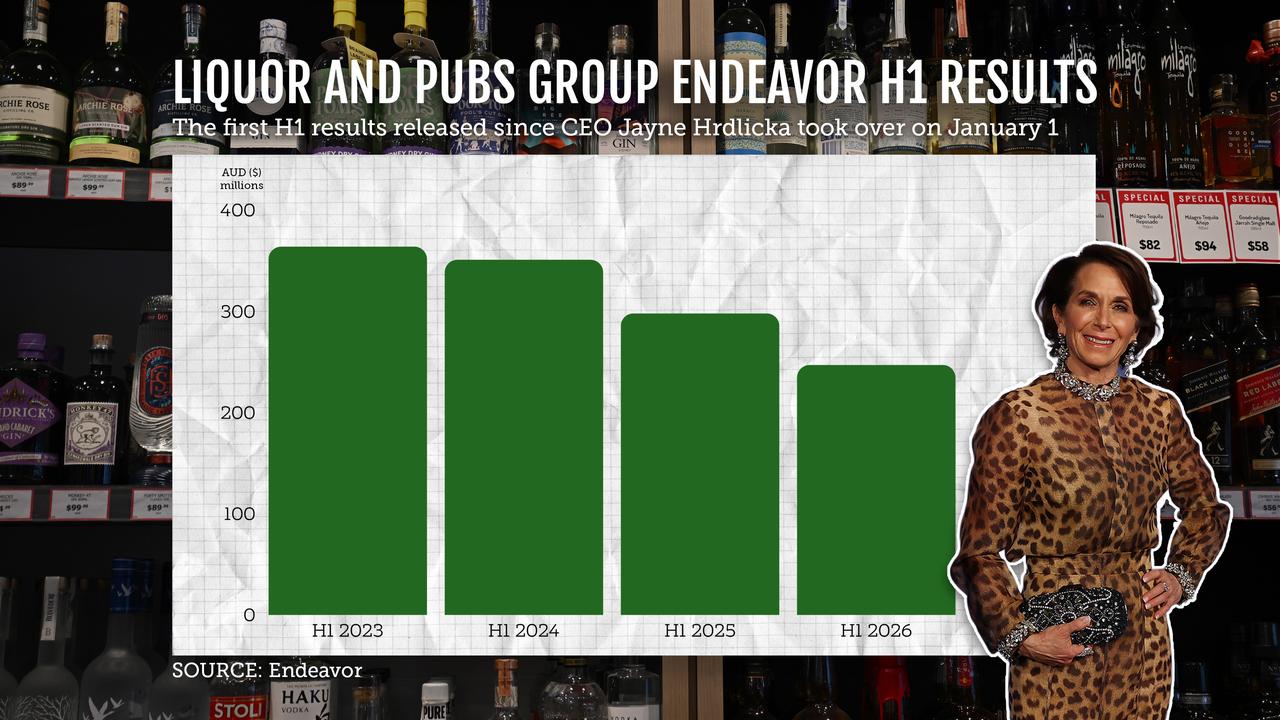
Ms Hrdlicka’s aim is to arrest that and set the company up for stronger profit growth in the years ahead.
“Both in retail and in the hotels business, we have a significant opportunity to get the fundamentals right,” she said.
Earlier this month, Endeavour warned that the conflict in the Middle East, sparked when the US attacked Iran in late February, was threatening supply chains and pushing up fuel and freight costs.
At the same time, it warned cost of living pressures were weighing on sales of liquor, which is a discretionary item unlike food, and food and bar sales in its pubs.
Endeavour will report its 2025/26 results in August.

Aussie shares edge higher as April inflation eases
Australia’s share market has shrugged off an early wobble after April inflation came in cooler than expected, rising the odds the Reserve Bank will hold rather hike the interest rate at its June meeting.
The S&P/ASX200 crept 8.5 points higher by midday on Wednesday, up 0.11 per cent, to 8,667.2, as the broader All Ordinaries slipped 16.1 points, or 0.18 per cent, to 8,898.7.
April’s headline consumer price index figure came in at 4.2 per cent over 12 months, lower than an expected 4.4 per cent and easing from March’s 4.6 per cent.
The Reserve Bank’s preferred trimmed-mean measure ticked slightly higher to 3.4 per cent, but both figures remain outside the central bank’s 2-3 per cent target range.
Financial stocks held the index back from significant gains, the heavyweight sector down 1.2 per cent and tracking with even bigger losses for the big four banks, as Westpac slumped two per cent after copping a $26 million regulator fine for failing to respond to customer hardship notices.
The basic materials sector improved by more than one per cent, with strong leads from South32 and Lynas Rare Earths, while mega miners BHP and Fortescue also advanced.
Gold miners were broadly positive as the precious metal stalled near $US4,500 ($A6,285) an ounce.
Energy stocks edged higher, as Brent crude jumped overnight before easing to $US95.90 a barrel, as tensions flared in the Middle East and both Iran and the US played down hopes of an imminent deal.
With the Persian Gulf situation still fluid and the major players at odds over the Hormuz Strait, Iran’s nuclear ambitions and its frozen assets, oil price volatility could persist for some time, Ebury economist Anthony Malouf said.
“Even if some sort of an agreement was to come about, experts have noted that a full nuclear agreement could take months of further negotiation given the technical complexity involved,” he said.
Consumer discretionary stocks surged 0.8 per cent as the odds of a fourth consecutive RBA rate cut eased, with decent moves from JB Hi-Fi, Super Retail and Harvey Norman.
Eagers Automotive fell 2.2 per cent after supply chain concerns shrouded an otherwise positive earnings outlook.
In other company news, Dan Murphy’s and BWS owner Endeavour tumbled three per cent to a record-low of $2.95 after flagging plans to slash costs by $300 million over three years and exit most of its winery businesses.
Gina Rinehart has taken an indirect stake of more than nine per cent in Southern Cross Media, after Hancock Prospecting-owned Hanrine Finance loaned tens of millions of dollars to Bruce McWilliam to fund his investment in the media company.
Two companies have been short-listed to take over the troubled Whyalla steelworks, with M Resources and India’s Jindal Steel emerging as final bidders.
The Australian dollar is buying 71.57 US cents, down slightly from 71.65 US cents on Tuesday at 5pm.
The $180m bill to calculate the Inland Rail blow-out
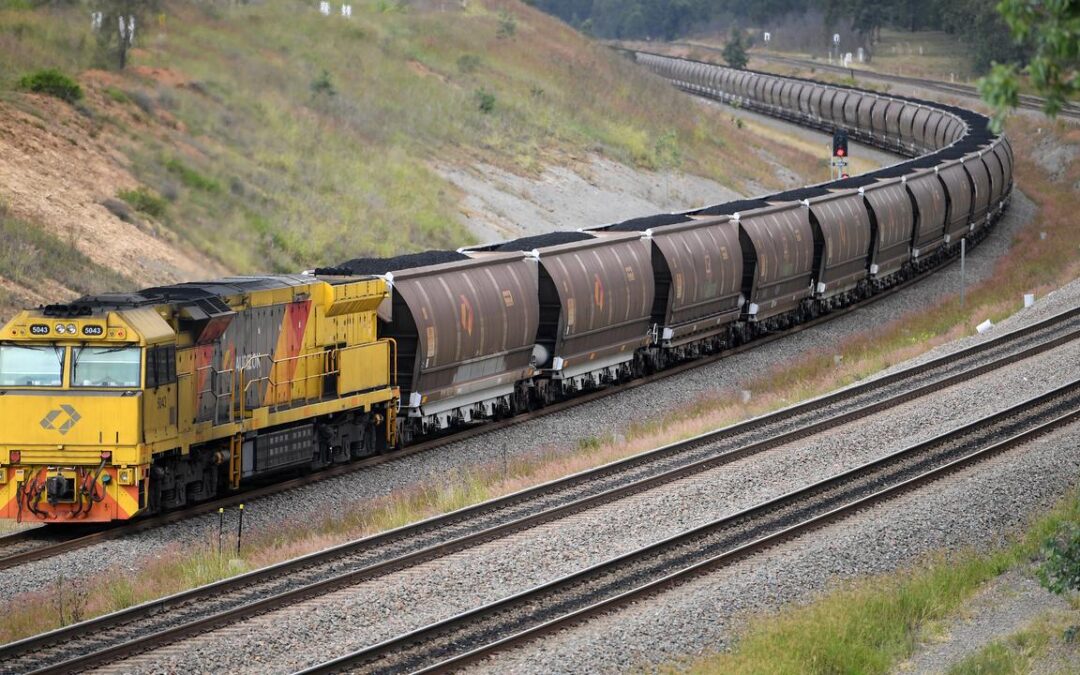
Consultant firms were paid almost $180 million to estimate the bloated Inland Rail budget, while a departing executive got $317,000 soon before half the freight route was scrapped.
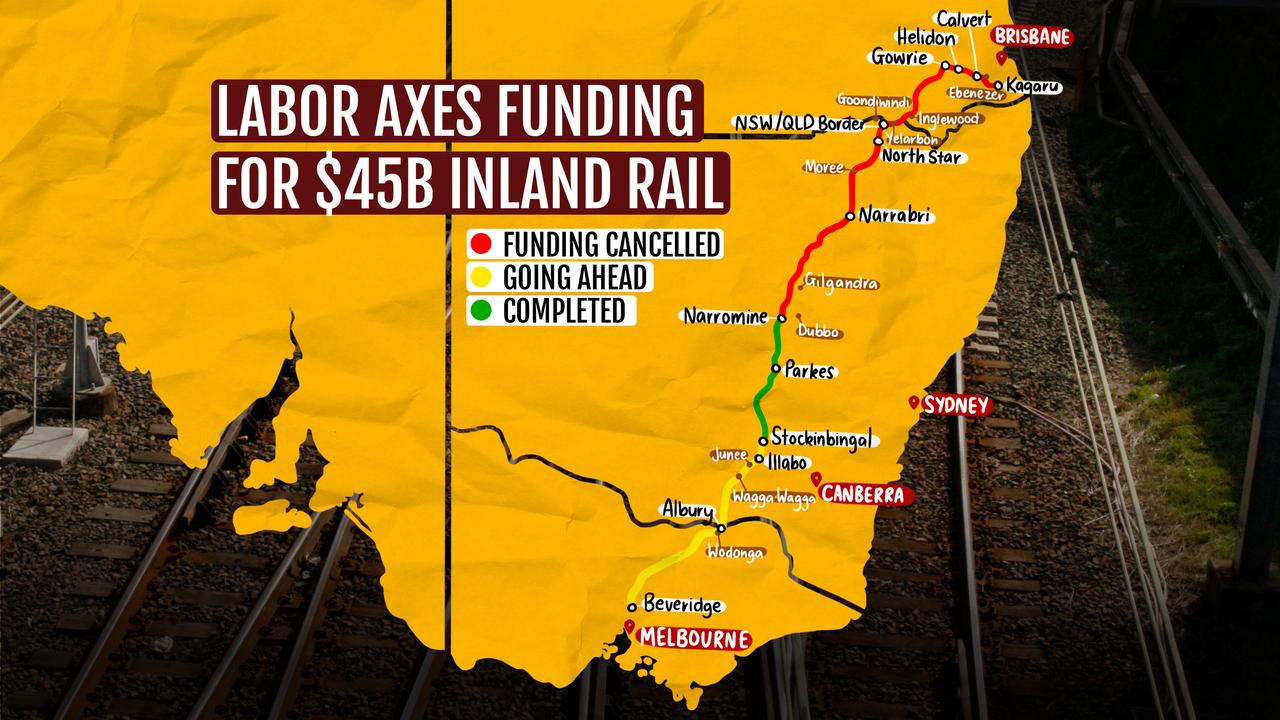
The federal government shelved the Inland Rail route north of Parkes, in central NSW, in early May, amid a budget blow-out of at least $45.6 billion.
That was nearly 10 times the estimated cost put forward in 2015 for the rail corridor, which was originally intended to connect Melbourne and Brisbane.
A budget estimates hearing on Tuesday night was told of generous packages paid to Inland Rail executives, including $317,000 to Nick Miller upon his departure as chief executive in mid-2025.
Taxpayers also footed a bill of more than $179 million over three years for consultants investigating the cost and economics of the project.
Interim chief executive Fiona McDougall said the report that uncovered the $45.6 billion blow-out was highly technical, taking in increased labour costs and the extended time frame.
“Contingency and time are the significant contributor in the increase to the estimated cost,” she said.
Work on environmental approvals and land acquisition north of Parkes would continue so the route can be preserved for any future construction.
But compensation for regional businesses and workers who were geared up to support the northern route would be a decision for the government, Ms McDougall said.
“We deal with people in our communities every day. We’ve got staff up there, we’ve built up long-term relationships, so we deeply care about the people in our communities,” she said.
“In regard to compensation, that’s a matter for government.”
Meanwhile, the man known as the grandfather of Inland Rail is lobbying Infrastructure Minister Catherine King to keep the dream alive.
Everald Compton, who first pitched the idea of a back country freight route in 1996, is determined to see the project move quickly into private hands and had a hopeful meeting with Prime Minister Anthony Albanese on Tuesday.
“I can’t say I signed any documents, but it was a very positive meeting,” Mr Compton told AAP in Canberra.
He will now take his quest to Ms King to negotiate a potential contract, which he would like to finalise within weeks.
“I’m 94-years-old mate, I can’t muck around,” Mr Compton said.
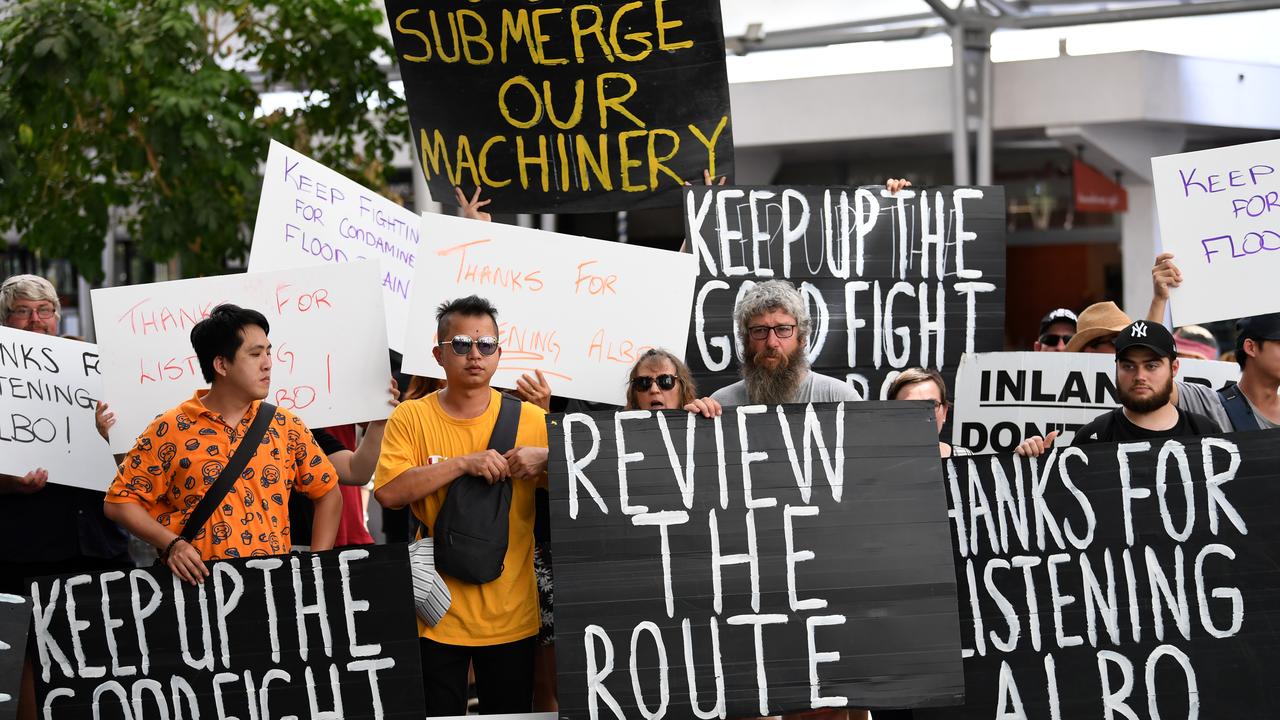
Earlier in May, Mr Albanese said he was open to the idea of a private sector operator.
“But the truth is that we had to bite the bullet and make a decision based upon what was before the government,” he told Newcastle radio 2HD.
“This was supposed to be completed last decade.”

Employment changes ‘Groundhog Day’ for jobseekers
People looking for a job will be continually punished despite looming changes to employment services, advocates claim.
Workplace Minister Amanda Rishworth will outline a shake-up of employment services in a speech to the National Press Club on Wednesday, in an attempt to make the system fairer.
More than one million Australians – many of them on programs such as JobSeeker – are required to see privately owned employment services providers under a $2 billion-a-year scheme aimed at getting more people into paid work.
But the system has been plagued with claims of unfair suspensions from support payments.
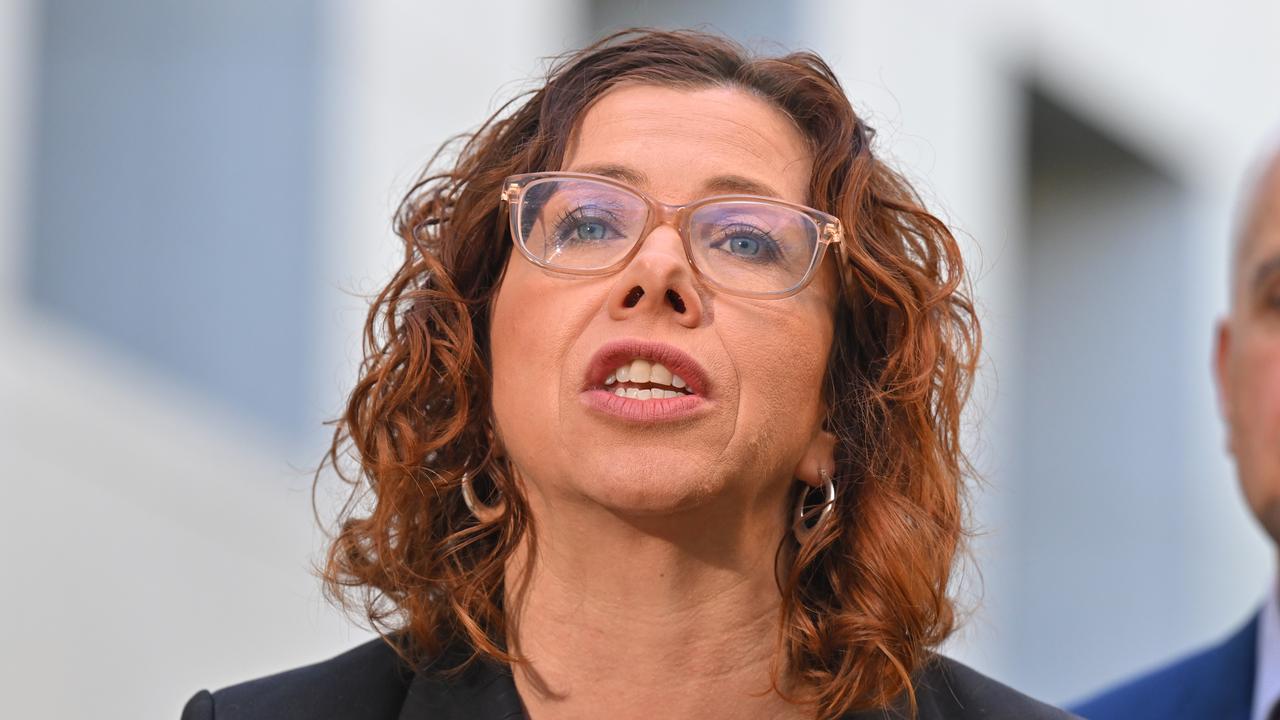
Ms Rishworth will use the speech to outline a three-tiered system for people who are dealing with Workforce Australia as they try to find a job.
Service Stream One will be the lightest touch: a digital service for people who are ready to work.
Under Service Stream Two, private providers will help participants build skills and confidence to return to the job market, while Service Stream Three is reserved for people with complex barriers to work who need intensive support.
She said the move will be a big change from the current approach where all job seekers are triaged in the same way.
“A one-size-fits-all approach, across all elements of Workforce Australia, is letting too many participants fall through the cracks and creating inefficiencies in the system,” Ms Rishworth will say in the speech.
She will also flag changes to mutual obligations, a requirement for job seekers to accept any work they are offered and attend interviews or training services.
“The second change is the introduction of effective, fair and proportionate mutual obligations, that are reflective of an individual’s distance from the labour market and are designed to actually help people get a suitable job,” Ms Rishworth will say.
But Antipoverty Centre spokesman Jay Coonan said keeping mutual obligations denied any meaningful change.
“This is like living in Groundhog Day. You can’t punish people into employment in an economy designed to keep at least four per cent of us unemployed,” he said.
“It’s not a major overhaul if you keep ‘mutual’ obligations in place. That’s punishment as usual.”
Greens government services spokeswoman Penny Allman-Payne said misery would continue for those in the employment system.
“These reforms aren’t a shake-up, they’re a screw-up,” she said.
“One million people have been waiting for years for Labor to reform John Howard’s employment services system so that it actually helps them find work and doesn’t coerce and punish them.
“But what they’ve discovered today is that Labor is continuing to prop up a system which punches down on welfare recipients.”
The mutual obligations system has been roundly criticised, including in two Commonwealth ombudsman’s reports which found the suspension of many people’s welfare payments for failing to meet their jobseeking requirements may have been unlawful.
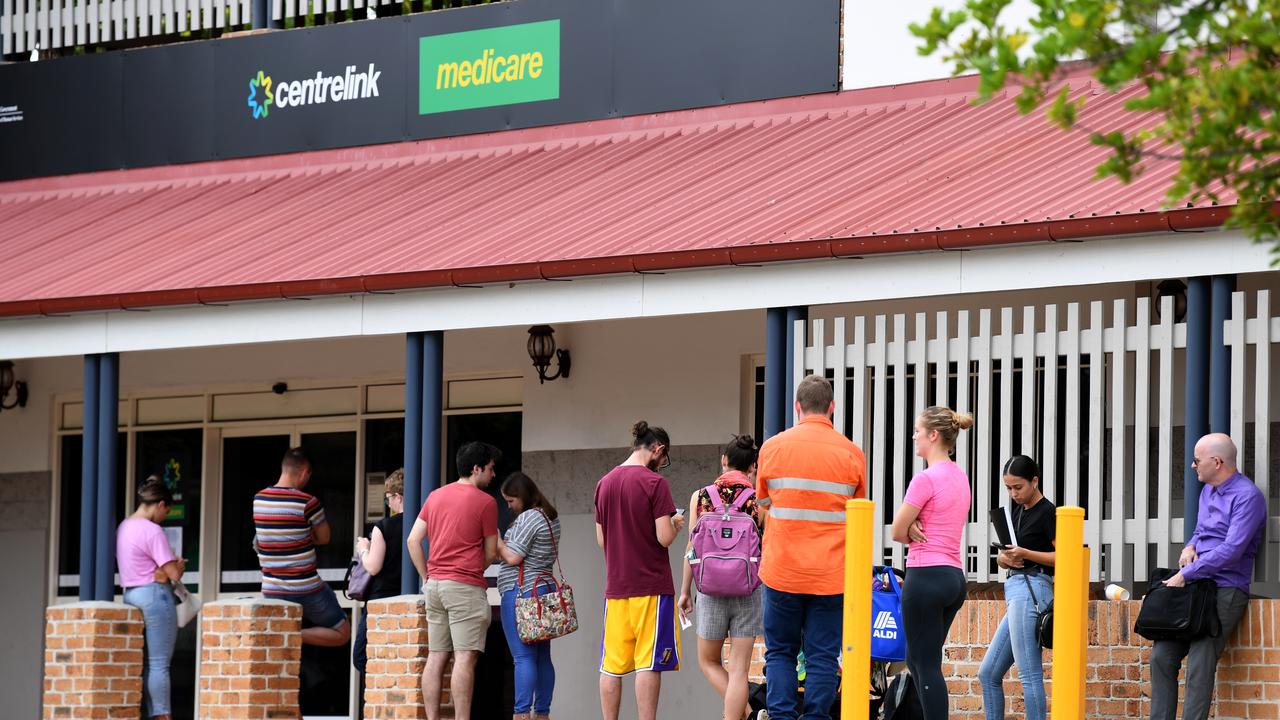
The scheme is designed to ensure welfare recipients are actively searching for work, but advocates claim it punishes people who have complex needs and may struggle to find a job.
Ms Rishworth will flag further discussions with job seekers, employers, providers and communities as the government fleshes out its reforms.
The Community and Public Sector Union welcomed changes to the sector, but said they didn’t go far enough to overhaul privatisation.
The union’s national secretary Melissa Donnelly said outsourcing employment services had been a disaster for jobseekers.
“Today’s announcement is a step in the right direction, but risks not going far enough to fix a system that is fundamentally broken,” she said.
“Australian job seekers are sick of being lectured by flashy ‘entrepreneurs’ who are milking the government for hundreds of millions of dollars and providing a broken, profit-driven service in return.”

‘Grossly negligent’: Westpac cops $26 million penalty
Westpac has been fined $26 million for grossly negligent conduct after failing to respond to customers in financial hardship.
Federal Court Judge Tim McEvoy on Tuesday found that while the bank’s conduct was not deliberate, it occurred over a relatively lengthy period, from 2017 to 2023.
The Australian Securities and Investments Commission pursued Westpac in 2023 after it was found the bank had failed to respond to more than 200 online hardship requests from its customers over the six-year period.
Justice McEvoy found the requests were made by customers of Westpac and its subsidiaries St George Bank, Bank SA and Bank of Melbourne.
The customers were struggling to keep up with repayments on home loans, credit cards, personal loans, car loans and other responsibilities.
“I accept that Westpac’s contraventions in this case were very serious,” Justice McEvoy said.
“They impacted many vulnerable customers and continued over an extended period. It may in fact be said that the circumstances faced by the affected customers means that their financial vulnerability cannot be overstated.
“While the contraventions were not suggested to be deliberate and arose instead from inadequate systems and operational failures, I have accepted that they were grossly negligent.”
ASIC deputy chairwoman Sarah Court said the penalty sends a clear message to Westpac and other lenders that they must do better in responding to customers seeking assistance.
“Westpac failed the very customers who needed help when they needed it most. These were customers who were asking for some breathing room for a range of reasons including domestic abuse, natural disasters, serious illness or the loss of their job,” she said.
“Instead of providing a safety net for these customers, Westpac’s systemic failures let them slip through the cracks.”
Westpac has been ordered to pay the regulator’s costs.

BP ousts chair citing governance and conduct issues
BP’s board has ousted chair Albert Manifold and expressed serious concerns about his governance standards, oversight and conduct in the latest leadership turmoil to rock the oil major, driving its share price down as much as 10 per cent.
Four sources with knowledge of the matter said Manifold had acted aggressively with different colleagues across the company, citing that as one reason for his firing on Tuesday.
The board had received enough information following a whistleblower report to ascertain that there was a pattern of unacceptable behaviour, said one of the sources, who is close to BP’s board. The sources declined to be identified because they were not authorised to speak publicly.

A BP spokesperson declined to give further details. In an emailed statement to Bloomberg News, Manifold disputed accusations of wrongdoing.
“I was removed without warning and without explanation,” Manifold said.
“I dispute entirely the characterisation of my conduct and I will not allow a false narrative to go unchallenged.”
Reuters could not reach Manifold for comment.
Manifold’s surprise removal came just under eight months after he took office to help oversee a strategy revamp, and follows years of management churn at BP.
In 2023, former BP CEO Bernard Looney was fired after lying to the board about his personal relationships with colleagues.
His successor, Murray Auchincloss, left abruptly in December 2025 with no clear reason, and former Woodside CEO Meg O’Neill was immediately announced as his replacement.
She is BP’s fifth CEO since 2020, and is expected to accelerate the company’s shift away from renewable energy to refocus on oil and gas.
“At this point it’s fair to say BP has the most volatile boardroom of the oil supermajors,” said Lindsey Stewart, director of institutional investor content at Morningstar.
“With a resurgent share price so far this year, BP should be taking credit for the rewards of its strategic reset,” Stewart said.
“Instead, the company is on its third CEO and now its third chairman in under three years. It’s clear that getting a grip on corporate governance and strategy at the company must be a priority of the interim chair and his eventual successor.”
Ian Tyler, a former chief of British construction group Balfour Beatty and a BP board member since last year, will be interim chair, the company said.
In a statement BP said its board had unanimously decided that Manifold – who has had the backing of activist hedge fund Elliott, which has built up a stake of around five per cent in BP – should no longer serve as chair and director with immediate effect.
“This follows serious concerns raised to the board related to important governance standards, oversight and conduct,” BP said.
“Albert has helped bring a welcome focus and pace to BP’s transformation. However, the board has been surprised and disappointed to learn of governance oversight and conduct issues it deems unacceptable and has taken decisive action,” said senior independent director Amanda Blanc, who oversaw Manifold’s appointment in October.
Elliott declined to comment. BP shares were down almost 10 per cent after the announcement and their trading briefly halted. They later pared some losses to trade down around four per cent. An index of European energy companies was down around 0.1 per cent.
with Reuters
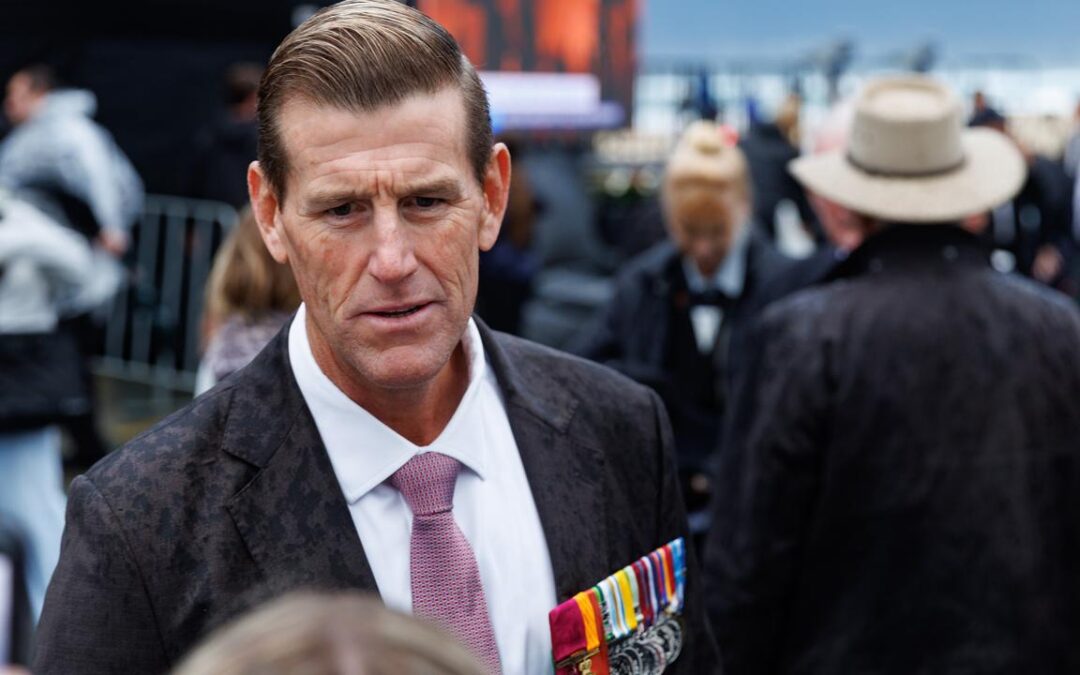
Roberts-Smith arrest leak referred to corruption body
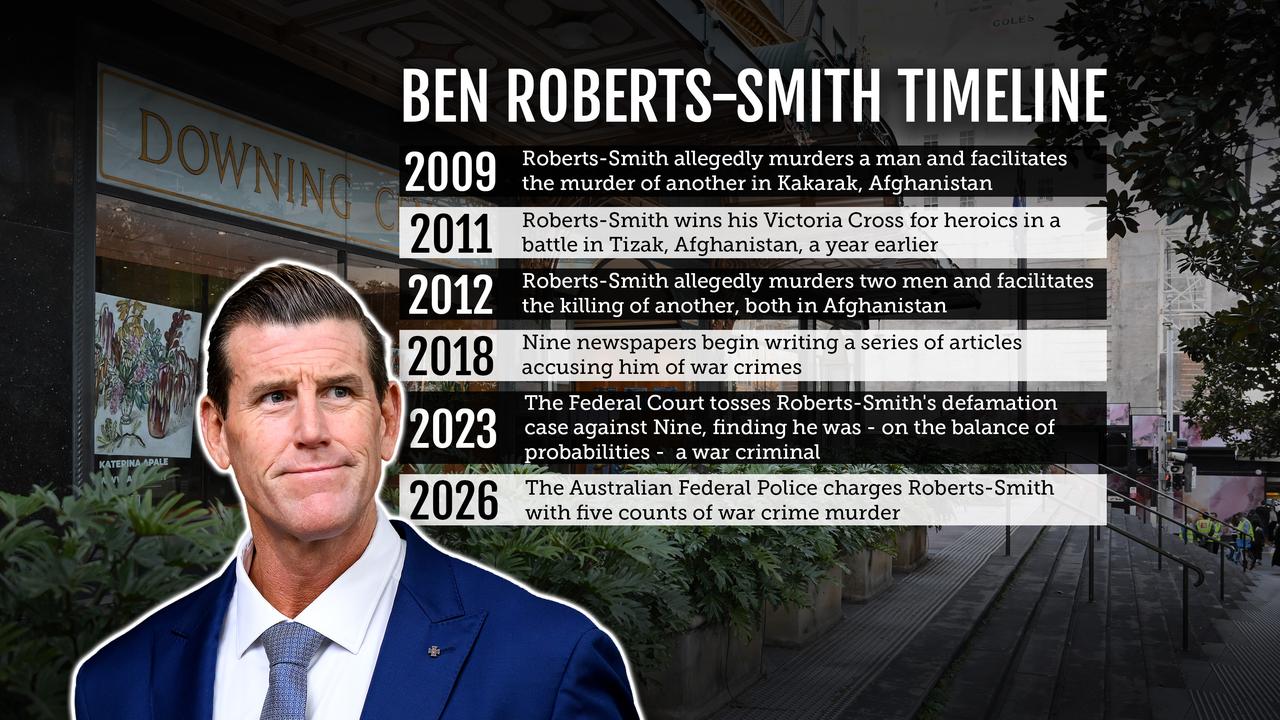
The department responsible for investigating war crimes has asked the federal anti-corruption commission to probe leaks to the media about the arrest of Ben Roberts-Smith.
The Victoria Cross recipient was arrested in April and charged with murdering or ordering the murders of five unarmed detainees while deployed in Afghanistan between 2009 and 2012.
The former SAS soldier has promised to use the upcoming trial to clear his name.
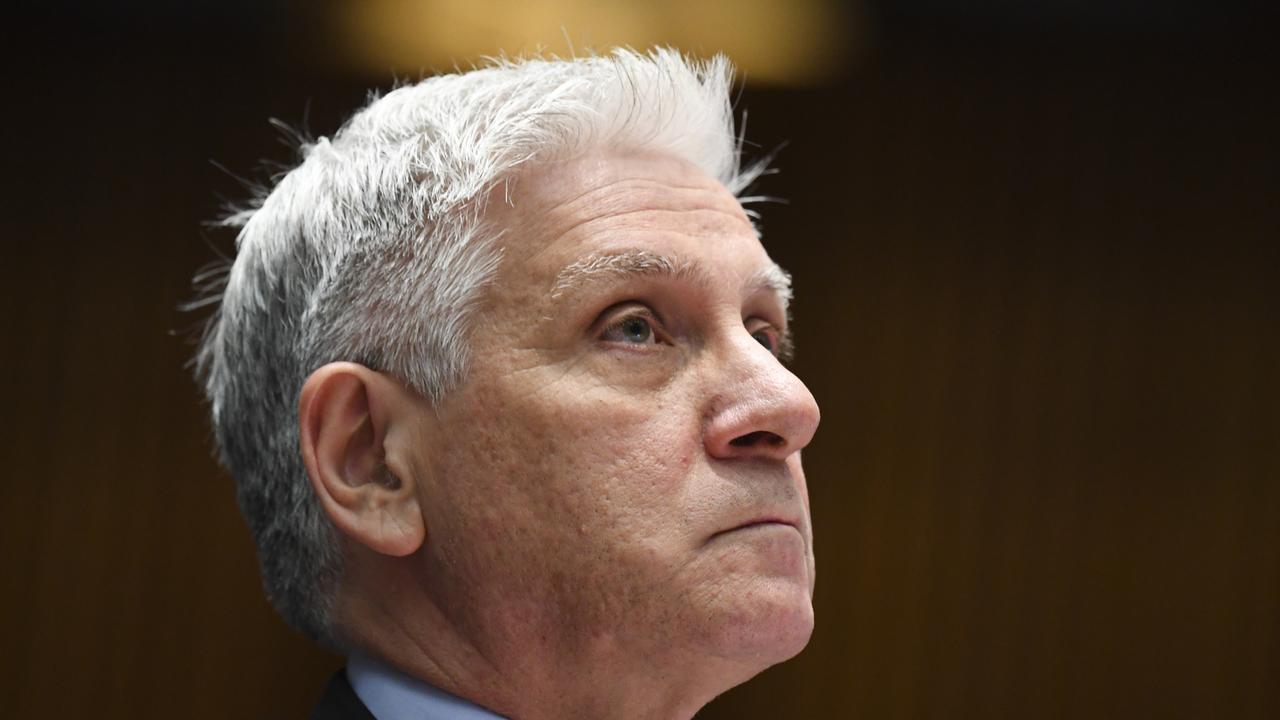
Appearing before a parliamentary budget hearing on Tuesday, the head of the Office of the Special Investigator, said he was surprised the media had knowledge of the arrest of Roberts-Smith.
Chris Moraitis said the war crimes investigator and the Australian Federal Police had written to the National Anti-Corruption Commission to investigate.
“It’s matter that concerns me. The media seem to have been privy to things, and therefore we’re taking steps to ascertain what happened there,” he told the hearing on Tuesday night.
“We believe there’s an unauthorised disclosure.
“It surprised me that that would happen, because we’re usually pretty good on keeping a low profile.”
When asked how the media might have known about the arrest ahead of time, the director general responded: “Good question”.
The federal corruption watchdog has yet to respond to the agencies’ request.
Mr Moraitis also revealed the investigator had tried to contact Attorney-General Michelle Rowland about the arrest ahead of time, but the message had gone to a voicemail.
The investigator’s director of investigations Ross Barnett said the agency had carried out careful planning for the arrest, and the choice to arrest Roberts-Smith at Sydney Airport was needed.
“In this particular case, the operational planning process did not support the option of an arrest by appointment,” he said.

Tax changes to have ‘modest’ impact on house prices
Changes to negative gearing and the capital gains tax will have a small impact on property affordability, the housing minister concedes.
The federal government will on Thursday introduce to parliament its changes to the taxes, to make it easier for more first home buyers to enter the market.
Under the changes, negative gearing would only be limited to new homes from July 2027, while the 50 per cent discount on capital gains tax would be replaced by a rate based on inflation from the same time period.
Housing Minister Clare O’Neil said while the changes would enable 75,000 more people to buy their first home over the next decade, property prices would come down as a result.
“This will have a modest affordability effect on house prices in Australia, but at the end of the day, the thing that is driving house prices is actually not our tax settings,” she told ABC TV on Wednesday.
“It’s a fundamental mismatched between how many homes we’re building and how many homes we need.
“These changes are difficult, but incredibly important for addressing the housing challenges the country faces.”
The government will bundle the tax changes in the same laws as a $250-a-year tax offset.
The coalition is set to oppose the measures, conceding it will open them up to attacks for voting down tax cuts for working Australians.
Opposition frontbencher Melissa McIntosh said the government was trying to rush the laws through parliament.
“They’re trying to push a whole bunch of legislation through budget-related, including their taxes on small businesses,” she told ABC Radio.
“The government promised transparency when they came into power and pushing legislation through, whether it’s the NDIS or whether it is their taxes related to the budget, there’s no transparency in that.”
It comes as a Guardian Essential poll showed 56 per cent of those surveyed said Labor had fallen short of expectations since the 2025 election.
The poll also found 39 per cent disapproved of the budget, compared to 25 per cent backing the financial document.
The negative gearing and capital gains tax changes were backed by 33 per cent, compared to 27 per cent against it.
The government is consulting industry groups about potential carve-outs from the new capital gains tax regime for startups, which could face their top marginal tax rate doubling to near 47 per cent when they sell their business.
Shadow treasurer Tim Wilson said the carve outs showed the changes were misguided.
“This budget is unravelling faster than I think anybody could imagine, and so they’re trying to come up with every different scenario to try and deflect the problems,” he told Sky News.