
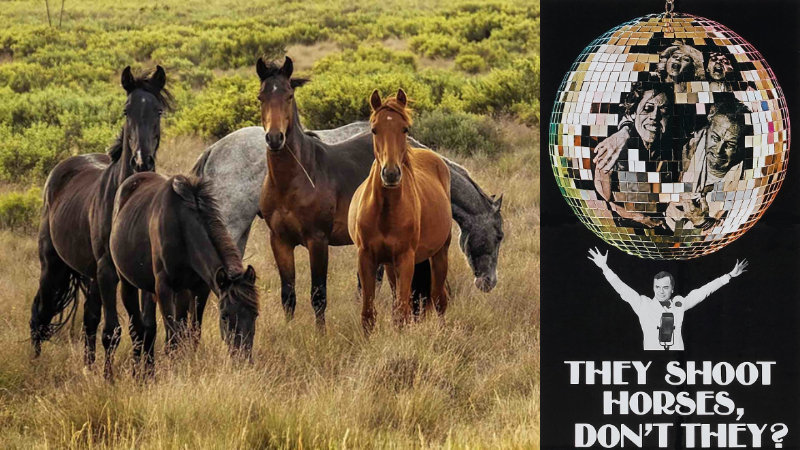

As the NSW election approaches, the Minns Government has paused the mass cull of the Snowy Mountains brumbies in Kosciuszko National Park. Suzanne Arnold reports on the politics.
Sydney Pollack’s classic 1969 film, “They Shoot Horses Don’t They?” had a rather tragic end, although only one horse was shot. At Kosciuszko National Park (KNP) in July this year,154 Brumbies were shot from the air.
The images of helicopter marksmen shooting brumbies, leaving them dying or dead in the Kosciuszko National Park (KNP) in July, created massive protests. Photographs of dead horses with half-born foals horrified social media. Protests, numbering over 200,000 in less than 48 hours from all over Australia and internationally, demonstrated a deeply shocked, disgusted public.
Enter NSW politics. The issue is fraught and as a NSW election looms in March, the government of Chris Minns has paused the cull of brumbies. Besides two legal challenges in the Land & Environment Court, Minns has faced a significant backlash over both the brumbies cull and his national parks policies which environmentalists say are putting koalas in danger.
The rub is however, that the culling of brumbies is seen as a necessity by many ecology scientists who are dedicated to rid the KNP of every horse, which they insist causes major ecological damage to the alpine ecosystem. Not only the KNP but other national parks with resident horses.
Brumby history
People familiar with Australian horse history say the brumbies are descended from the bloodlines of the Waler horses, which played significant roles in World War I; tough Australian working horses that served as vital military mounts for mounted troops
More than 120,000 Walers travelled overseas to help Allied forces in places like Palestine and the Middle East.
They carried the Australian Light Horse through battles, including the famous cavalry charge at Beersheba in 1917. Their history is preserved in the Australian War Memorial.
“During the campaign they often went for up to 60 hours without water, while carrying a load of almost 130 kilograms, comprising rider, saddle, equipment, food, and water.”
Support for the cull
Conservation organisations and members of the Greens party supported the cull. The Shooters & Fishers party objected to the cruelty inflicted, wanting to ban aerial shooting as inhumane. According to brumby activists, thousands of letters of protest sent to Penny Sharpe, Minister for Environment and responsible for authorising the slaughter, were ignored.
Limited research exists on the extent of environmental damage, but there’s no doubt that hard-hooved animals cause problems and their populations need to be controlled. This is potentially an area of agreement if humane methods of horse control were legislated and aerial killing outlawed.
However, the construction of the giant Snowy Hydro 2 renewal energy project in the park can’t be divorced from the extent of damage inflicted on the KNP alpine ecosystems.
Snowy 2.0
National Parks Association of NSW is outspoken in its condemnation of the project.
“Snowy 2.0 should not have been contemplated in the first place, due to its substantial, permanent environmental damage to Kosciuszko National Park.
“The Environmental Impact Statements (EISs) for Snowy 2.0 describe the devastating and unprecedented damage that would be inflicted on the irreplaceable alpine ecosystems and species of Kosciuszko National Park.
“Snowy 2.0 has not been subjected to comprehensive and periodic checkpoint reviews by independent expert engineering, power systems, economic or environmental analysts. This is standard practice for $multi-billion projects, particularly for a Government Corporation where it is the Australian community that bears the risks”.
But the primary source of concern is the extent of cruelty which continues to be censored, ignored and rejected by the NSW Labor government, the opposition, Greens, conservation organisations and mainstream media.
It’s fair to suggest the sheer extent of differing reactions to the cruelty suggests either a significant section of society now accepting of extreme violence to animals or a greater percentage who cannot tolerate any form of cruelty towards humans or animals.
Sanctioned cruelty
Australians are known for responding to emergencies, caring for others in times of great distress. The proposition that a government can permit such extreme and inhumane measures when humane options are available continues to cause anger and grief.
Reality demands politicians who authorise these operations should personally witness stampeding terrified horses, foals, pregnant mares, and older horses gallop across landscapes pitted with animal holes, places where they usually graze in peace. Helicopter noise and downdraft cause mass panic, often resulting in foals breaking their legs and mares giving premature birth.
Horses live in families; their devotion to each other is extraordinary, well demonstrated by horses standing by their dead mates for days.
RSPCA NSW supported the cull in spite of evidence of aggravated cruelty as described in the Prevention of Cruelty to Animals Act.
At an August budget estimates hearing, Minister Sharpe stated,
“Aerial shooters use high-grade weapons firing multiple rounds—ranging from seven and sometimes up to 15 shots—to ensure a rapid death during the Kosciuszko National Park brumby cull.’
“It’s not one shot and then they’re harmed and wandering around and the helicopter has to come down and deal with it.”
Detailed reports and first-hand knowledge of the cruelty involved in this method of culling are hard to ignore. A former professional shooter advised the Australian Brumby Alliance :
“My experience reinforced the impossibility of getting a clean, instant brain kill. Head shots were often too difficult to achieve even for the best marksmen and even if a head shot was executed it still didn’t guarantee an instant kill as often they ended up missing the horse’s brain and taking out its jaw or something else instead. The consequences of which was often seriously maimed horses escaping into tree cover,
where they would later die a slow and painful death.
Even in gun-happy USA, federal law and policy prohibit shooting or killing wild horses from helicopters as a culling method. In New Zealand and Canada, lethal aerial shooting isn’t standard or a legally promoted practice for horse management.
“Offsets”
Snowy Hydro 2 is spending approximately $100m on environmental offsets. Does killing horses constitute an offset?
It would appear so. Snowy 2.0 Offset Action Plans expressly create new offset-funded horse removal programs.
For example, the Eastern pygmy-possum plan allocates up to $500,000 between 2025 and 2045 for “Additional deer, horse and rabbit control” in designated offset areas.
With several lawsuits launched to stop the aerial cull, the fate of brumbies is on the line.
Snowy 2.0. A snow-job costing taxpayers twenty times its budget
Sue Arnold is a former Fairfax investigative journalist. Her speciality is environmental issues and she is a regular contributor to Australian and international publications. Sue heads up Australians for Animals Inc., a 32-year-old wildlife charity and is Founder and CEO of the California Gray Whale Coalition based in San Francisco.