The Bondi gunmen allegedly threw several shrapnel-filled bombs into a Jewish crowd celebrating Hanukkah in a failed attempt to claim more lives in their minutes-long, anti-Semitic massacre.
Police allegations about the Islamic-State-inspired shooters’ flawed bombs, training in a regional area, arsenal of weaponry left behind and reconnaissance to the massacre site in the days before the December 14 attack were released by a court on Monday.
Surviving gunman Naveed Akram, 24, faces 59 charges including committing a terrorist act and 15 counts of murder.
He and his deceased father, Sajid Akram, 50, are accused of carrying out Australia’s worst mass shooting since 1996 by targeting the Jewish festival of lights at Bondi Beach.
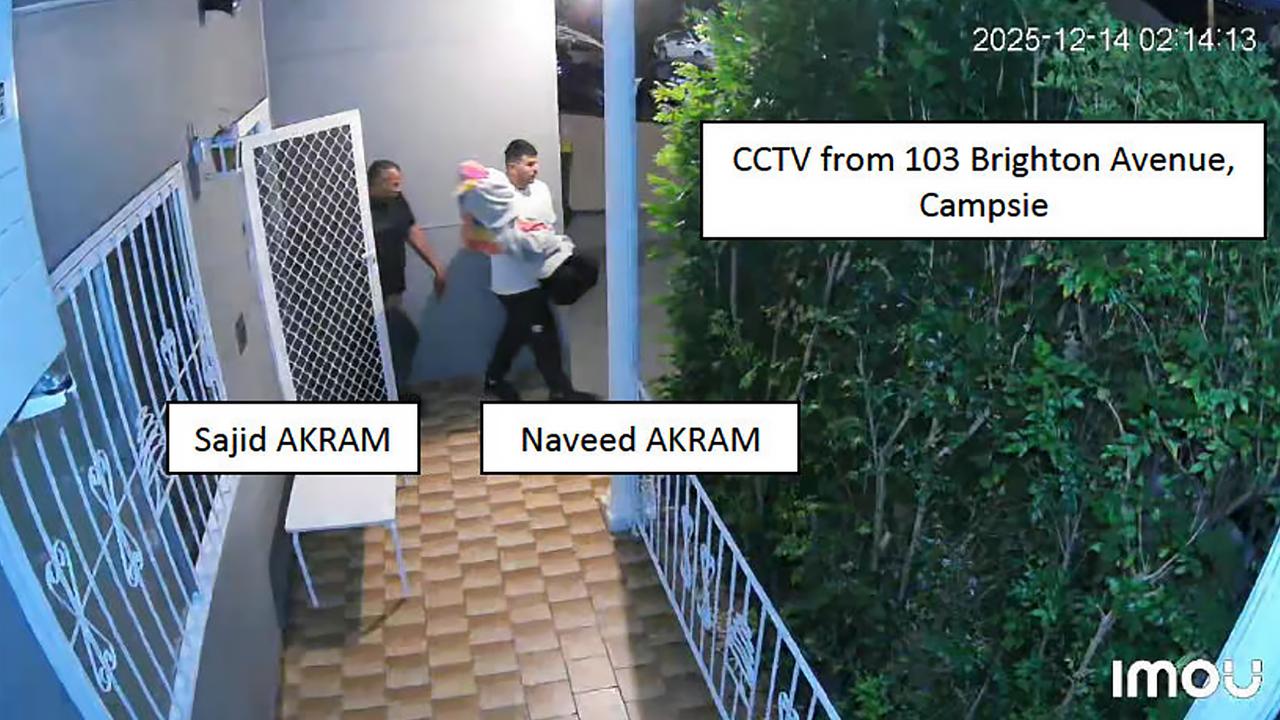
Images tendered by police in Naveed’s case allegedly show the Akrams at a short-term rental home they used as a staging post for their attack.
CCTV footage shows the men carrying long and bulky items wrapped in blankets and loading them into the younger man’s 24-year-old silver Hyundai Elantra in the early hours of December 14.
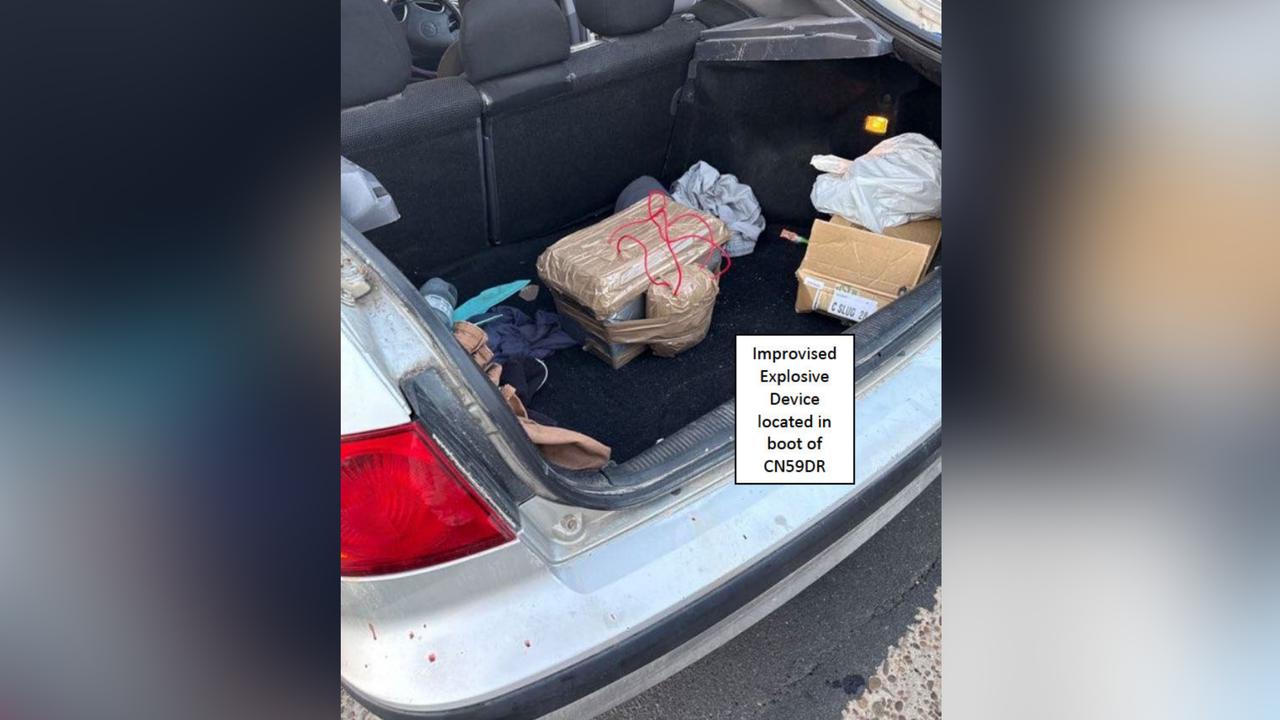
Under the blankets were two single-barrel shotguns, a Beretta rifle, five homemade bombs and two ISIS flags, police allege.
The men travelled from the suburb of Campsie in Sydney’s southwest to Bondi Beach after 5pm.
After parking near a footbridge on Campbell Parade, the men tossed three pipe bombs filled with steel ball bearings and a “tennis ball bomb” into the Hannukah celebration at Archer Park before opening fire.
But none of the pipe bombs detonated, despite preliminary police analysis finding they were “viable”.
No further detail about the tennis ball bomb was provided.
A box-like bomb was found in the boot of the car while two hand-painted ISIS flags were also found in the car.
Further weaponry and explosive devices were discovered by police in the Campsie rental, including a 3D-printed shotgun speed loader, a firearm scope, two more guns and another suspected bomb.
Police allege the men left behind videos that indicated their adherence to religiously motivated violent extremism.
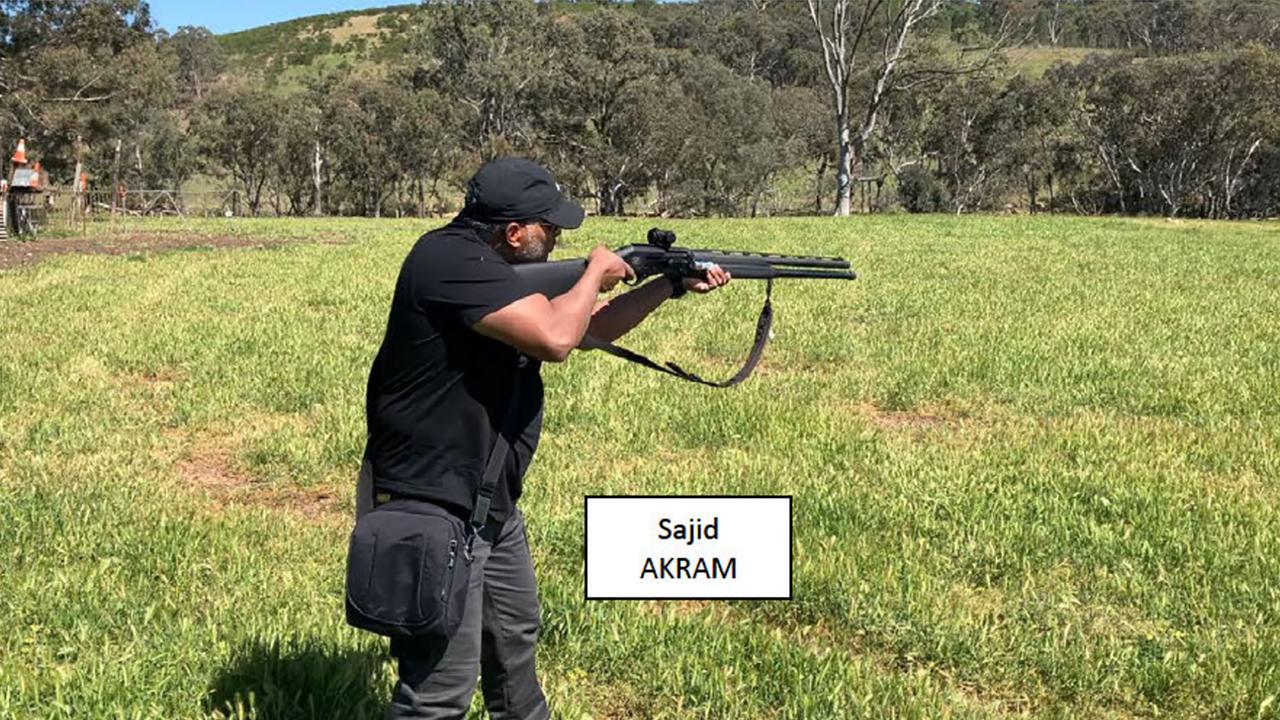
Footage recorded in late October – six to eight weeks before the attack – showed each Akram training with long-arm guns and “moving in a tactical manner” in a countryside location.
Police suspect the area was in NSW.
“The (younger Akram) is recorded appearing to recite, in Arabic, a passage from the Quran,” the facts sheet states.
“Following the recitation, both the accused and S.AKRAM speak in English and make a number of statement sregarding their motivation for the ‘Bondi attack’ and condemning the acts of ‘Zionists’.(sic)”
Further footage captured by security cameras at Bondi Beach appears to show the Akrams scoped out the area about 48 hours before their attack.
“There is evidence that the accused and his father … meticulously planned this terrorist attack for many months,” the facts sheet says.
As well as releasing the police allegations, Deputy Chief Magistrate Michael Antrum on Monday suppressed the identities of 25 survivors, to protect their privacy and assist their recovery.
The court order allows victim-survivors to choose if and when they go public with their story, and join other survivors such as Arsen Ostrovsky and hero tobacconist Ahmed Al Ahmed.
Akram remains in custody. His case is next due in court in April.

Australian Associated Press is the beating heart of Australian news. AAP is Australia’s only independent national newswire and has been delivering accurate, reliable and fast news content to the media industry, government and corporate sector for 85 years. We keep Australia informed.