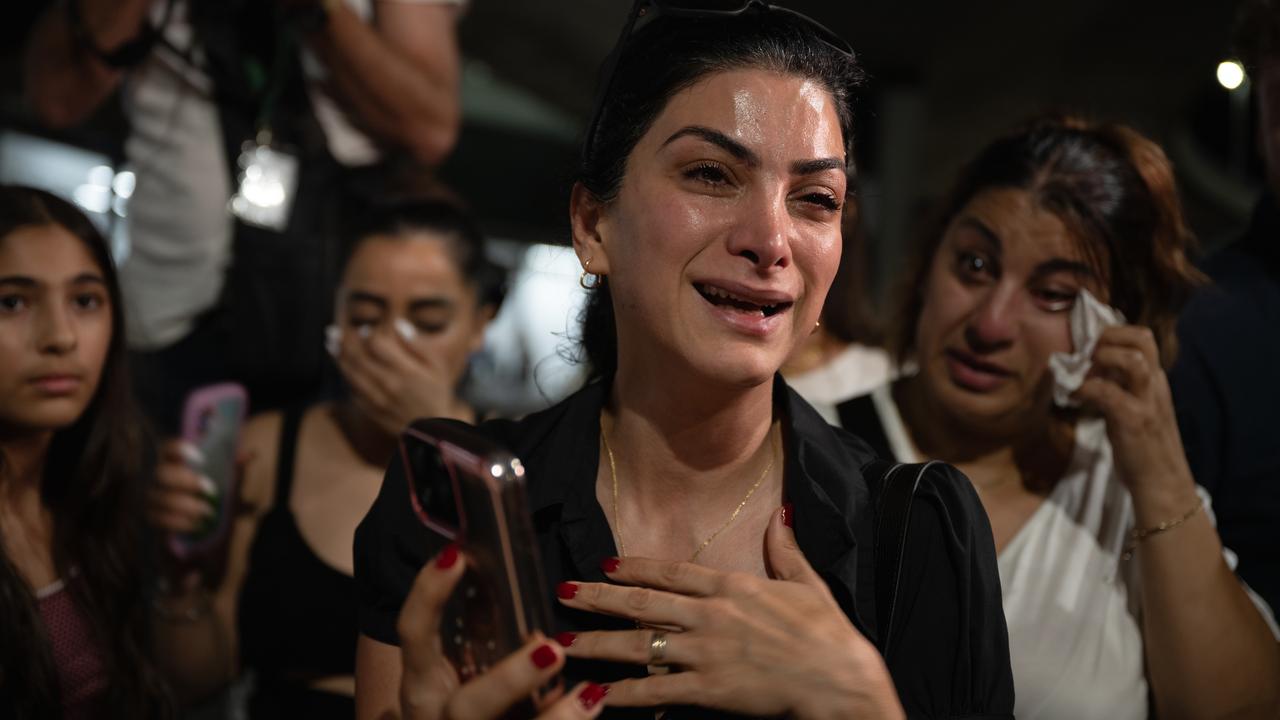
There are grave fears for the safety of departing Iranian soccer players after five of their teammates were granted asylum in Australia.
The remaining Lionesses departed Australia on Tuesday night after flying from the Gold Coast to Sydney, although there were media reports one or two other players did not board the plane.
They earlier left a Gold Coast hotel under police guard with one player appearing to be dragged by a teammate onto the bus, in a video published by Nine newspapers.
Protesters had tried to block the bus from leaving for the airport.
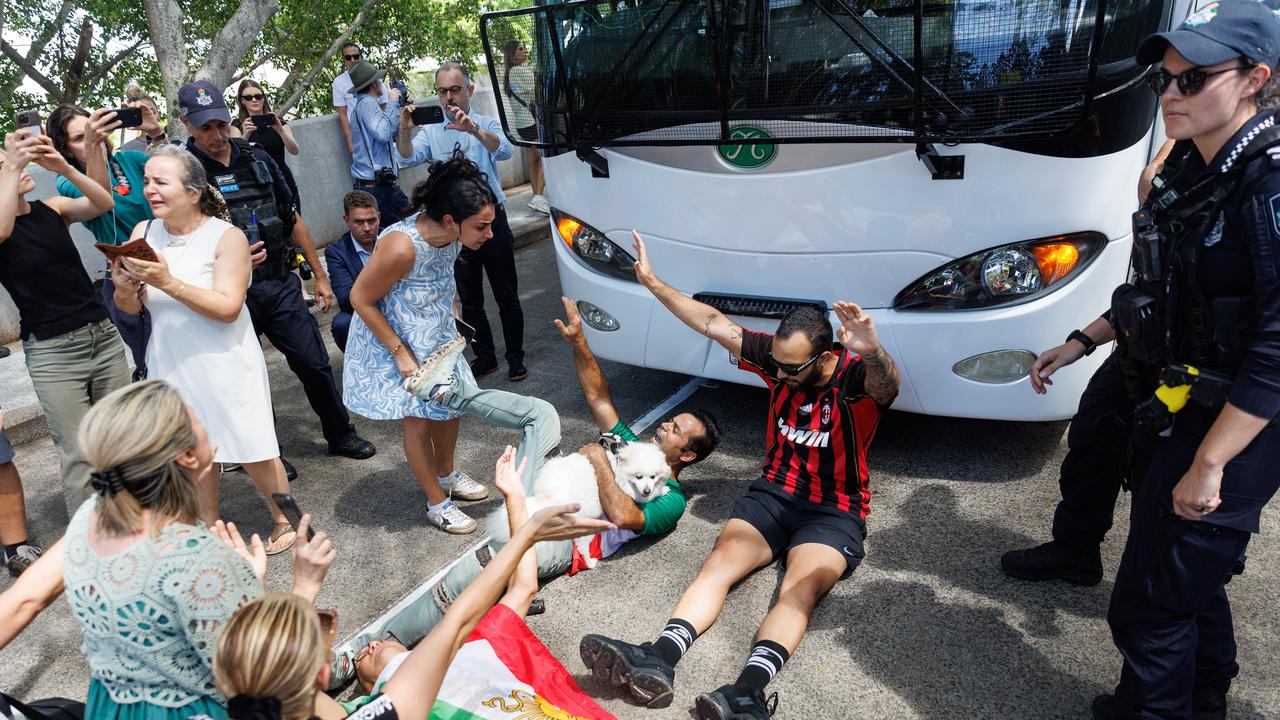
Demonstrators opposed to the Iranian government also turned up at Sydney airport on Tuesday evening.
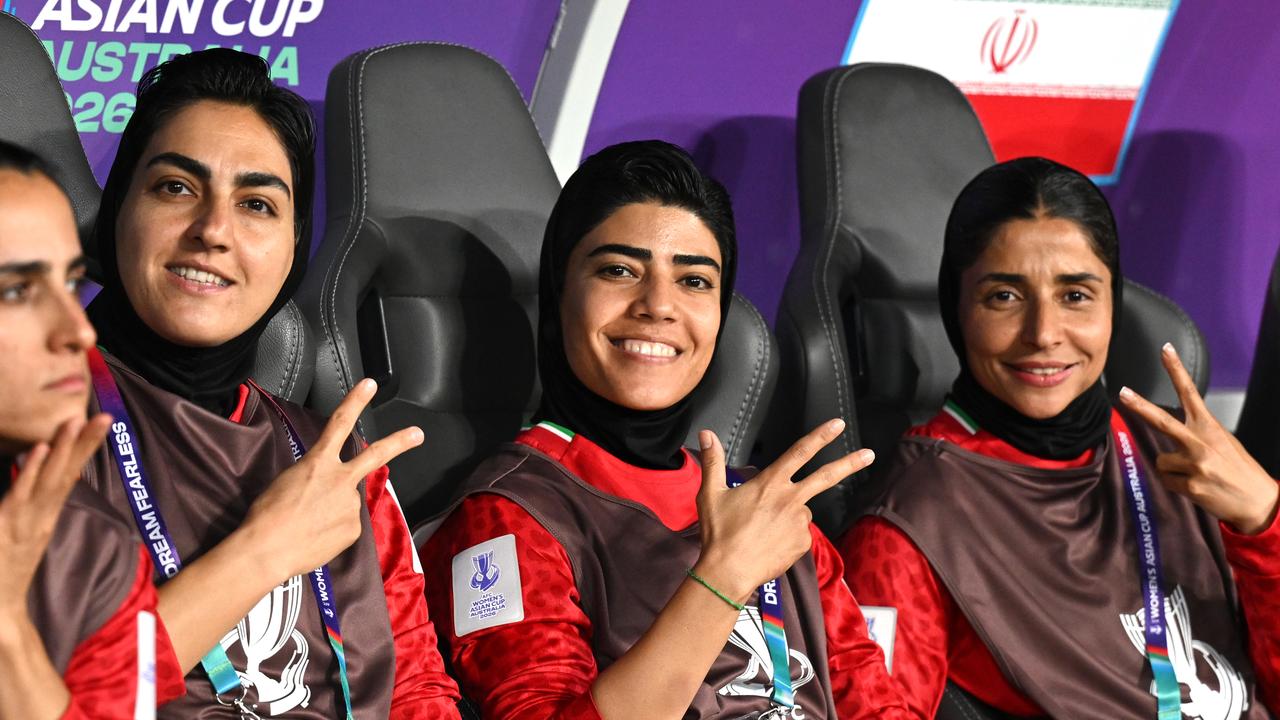
Players were branded “wartime traitors” on Iranian state TV for not singing the national anthem before their first Asian Cup match, just days after the killing of late supreme leader Ayatollah Ali Khamenei in US-led strikes.
The women who will stay in Australia include captain Zahra Ghanbari and players Fatemeh Pasandideh, Zahra Sarbali, Atefeh Ramezanizadeh and Mona Hamoudi.
The asylum offer was open to other players if they decided to seek assistance, Prime Minister Anthony Albanese said on Tuesday.
Iranian refugee advocate Ara Rasuli, who was involved with the asylum process, said the Australian government had “opened every avenue for the girls to stay here and to be protected”.
She said the players who returned to Iran possibly faced execution, and their families faced retaliation from the regime.
“They are in a lot of danger,” she said.
“There are all sorts of different threats, such as taking the families into custody, taking over their assets … and that’s why most of the girls are choosing to go back home, because the threats are a big issue in this matter.”
Retired Socceroos captain and human rights activist Craig Foster called for reform of global sport governance as women continued to be placed in these situations “far too often”.
“There will have to be accountability by the Asian Football Confederation and by FIFA as to what did not occur, what processes were not in place … this should have been avoidable,” he told AAP.
“It was foreseeable before the tournament. What has happened is neither uncommon … and was preventable.”
There have been previous instances where athletes have claimed asylum during sporting events, such as when the Afghan women’s cricket team, staff and family members fled to Australia after the Taliban’s takeover in 2021.
In a statement, the Australian Federal Police said it had been providing assistance to Home Affairs to help provide asylum to the Iranian’s women’s football team.
“The AFP has long and enduring relationships with the Iranian diaspora through the AFP’s Community Liaison Teams,” the statement read.
“The AFP acknowledges the community leaders, not-for-profit groups and ordinary Australians for their assistance and advocacy in this matter.”

Australian Associated Press is the beating heart of Australian news. AAP is Australia’s only independent national newswire and has been delivering accurate, reliable and fast news content to the media industry, government and corporate sector for 85 years. We keep Australia informed.