China has set its economic growth target for 2026 at 4.5-5 per cent, a slight downgrade from the 5.0 per cent pace Australia’s major trading partner achieved in 2025.
The target leaves room for greater, albeit not decisive, efforts to curb industrial overcapacity and rebalance the economy.
China also released its 15th five-year plan, and as widely expected, pledged investments in innovation, high-tech industries, scientific research and a “notable” – but unspecified – increase in household consumption as a share of economic output.
The pledges show Beijing is concerned weak domestic demand makes the world’s second-largest economy too reliant on exports for growth, but that it also does not want to abandon efforts to upgrade its vast industrial complex, which gives it supply chain leverage over Washington and its allies at a time when the rivalry is intensifying.
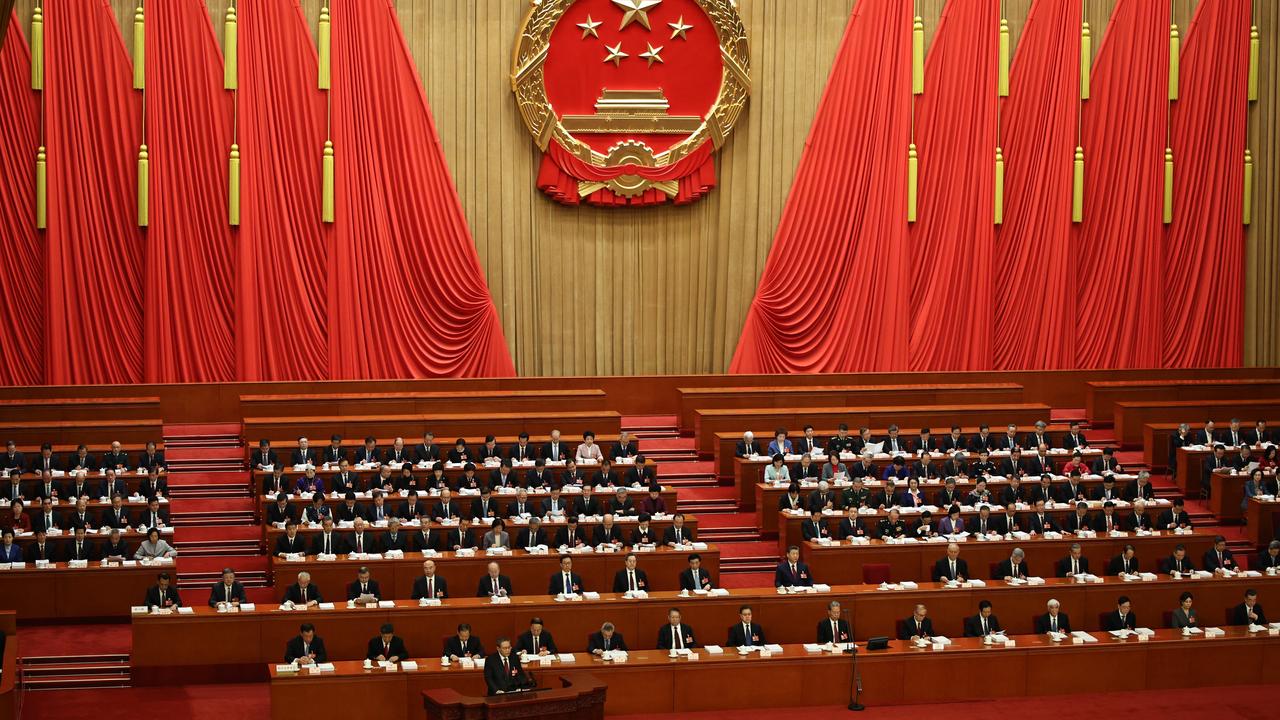
The growth target appeared in an official government report seen by Reuters and due to be presented in parliament, which opened its annual session on Thursday with a speech by Premier Li Qiang.
Economists have said a lower target gives Beijing more flexibility to implement reforms, such as reducing industrial overcapacity, but cautioned this shift does not mean a departure from its production-focused growth model.
Analysts at the Mercator Institute for China Studies describe promises to consumers as “hollow”, saying the leadership believes expansive support to key industries serves national interests best at a time of great power competition.
“Precariously balanced as it is, China’s economic policy will continue to systematically favour companies over households,” MERICS analysts wrote in a note before the parliament meeting.
“Beijing will persist in slow-rolling measures to expand social welfare, while using generous subsidies and tax incentives to drive industrial growth and upgrading.”
In terms of stimulus, China plans a budget deficit of 4.0 per cent of gross domestic product, similar to 2025.
It set unchanged special debt issuance quotas for the central government of 1.3 trillion yuan ($A266 billion) and for local governments at 4.4 trillion yuan ($A900.73 billion).
China pledged to raise minimum monthly pensions by 20 yuan ($A4.10) per person and basic medical insurance subsidies for rural, non-working people by 24 yuan ($A4.90).
It said it wants to increase education spending, subsidise childcare and reform public hospitals.
Larry Hu, chief China economist at Macquarie, expects fiscal levers to be adjusted flexibly, based on how the economy performs in coming months.
“If exports remain strong, they may tolerate weak domestic consumption. Conversely, if exports falter, they will step up domestic stimulus to defend the GDP target,” said Hu.
Former central bank adviser Liu Shinjin warned at a financial forum in January that China’s record $1.2 trillion ($A245.64 billion) trade surplus in 2025 – a key factor behind reaching the 2025 economic growth target – reflects not only rising manufacturing competitiveness but also weak domestic consumption.
He said China must shift from its long-standing reliance on investment and exports towards a model primarily driven by innovation and consumption, adding that while manufacturing could be further upgraded, this doesn’t mean its share in the economy shouldn’t fall.
“China’s current insufficient consumption is deeply tied to a series of institutional and structural factors, making it unrealistic to fully resolve these issues in the short term,” Liu said.
“However, leaving them unaddressed is not an option either.”

Australian Associated Press is the beating heart of Australian news. AAP is Australia’s only independent national newswire and has been delivering accurate, reliable and fast news content to the media industry, government and corporate sector for 85 years. We keep Australia informed.