
The safest money on Melbourne Cup day is on a rate rise.
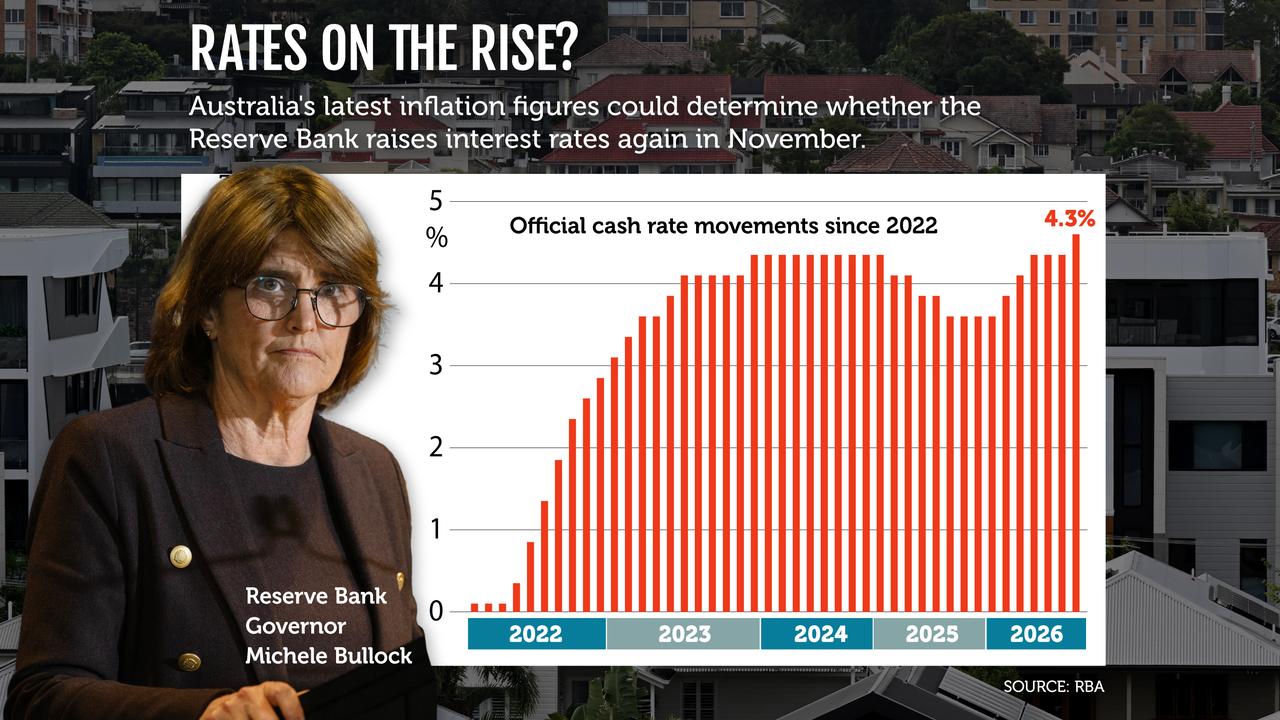
Bond markets and most economists have swung in behind a Reserve Bank of Australia rate hike on Tuesday after hot inflation figures and hawkish commentary from governor Michele Bullock the previous week.
The Middle East oil shock and surging artificial intelligence investment have further exposed Australia’s already supply-constrained economy.
The central bank’s preferred measure of inflation – the quarterly trimmed mean – came in at one per cent in September, above the bank’s forecast of 0.8 per cent.
In annualised terms, the trimmed mean was 3.7 per cent. That’s the 20th consecutive quarter underlying inflation has been above the midpoint of the Reserve Bank’s two to three per cent target band.
Recent remarks from Reserve Bank officials show the bank is increasingly worried about how persistent inflation has been, HSBC chief economist Paul Bloxham said.
“Although the jobs market is showing clearer signs of weakening, and falling housing prices are starting to feed through to stalling growth, we see the RBA prioritising the high inflation challenge and hiking in November,” he said in a client note.
“There is unlikely to be a ‘narrow pathway’ this time.”
Mr Bloxham estimated a recession was a fifty-fifty chance and predicted the unemployment rate to tick up to 5.1 per cent.
Unlike the post-COVID-19 pandemic price breakout, the Reserve Bank is in no mood to shield households from the worst impacts of its inflation fight.
A fifth rate rise this year would bring the cash rate to 4.85 per cent – the highest level since 2008.
It would also mean a household with a $600,000 mortgage would pay an extra $456 on monthly interest repayments compared to the start of the year, according to financial comparison site Canstar.
The decline in borrowing capacity, stretched affordability and Labor’s curbs on property investor tax breaks have hit house prices.
The housing downturn is on track to be the deepest on record and property data firm Cotality will provide another snapshot on Monday.
Home values fell 1.1 per cent in September.
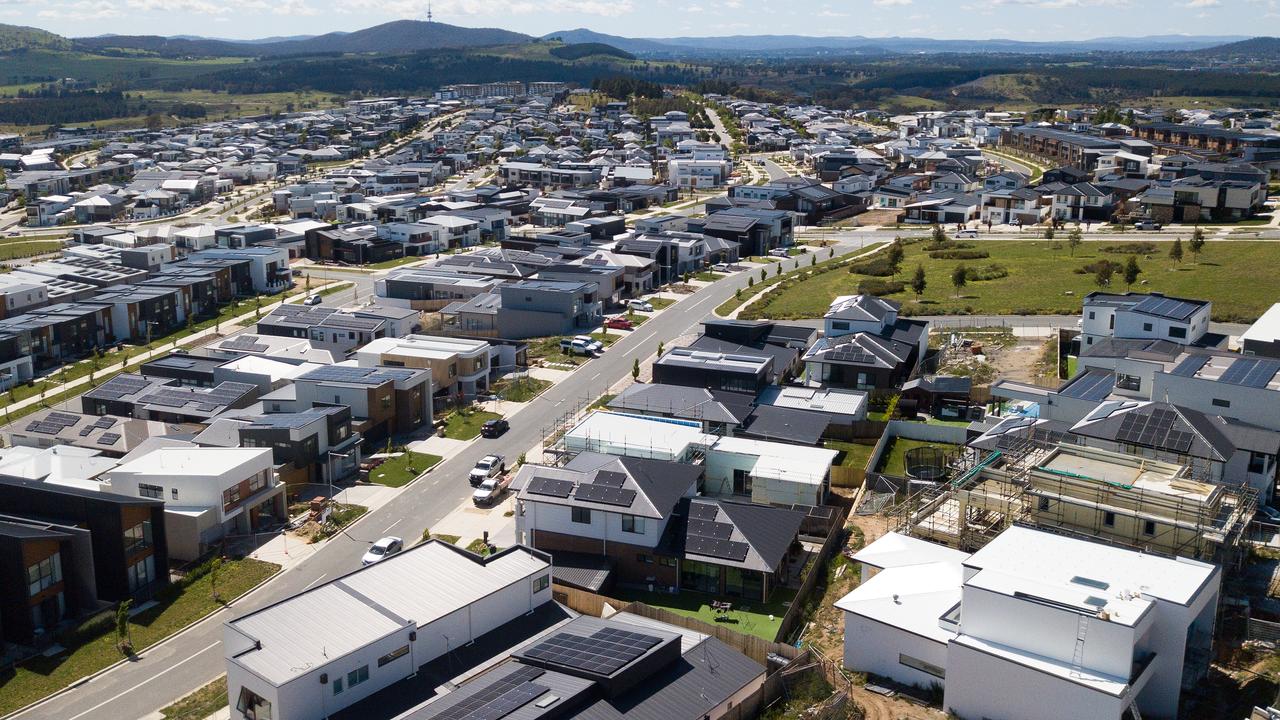
With rate expectations having firmed since, the decline is unlikely to decelerate.
While consumer confidence has cratered, helped by rising rates and falling house prices, household spending has held up relatively well.
The Australian Bureau of Statistics reported spending was up 6.8 per cent in the 12 months to August.
NAB expects another strong monthly rise of 0.8 per cent when September figures are released on Monday.
Disappointing quarterly results from Intel and Amazon have meanwhile amplified Wall Street investor concerns about massive spending by AI-related companies.
US indices tumbled on Friday, with the Nasdaq suffering its largest one-day percentage drop since June 5.

It lost 747.73 points, or 2.86 per cent, to close at 25,437.00. The Dow Jones shed 1.09 per cent to finish at 51,770.31 and the S&P 500 lost 1.82 per cent to 7,580.07.
Australian share futures were steady, slipping 4.0 points, or 0.04 per cent, to 17,455.
The benchmark S&P/ASX200 gained 1.28 per cent for the week after rising 16.3 points on Friday, or 0.18 per cent, to 8908.1.

Australian Associated Press is the beating heart of Australian news. AAP is Australia’s only independent national newswire and has been delivering accurate, reliable and fast news content to the media industry, government and corporate sector for 85 years. We keep Australia informed.