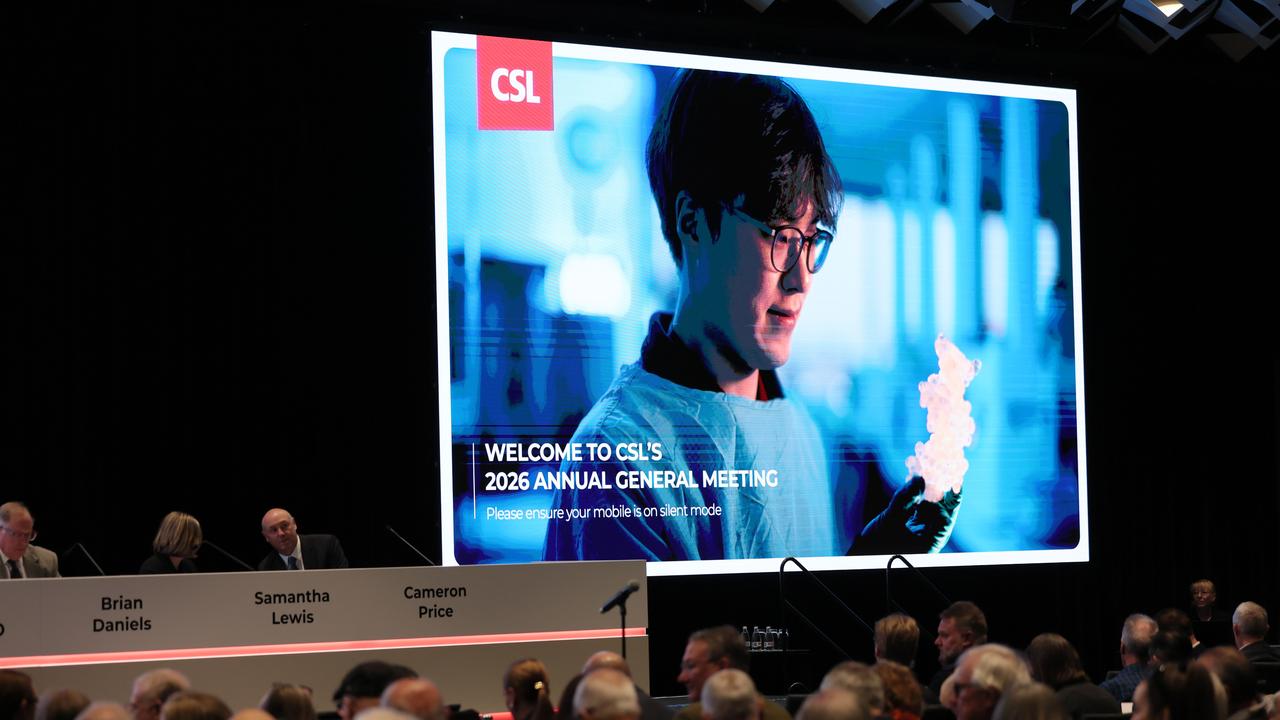

An Australian blood plasma and vaccine giant under pressure over disappointing earnings and share price performance says not every decision it made was a bad one, as it pointed to a management shake-up.
Melbourne-based CSL, best known for its groundbreaking Gardasil cervical cancer vaccine, recently appointed a high-powered former GSK executive as its first female chief executive.
Deborah Waterhouse, who replaces the former boss ousted in 2025, “ticks all the boxes” needed to repair the damage, outgoing chair Brian McNamee told a shareholders meeting on Tuesday.
Ms Waterhouse, who has a long career in the pharmaceuticals and biotechnology sectors, is joining CSL in February from multibillion-dollar global HIV specialist ViiV Healthcare, which she led for 10 years.
Viiv is jointly owned by Japanese pharmaceuticals group Shionogi and UK giant GSK, where she once worked as head of its US vaccine and primary care business and as general manager of its Australia and New Zealand operations.
In August, CSL reported a statutory net loss of $US2.6 billion ($A3.7 billion) for 2025/26, due to writedowns in its Vifor kidney treatment and iron deficiency businesses.
The shock loss compared to a $US3 billion ($A4.3 billion) profit the year before.
Vifor has struggled against generic competition and regulatory shifts since its 2022 acquisition by CSL.
But in the past two years, CSL has disappointed investors with earnings downgrades, prompting a multibillion-dollar cut in its market value, which recently drove a plan to shed about 3000 jobs.
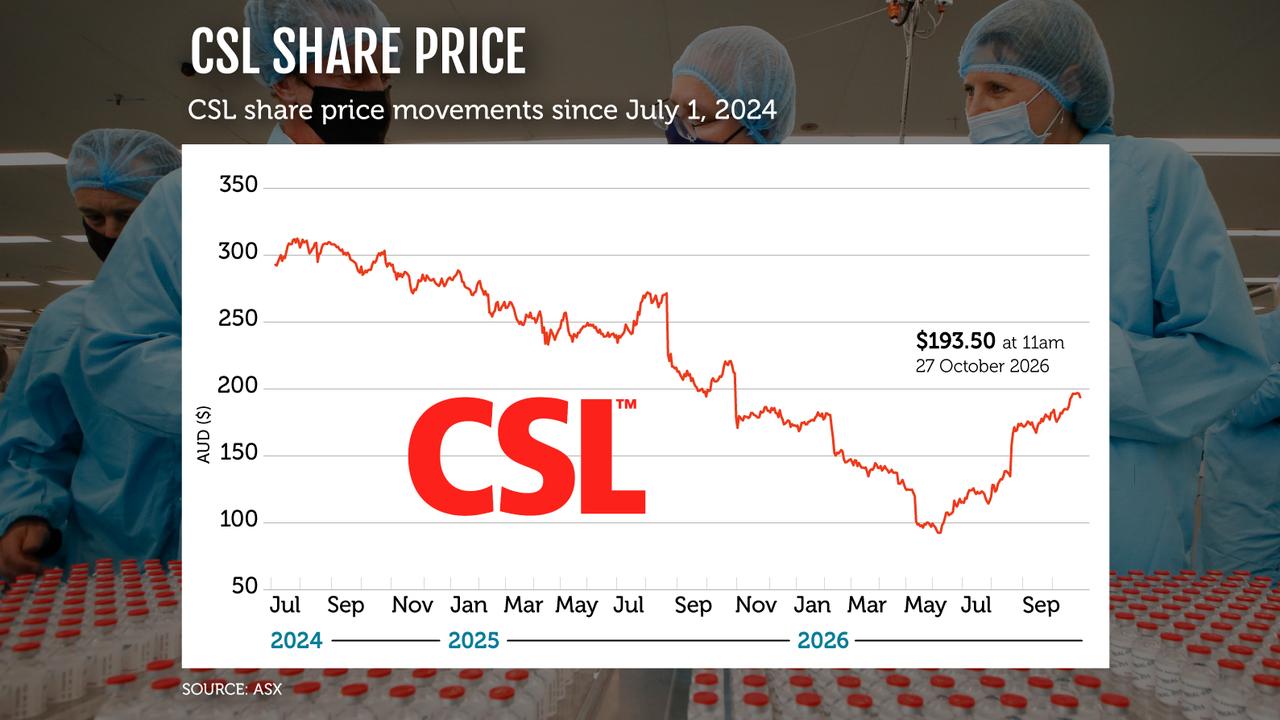
Shareholders peppered the board with questions about the share price, which tumbled by about 70 per cent from $310 in July 2024 to a nine-year low of about $90 in June this year.
It was trading at $194.50 around noon on Tuesday.
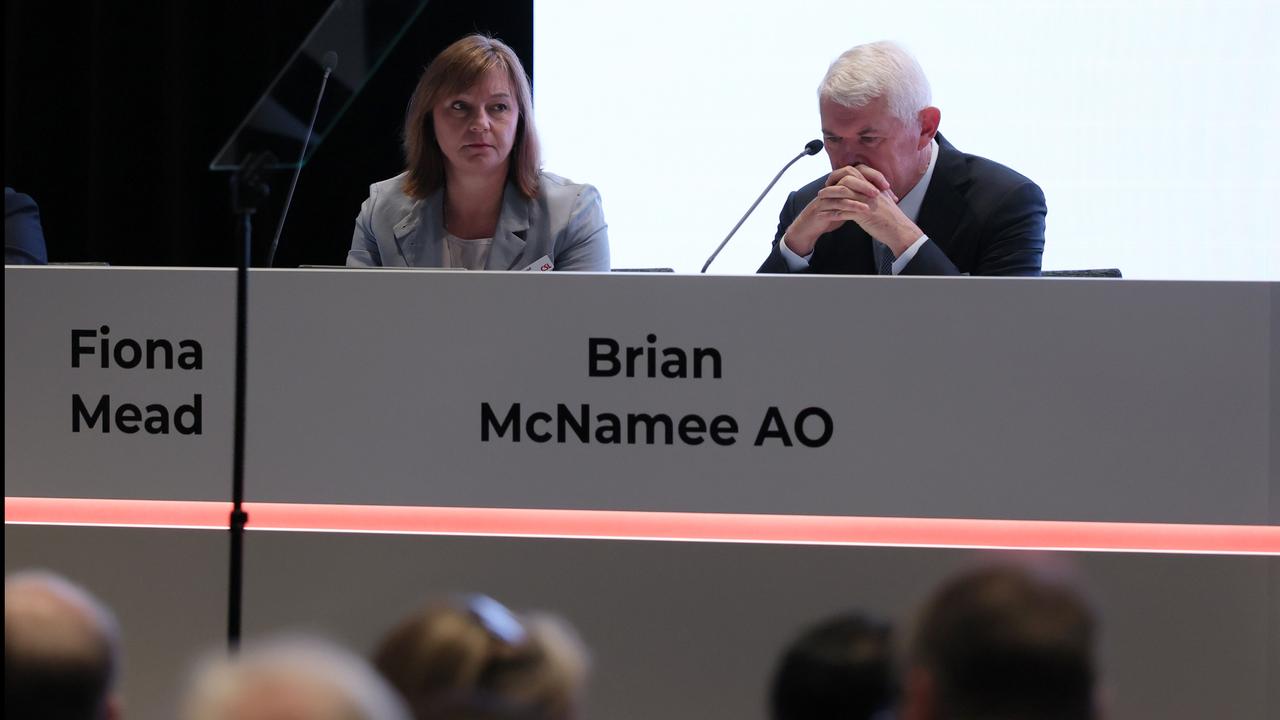
“We can’t just pack our bags and go home,” Mr McNamee said.
“We’ve refreshed the board, we’ve refreshed management, and I think we’ve done what a company would do when it accepts that.
“Vifor as a business is actually a business we still like; we still like the iron (deficiency) franchise because it’s very cash generative … not every decision was bad.”
Interim chief executive Gordon Naylor, who will replace the retiring Mr McNamee as chair after Ms Waterhouse settles in, was adamant the underlying business was resilient.
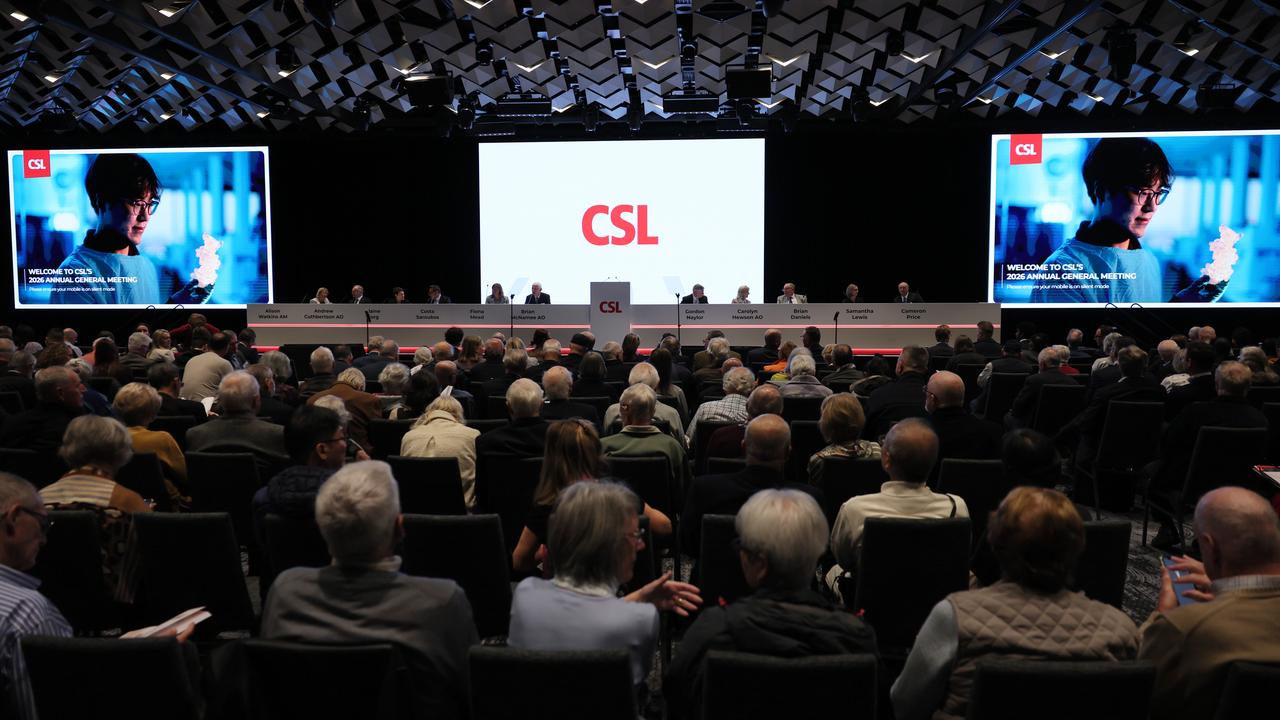
“Cash generation remains one of the company’s greatest strengths and provides flexibility to invest in future growth while maintaining a strong balance sheet and returning capital to shareholders,” he told the meeting in Melbourne.
Heading into 2026/27, CSL could deliver savings of $US400 million ($A570 million), Mr Naylor said as he confirmed its forecast for a five per cent rise in annual underlying net profit.
It also maintains its market-leading position in plasma and is looking for ways to improve collection and manufacturing capabilities.
“Reliable plasma supply remains critical to supporting long-term growth in our immunoglobulin franchise and meeting increasing patient demand,” Mr Naylor said.
At the same time, CSL’s vaccine business Seqirus continues to face headwinds in the US, which has a “slightly controversial policy framework”, after health secretary Robert F Kennedy scaled back long-standing immunisation protocols.
“But against that headwind, Seqirus is driven by the quality of its vaccine portfolio and is actually gaining market share and doing quite well,” Mr Naylor said.
Mr McNamee retires at the end of March after more than eight years as chair and after serving as chief executive from 1990 to 2013.

Australian Associated Press is the beating heart of Australian news. AAP is Australia’s only independent national newswire and has been delivering accurate, reliable and fast news content to the media industry, government and corporate sector for 85 years. We keep Australia informed.