Australians face a hefty blow to their living standards by 2066 if the government’s heroic assumptions about productivity fail to materialise.
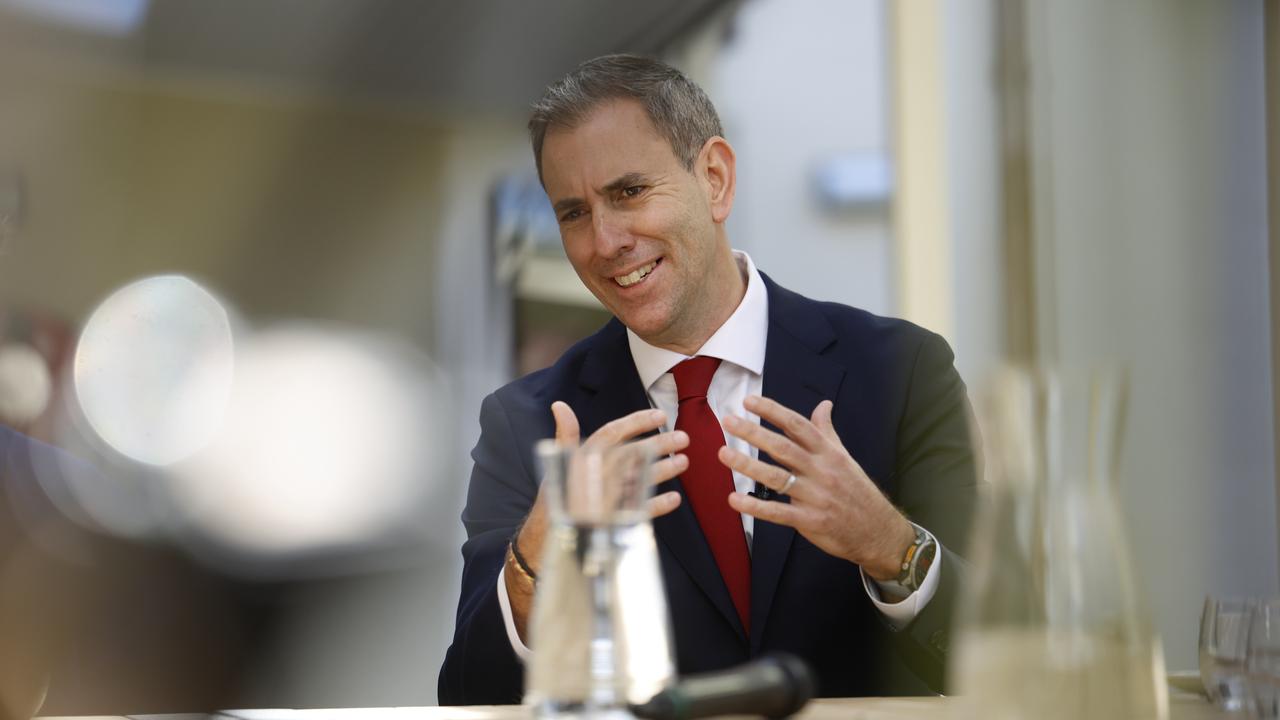
Economists panned the government for projecting productivity growth to bounce back from the 0.3 per cent it has averaged over the past decade to 1.2 per cent in the nation’s latest Intergenerational Report, released by Treasurer Jim Chalmers on Monday.
The rosy assumption underpinned projected growth in the economy and Australians’ living standards.
The report forecasts Australia’s economy to be more than twice as large in real terms in 40 years’ time, while income per capita is expected to be 55 per cent higher.
But under a more pessimistic forecast that productivity will grow by 0.8 per cent per year – still above the Reserve Bank’s 0.7 per cent medium-term assumption – the average Australian’s income is projected to be $20,000 lower than the baseline projection of $149,500.
Treasury’s forecast was based on productivity returning to its long-term assumption of 1.2 per cent, which it downgraded from 1.5 per cent in 2022.
Productivity – the main driver of living standards over the long term – was falling across the developed world, due to structural shifts towards a more service-based economy, an ageing population and slower diffusion of technology.
But Treasury was banking on artificial intelligence, as well as the government’s recent tweaks to regulation and competition policy, to turn around Australia’s productivity malaise.
The AI revolution would be “the biggest economic transformation of our lifetime”, Dr Chalmers said.
“AI will play a pivotal role in reaching long-term productivity growth of 1.2 per cent and higher if productivity gains accelerate over time,” the treasurer said in a speech at the Australian National University.

HSBC chief economist Paul Bloxham questioned Treasury’s assumption that productivity would bounce back so quickly, given it has averaged at 0.3 per cent over the past decade and most recently declined 0.2 per cent in the June quarter.
So far, there has been little evidence to justify pinning Australia’s productivity hopes on AI.
“Our take is that Australia’s economy is largely ‘supply constrained’ due to a lack of housing and cheap energy – AI seems unlikely to fix these problems,” Mr Bloxham said.
Independent economist Chris Richardson said the assumption was “bollocks”.
“The rise of AI is being used as a terrible toupee to try to hide the ever-larger bald spots evident in the Australian economy and the Australian budget,” he wrote on X.
Under the 0.8 per cent assumption, real GDP growth would be 1.2 per cent instead of 1.6 per cent, and GDP per capita would be $136,000 instead of $157,300.
Real gross national income per capita, a measure of living standards, would be $129,800 under the 0.8 per cent assumption instead of $149,500, but still higher than the current level of $96,500.
The federal budget will also be in worse shape.
Under the low-productivity scenario, the deficit would be 4.2 per cent of GDP instead of 1.8 per cent, while gross debt would be 55.9 per cent of GDP instead of 27.4 per cent.

Australian Associated Press is the beating heart of Australian news. AAP is Australia’s only independent national newswire and has been delivering accurate, reliable and fast news content to the media industry, government and corporate sector for 85 years. We keep Australia informed.