
The Shell whistleblower is in a fight for his life as Queensland’s Supreme Court decides whether client-lawyer privilege or whistleblowers’ protections comes first. Troy Stolz reports.
Terminally ill whistleblower Kent Quinlan is seeking access to 68 documents he claims prove his identity was leaked and he was retaliated against for blowing the whistle.
Shell’s counsel is arguing the 2019 whistleblower reforms do not override client-lawyer privilege.
This is the question Justice Soraya Ryan grapples with, is when dealing with legal professional privilege and Australia’s whistleblower protection laws, how do the two interact? In particular, where the documents in dispute may themselves be evidence of alleged breaches of those protections.
Crime-fraud exception to privilege
Tony Morris KC for Quinlan invoked the crime-fraud exception to legal professional privilege, also called the fraud/crime or iniquity exception. Privilege does not protect communications made to commit, plan or further a crime, fraud, or an act that attracts a civil penalty under the Corporations Act.
Morris further argued, if Shell withheld documents that were created in furtherance of alleged sham transactions, insider trading, market manipulation, or the unauthorised identification and victimisation of a whistleblower, they never attracted privilege in the first place.
Moreover, the lawyer need not have known of any improper purpose. What matters is whether the communication furthered the alleged misconduct. That issue was argued at length.
Morris cross-examined Shell in-house Counsel James Johnston and external lawyer Nicole Caton, Partner at DLA Piper. The questioning went to alleged weaknesses and inconsistencies in affidavits tendered to the Court. Morris argued Quinlan should have the documents because they may be relevant to his allegations and to whether his statutory whistleblower protections were breached.
Those allegations include sham electricity transactions, insider trading, market manipulation, inflated profits, disclosure of Quinlan’s identity as a whistleblower, and retaliation against him.
Testing whistleblower reforms
Australia enhanced its corporate whistleblower regime in 2019. The reforms were designed to encourage people to report corporate wrongdoing and to protect them from retaliation, including by
protecting the confidentiality of their identity.
According to Shell’s own evidence, 50 of the 68 disputed documents have already been flagged by Shell as identifying Quinlan as a whistleblower without his consent.
The Quinlan case echoes issues exposed in the KPMG/Allens scandal: both raise the uncomfortable question of whether legal professional privilege is designed to protect confidential legal advice or whether it can become a shield that prevents scrutiny of documents potentially relevant to a whistleblower’s allegations and treatment.
“Battle for the soul”. KPMG whistleblower’s court win threatens Big 4 super-perk
Whistleblower Quinlan, a former deputy financial officer of ERM, acquired by Shell in 2019, further alleges the disputed documents support alleged sham electricity transactions involving Queensland government-owned Stanwell and ASX-listed Macquarie Bank, including trading and share-price manipulation.
Those allegations are also contested.
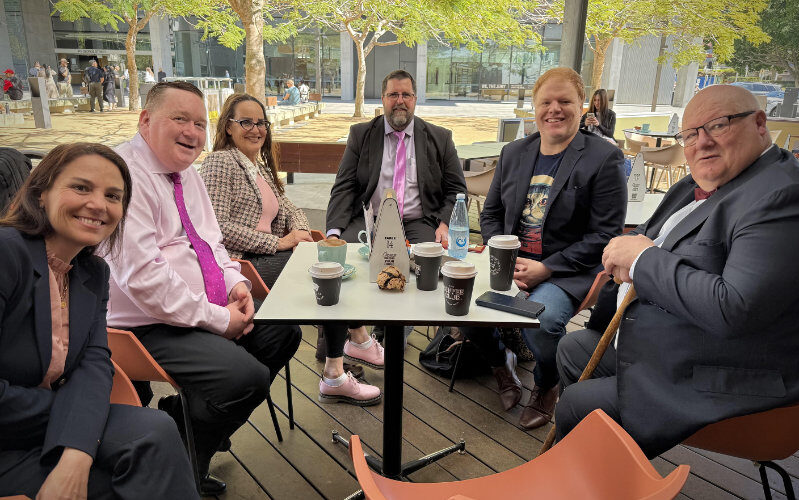
Quinlan was joined in court by fellow prominent whistleblowers Richard Boyle, Julia Delaforce, Jeff Morris OAM, Sharon Kelsey and this writer.
No conviction for whistleblower Boyle. Reform urged after ordeal
For whistleblowers across Australia, the significance of this interlocutory fight may extend well beyond one man. Seven years after the 2019 reforms, the case is testing what those protections mean when a whistleblower tries to use them against a powerful corporation and when that corporation answers with legal professional privilege.
The question is no longer whether Australia has whistleblower laws. It is whether those laws
work when a whistleblower needs them most.
Justice Ryan reserved her decision and indicated she hoped to deliver it by 7 November 2026.
Terminally ill Mr Quinlan is due to give evidence over two weeks from 7 December 2026, based on a statement of evidence in chief running to nearly 4,000 pages.
The allegations in Quinlan v Shell remain contested and have not been determined at trial. References to alleged misconduct are allegations advanced in the proceedings and should not be read as findings of wrongdoing.
High Court: look at the work, not the paperwork. Is BHP looking?

Troy Stolz is an Australian whistleblower and gambling reform advocate. He was the head of ClubsNSW's anti-money-laundering and counter-terrorism unit, until 2019.