
Will a global human rights declaration help pave the way for Zomi Frankcom’s killers to be held accountable for her death? Human rights advocate Shamikh Badra asks.
The killing of Australian aid worker Zomi Frankcom in Gaza in April 2024 has not gone away as an issue in Australia. Six of her World Central Kitchen colleagues were also killed in the attack.
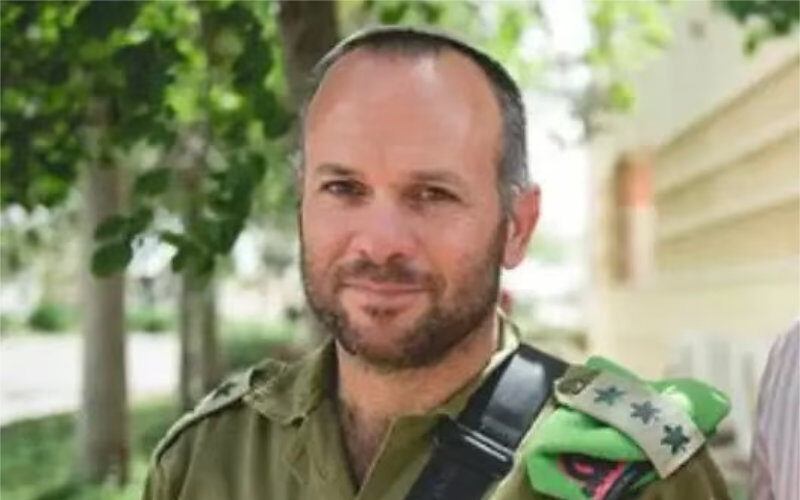
Last week, the IDF said it would not pursue a criminal investigation or take additional measures against anyone involved in the incident. This, despite originally sacking the commander who ordered it, Colonel Nochi Mendel. In an October 2025 interview, Colonel Mendel said he did not mean to kill any of the WCK employees, but said: “I’m not sorry for what I did.”
His comments sit awkwardly with the IDF’s earlier description of the attack as a “grave mistake” caused by misidentification.
That makes the accountability question harder to avoid.
The convoy’s movements had been coordinated with the Israeli military and the vehicles carried World Central Kitchen markings. This was not one strike. Three vehicles were hit in three separate strikes over four minutes. Mendel also said he had been watching a continuous live drone feed as the convoy moved.
Elbit: how Australia helped finance the IDF killing of Zomi Frankcom and the slaughter in Gaza
Not about “mistakes”
It is no longer enough to reduce the case to a question of whether mistakes were made. Seven humanitarian workers were killed. The commander who ordered the attack has acknowledged that he did so. Yet the criminal process has been closed without an independent process establishing responsibility.
There was a lot of anger after the WCK deaths, particularly over how aid workers could be killed while doing their job. For the Australian government, it also raised a difficult question: how should those responsible be held to account?
Humanitarian workers are protected by international law, but when they are killed, accountability can be hard to secure. Australia decided to take that problem beyond Zomi’s case.
In September 2025, it joined eight other countries in launching the Declaration for the Protection of Humanitarian Personnel. The government said the initiative was launched in Zomi’s honour. It now has the support of 125 countries, bringing governments together around the protection of humanitarian workers and the need for accountability when they are harmed.
What now?
That decision puts Australia in a difficult position. Zomi’s death helped give momentum to an international commitment against impunity.
Now her case is testing how much that commitment means in practice.
This case exposes the accountability gap. Australia has been successful in winning international support for a principle. The harder task is deciding what to do when that principle is tested, and the political choices become more difficult.
The problem is not a lack of law. Humanitarian workers already have protection under international law. The Declaration did not create those rules. It is also not a court and cannot prosecute anyone.
Its importance lies in the problem it tries to address. Rules may exist, yet accountability can still fail. That is why the Declaration deals not only with protection but also with justice and accountability. Foreign Minister Penny Wong made that connection herself.
In April, two years after Zomi’s death, she said that honouring Zomi’s legacy meant turning commitment into action.
Those words have a different weight now. Australia is no longer talking only about how the system should work in future cases. It is dealing with the case that helped drive its own initiative.
The issue cannot end with a debate over whether the military investigation was adequate. Australia also has to decide what follows from its own judgement that the process fell short.
Who is responsible?
One question is what went wrong. Another is who was responsible.
An investigation can identify failures. It can recommend new procedures or training. Officers can be removed from their positions. These steps may be necessary, but they do not by themselves establish responsibility for the deaths. That distinction is important in the Frankcom case.
Why was the convoy struck three times? Why has Australia still not received the drone audio it requested? Why was the convoy attacked inside a humanitarian fire control zone? There are also questions about the role of a senior brigade officer who had earlier signed a letter calling for restrictions on aid entering Gaza.
Australia has also rejected the idea that dismissing two officers and reprimanding three others amounts to enough accountability for seven deaths. Penny Wong has said that the government does not have confidence in the Israeli Military Advocate General’s process.
The issue, then, is not simply whether the Israeli military admitted that serious failures occurred. It is whether there has been a credible process for establishing responsibility.
International norms
Acknowledging failure and delivering accountability are not the same thing. The case also raises a broader question about how international norms work.
Martha Finnemore and Kathryn Sikkink have written about the way international norms develop. An idea first gains support. More states adopt it. Over time, it can become part of what governments are expected to do. The Declaration has made real progress on that front.
Australia and its partners promoted it, and other governments joined. That is a diplomatic achievement. It matters that so many governments have accepted the principle. However,
support is not implementation.
Governments can agree that humanitarian workers should be protected. They can agree that attacks on them should not go unpunished. The harder part begins when they face an actual case and have to decide what they are prepared to do about it. That is when political cost matters.
The international system has many rules and declarations. Governments often agree on principles without much difficulty. The real weakness appears after a breach, when those governments have to decide whether the principle they supported will affect their own actions.
The countries behind the Declaration appear to recognise this problem. The Group of Friends for the Protection of Humanitarian Personnel was created with implementation in mind. At an expert meeting in June, governments and humanitarian organisations discussed how political commitments could lead to stronger protection on the ground.
Australian actions
Australia has taken several steps since Israel announced its decision. Wong summoned the Israeli ambassador. She said Israel’s response fell far short of the accountability Australia expected. The government has continued to seek evidence and answers.
Prime Minister Anthony Albanese called the decision an outrage. He also said an independent investigation was one option that should be considered.
Australia then joined Canada and the United Kingdom in a statement on 21 August. The three governments called the decision not to pursue a criminal investigation “shameful”. They said the victims and their families deserved justice and accountability.
The difficult part is what comes next. There is already discussion about an independent investigation. Australia could continue pressing for evidence. International legal processes, sanctions, diplomatic pressure and joint action with other governments have also been raised.
Send Hillel Newman home: Australia has tolerated his contempt long enough
Each option needs to be considered on its own merits. The answer should not be an automatic punishment, and Australia should not decide in advance who is criminally guilty.
A political judgement cannot replace a credible legal process.
But Australia can insist that there should be a process capable of establishing responsibility in an independent and credible way. If that cannot be achieved, it then has to consider what further legal or diplomatic steps are justified. That is the point at which the Declaration starts to matter in a practical sense.
Australia-Israel relations
Australia’s relationship with Israel makes the issue more difficult. It also makes the test more important. It is easy for governments to support a principle when little is at stake. The situation changes when applying that principle can affect relations with a partner or ally.
If accountability is demanded firmly from states that are easy to pressure, but approached differently when a close partner is involved, the idea that the principle is universal becomes weaker. That does not mean governments have no other interests. Of course they do.
Diplomacy involves competing interests and difficult choices.
But international norms are meant to place limits on those choices. A principle has little force if it applies only when there is no political cost.
Zomi’s Australian citizenship also raises another issue. The Australian government has a particular responsibility to her family. But the Declaration launched in her honour was never meant to protect Australians alone.
Most humanitarian workers in conflict zones are local. They often face the greatest risks. When they are killed, they may also have far less political power behind them.
Zomi’s legacy
Zomi’s legacy should not be a higher standard of accountability only when the victim carries an Australian passport. The point of the Declaration is much wider than that. The same standard should matter when the victim is a Palestinian aid worker. It should matter for a Sudanese or Ukrainian aid worker. It should matter in conflicts that attract far less international attention.
If protection is meant to be universal,
nationality cannot determine the seriousness of the response.
Australia has already achieved something important. A case involving one of its citizens helped produce an international commitment that now has the support of 125 countries.
What happens next will tell us more about the strength of that commitment. Zomi Frankcom’s death helped Australia ask the world to make accountability more than a promise. Her case now asks Australia to show what that promise means.
World Humanitarian Day. Worker deaths nearly triple in 3 years amid aid cuts
Shamikh Badra is a Palestinian-Australian researcher, human rights advocate and community organiser from Gaza. He is a PhD candidate at the University of Wollongong, researching Palestinian diplomatic resistance, and holds a Master’s in Peace and Conflict Studies from the University of Sydney.