
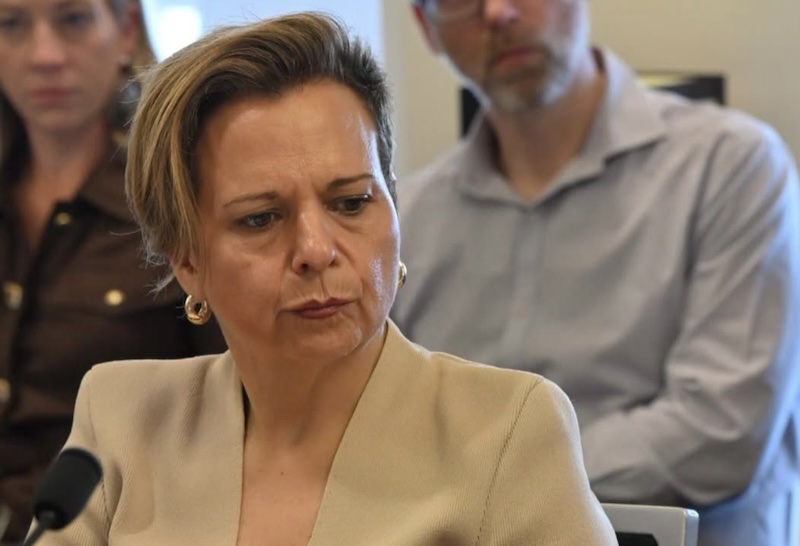

Attorney General Michelle Rowland is set to decide tomorrow whether military whistleblower David McBride will be released on parole, with the power to make the decision resting with her rather than an independent parole board. Stephanie Tran reports.
In May 2024, ACT Supreme Court Justice Mossop sentenced David McBride to a five years and eight months in prison. The judge imposed a 27-month non-parole period, describing it as the “minimum period of full-time detention necessary to fulfil the purposes of sentencing”.
The court ordered that the non-parole period run from 14 May 2024 until 13 August 2026.
The prospect of a politician deciding McBride’s fate has prompted criticism from supporters of the whistleblower, who argue the arrangement creates a conflict of interest as the Attorney-General’s department decided to continue the prosecution of McBride.
Gabriel Shipton, founder of The Information Rights Project and a prominent supporter of McBride, said the decision had implications beyond the former military lawyer and his family.
“When institutions act to hide their wrong doing and punish those that reveal it, we as citizens lose our trust in them,” Shipton said.
“Freeing David McBride would bring relief to him and his family, and it will also be a step towards rebuilding that trust.”
MWM contacted the Attorney-General’s Department for comment. A spokesperson for Michelle Rowland said “the Government does not provide specific commentary or details about individual parole matters.”

Stephanie is a journalist with a background in both law and journalism. She has worked at The Guardian and as a paralegal, where she assisted Crikey’s defence team in the high-profile defamation case brought by Lachlan Murdoch. Her reporting has been recognised nationally, earning her the 2021 Democracy’s Watchdogs Award for Student Investigative Reporting and a nomination for the 2021 Walkley Student Journalist of the Year Award.