Nobel Prize winner Werner Heisenberg once wrote: “Not only is the universe stranger than we think, it is stranger than we can think.”
The words of the German quantum physicist ring true many decades on as scientists use supercomputers and cutting-edge telescopes to try and confirm his most elusive theory.
An Australian astronomer is among a team of researchers who may have observed a complex phenomenon called vacuum birefringence, theorised by Heisenberg in 1936.
Their finding could open a “new cosmic window” in quantum physics and improve understanding of the universe, according to research published in the international journal Nature on Thursday.
Known as a physics “cold case”, astronomers have long been chasing Heisenberg and his student Hans Euler’s theory that seemingly empty space can alter the path of light.
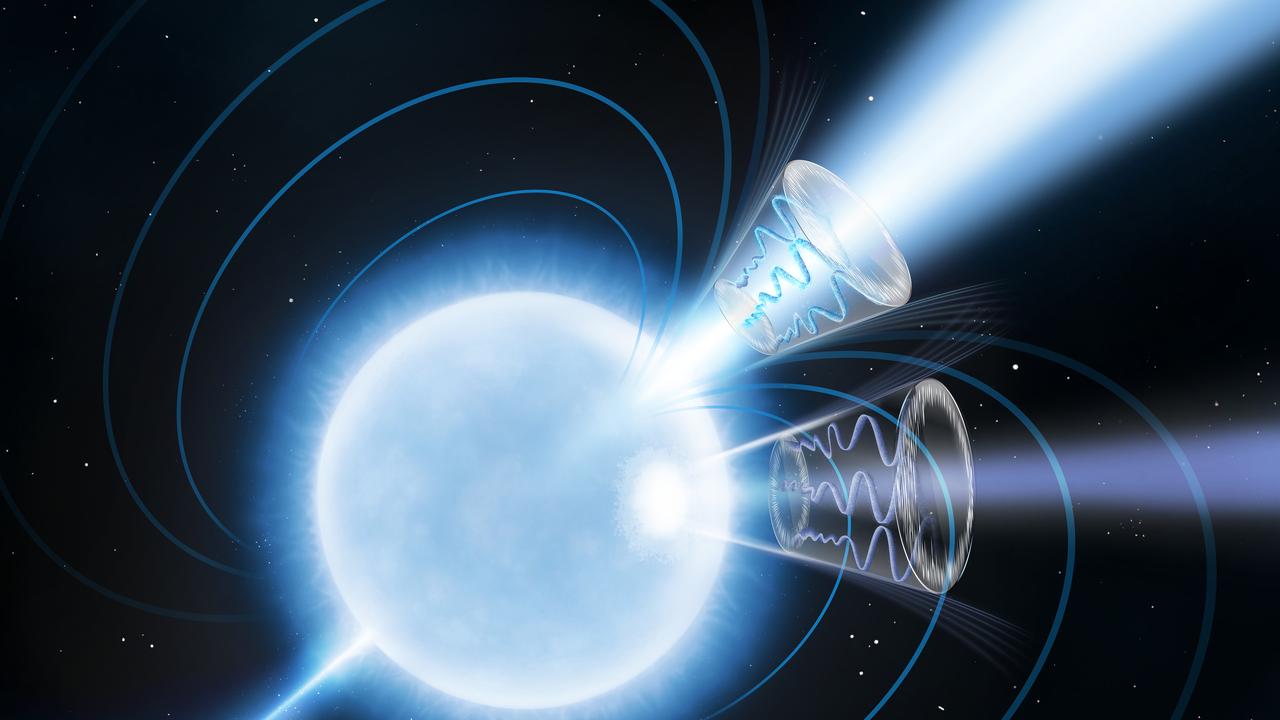
The theory suggests even a vacuum is teeming with virtual particles that pop in and out of existence and polarise light.
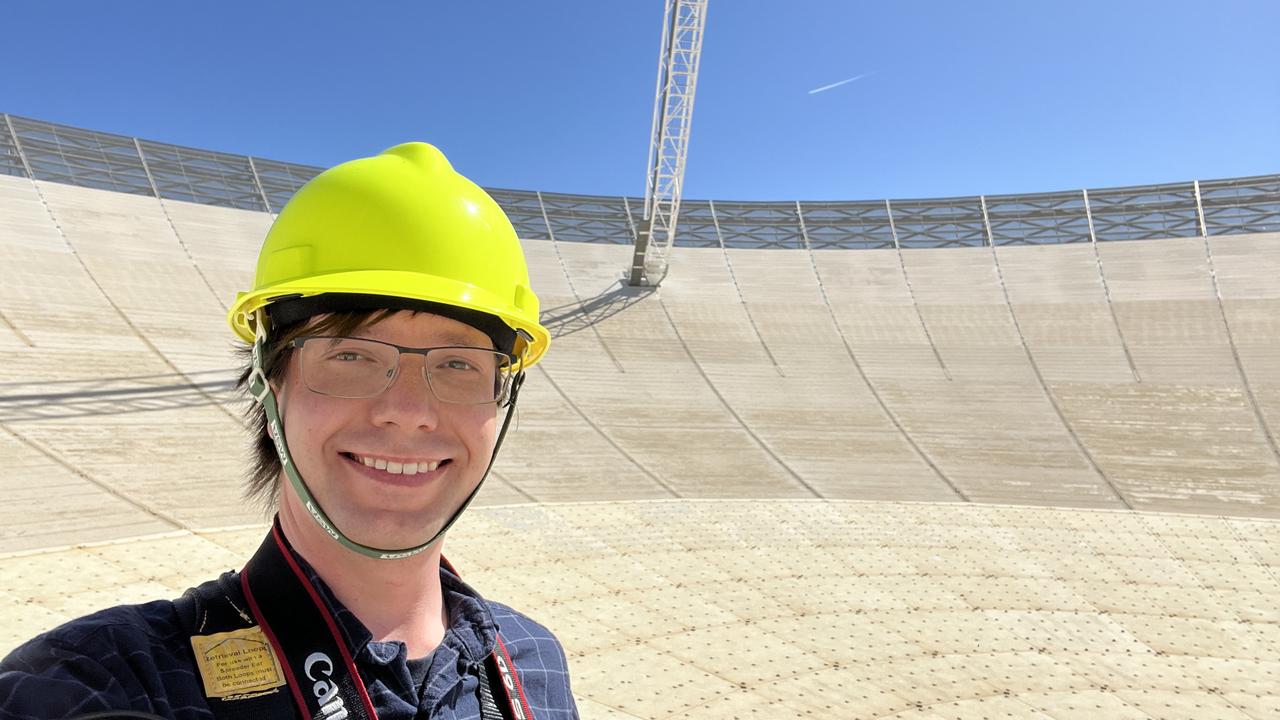
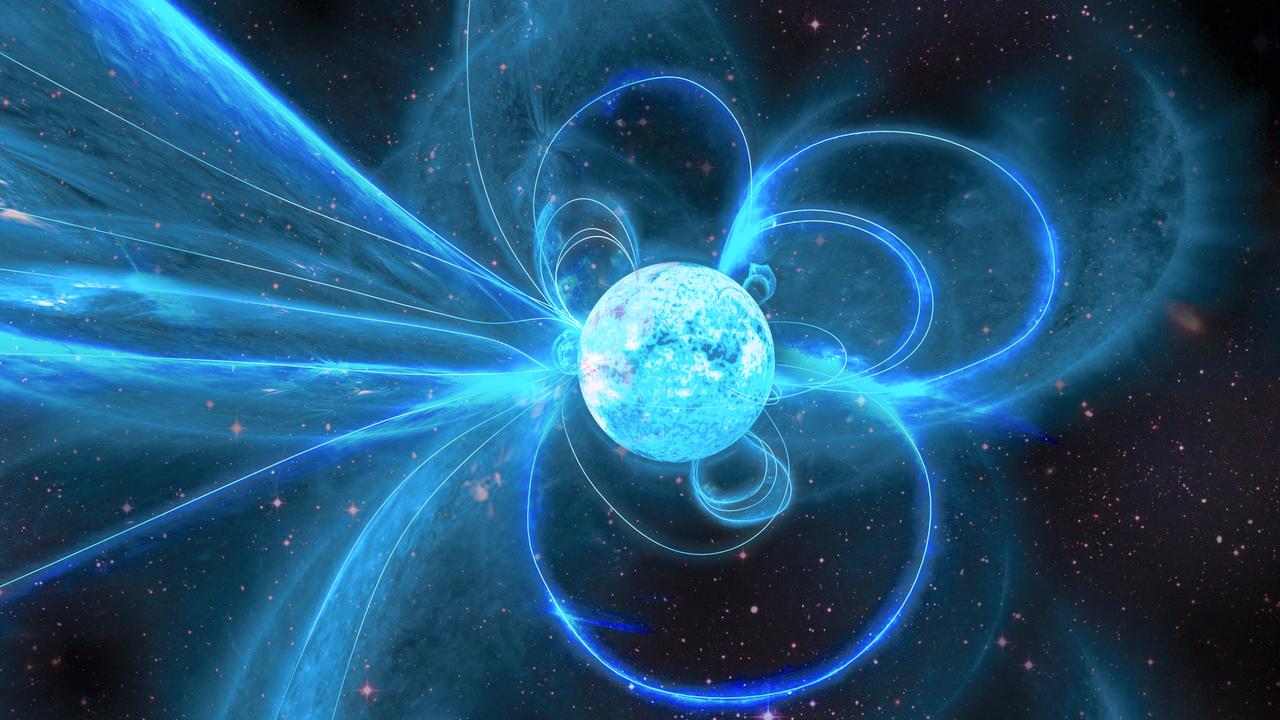
Swinburne University of Technology astronomer Marcus Lower helped analyse a rare neuron star, called a magnetar, which has magnetic fields powerful enough to make the effect visible.
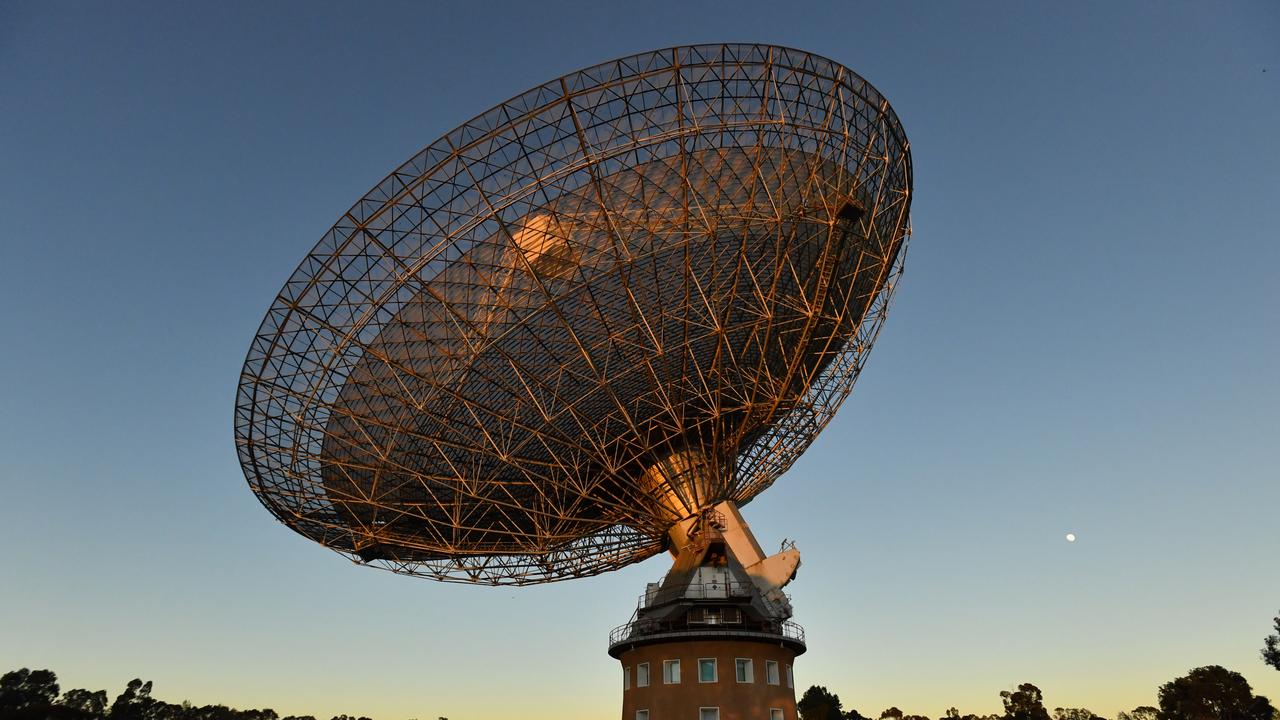
The team observed the magnetar – dubbed 1E1547 – using NASA’s Imaging X-ray Polarimetry Explorer, its NICER telescope on the International Space Station, and the CSIRO’s radio telescope Murriyang near Parkes in rural NSW that was made famous in the movie The Dish.
After in-depth analysis backed by Swinburne’s supercomputer, Ngarrgu Tindebeek, the researchers found what could be the first detection of vacuum birefringence in the magnetar’s field.
Dr Lower said the scientists were not expecting to capture the mysterious phenomenon and initially felt very cautious about making such a bold claim.
“People have been trying to look for this using really powerful lasers or big particle accelerators and colliding particles at almost the speed of light to try and measure these tiny little fluctuations,” he told AAP.
“The kinds of magnetic fields that you need just don’t exist on Earth … so people have been looking for this effect going back to when Heisenberg came up with it in the 1930s.”
The study was many years in the making as the researchers sought access to NASA’s instruments.
They were knocked back at first, but the US space agency eventually approved a revised proposal.
It was the cutting-edge technology that made the findings possible, Dr Lower said.
“We have observed quite a few magnetars … that have these extremely powerful magnetic fields that should produce this vacuum birefringence effect.
“It’s only in the last six or so years that we’ve actually had a telescope capable of detecting this effect around magnetars.”
The findings could be confirmed with further data analysis and computer simulations.
Dr Lower said the study put physics to the ultimate test, possibly revealing more about the mysteries of the universe.
“Our best theories of quantum electrodynamics and quantum physics all still work when you put them in the most extreme magnetic environment in the universe,” he said.
“It’s a bit of a relief because it means that our theories still work and there’s nothing broken with physics.
“From there, we could start to learn new things about the fundamental nature of the universe.”

Australian Associated Press is the beating heart of Australian news. AAP is Australia’s only independent national newswire and has been delivering accurate, reliable and fast news content to the media industry, government and corporate sector for 85 years. We keep Australia informed.