Love triumphs over evil.
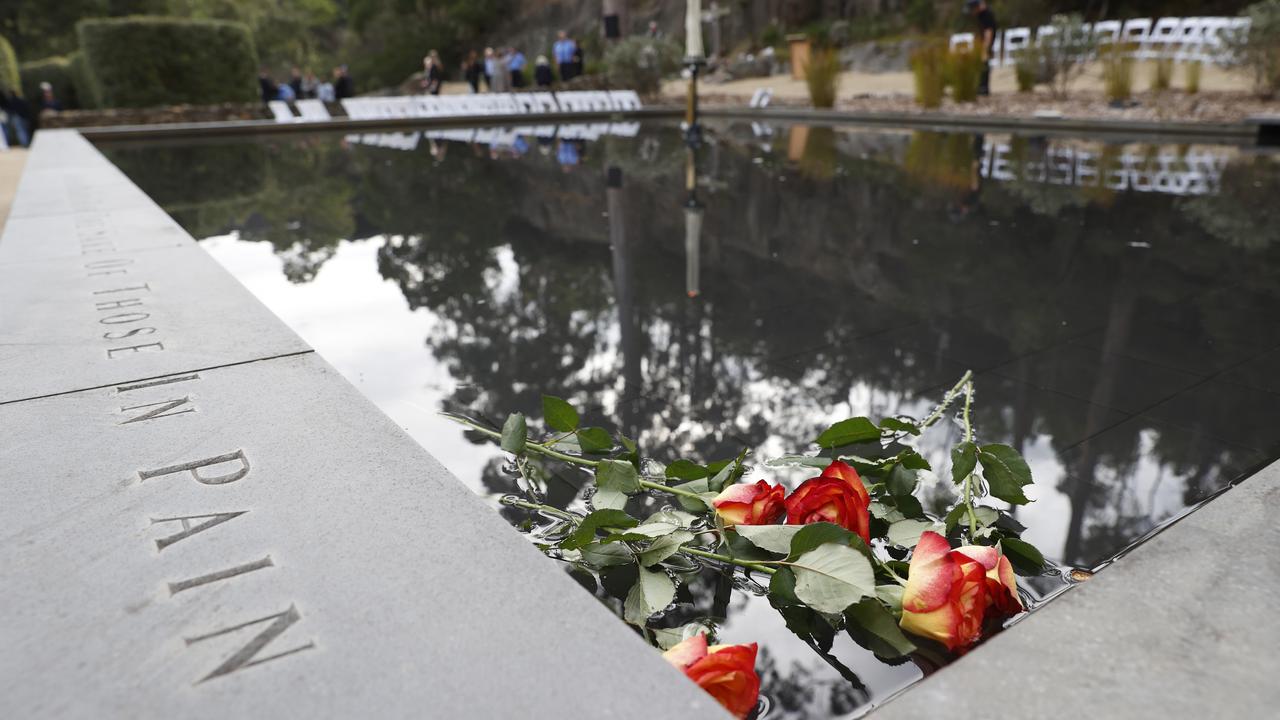
A simple yet powerful message was at the centre of a small and heartfelt ceremony marking 30 years since the Port Arthur shooting massacre.
Thirty-five people were killed and two dozen injured by a lone gunman who opened fire with a semi-automatic rifle at the historic tourist site on April 28, 1996.
It remains the most deadly mass shooting in Australia’s modern history.
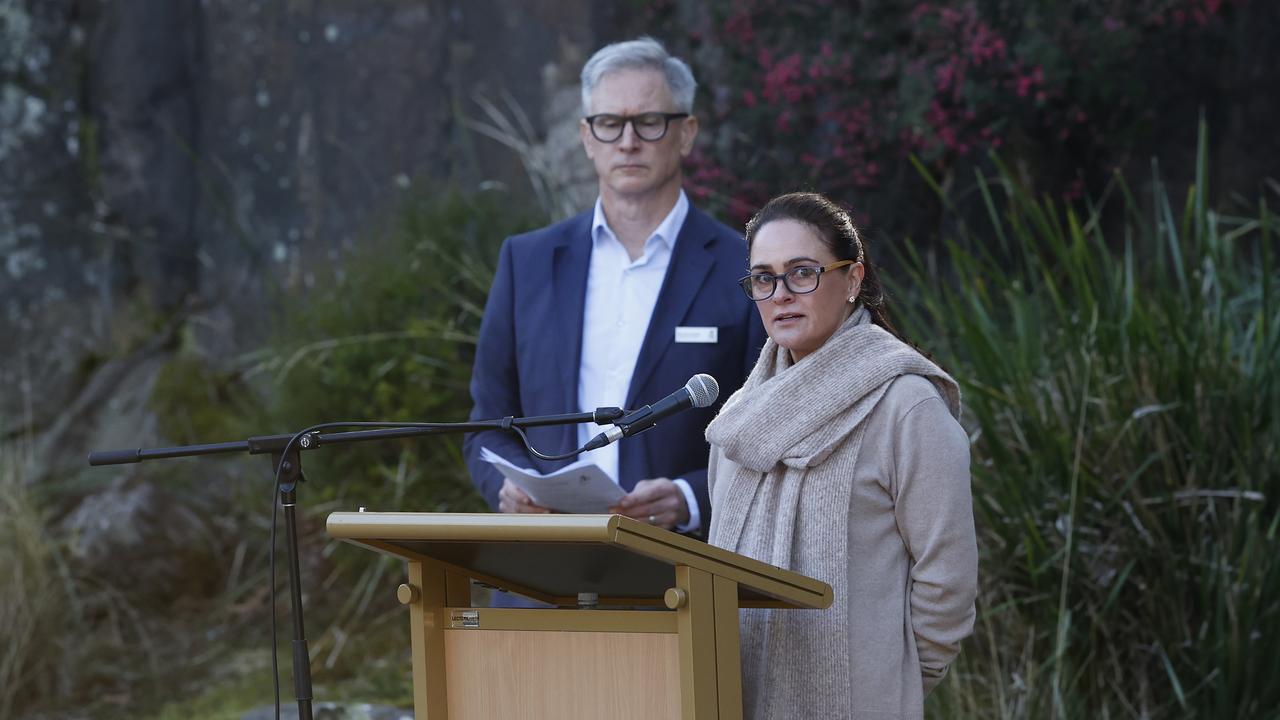
Jane Scholefield, who hid behind a wall in the penitentiary building to avoid the bullets, said the day was etched in her memory in ways words could never explain.
“Every year when the anniversary comes around, the memories return with a weight that never fully lifts,” she told the ceremony at the site.
“Even when the world moves on … for those of us touched by that day, it is never forgotten. It lives within us.”
Among the crowd was 70-year-old Carolyn Loughton, whose 15-year-old daughter Sarah was murdered on the pair’s first big holiday together.
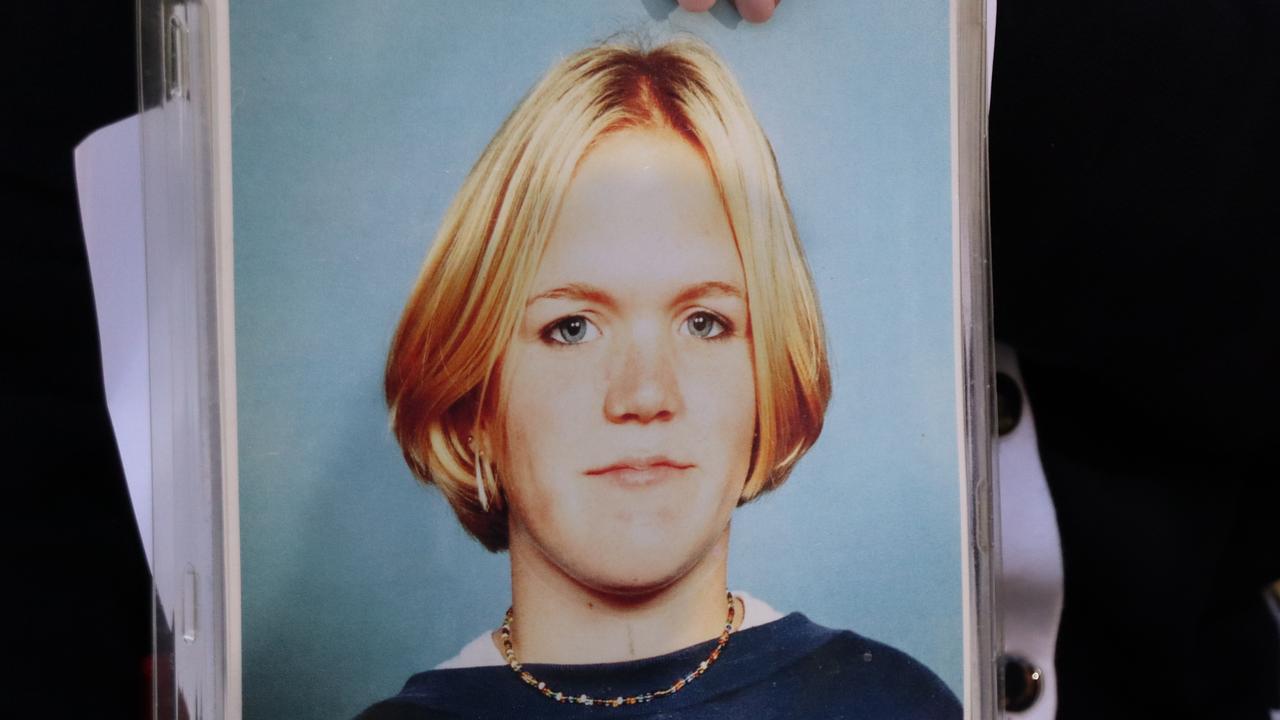
“I gave birth to my daughter and I lay on top of her when she took her last breath,” she said before the ceremony.
Ms Loughton was shot in the back, forcing doctors into a marathon procedure and the removal of her left fibula and half of her hip to use as bone grafts.
She said Sarah was a keen horse rider and tennis player and an empathetic, intelligent teenager with a bright future.
“When you lose your children, you lose your future. It is the continual loss of what could have been for her and for me,” she said.
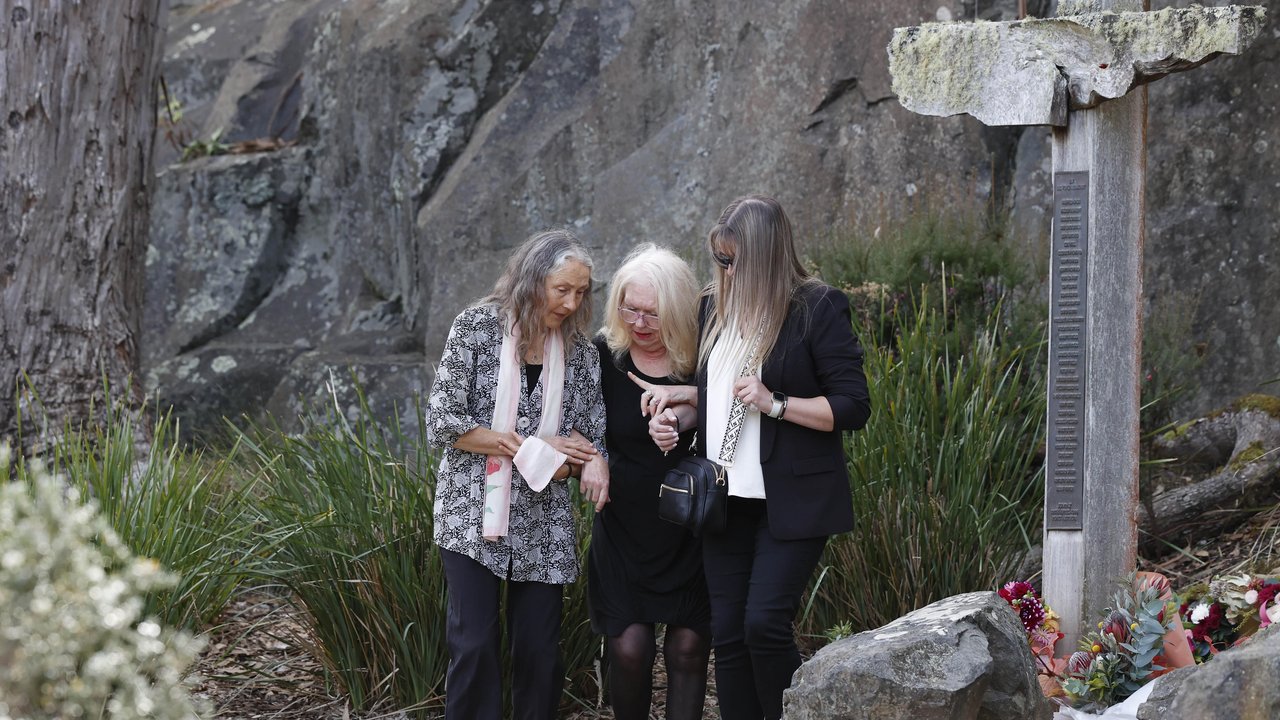
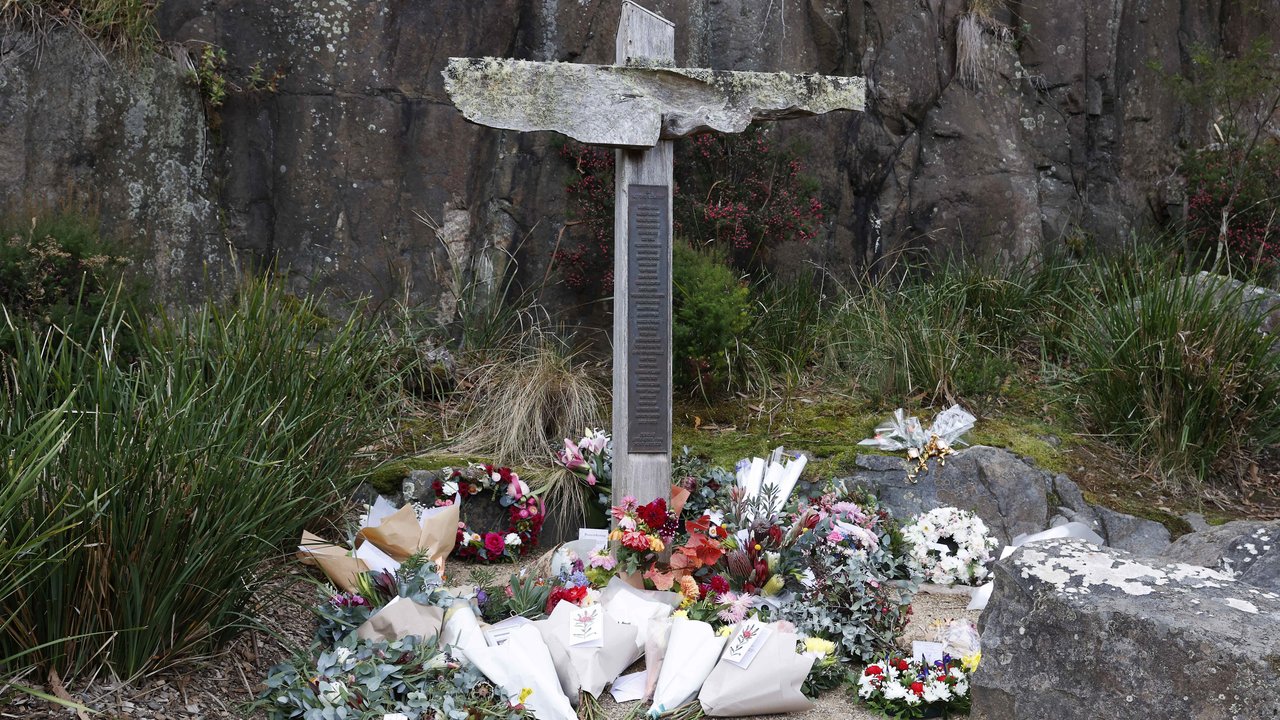
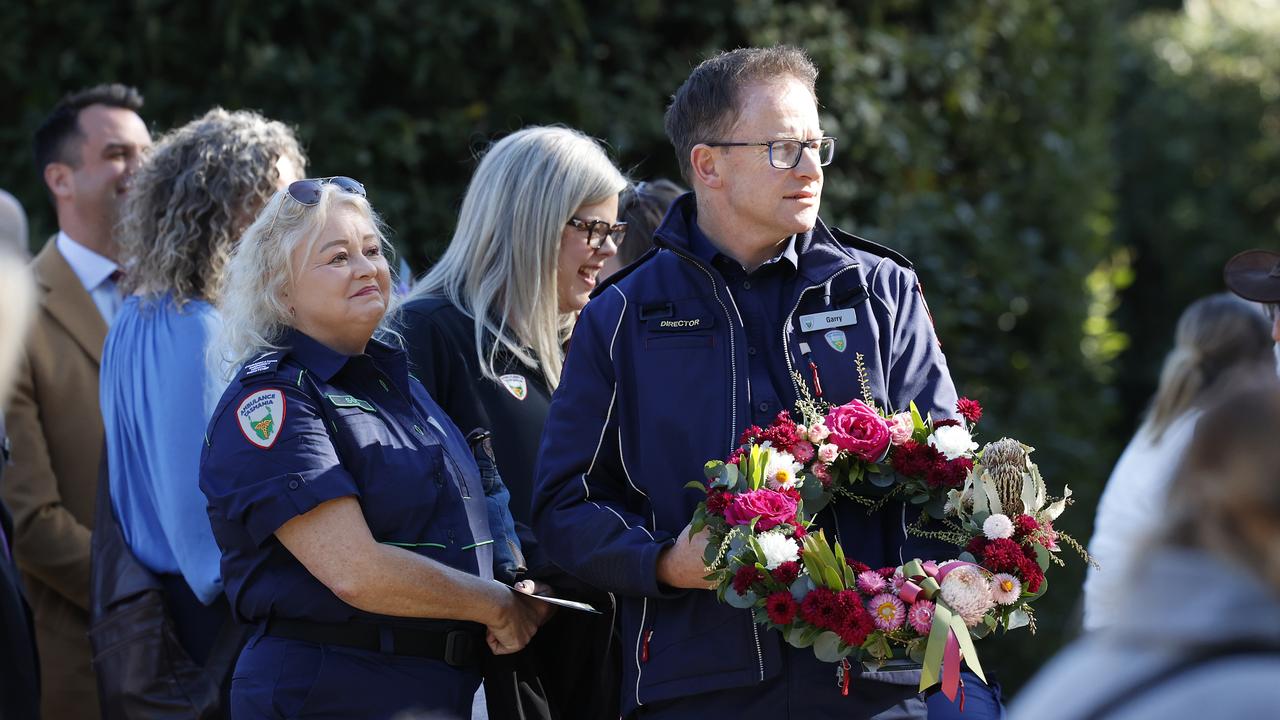
Flowers and wreaths were placed at a memorial cross, while attendees were encouraged to share words of love on paper leaves.
A moment of silence was held at 1.30pm, the time the shooting began, and the names of the 35 people who died were read out.
“At the heart of survival, of remembrance, of change is something simple but incredibly powerful: love,” Ms Scholefield said.
“Love for those lost, love for those who stood beside us and love for the lives we continue to live.
“Love is stronger than hatred, it is stronger than fear, it is stronger than evil.”
The tragedy prompted landmark gun law reform under then-prime minister John Howard and a buyback scheme that led to the destruction of more than 640,000 weapons.
Gun laws have been under a recent microscope since 15 people were killed in a shooting targeting the Jewish community at Bondi in December.
“The shootings … just five months ago, showed that there are still rapid-fire guns in the hands of the community,” Ms Loughton said.
“These guns must be put out of reach for the safety of all.”
Ms Loughton and Gun Control Australia’s Roland Browne said they supported Prime Minister Anthony Albanese’s proposed cap on the number of guns a person can own.
“The lessons from the late ’80s and early ’90s remain,” Mr Browne said.
“Work still needs to be done and our group will continue to do it.”
Mr Albanese thanked Walter Mikac, who lost his wife Nanette and daughters Alannah and Madeline in the shooting, for leading the call for gun reform in 1996.
“Australia is a better place because the government and the parliament of the day came together to answer Walter’s call,” he said.
“This is what we hold on to – the abiding memory that somehow, amid the most terrible darkness, the best of humanity found a way to shine.”
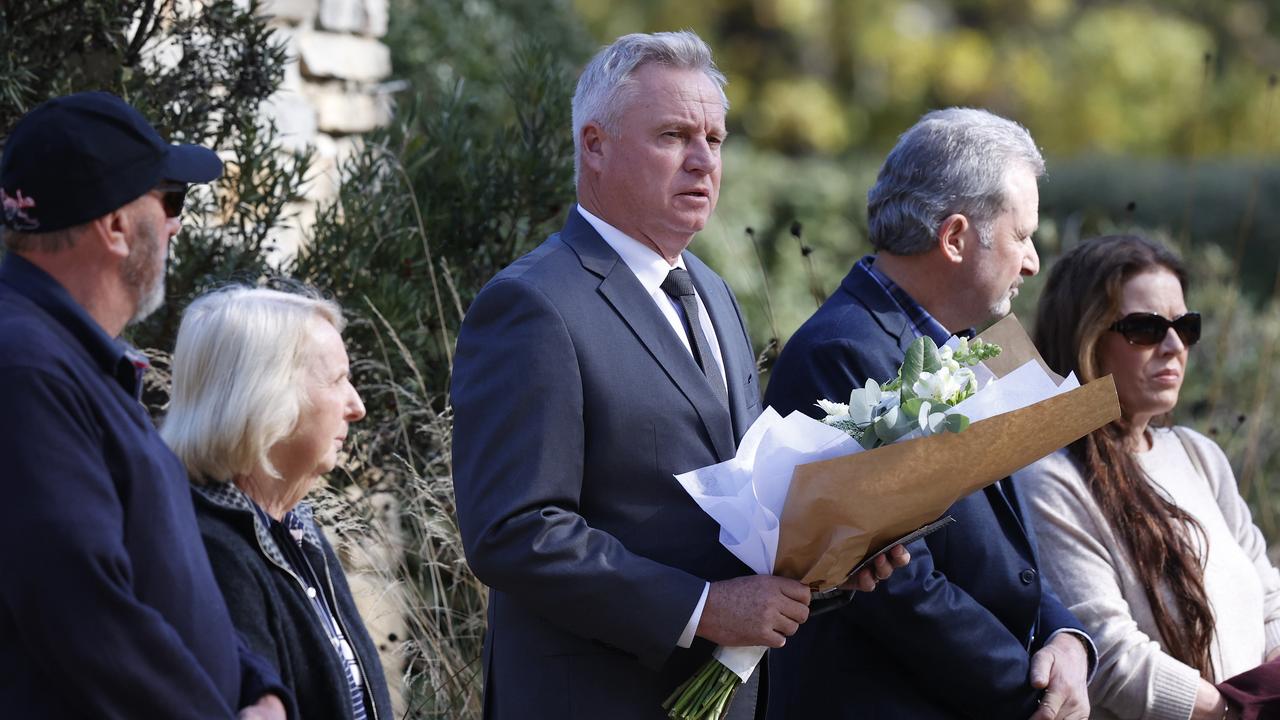
Mr Mikac said the government’s commitment three decades ago to community safety remained “as important as ever”.
Tasmanian Premier Jeremy Rockliff said the state would never forget the lives lost and every person whose life changed forever.
Gunman Martin Bryant, who is now aged 58, is serving 35 life sentences and will never be released from Risdon Prison in Hobart.

Australian Associated Press is the beating heart of Australian news. AAP is Australia’s only independent national newswire and has been delivering accurate, reliable and fast news content to the media industry, government and corporate sector for 85 years. We keep Australia informed.