
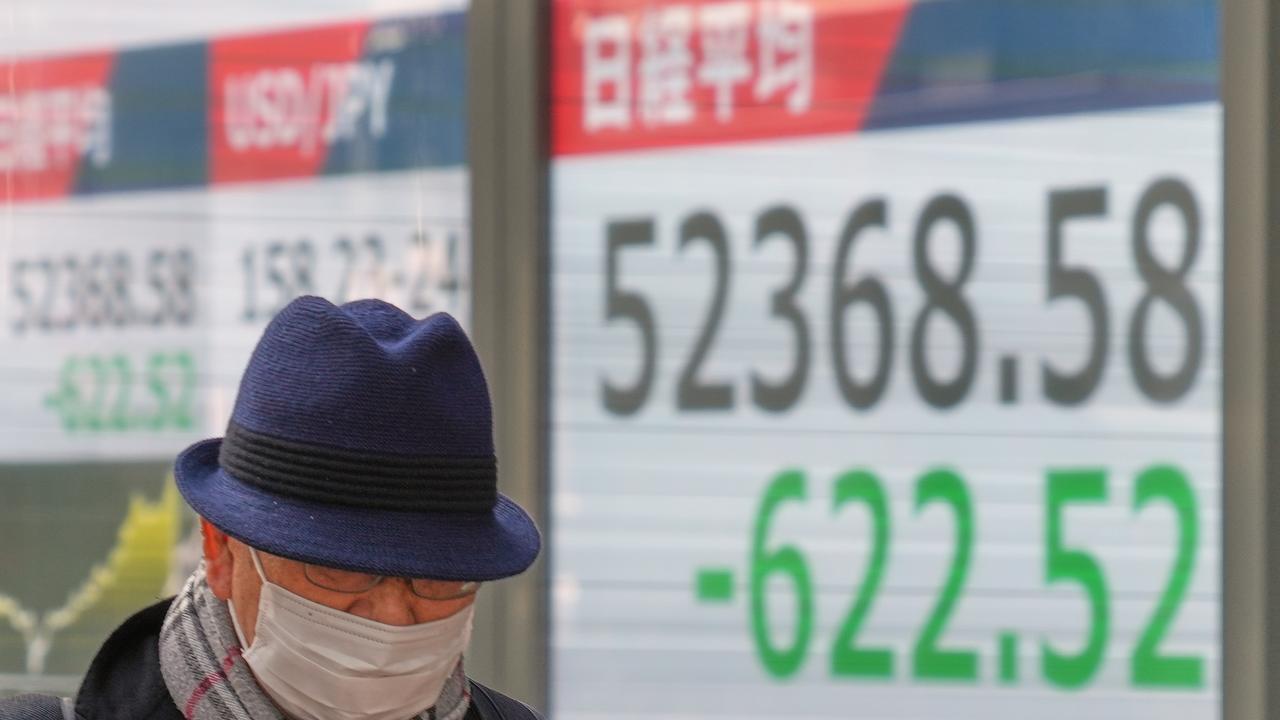
The Bank of Japan kept interest rates steady on Friday and raised its economic and inflation forecasts, signalling its confidence a moderate recovery would justify raising still-low borrowing costs further.
Markets are focusing on Governor Kazuo Ueda’s post-meeting press conference for hints on when the BOJ might next raise rates, a decision complicated by a fresh bout of market volatility caused by Prime Minister Sanae Takaichi’s decision to call a snap election next month.
The central bank is caught between a need to keep yen bears at bay with hawkish communication, without triggering further rises in bond yields on expectations of hefty spending by Takaichi’s government.
At a two-day meeting that ended on Friday, the BOJ maintained its key policy rate at 0.75 per cent in a widely expected decision after having just hiked the rate from 0.5 per cent in December.
In a quarterly outlook report, the BOJ raised its growth forecast for fiscal 2025 and 2026, and maintained its view the economy will remain on course for a moderate recovery.
It also revised up its core consumer inflation forecast for fiscal 2026 to 1.9 per cent from 1.8 per cent three months ago, adding that risks to the economic and price outlook were roughly balanced.
The central bank also maintained its pledge to keep raising rates if economic and price developments move in line with its projections.
“The mechanism in which wages and prices rise moderately in tandem will be sustained, allowing for underlying inflation to continue rising moderately,” the BOJ said in the report.
Japan’s economy has weathered the hit from US tariffs and is likely to get a lift from Takaichi’s stimulus package focusing on steps to cushion the blow from rising living costs.
But the premier’s vow to strengthen her expansionary fiscal policy and suspend the 8.0 per cent sales tax on food has stoked fears of additional debt issuance, leading to the spike in bond yields, which could hurt the economy.
The yield spike has drawn renewed attention to the BOJ’s quantitative tightening plan, under which it has been unwinding its years of massive stimulus by gradually slowing its bond buying at a set pace to reduce its huge balance sheet.
The BOJ has been tapering bond buying since 2024 under a pre-set, moderate pace. But it has said it could suspend this tapering or conduct emergency bond-buying operations to cope with extreme market stress.
Some analysts speculate the BOJ could tap these tools soon. But the central bank has set a high hurdle for deploying these measures, as ramping up bond-buying would run counter to its efforts to wean the economy off the stimulus it deployed to fight years of deflation.
Ueda has repeatedly said while bond yields should be set by markets, the BOJ will step in if they make “exceptional, unusual moves.”
The BOJ changed direction in 2024, raising its policy rate several times and tapering bond purchases on the view Japan was on the cusp of durably achieving the bank’s 2.0 per cent inflation target.

Australian Associated Press is the beating heart of Australian news. AAP is Australia’s only independent national newswire and has been delivering accurate, reliable and fast news content to the media industry, government and corporate sector for 85 years. We keep Australia informed.