

First Nations witnesses brought Parliament evidence of a terrorist bomb, death threats and lives disfigured by racism. Governments sent empty chairs. The media supplied silence. Canberra showed whose fear merits the machinery of state. Andrew Brown.
Australia does not merely have a hierarchy of grief. It has built a bureaucracy to administer it.
At the top, grief is televised, funded, securitised, furnished with a special envoy and carried into a Royal Commission by the full weight of government. At the bottom, grief is granted a microphone and denied an audience.
On 26 January, a homemade bomb packed with nails and ball bearings was thrown into a crowd of about 2,500 people at a First Nations rally in Perth. By dumb luck or mechanical failure, it did not explode.
Consider the date. A device built to kill Aboriginal people, thrown on the day the nation celebrates its own founding. Whoever built it understood the symbolism. The country pretended not to.
Australia was spared a massacre.
It then behaved as though nothing much had happened.
Renae Isaacs Guthridge was standing with her family when the device landed. She told the parliamentary inquiry: “We should be dead, because it landed right in front of us.”
Marissa Williamson Pohlman, the first Aboriginal woman to box for Australia at an Olympic Games, described being belittled, racially abused and abandoned by the sporting institutions that once celebrated her.
A mother questioned whether school exposed her children to more harm than education. An Elder spoke of being frightened to gather publicly after another attempt on community members’ lives.
These were accounts given to the Australian Parliament, about Australia, in 2026.
Did you know this inquiry was taking place? Most Australians did not. If you missed it, congratulations. You have been consuming Australian news exactly as its editors intended.
The inquiry Australia was not meant to notice
The Joint Standing Committee on Aboriginal and Torres Strait Islander Affairs adopted the inquiry on 4 March 2026 on a referral from Indigenous Australians Minister Malarndirri McCarthy. It received more than 500 submissions, held its final hearing in Melbourne on 7 August and reports on 15 September.
Barely six months. Centuries of racial violence squeezed between a referral letter and a reporting deadline.
Yet time was not the inquiry’s greatest problem. Interest was.
The Northern Territory Government stayed away entirely. Not one department appeared. Not police, not corrections, not health, not education. This in a jurisdiction where First Nations people comprise almost 30 per cent of the population and where the evidence concerned racism inside its police, courts, hospitals, schools and child protection systems.
In Queensland, the Department of Families, Queensland Police, Queensland Corrective Services and the State Emergency Service in the Far North were invited.
All declined.
These agencies remove Aboriginal children, arrest Aboriginal adults and imprison Aboriginal bodies. Asked to account for that power on the public record, they treated Parliament like an unwanted calendar invitation.
Refusing that invitation is not an oversight. It is a calculation. They weighed the cost of facing Aboriginal witnesses against the cost of ignoring a committee, and concluded Parliament was the cheaper insult. They were right. That is the most damning part.
Every one of these departments has a glossy reconciliation plan, artwork in the foyer and photographs of executives beside an Elder. Reconciliation has become an interior design choice. Ask those executives to face Aboriginal people describing what their systems actually do, and suddenly Outlook is full.
The ceremony is compulsory. Accountability is optional.
When Canberra discovers urgency
Antisemitism is real, poisonous and deserving of the full force of government. The scandal is not that Jewish Australians received protection. The scandal is that Canberra cannot extend the same seriousness to First Nations Australians.
The Royal Commission on Antisemitism and Social Cohesion has coercive powers, a former High Court justice, national hearings, relentless political attention and $131.1 million over four years. A Special Envoy, Jillian Segal, works directly with the Prime Minister, her office reaching into universities, curricula, cultural funding and media coverage.
Where is the equivalent envoy for racism against First Nations people?
The university report card? The threat to strip funding from institutions that tolerate racism against Aboriginal students?
There is none.
Put a price on it. One community’s safety was costed at $131.1 million, an envoy and a Royal Commissioner. The other’s at a committee room, a court reporter and a deadline.
That is not equality imperfectly delivered. It is hierarchy on official letterhead.
The bomb failed. So did the country
The Bondi attack was murderous and catastrophic. The Perth bomb did not detonate. That difference matters profoundly. But a bomb does not become less racist because its wiring fails.
The device failed. Its message did not.
The Perth attack was reported briefly, then buried. This was not a blackout. The trick was containment. Cover the story just enough to deny silence, never enough to create consequence. The press did not lack facts. It lacked appetite.
That silence told First Nations people their pain may enter Hansard, but it will not be permitted to interrupt the national conversation.
The paperwork of forgetting
The Royal Commission into Aboriginal Deaths in Custody reported 35 years ago with 339 recommendations. Hundreds have died in custody since. Bringing Them Home reported in 1997. Aboriginal children are removed today at higher rates than during the Stolen Generations.
The reports accumulate. Governments rotate. The funerals continue.
Governments receive, acknowledge, note, consider, consult and defer. The word they struggle with is implement.
When this inquiry reports, ministers will praise the courage of the witnesses. They always praise the courage of the witnesses.
Gratitude is the cheapest currency in Canberra.
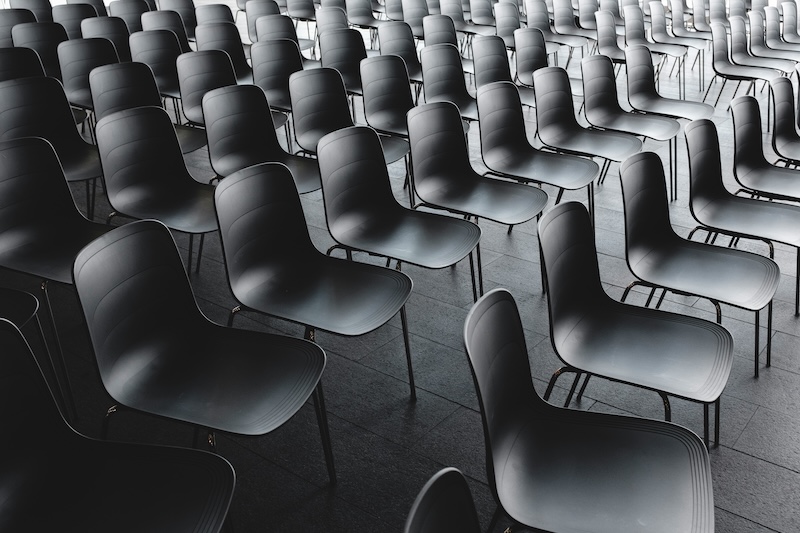
If the report’s recommendations are not funded, assigned, deadlined and tracked, those empty chairs will stop being symbols of accidental indifference.
They will become the verdict.
Australia operates two systems of compassion. One converts pain into power. The other converts it into paperwork.

Andrew Brown is a Sydney businessman in the health products sector, former Deputy Mayor of Mosman and Palestine peace activist