

Charities put their registration at risk if their activities breach Australian law, but breaking international law may not pose a problem. Stephanie Tran reports.
The Australian Charities and Not-for-profits Commission (ACNC) says an activity being contrary to international law did not necessarily mean a charity had a “disqualifying purpose”.
“A charity that undertakes activities that are inconsistent with international law but is not conduct that is unlawful under Australian law will not necessarily have a disqualifying purpose,” the ACNC said in a response to questions from Greens senator David Shoebridge.
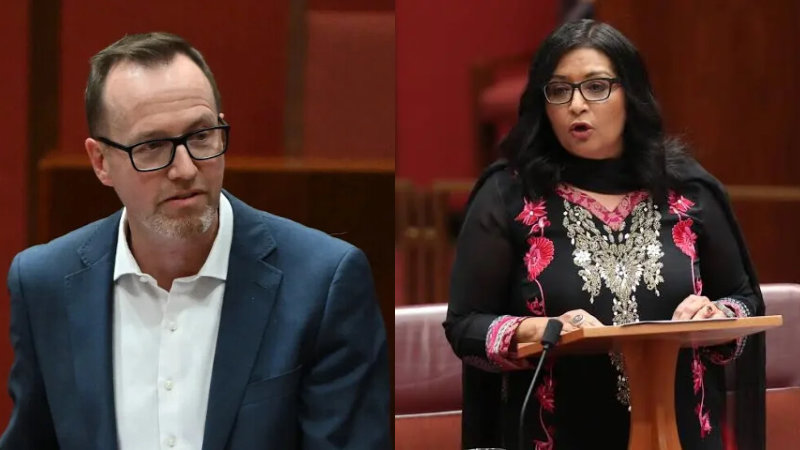
The response followed a question from Shoebridge at Senate Estimates in June about whether funding Israeli settlements on occupied Palestinian land could be considered contrary to public policy.
The senators’ questions, in turn, followed investigations by MWM which showed Australian charities registered with the ACNC funding the IDF and illegal Israeli settlements on the West Bank.
Millions in tax-deductible donations to IDF, illegal settlements
“If an activity has been condemned by the Australian government, if it’s contrary to international law, are you saying you couldn’t tell whether or not it would be defined as contrary to public policy?” Shoebridge asked, adding,
I would have thought funding illegal settlements on an occupied people’s land would be contrary to public policy.
The ACNC said it assessed charities’ entitlement to registration on a “case-by-case basis”.
But it said an overseas charity would generally be at risk of losing charitable registration if it supported “violence, intimidation, illegal displacement of populations, or an armed force of a foreign country”.
The regulator also listed terrorism financing, money laundering, fraud and sanctions evasion among activities that could put a charity’s registration at risk.
 Loading...

 Reload document
  Open in new tab
 Shoebridge said the response demonstrated a longstanding lack of transparency from the charities regulator.
“I’ve been chasing transparency on charities for years now and it’s the same pattern every time with secrecy and exemptions in a system built to look away,” he said.
He said the ACNC’s response meant the regulator would not adequately scrutinise charities’ involvement in activities that breached international law.
“The ACNC’s answers confirm that they do not, and will not, even consider if registered charities are funding programs and activities that are in direct breach of international law,” Shoebridge said.
Plethora of complaints
The response comes as the ACNC faces growing numbers of complaints about charities’ activities in relation to the Israel/Gaza conflict.
Between 7 October 2023 and 26 June 2026, the regulator received more than 1,800 concerns associated with the Israel/Gaza conflict, relating to 89 charities, according to figures provided to the Senate.
The concerns included complaints from members of the public, referrals from other government agencies and information generated through the ACNC’s own intelligence, the regulator said.
It said that the concerns reflected “many views and positions relating to the conflict”.
The figures were provided in response to questions from Greens senator Mehreen Faruqi, who asked how many complaints the ACNC had received about Israel-linked charities since October 2023.
“Commissioner, Australians are increasingly concerned that taxpayer-subsidised charities may be helping channel funds to organisations linked to the IDF and illegal settlements while Israel commits genocide,” Senator Faruqi said. “How many complaints has the ACNC received about Israel-linked charities since October 2023?”
Loading...
ACNC compliance activity
Faruqi also asked whether any of those complaints had resulted in a formal investigation.
The ACNC said four charities associated with concerns relating to the Israel-Gaza conflict had been subject to “ACNC compliance activity”.
It did not provide further details about the four charities or disclose whether any of the four charities subjected to compliance activity were connected to allegations concerning financing the IDF or illegal Israeli settlements.
The regulator said it “continues to assess information received in relation to these matters and all other concerns received” under its regulatory approach statement.
“The ACNC says complaints have led to compliance action in 4 cases but the community is not allowed to know what charities have been sanctioned or why,” Shoebridge said.
“We don’t know which charities have had action taken against them, and this secrecy only undermines support for the charitable sector. Secrecy spreads suspicion and untrust and that ultimately impacts the good as well as the bad.”
Faruqi asked the ACNC if it had “investigated whether Australians are effectively being forced to subsidise a military that leading human rights organisations and genocide experts all agree is committing genocide in Gaza?”.
The ACNC did not directly address whether it had investigated if any Australian charity had funded the IDF.
MWM contacted the ACNC for comment. The ACNC said they were unable to provide more information beyond their responses to the Senate questions due to their secrecy provisions.
“At risk” of breaches
Instead, it said charities engaging in those activities were “at risk” of breaching regulatory standards.
“Where there is a concern that a charity may be supporting the displacement of populations or an armed force of a foreign country in a way that breaches Australian law, a charity is at risk of breaching Governance Standard 3 and where relevant, External Conduct Standard 1.”
“A charity engaging in such activity could also have a disqualifying purpose and risk losing its entitlement to remain registered,” the ACNC said.
Faruqi also asked whether directing funds to organisations connected to a military committing genocide or to illegal settlement activity could comply with External Conduct Standard 4, which requires charities to take reasonable steps concerning the safety of vulnerable people overseas.
The ACNC responded that “where there is a concern that a charity may be supporting the displacement of populations or an armed force of a foreign country in a way that breaches Australian law, a charity is at risk of losing entitlement to maintain charity registration for a range of reasons, including failures to comply with applicable External Conduct Standards.”
“Charities are supposed to relieve poverty and suffering, not launder donations into military infrastructure and illegal West Bank Israeli settlement expansion,” Shoebridge said.
“Every dollar that goes to these groups as a tax deduction is a public subsidy, and in this case it seems very clear they are subsidising the IDF and illegal settlements.”
Charities funding Israel’s illegal settlements untouchable, Labor says

Stephanie is a journalist with a background in both law and journalism. She has worked at The Guardian and as a paralegal, where she assisted Crikey’s defence team in the high-profile defamation case brought by Lachlan Murdoch. Her reporting has been recognised nationally, earning her the 2021 Democracy’s Watchdogs Award for Student Investigative Reporting and a nomination for the 2021 Walkley Student Journalist of the Year Award.