
The Supreme Court has expedited evidence of Shell whistleblower Kent Quinlan after hearing he has terminal brain cancer and an expected life expectancy of less than 12 months. Troy Stolz and Stephanie Tran report.
The Supreme Court of Queensland has ordered a timetable to allow Shell whistleblower Kent Quinlan to give evidence later this year after the court was told he has terminal brain cancer and a life expectancy of less than 12 months.
The case returned before Justice Cooper in the Supreme Court of Queensland on Friday, where the court considered how Quinlan’s evidence should be preserved in light of his deteriorating health.
The hearing followed an application filed on Quinlan’s behalf seeking to expedite the proceeding because of his medical condition. The application arises from long-running proceedings brought by Quinlan against Shell Energy and 13 other respondents.
Quinlan, a former chief financial officer of ERM Power, alleges he uncovered
insider trading and a series of “sham transactions”
while working at the company. ERM Power, founded by Trevor St Baker, became one of Australia’s largest electricity retailers before being acquired by Shell in a deal worth about $620m.
Quinlan has pursued the proceedings for several years, including seeking court orders requiring Shell to produce internal company documents regarding the conduct of other corporate entities, including Macquarie Bank.
A lawyer-fest, much nitpicking
About 18 lawyers appeared in the Supreme Court of Queensland on Friday. The respondents were represented by top-tier law firms, including DLA Piper, Allens, A&O Shearman, BNLaw and Wotton Kearney.
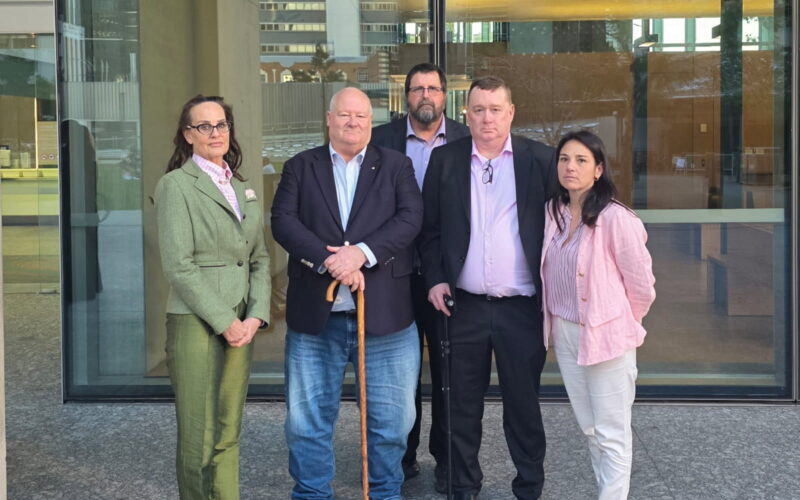
Quinlan attended court supported by fellow whistleblowers Troy Stolz, Julia Delaforce, Sharon Kelsey and Jeff Morris.
During the afternoon hearing, Quinlan assumed self-representation at the bar table and addressed the court directly on procedural issues relating to the preservation of his evidence.
Addressing the court, Quinlan said: “Your Honour, I want to work out how I do things if I live and if I die,” referring to arrangements for preserving his evidence.
Counsel for the first defendant submitted Quinlan had failed to comply with earlier court orders and sought a further affidavit. Justice Cooper declined that request.
Big oil wants gag orders
Counsel for the third and fourth defendants also sought orders that Quinlan’s evidence, scheduled to be taken in December, be heard in closed court, relying on two authorities in support of the application.
Justice Cooper indicated the public interest lay in the eventual trial rather than the pre-trial examination, observing:
“Public interest is in the trial, not at the examination.”
Quinlan sought orders allowing procedural timetables to be amended automatically if his health deteriorated, arguing he should not be required to make further court appearances should his condition worsen.
Counsel for the third and fourth defendants opposed that proposal, submitting any future extension should instead be brought back before the court.
Evidence yes, but proceedings suppressed
Justice Cooper granted Quinlan’s application to give his evidence.
The evidence will be taken in a closed court and the recorded audio and video testimony will be played at the trial publicly in the event of Quinlan’s passing.
His honour made clear he intended to establish a timetable that would enable Quinlan to give his evidence in chief in December in light of his deteriorating health.
The matter was adjourned for a further case management hearing on 14 October.
Feds to step into Troy Stolz case after ClubsNSW hammers pokies whistleblower for four days

Troy Stolz is an Australian whistleblower and gambling reform advocate. He was the head of ClubsNSW's anti-money-laundering and counter-terrorism unit, until 2019.

Stephanie is a journalist with a background in both law and journalism. She has worked at The Guardian and as a paralegal, where she assisted Crikey’s defence team in the high-profile defamation case brought by Lachlan Murdoch. Her reporting has been recognised nationally, earning her the 2021 Democracy’s Watchdogs Award for Student Investigative Reporting and a nomination for the 2021 Walkley Student Journalist of the Year Award.