

The AUKUS Public Inquiry has reminded Australians of a nuclear weapon proliferation problem that the Government is yet to solve and one that could change the program from full-steam-ahead to a dead stop. Rex Patrick reports.
AUKUS Public Inquiry
It’s the inquiry the Labor government and Coalition opposition didn’t want. It’s the “AUKUS Inquiry unauthorised!”
The inquiry will likely have little direct effect on Prime Minister Albanese and his Cabinet National Security Committee.
They’re completely blinded by the gold epaulets on the shoulders of the admirals that are briefing them (the same admirals who spent $3B not buying French submarines, buying the most expensive frigates known to man and procuring patrol boats that were found not fit for purpose).
But the Inquiry will inform the public.
Nuclear weapon material
One very useful submission to the Inquiry was from Tilman Ruff, a Nobel laureate. He laid out some facts about the nuclear fuel inside a Virginia Class submarine’s reactor.
At the start of their life every Virginia class submarine has about 650 kg of highly enriched uranium that will power the vessel’s reactor. That’s a 93% enrichment – 610 kg of fissionable uranium-235. At the end of each submarine’s life the fuel elements in the reactor still be 83% enriched – 375 kg of uranium 235. The Hiroshima bomb was 80% U-235.
Waste responsibility
Australia must deal with the waste from our AUKUS submarines. By binding treaty agreement with the United States and the United Kingdom, AUKUS provides that “Australia shall be responsible for the management, disposition, storage, and disposal of any spent nuclear fuel and radioactive waste resulting from the operation of Naval Nuclear Propulsion Plants …”
The Australian Government is doing everything it can to not talk about how it will deal with nuclear waste. It recently lodged an appeal in the Federal Court to try to overturn a Freedom of Information win on the topic.
Whatever they ultimately do on the waste front, it’s going to be expensive.
Tilman told the AUKUS Public Inquiry that AUKUS nuclear waste needs a really high level of security because “in 10,000 years, someone could still go and dig that stuff up and build nuclear weapons with it”.
Non-proliferation risk
And therein lies one of the problems with AUKUS that the Government has been unable to solve.
Australia is a signatory to the Nuclear Non-Proliferation Treaty, a treaty to limit the spread of nuclear weapons and associated materials and technology.
Under the Treaty, non-nuclear-weapon states (including Australia) are obligated to not manufacture or otherwise acquire nuclear weapons.
Correspondingly, nuclear-weapon states (including the US and the UK) are obligated not to transfer nuclear weapons to any recipient, and not in any way to assist, encourage or induce any non-nuclear-weapon state to manufacture or otherwise acquire nuclear weapons.
IAEA decision the key
Associated with the Treaty are legally binding Comprehensive Safeguard Agreements between a signatory country and the International Atomic Energy Agency (IAEA) to allow the IAEA to verify that a country’s nuclear material is being used only for peaceful purposes and not diverted to nuclear weapons or other nuclear explosive devices.
Article 14 of the treaty allows Australia to pursue naval nuclear propulsion, but it requires that we renegotiate our Comprehensive Safeguard Agreement, originally agreed in 1974 with no contemplation of operating weapon grade naval reactors.
If we do not reach agreement with the IAEA, the US and UK will not transfer submarines to Australia.
Albo and the nukes – the demise of Labor’s disarmament policy
Follow the money
Australia commenced negotiations on a new Comprehensive Safeguard Agreement in May 2023. The Department of Foreign Affairs and Trade has taken the lead on the negotiations.
There has been considerable secrecy from the Government in relation to progress on the Agreement, which is opposed by several countries including Indonesia, Malaysia and China. Opposing countries argue that
AUKUS could weaken the non-proliferation regime.
Information on progress has been limited. So MWM has followed the money.
In the 2023-24 Budget, DFAT was allocated $35M for financial year 23/24 and $40M for 24/25 to provide legal, policy and diplomatic support for AUKUS non-proliferation related negotiations. No money was allocated for financial years 25/26 or 26/27.
In the 2024-25 budget optimism was still alive with $40M remaining allocated for that financial year and, again, nothing allocated in 25/26 or 26/27.
In the 2025-26 budget optimism had faded and another $39M was thrown in to the pot to cover ongoing negotiations. Nothing was allocated for the following years.
This year’s Budget papers are telling. It allocated $43M for this financial year and includes $44M for 27/28.
The negotiations have gone from a two year $75M task to a four year $200M task (at least).
Like happens so often with Defence projects, the whole thing has been a complete under-estimation.
Nuclear explosion-sized crater
When MWM made the first ever FOI request for an Australian Submarine Agency’s Budget Estimate’s Brief (October 2023) there were seven pages dedicated to nuclear non-proliferation. In the latest Budget Estimate’s Brief (June 2026) there was nothing.
If the IAEA does not reach agreement with Australia, whether for political or technical reasons, AUKUS is dead. The price of then proceeding without IAEA agreement would be to risk a catastrophic breakdown of the already shaky nuclear non-proliferation regime.
That would be something the AUKUS powers could not afford.
The US and UK can walk away, thankful for the billions in taxpayer’s dollars that we’ve gifted to their industry. And even more will have been wasted here in Australia.
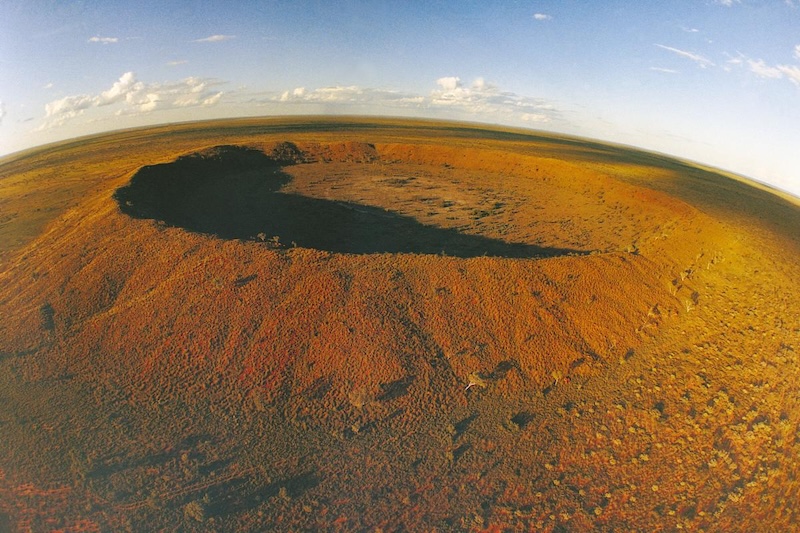
We’ll be left with a nuclear explosion sized crater in our Defence budget with nothing to show for it. The money will be gone, and our national security will have been compromised.
Where are the AUKUS nuclear waste costings (let alone the dump sites)?

Rex Patrick is a former Senator for South Australia and, earlier, a submariner in the armed forces. Best known as an anti-corruption and transparency crusader, Rex is also known as the "Transparency Warrior."