
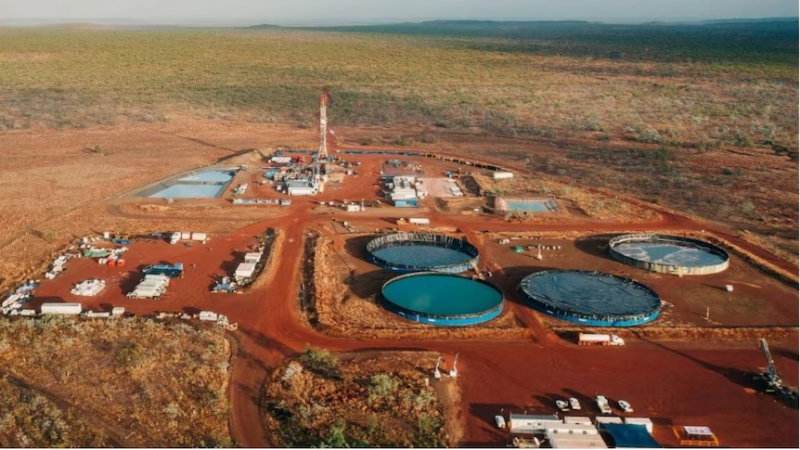
While the NT’s debt balloons and essential services crumble, foreign-owned INPEX extract billions through “fiscal stability agreements”. Graham Bates reports from the Northern Territory.
In December 1974, I was working at Darwin Hospital when Cyclone Tracy destroyed 90% of the city. I stayed for 18 years to help rebuild.
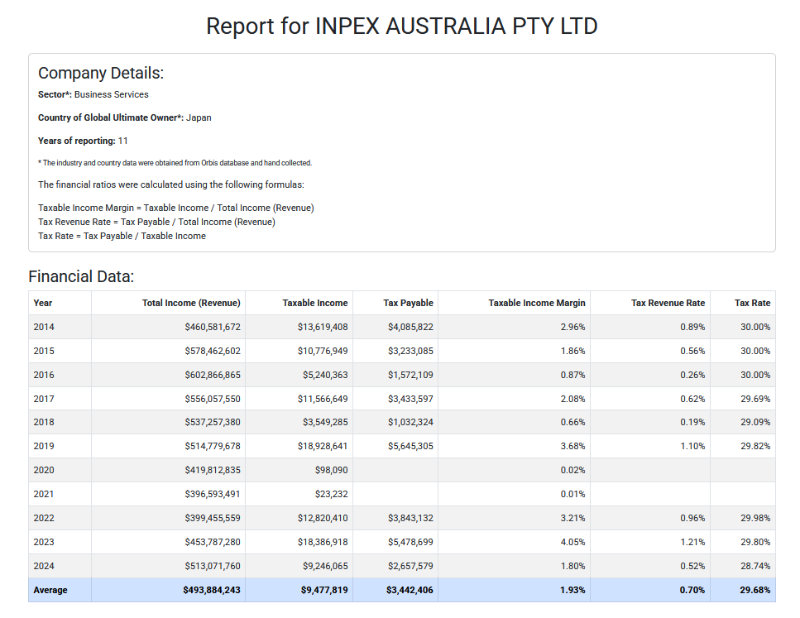
Today, I see the Northern Territory facing a different kind of destruction. Not from cyclonic winds, flying debris, and rain, but from foreign gas corporations paying almost no tax. INPEX, operator of the $40B Ichthys LNG project, is now expanding into the Beetaloo Basin, paying 70 cents in tax for every $100 in revenue, according to MWM Tax Data.
I lived through one cyclone; now I’m watching another, the Territory’s fiscal infrastructure being flattened.
Source: MWM Tax Data
Extraction without contribution
The tax data reveals the scale of the problem for Territorians in a Cost-of-Living Crisis: INPEX Australia Pty Ltd pays an average of $3.4m in tax on revenues of $493.9m.
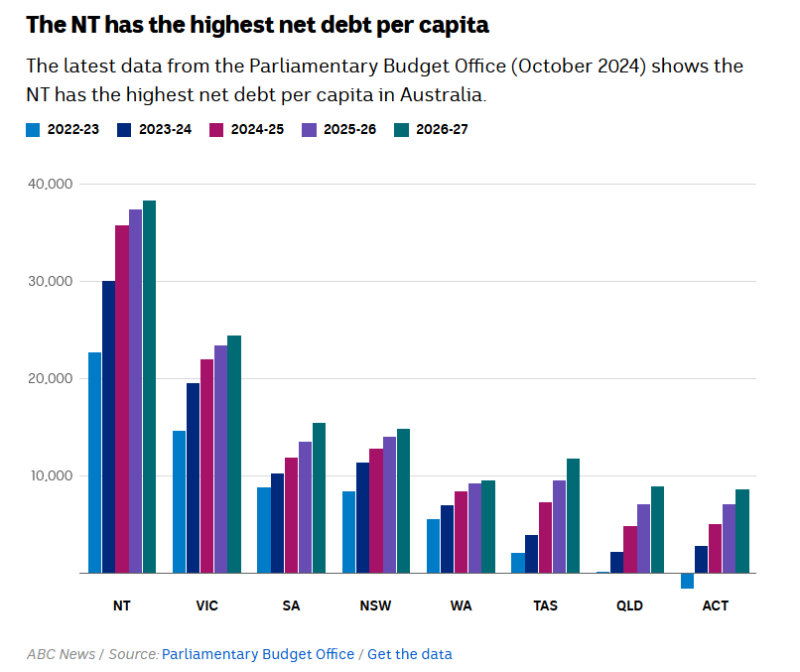
Meanwhile, Territorians face government debt per capita rising exponentially, annual interest payments consuming budgets, young people leaving for better opportunities, and infrastructure left underfunded.
Source: Parliamentary Budget Office
Fiscal Stability Agreement
The mechanism enabling the Territory’s largesse towards the gas companies is the 2008 Project Development Agreement between the NT Government, INPEX Browse Ltd, and Total E&P Australie Pty Ltd.
Clause 14 contains “fiscal stability provisions” that protect INPEX from changes in tax law. If the NT passes legislation causing INPEX “loss of profit,” the government must compensate it, with disputes settled in confidential arbitration.
This creates a regulatory straitjacket where the NT cannot impose new taxes or royalties, environmental regulations can be challenged, and any “discriminatory change in law” triggers compensation. In effect,
a foreign corporation has more legal protection than the Territory’s own citizens.
Iran war to trigger a force majeure?
However, there may be a way forward. In early 2026, the US-Israeli conflict with Iran closed the Strait of Hormuz, disrupting global energy supply chains. Nations worldwide invoked “Force Majeure” to suspend contractual obligations.
Critically, it wasn’t just those nations directly affected by the conflict. China, Singapore, South Korea, and India — all thousands of kilometres away — successfully declared force majeure due to indirect economic disruption.
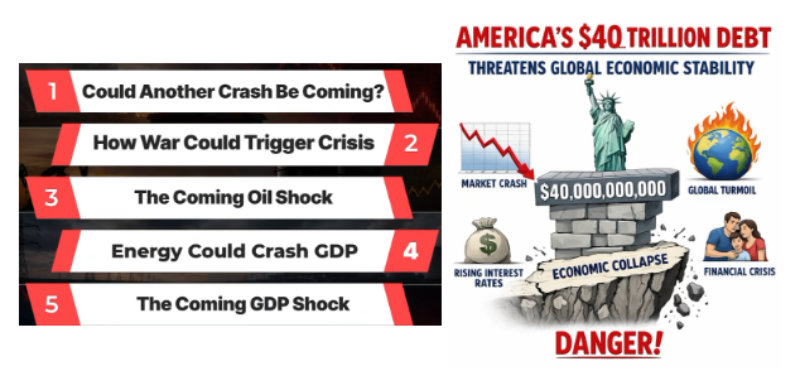
As Australian Economics Professor Steve Keen noted in September 2026, the closure of the Strait of Hormuz has severe downstream production effects, threatening the production chain of indispensable products like Sulphuric Acid.
Steve Keen on the US debt trap. Source: YouTube
Professor Ilias Bantekas of Hamad bin Khalifa University explained this legal precedent: “What we could never have foreseen is that the Strait of Hormuz could be closed to shipping altogether… on its own, this could be sufficient to constitute a force majeure event.”
The Northern Territory can invoke the same legal doctrine. The 2026 global geopolitical shock, combined with the NT’s fiscal crisis and INPEX’s minimal tax contribution, constitutes a fundamental change of circumstances.
Under Australian common law, the Doctrine of Frustration allows contract termination when performance becomes “radically different” from what was agreed.
In 1974, Territorians and other Australians helped rebuild Darwin from a vast vista of catastrophic devastation. Today, we face fiscal devastation — but the enemy isn’t cyclonic winds and torrential rain.
It is complex legal clauses buried within 500-page contracts, protecting “loss of profit” while hospitals and schools age and crumble.
Inpex and Australia’s gas rip-off. Billions in revenue, crumbs in tax

Graham Bates is a former Northern Territory public servant who lived through Cyclone Tracy in 1974 while working at Darwin Hospital. He now writes at Osprey on Overwatch, investigating corporate power, resource governance, and fiscal sovereignty.