
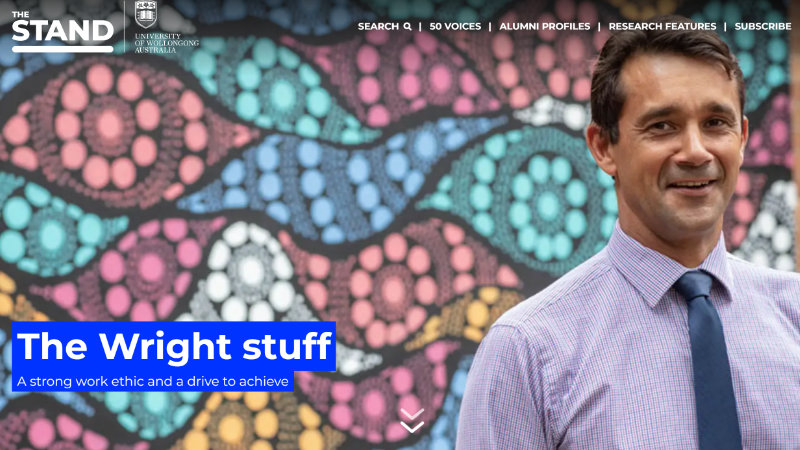
Testimony by Uni of Wollongong CFO Matthew Wright reveals flawed process ensured consultants KordaMentha got a lucrative gig that led to mass sackings. Adam Lucas and James Guthrie with the details.
In June 2026, the NSW Independent Commission Against Corruption (ICAC) began public hearings into allegations of corrupt conduct at the University of Wollongong (UOW), involving recruitment, procurement and conflict- of-interest management.
The inquiry, dubbed Operation Scandi, is examining claims including the circumstances surrounding the appointment of Professor John Dewar as interim vice-chancellor and the subsequent multi-million-dollar engagement of consulting firm KordaMentha.
Uni of Wollongong and KordaMentha: The tangled dollar-webs they weaved
Most of ICAC’s attention to date has fallen on former Chancellor Michael Still and former Interim Vice-Chancellor John Dewar. However, another player whose role in this affair deserves closer scrutiny is Matthew Wright, UOW’s Chief Financial Officer, a position he’s held since at least 2013.
Wright is not just any UOW executive. While CFO, he was appointed as the probity officer to oversee the tender process that would select KordaMentha. His job was to ensure fairness, transparency, and integrity in the procurement process. Instead, he became a conduit through which information relevant to the tender passed to a partner of one of the tenderers.
A flawed tender process
The story of Wright’s involvement begins on 13 June 2024, nine days before Dewar formally commenced as Interim VC and eight days before the KordaMentha tender closed.
On that day, Dewar (who was still using his KordaMentha email address) sent Wright a set of slides titled “University of Wollongong Historical Financial Performance 2018-2023”. The slides were KordaMentha property and were prepared by the firm that was about to bid for the UOW review work.
Wright, as Chief Financial Officer and soon-to-be probity officer, reviewed the material in detail. He added comments and corrections to the slides in dark grey. He also provided data drawn from UOW’s internal systems. This was information that, by its nature, was not available to other tenderers.
A little mixed up
Wright’s assessment of Dewar’s slides was telling: “it gets a little mixed up with subsidiaries … but basically it is not comparing apples with apples.” He offered to “restate all the slides or provide the numbers across all the stats.”
Whatever Wright believed about the capacity in which Dewar was communicating, the practical effect of his offer was to
improve a KordaMentha analysis while KordaMentha was preparing to tender for the work.
During the ICAC hearings, Wright claimed he believed he was speaking to Dewar “in his capacity as the incoming Interim Vice-Chancellor” and did not realise the information could be used by KordaMentha.
Probity process undermined
When Commissioner Lakatos asked Wright whether the risk of Dewar sharing the slides with KordaMentha should have been considered, Wright said, “Yes, perhaps I should have.”
He acknowledged that if the information he provided to Dewar were passed to KordaMentha before they submitted their RFP response, it “would undermine the probity of the tender process.”
By his own admission, this was not a minor oversight. Wright was the probity officer. His job was to guard against this kind of conflict. Instead, he became a source of inside information for the consulting firm he was supposed to be scrutinising.
Inside information advantage
Wright’s contribution was not an isolated incident. The information he provided to Dewar, which included detailed financial analysis, staffing data and enrolment trends, was precisely the kind of intelligence that could give any tenderer an advantage.
The slides Dewar shared with Wright contained analysis of:
- Revenue trends and declining student intake
- Rising expenses outstripping revenue growth
- The university’s staffing ratio (1:1.3 academic to non-academic staff, versus the industry norm of 1:1)
- Potential savings of $31m to $39m if a 1:1 ratio was maintained.
These were included in KordaMentha’s proposal, which Wright had helped refine via his feedback on the original slides.
When KordaMentha submitted its proposal on 21 June, it included an appendix containing financial analysis that drew directly on the corrections and internal data Wright had supplied to Dewar. Wright, reviewing the proposal for compliance, did not recognise his own handiwork. He admitted under oath that he did not make the connection between the analysis in KordaMentha’s proposal and the analysis he had helped Dewar refine only eight days earlier,
while failing to recognise the associated risk.
Wright’s testimony before ICAC revealed he had given KordaMentha an informational advantage unavailable to other tenderers. He acknowledged:
- He did not consider the conflict of interest posed by Dewar’s role at KordaMentha.
- He did not alert anyone at UOW about Dewar’s involvement in the tender process.
- He accepted that he did not alert the tender panel to his earlier provision of comments and additional information to Dewar.
- He did not make the connection between Dewar’s slides and KordaMentha’s proposal.
When asked whether providing information to Dewar that KordaMentha could use “would undermine the probity of the tender process”, Wright answered, “Yes.”
The price of failure
The consequences of Wright’s failures are yet to be fully revealed. As designated probity officer, he was responsible for providing assurance about the integrity of the tender process. KordaMentha not only won the contract, it was, as it later turned out, empowered to
increase the value of that contract by more than twelve times the initial agreement.
On 3 July 2026 – the second anniversary of the announcement of KordaMentha’s successful tender – Counsel Assisting put to Dewar that he had used information obtained through his appointment to benefit KordaMentha. When the proposition was put to him that the process had been tainted, Dewar agreed.
Wright’s role in that taint cannot be overlooked. He was the probity officer who failed to maintain probity. He was the financial gatekeeper who handed over the keys. And he was the senior executive who, when asked whether he should have seen the risk, could only offer a belated: “Perhaps I should have.”
Upshot of KordaMentha
UOW subsequently implemented a “transformation program” that led to more than 200 job losses, a purported $21 million reduction in annual salary expenditure, and the second largest workforce reduction in the university’s history. Over the last five years, almost a quarter of UOW’s workforce has been made redundant.
On the basis of the evidence aired at ICAC, there are strong grounds for concluding that the integrity of the process was compromised before the tenders were assessed.
The University of Wollongong paid more than $3.7m for a review that was deeply compromised. Moreover, Matthew Wright, the man charged with protecting the integrity of that process, handed over the keys, whether he intended to or not.
Wollongong University Inc. Profit over jobs as consultants prosper
Adam Lucasis is an honorary senior fellow at the University of Wollongong and a founding member of Academics for Public Universities and Public Universities Australia. Prior to working at UOW, he was a researcher and policy analyst in the NSW Cabinet Office and the Departments of State and Regional Development, Aboriginal Affairs and Housing.

James Guthrie AM is Emeritus Professor in the Department of Accounting and Corporate Governance at Macquarie University. He is the joint founding editor of the Accounting, Auditing and Accountability Journal, which has been consistently ranked in the top five journals in his field.