
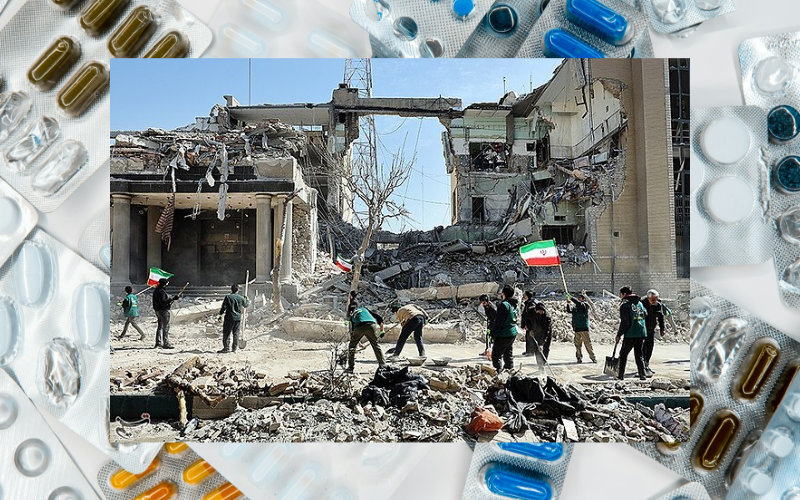

During the US-Israel-Iran War, all eyes were on fuel supplies. However, critical medical supplies potentially posed a higher risk. Rex Patrick reports.
The Iran war may or may not be over, but our fuel supply seems to be under control for now. However, while eyes were on fuel security, there was some other supply chain talk and distress taking place inside the government.
In addition to infeed into the industrial, mining and resource industries, the Government was also looking to, particularly, food and groceries, plastics and fertilisers, and some directed their focus to medicines.
Medical vulnerability
Our government has little control over the supply of medicines in Australia, although there is a minimum stockholding requirement for certain medicines and a legal requirement for suppliers to notify the Australian Therapeutic Goods Administration (TGA) of potential shortages of designated medicines.
Readers might recall that from April 2023 through 2024, after a combination of global demand and manufacturing constraints, Australia suffered a shortage of Intravenous (IV) fluids that are used in hospitals for routine and critical care, as fluid replacement, for resuscitation, and to administer other IV medicines.
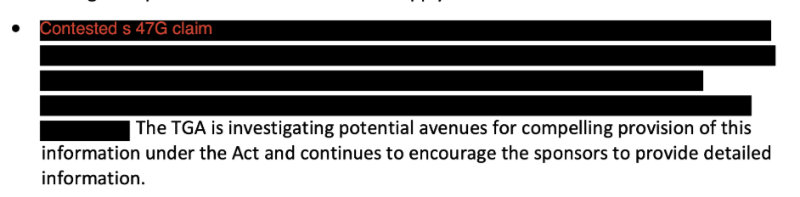
Extract from Health Minister’s Brief on IV Fluid Shortages (Source: FOI)
At the time, IV fluids were not a reportable medicine, something that has now been fixed. The IV fluids shortage was a reminder of our medical vulnerability, something that arose again after the war started on 28 February.
Wartime alert
In early March, the TGA contacted therapeutic goods industry peak bodies to actively request they advise Government as soon as possible of any signs of potential supply issues resulting from the rapid escalation of the Iran War.
The TGA also did a preliminary assessment of the Australian Register of Therapeutic Goods (ARTG) for medicines manufactured in the Middle East that might be impacted by the conflict. Countries examined were Israel, Iran, Turkey, Cyprus, Jordan, Lebanon, UAE, Oman, Pakistan and Qatar. Turkey and Israel manufactured over 70% of 531 ARTG products … none were produced in Iran, Lebanon or Qatar.
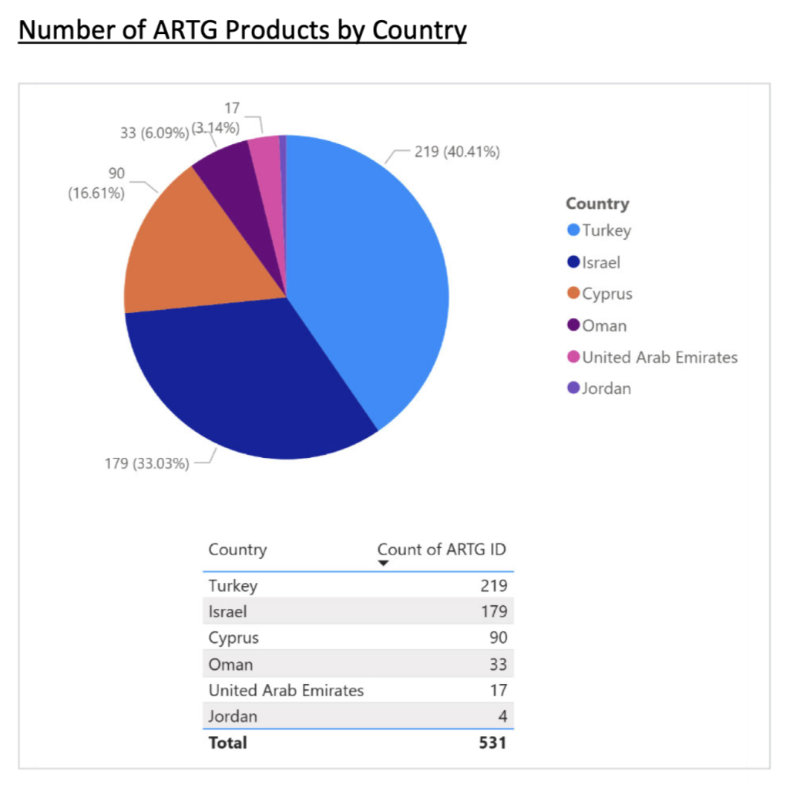
TGA Analysis (Source: FOI)
Eleven products were assessed as “at risk of supply” if the conflict was prolonged.
By 11 March 2 suppliers had indicated that 3 products had been affected by issues arising by from the conflict, but that they were working if securing flights from the Middle East.
The Minister’s office was briefed on 12 March.
The TGA were actively looking for other suppliers but warned the minister that our long shipping lines and freight times could make Australia feel the effects of disruptions “earlier or more acutely than other jurisdictions”. Rises in fuel and insurance costs could make finding alternate supplies harder.
Medicine availability
The Medicine Availability Working Group (MAWG) met on 18 March. The MAWG consists of representatives from each state and territory and the Medicines Shortages Section of the TGA. They meet monthly.
The Iran conflict was on the March meeting agenda.
Queensland reported that its central warehouse was at full capacity. NSW was putting together a list of essential medicines for possible stockpiling for public hospitals. The TGA was discouraging stockpiling. Victoria was experiencing freight cost rises in relation to their medicine suppliers.
A couple of days later, the TGA issued advice for people not to panic-buy medicines.
Supply chain resilience
MWM does not know if any actual shortages resulted from the conflict, as Freedom of Information requests rarely get responded to in a timely manner. But it’s good to know that from the moment the conflict started, officials had turned their minds to potential medicine shortages.
But the issue raises questions as to just how well prepared Australia are in general. Covid 19 alerted us to supply chain vulnerabilities, and the War in Iran has served as a timely reminder.
Inside the Department of Industry, Science and Resources is an Office of Supply Chain Resilience. MWM has started investigating some of the work they are doing, with Freedom of Information requests pending.
There’s a huge public interest in making sure we get on top of national resilience, because preparedness ultimately makes for a cheap medicine.
Fuel price gouging. War profiteering and government dissembling

Rex Patrick is a former Senator for South Australia and, earlier, a submariner in the armed forces. Best known as an anti-corruption and transparency crusader, Rex is also known as the "Transparency Warrior."