

Women’s rights are rolling back at the exact moment women are being pushed closer to war, poverty and public violence. This is not drift. It is design. Aleta Moriarty reports.
The UN Women’s International Women’s Day 2026 Report warns that women and girls have “never been closer to equality, and never closer to losing it”.
Laws are being reshaped to restrict women’s freedoms, silence their voices, and allow abuse without consequence. The intensification of global backlash is eroding legal protections across multilateral systems and national contexts simultaneously. And the political will to act remains absent.
UN Women’s Report found that nearly one in four countries reports a backlash against women’s rights in 2024. At the same time, the number of women and girls living amid conflict has risen sharply in the past decade. In 2024, more than 4,600 cases of conflict-related sexual violence, including as a tactic of war, torture, terror and political repression, were documented by the United Nations, an increase of 87 per cent between 2022 and 2024.
By 2024, the WPS Index counted 676 million women exposed to armed conflict, a 74% rise since 2010 and the highest figure ever recorded. Women now account for four in ten deaths in armed conflict.
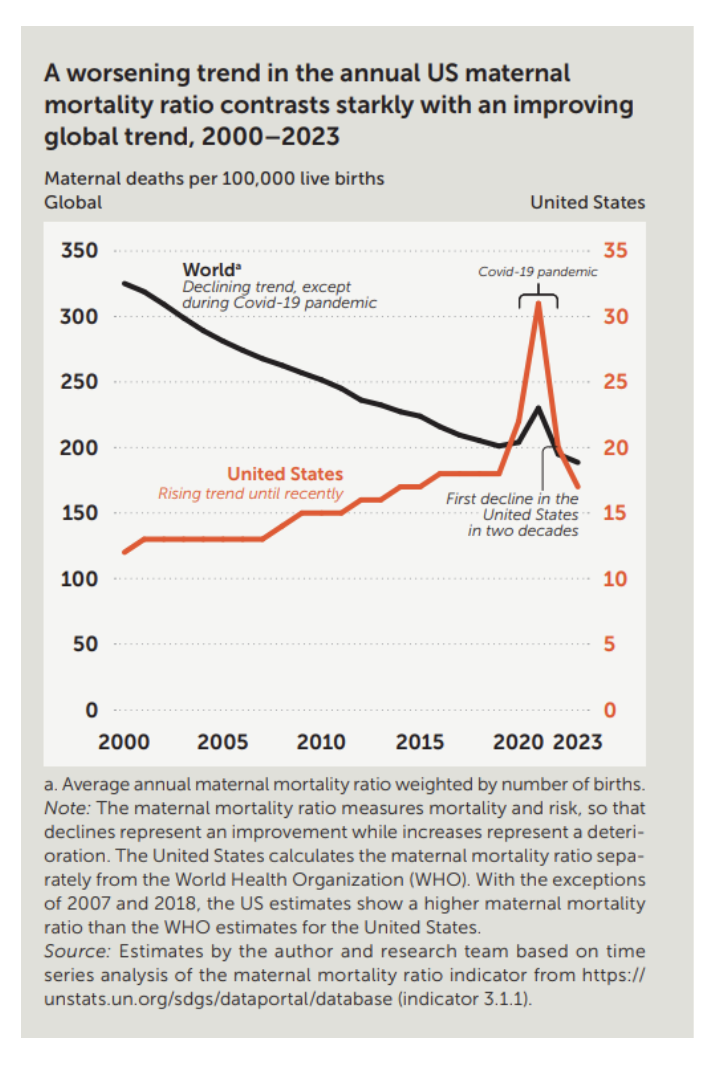
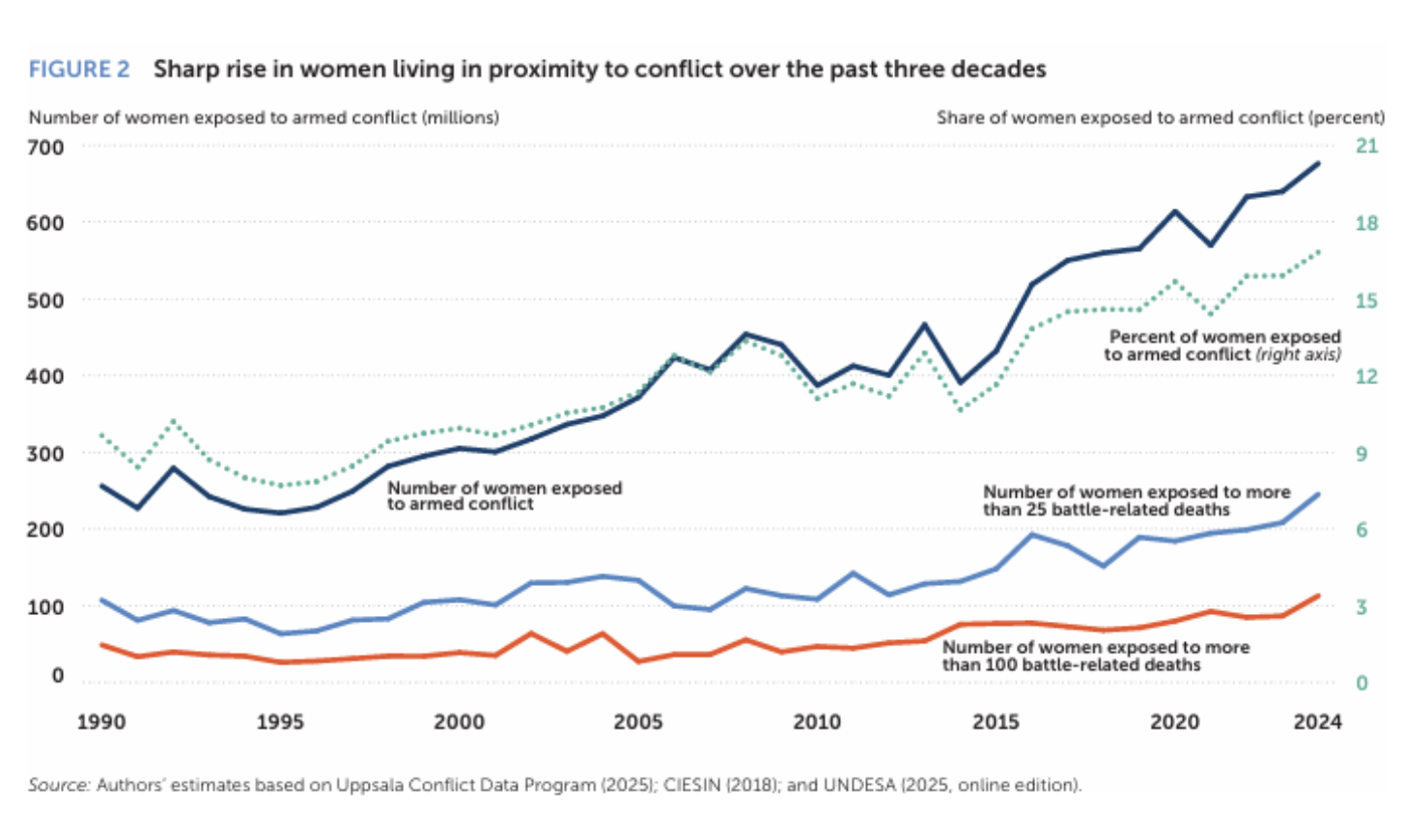 As conflicts reach a historic peak, progress on women’s status has neared a historic low. This is now flowing on to a number of other indicators, for example we are now seeing maternal mortality rates in the US trending upwards, against the global trajectory down.
 Growing polarisation, who is exploiting it
The fracturing of politics along gender lines is one of the most consequential electoral trends of the 21st century and it is accelerating. In country after country, young men and women are voting in starkly different directions.
In the 2024 US presidential election, women supported Kamala Harris over Donald Trump by approximately 13 percentage points, while men swung decisively Republican.
Among voters aged 18–29, the gap widened dramatically. The Brookings Institution documents a record gender gap in political preferences among under-30s reaching 32 points in pre-election polling, the largest ever recorded.
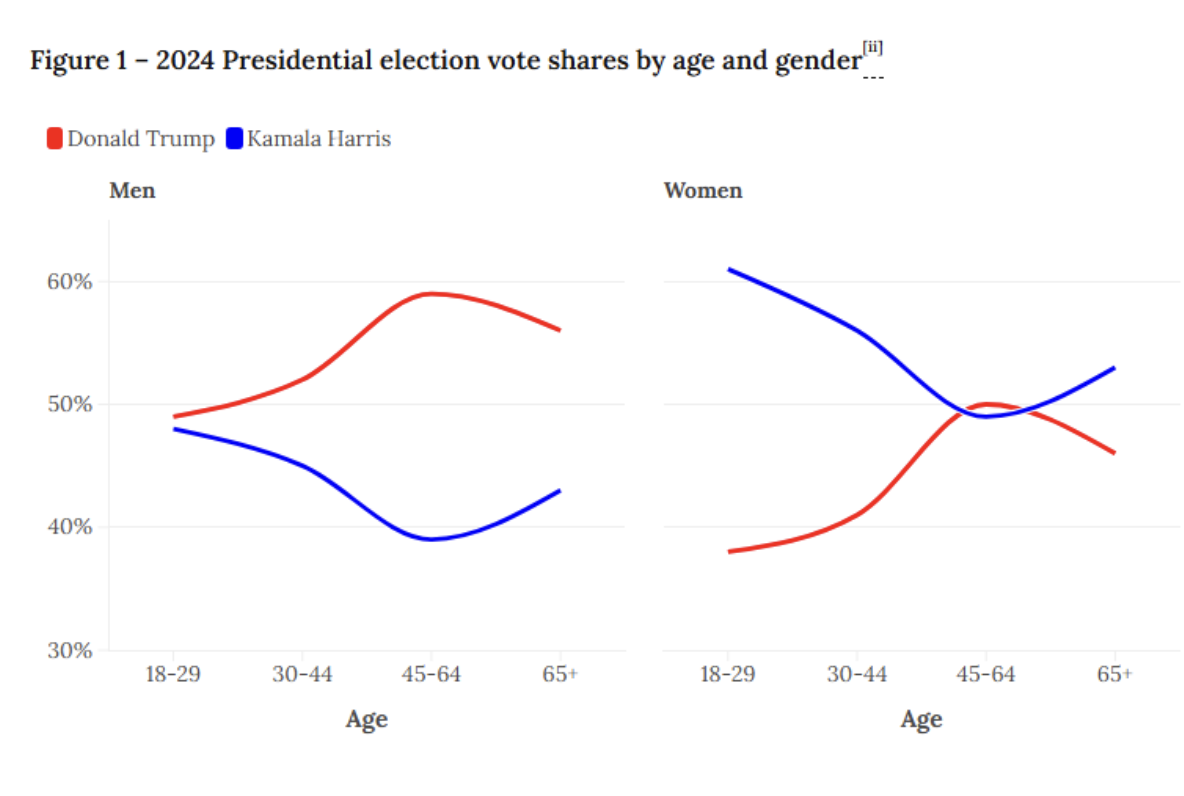
Graph from From here: Ballot of the Sexes | Onward
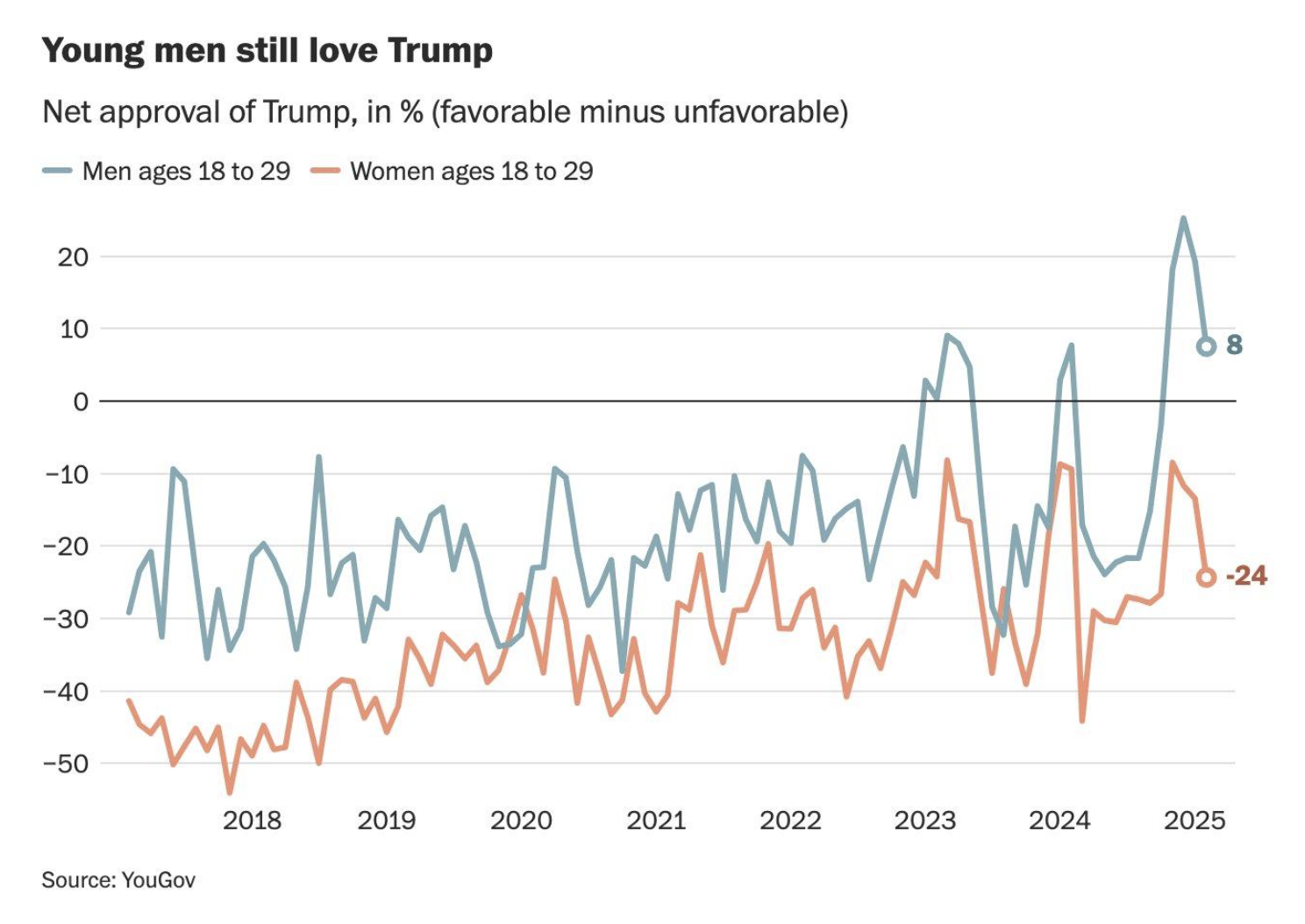
Graph from From here: Ballot of the Sexes | Onward
The pattern is global and accelerating.
A peer-reviewed analysis of the 2024 European Parliament elections, covering 27 countries and nearly 25,000 voters, found far-right support among young men has reached over 21%, compared to just 14% among young women, the largest such gap since records began.
In South Korea, the right-wing Reform Party drew over 37% of men in their 20s while 58% of young women backed the progressive candidate; in Germany, the AfD drew 19% support from men versus 12% from women in the 2024 EU elections; In the UK’s 2024 general election, YouGov’s post-election survey found that among 18–24 year olds, young women were almost twice as likely to vote Green as young men (23% vs 12%), while young men were twice as likely to vote for Reform UK (12% vs 6% of young women), a pattern that holds across age groups.
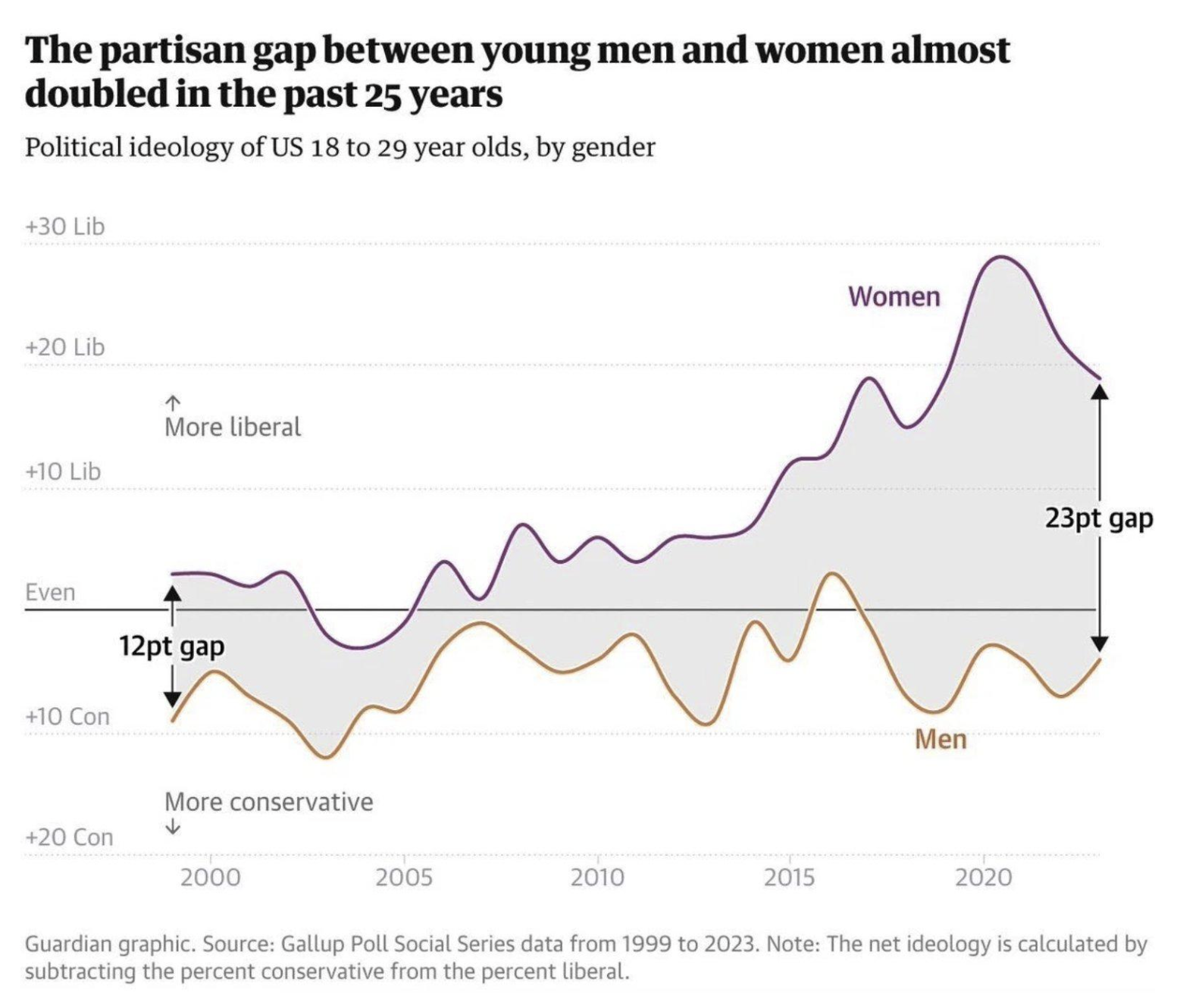
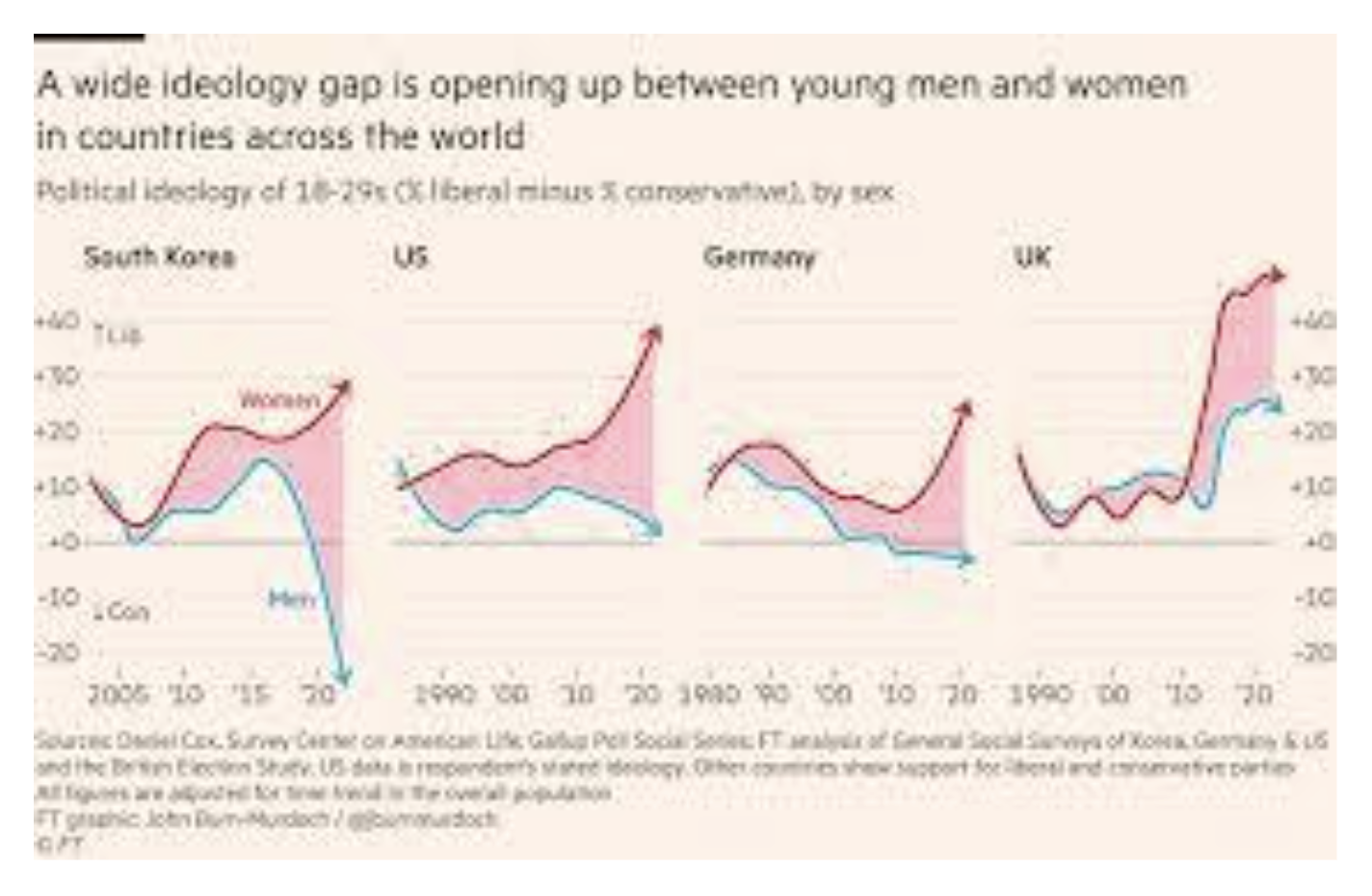
Financial Times gender divide graph
And Australia?
Australia is no different. The 2025 Australian Election Study confirmed nine percentage points fewer women than men voted for the Coalition — a gap widening every election cycle since the Howard era. Research published in the Australian Journal of Political Science found that Australia’s gender gap is driven primarily by women moving further left rather than men moving right, distinguishing it from the more dramatic male rightward shifts seen in Europe and South Korea.
The gender divides maps onto structurally different orientations toward power, violence, and human rights, which is precisely why suppressing women is so strategically important to authoritarian and right wing movements.
Evidence shows that in the United States, gender differences on support for military intervention average around 8%, a gap that has appeared in major conflict from World War II through Iraq, with women consistently less supportive of the use of force.
In Australia, on a weekly basis women are strung up for opposing war, while the government either looks away or pulls on the rope.
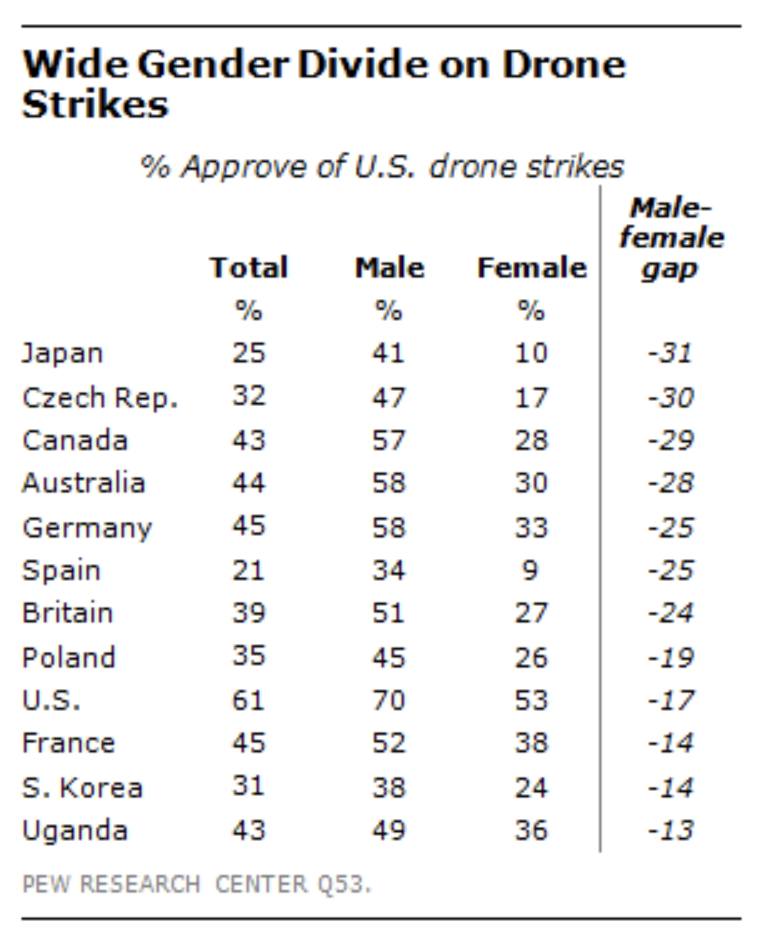
Research shows that countries with more men in power are more likely to engage in warfare and commit human rights abuses, while countries with higher shares of women in parliament have more laws equalising rights and stronger democratic institutions, with women’s status strongly and significantly correlated with election integrity, freedom of association, and checks on executive power.
Given women’s stronger support for human rights and democracy, and the gendered polarisation of politics, it is not surprising to see conservative groups harness this trend, drawing more disenfranchised young men to the right, supercharging misogyny.
Ultra right-wing authoritarians have been devastatingly effective at translating male alienation into political grievance.
The villain is feminism. The script is restoration.
Anti-feminist resentment binds class anxiety to gender domination. Transnational anti-gender networks raised over US$1.18 billion in Europe alone between 2019 and 2023, allowing tactics to spread rapidly across borders.
A direct threat
Harvard Kennedy School researchers Erica Chenoweth and Zoe Marks argue in Foreign Affairs that” misogyny and authoritarianism are not just common comorbidities but mutually reinforcing ills”.
Because women’s participation in mass movements makes them more likely to succeed and lead to egalitarian democracy, they are considered a direct threat by authoritarian leaders.
Trump and co
Donald Trump, found civilly liable for sexual abuse by a federal jury, has, since taking office, has certainly amplified misogyny while dismantling much of the machinery driving gender equality globally.
He dismantled USAID, cutting programmes estimated to cause between 500,000 and one million additional deaths annually, defunded Planned Parenthood and stripped Title X of $65 million, eliminated the White House Gender Policy Council, and expanded the Global Gag Rule to block abortion information in 51 countries.
He has simultaneously used misogynistic language and courted audiences steeped in incel ideology, while = the Epstein files, documenting what UN experts called “systematic sexual slavery” of women and girls, have been [released with heavy redactions protecting named co-conspirators, with the Justice Department confirming no new prosecutions are planned.
This is not by accident.
Misogyny is not a private attitude or an online curiosity. It is being used as a political force, one that serves a strategic function for every extreme right and authoritarian-adjacent movement currently gaining power, including Donald Trump. Governments that do not take it seriously as a security threat, a human rights violation, and a moral failure are complicit in its consequences.
The pattern plays out globally.
In Argentina, President Javier Milei has moved to remove femicide as a specific criminal offence from the penal code, calling it a product of “radical feminism”, this in a country that records a femicide every 30 hours. His government has already eliminated the Ministry of Women, defunded the gender violence emergency hotline by 42%, and was the only country to vote against a UN resolution to eliminate violence against women in November 2024. Femicides rose 15% in the first four months of 2025 compared to the same period a year prior.
Pauline Hanson and Scott Morrison
Here in Australia, Pauline Hanson’s One Nation has committed to rolling back abortion law, describing current state legislation as “one of the most extreme in the western world” – calling to eliminate access at multiple gestational stages, strip referral rights, and mandate “counselling” that would effectively recriminalise abortion in practice.
The ideological infrastructure sustaining this backlash is no longer confined to dark corners of the internet.
The Alliance for Responsible Citizenship (ARC), co-founded by Jordan Peterson and funded with £1 million from GB News co-owner Paul Marshall, drew 4,000 delegates from 96 countries to its February 2025 London conference, where speakers including Ben Shapiro, Nigel Farage, Peter Thiel, Kevin Roberts of the Heritage Foundation, and former Australian PM Scott Morrison gathered to advance what ARC describes as policy based on “traditional Western values”.
Attendees applauded Peterson’s attacks on the sexual revolution and progressive politics while a map of “the culture wars” on the exhibition floor labelled political divisions between “social justice warriors” and “incels” as opposing forces in a civilisational struggle.
CPAC Australia has run its own version domestically, platforming Pauline Hanson alongside international speakers promoting “parental rights” and opposing “gender ideology” in schools, the same conference circuit that has made far-right anti-feminist politics feel like an intellectual movement and a recruitment pipeline for the far right via male grievance.
What is packaged as a “pro-family” or “values” agenda is, in practice, a coordinated transnational effort to weaponise gender politics, and it appears to be working.
Supercharged misogyny
This move against equality has supercharged misogyny.
A landmark Ipsos/King’s College London survey of 23,000 people across 29 countries (March 2026) found that 33% of Gen Z men believe a husband should have the final word on important decisions in a marriage, compared to just 17% of baby boomer men.
31% of Gen Z men agree a wife should always obey her husband, compared with just 13% of baby boomer men. 24% of Gen Z men believe women should not appear too independent or self-sufficient, double the rate of boomers. 53% of Gen Z women identify as feminists compared with 32% of Gen Z men.
As Prof Heejung Chung, Director, Global Institute for Women’s Leadership, King’s College London states: “There’s a vacuum that’s being filled with rhetoric and voices trying to pitch young men against gender equality, against young women, against migrants.”
The extreme right and the hyper-masculinisation project
Extremist groups have jumped on the bandwagon. Contemporary scholarship increasingly recognises masculinity as central to understanding the extreme right-wing radicalisation wave we are currently seeing.
Radicalisation frequently functions as what scholars term a masculinisation project, with extremist ideologies offering frameworks for reclaiming perceived lost masculine status in rapidly evolving social landscapes.
The incel movement provides particularly clear evidence of grievance-based radicalisation rooted in masculine identity, characterised by what researchers call “aggrieved entitlement,” where sexual frustration is attributed to both personal barriers and socially constructed notions of attractiveness.
A 2024 systematic review of 37 studies found that aggrieved entitlement represents a strong motivator towards violence, from assault and rape to mass shootings. Research analysing 1,933 incel forum posts documented how participants constructed masculinities through narratives of humiliation while expressing violent misogyny.
Far-right organisations similarly exploit masculine grievance, with movements capitalising on male feelings of grievance, dislocation, and resentment by framing gender equality and multiculturalism as existential threats to male identity.
A real man
Research on groups such as the Proud Boys demonstrates how violence becomes conceptualised as a means to achieve status, defend one’s masculinity, and become a “real man.”
Recruitment to a lot of extremist groups in Australia now rely on hyper masculinised spaces. Gyms and hyper-masculine activities like boxing and combat sports have been utilised by networks including Hizb ut-Tahrir affiliates and the National Socialist Network, which has specifically recruited vulnerable young boys through fitness centres.
Contemporary far-right movements have increasingly emphasised bodybuilding and healthy lifestyle practices as tools for both recruitment and training.
For example, the Lads Society, before merging into the NSN, explicitly branded itself as a men’s fitness group to attract mainstream recruits who could then be indoctrinated into neo-Nazi ideology.
A 2024 University of Melbourne study by Dr Sara Meger found that if anti-feminist beliefs were classified as a distinct category, they would represent the most prevalent form of violent extremism in Australia today.
Among men surveyed, 19.4% believed it was legitimate to violently resist feminism. Dr Meger was unequivocal: the role of gender is “largely unaddressed” in Australia’s counter-extremism policy.
Putting women at extreme risk
All of this is pouring petrol on an already incendiary situation.
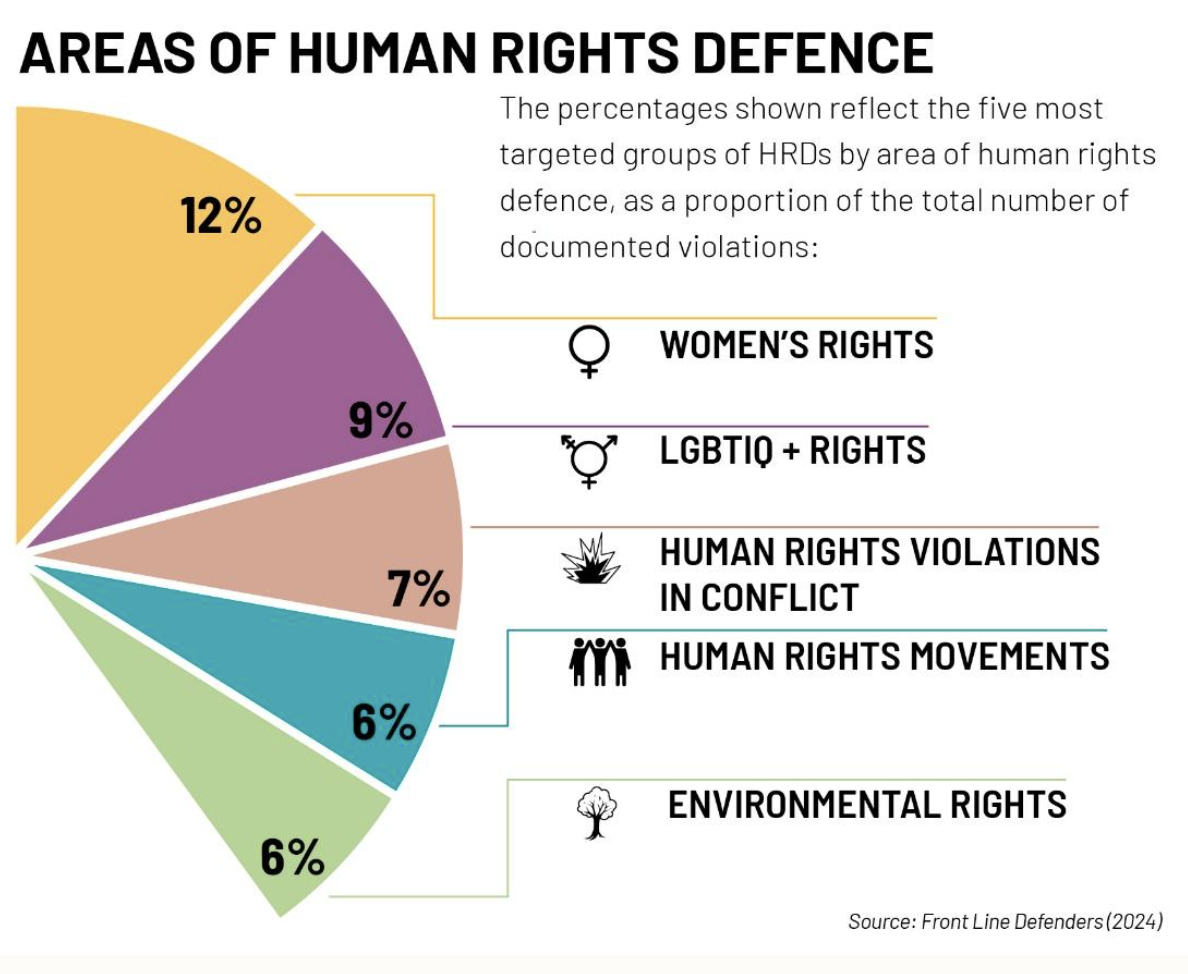
Globally, women’s rights defenders are ranked the most targeted human rights defenders group in of the world (despite government obligations to protect them), with smear campaigns, criminalisation, arbitrary detention and threats of sexual violence the most common weapons used against them.
Women politicians are being routinely attacked with one in three women parliamentarians in Asia-Pacific reported having received online threats of physical violence, including death threats and data showing women politicians are three times more likely than their male counterparts to receive sexually abusive language online.
It is so extreme that coordinated digital attacks on women in public life are now recognised as a structural threat to democracy itself.
Women journalists face the same fate with a quarter of women journalists globally indicating they had received physical threats, with 18 percent indicating threats of sexual violence.
 In Australia, one woman is killed every week by a current or former intimate partner, and almost ten women are hospitalised daily due to assault injuries.
Over the decade from mid-2002 to mid-2012, 488 women were killed by an intimate partner.
For Aboriginal and Torres Strait Islander women, the crisis is compounded catastrophically, they are 34 times more likely to be hospitalised due to family violence and 6 times more likely to die from it than non-Indigenous women, making gendered violence the leading cause of premature death in some communities.
ANROWS (Australia’s National Research Organisation for Women’s Safety) reports that intimate partner violence represents the single greatest contributor to the burden of disease, encompassing illness, disability, and premature death, for women aged 18–44, outweighing every other risk factor for that age group.
There will come a point, perhaps it has already come, when a government’s failure to act on the coordinated, well-funded campaigns of harassment and threats targeting women who speak cannot be called negligence any longer but must be called a choice.
This is not online mischief.
It is organised political violence against women, increasing risks for women, and it requires the same serious policy response we reserve for terrorism. Rights without protections, rights without funding, rights without enforcement are merely permissions, and permissions can be revoked.
History will not forgive a government that watched the flames spread and chose, again and again, to ignore, and often add fuel.

Aleta is a practitioner researcher in human rights, disability inclusion and gender. She is completing a PhD at University of Melbourne and has twenty years of experience working across agencies including the United Nations, UN Women, World Bank, and the University of Melbourne. She is currently standing as an Independent Candidate for Western Victoria. Her website is www.aletamoriarty.com